

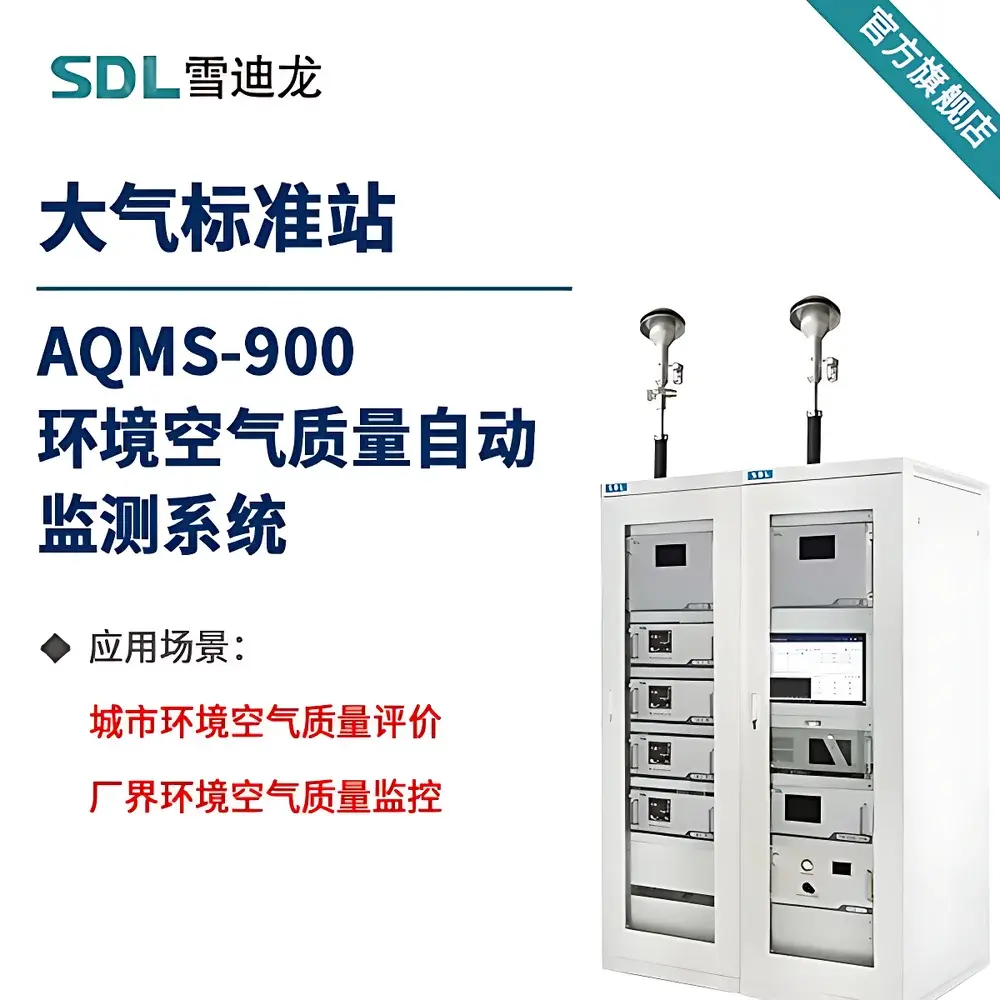
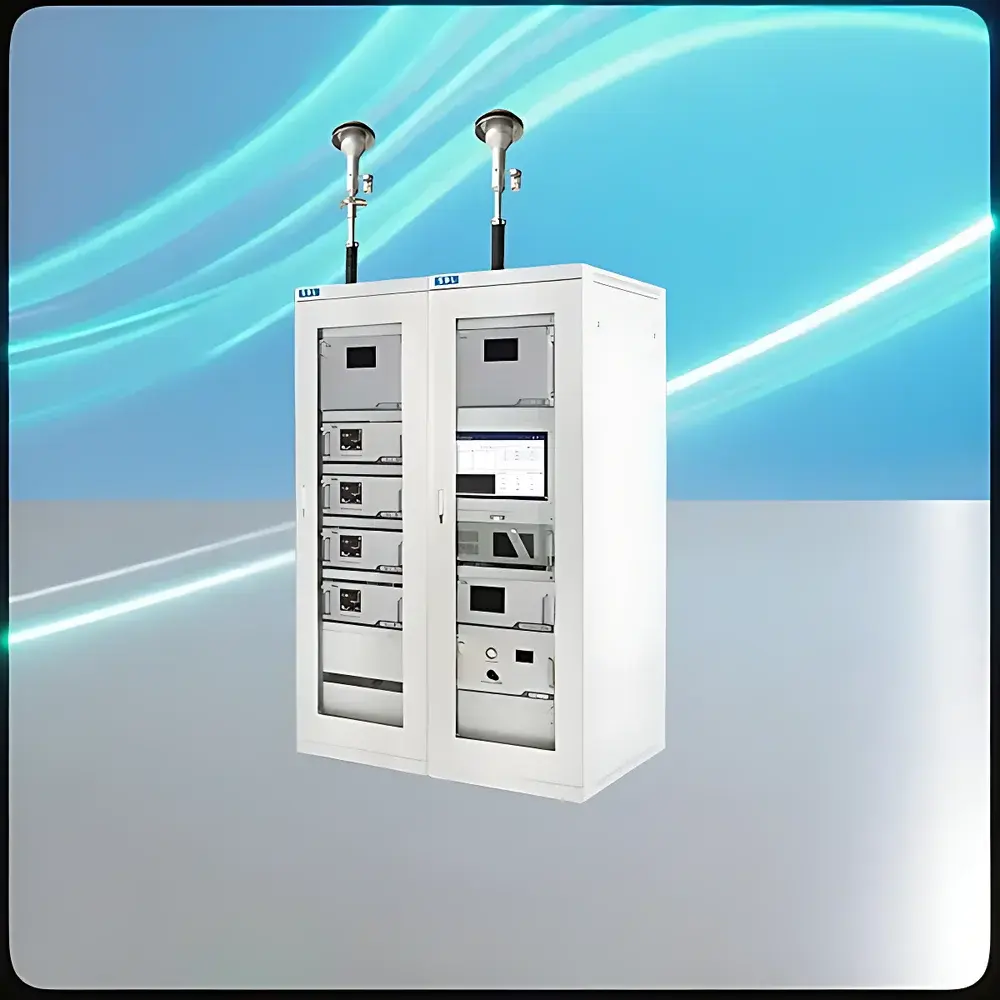
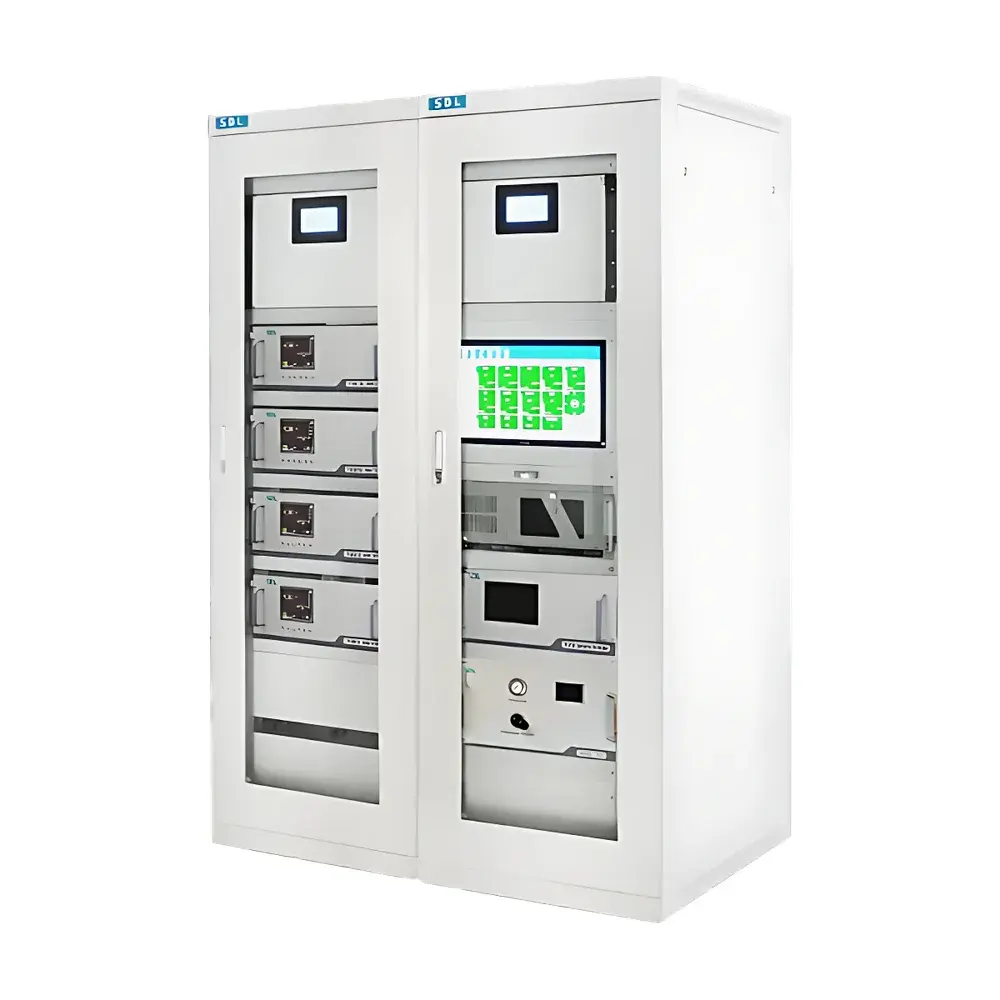
SDL AQMS-900 Automatic Air Quality Monitoring System
| Brand | SDL |
|---|---|
| Origin | Beijing, China |
| Manufacturer Type | Original Equipment Manufacturer (OEM) |
| Country of Origin | China |
| Model | AQMS-900 |
| Installation Type | Fixed-site |
| Measured Pollutants | SO₂, NOₓ (NO/NO₂), CO, O₃, PM₂.₅, PM₁₀ |
| Optional Meteorological Parameters | Wind direction, wind speed, ambient temperature, relative humidity, atmospheric pressure, rainfall, visibility |
| SO₂ Measurement Range | 0–50 / 100 / 500 / 1,000 / 5,000 / 20,000 ppb |
| Compliance Certifications | CCEP (China Environmental Protection Product Certification), Certified Test Report from the Eco-Environment Monitoring Instrument Quality Supervision & Inspection Center (MEE) |
Overview
The SDL AQMS-900 Automatic Air Quality Monitoring System is a fixed-site, continuous emission and ambient air monitoring platform engineered for regulatory-grade environmental surveillance in urban air quality stations, regional background monitoring sites, and industrial boundary applications. Designed in strict alignment with Chinese national standards—including HJ 653–2013, HJ 654–2013, and HJ 93–2013—the system implements standardized measurement principles across its analyzers: UV fluorescence for SO₂, chemiluminescence for NOₓ, non-dispersive infrared (NDIR) absorption for CO, UV photometry for O₃, and β-ray attenuation or tapered element oscillating microbalance (TEOM) technology for PM₂.₅ and PM₁₀ mass concentration determination. Its modular architecture supports seamless integration of certified reference instruments, ensuring traceability to national metrological standards and enabling long-term data comparability required for trend analysis, compliance reporting, and health impact modeling.
Key Features
- Regulatory-compliant hardware configuration validated by the Ministry of Ecology and Environment (MEE)–accredited inspection center, including CCEP certification for all core analyzers.
- Dual compensation capability—real-time temperature and barometric pressure correction applied to all gaseous and particulate measurements—to maintain accuracy under variable ambient conditions.
- Embedded Linux-based operating system deployed across analyzer controllers, delivering stable 24/7 operation with mean time between failures (MTBF) exceeding 8,000 hours.
- Onboard data logging with ≥1 year local storage capacity for raw concentration values, calibration events, zero/span drift logs, diagnostic flags, and system operational status timestamps.
- Modular expansion support for optional parameters including NMHC, BTEX, H₂S, NH₃, and full meteorological suite (wind vector, thermal-hygrometric profile, barometric pressure, precipitation accumulation, and horizontal visibility).
- Ruggedized outdoor enclosure rated IP55, equipped with climate-controlled internal environment (heating/cooling + desiccant dehumidification) to ensure analyzer stability across –30 °C to +50 °C ambient ranges.
Sample Compatibility & Compliance
The AQMS-900 is configured for ambient air sampling at standard reference conditions (25 °C, 101.325 kPa). Inlet systems comply with EN 12341:2014 and ISO 7203–1:2021 requirements for aerosol sampling head design, cut-point fidelity, and flow rate stability (±2% over 30-day interval). Gaseous analyzers meet performance specifications outlined in EPA Methods TO-15, IO-3.2, and EU Directive 2008/50/EC Annex III. All measurement data generated are structured according to HJ 664–2013 (Environmental Air Quality Monitoring Data Transmission Technical Specification) and support audit-ready archival per GLP-aligned data governance frameworks. The system architecture accommodates future alignment with ISO/IEC 17025:2017 laboratory accreditation requirements when deployed within certified monitoring networks.
Software & Data Management
The AQMS-900 integrates a centralized data acquisition and management software suite compliant with HJ 75–2017 and HJ 76–2017 protocols. It provides real-time visualization of up to 24 concurrent parameters via web-based dashboard with role-based access control (RBAC). Raw data streams are timestamped with NTP-synchronized precision (±100 ms), formatted in ASCII-delimited files conforming to MEE-defined schema, and transmitted via TCP/IP (MODBUS TCP, HTTP POST, or MQTT) to provincial or national environmental information platforms. Audit trails record all user-initiated actions—including calibration, maintenance, and configuration changes—with immutable logging meeting basic FDA 21 CFR Part 11 principles (electronic signature support available upon configuration). Data integrity safeguards include cyclic redundancy check (CRC), dual SD card redundancy, and automatic retransmission of failed packets during network interruption.
Applications
- Urban ambient air quality monitoring networks operated by municipal ecological environment bureaus.
- Regional background stations supporting national air quality assessment and transboundary pollution studies.
- Industrial fence-line monitoring for compliance with GB 37822–2019 (VOCs Emission Control Standard) and GB 16297–1996 (Air Pollutant Emission Standards).
- Construction site and road-side micro-environmental monitoring where high temporal resolution and multi-pollutant co-location are critical.
- Research applications requiring synchronized meteorological–chemical datasets for dispersion modeling (e.g., CALPUFF, AERMOD input preparation) and epidemiological exposure assessment.
FAQ
Does the AQMS-900 support remote diagnostics and firmware updates?
Yes—via secure SSH/TLS-enabled remote access; firmware updates are delivered as signed binary packages with version rollback capability.
What is the recommended calibration frequency for regulatory use?
Per HJ 75–2017, zero/span calibration is required at least every 7 days; multi-point linear verification every 30 days; full system performance audit annually.
Can the system be integrated with third-party SCADA or GIS platforms?
Yes—through open API (RESTful JSON interface), OPC UA server option, or custom MODBUS register mapping.
Is particulate matter measurement certified to ISO 20983:2020 or EN 12341:2014?
The PM module complies with EN 12341:2014 for PM₁₀ and PM₂.₅; ISO 20983:2020 conformance applies to system-level uncertainty budgeting and is documented in the type approval test report.
How is data security ensured during transmission to central servers?
All telemetry employs TLS 1.2+ encryption; certificate pinning and mutual authentication are configurable; data-at-rest encryption follows AES-256 standards on onboard storage.







