
SDL MODEL 9811 Online Permanganate Index (CODMn) Analyzer
| Brand | SDL |
|---|---|
| Origin | Beijing, China |
| Manufacturer Type | OEM Manufacturer |
| Product Category | Domestic |
| Model | MODEL 9811 |
| Measurement Principle | Potassium Permanganate Oxidation with ORP Endpoint Detection |
| Instrument Type | Online Analyzer |
| Range | 0–20 mg/L as O₂ |
| Repeatability | ±5% |
| Accuracy | ±5% |
| Resolution | 0.01 mg/L |
| Sample Compatibility | Surface Water & Drinking Water |
| Compliance | HJ/T 100–2003 |
| Certifications | CCEP Certified, Applicability Test Report Issued by National Environmental Monitoring Instrument Quality Supervision and Inspection Center |
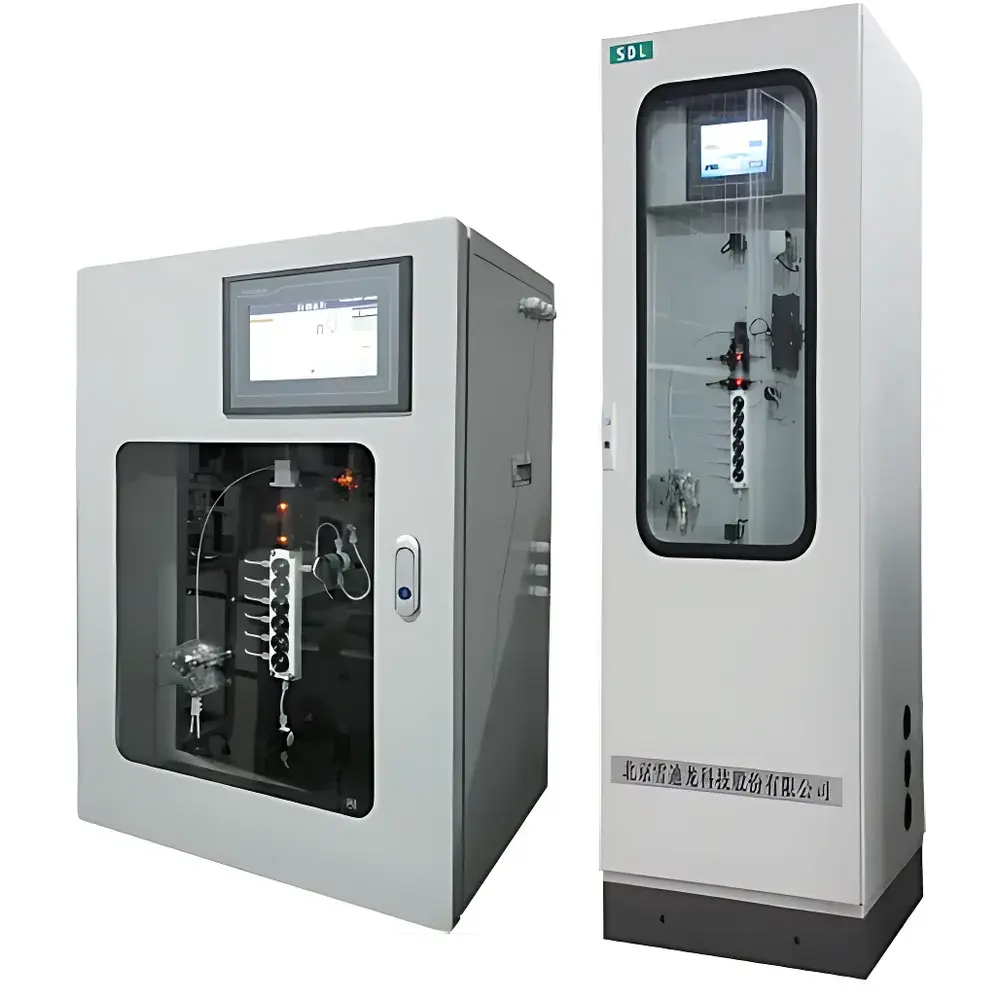
| Key Features | Oil-bath heating module, precision syringe pump titration, automated cleaning & calibration, multi-port valve island sampling system, remote control capability (SCADA/Modbus RTU), power-loss recovery, fault & reagent depletion alerts, multiple measurement modes (scheduled, triggered, continuous, manual) |
Overview
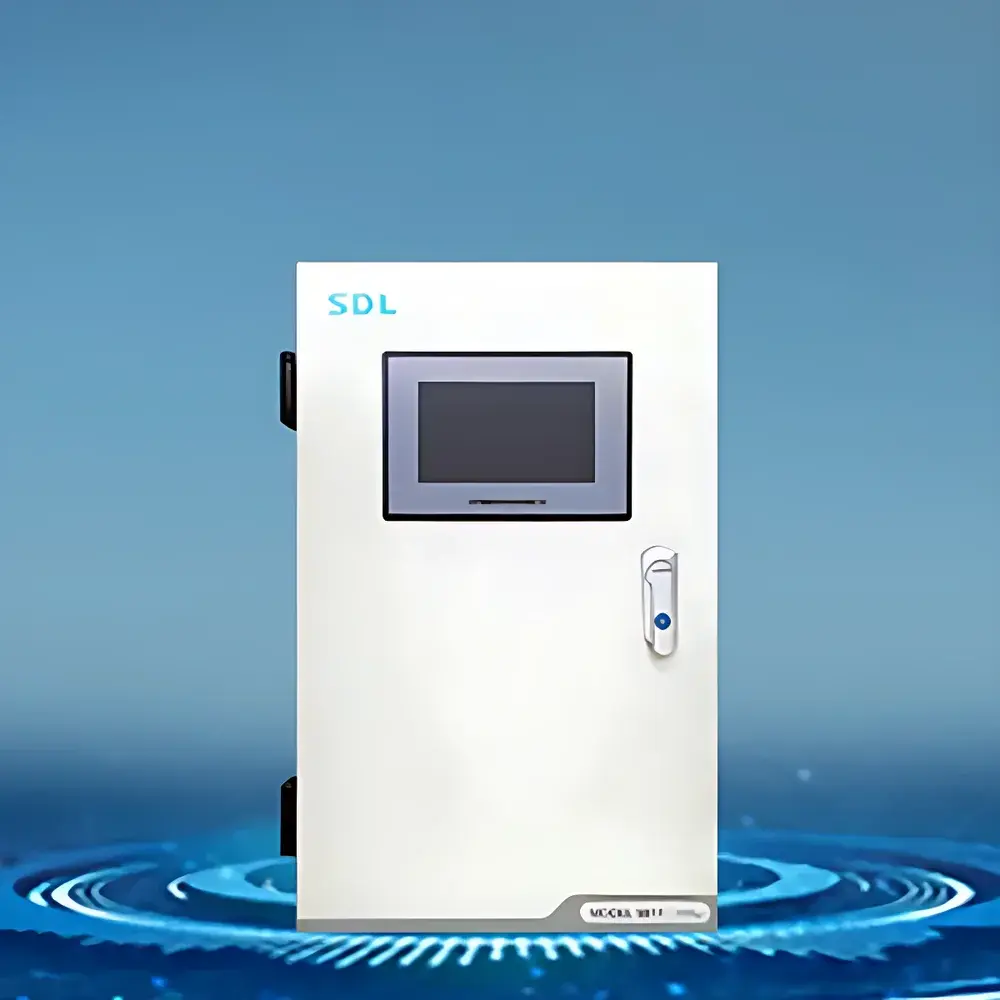
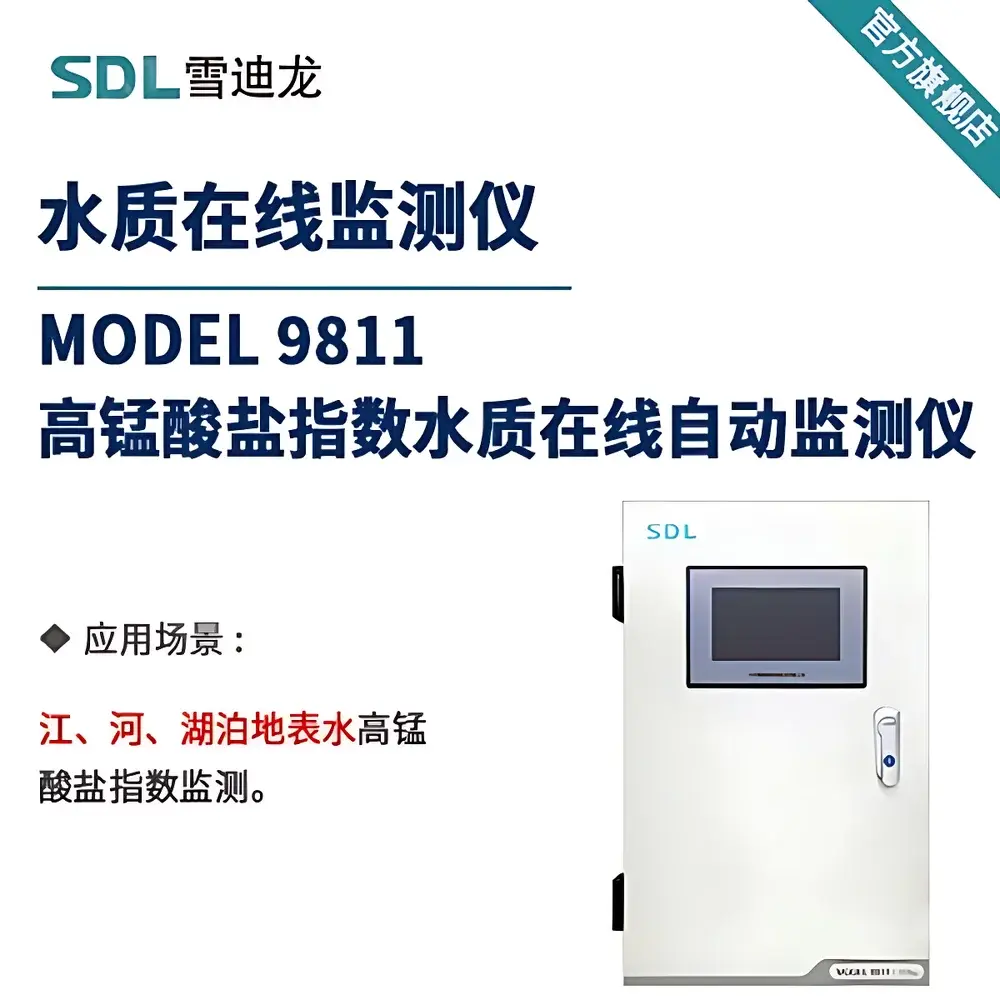
The SDL MODEL 9811 Online Permanganate Index (CODMn) Analyzer is a fully automated, continuously operating instrument engineered for real-time water quality assessment in regulatory and operational environments. It implements the standardized potassium permanganate oxidation method—defined in China’s HJ/T 100–2003 technical specification for automatic permanganate index analyzers—to quantify the oxygen-demanding organic and inorganic substances in low-to-moderately polluted water matrices. Unlike open-reflux or dichromate-based COD methods, the permanganate index targets readily oxidizable compounds under mild acidic conditions (70–100 °C), making it particularly suitable for monitoring source waters, finished drinking water, and protected surface water bodies where stringent regulatory thresholds apply. The analyzer employs potentiometric endpoint detection via an ORP (Oxidation-Reduction Potential) electrode to precisely identify the stoichiometric completion of permanganate reduction, eliminating subjective visual interpretation and ensuring objective, operator-independent results. Its robust architecture integrates oil-bath temperature control for consistent reaction kinetics, high-precision syringe-pump-driven reagent delivery, and intelligent endpoint validation logic—collectively minimizing drift and enhancing long-term measurement stability.
Key Features
- Oil-bath heating system maintains precise, uniform reaction temperature (±0.5 °C) across the full 70–100 °C range, critical for reproducible permanganate oxidation kinetics.
- High-accuracy syringe pump delivers KMnO4 and Na2C2O4 reagents with volumetric precision better than ±0.5% full scale, supporting reliable back-titration.
- ORP-based endpoint detection algorithm incorporates dynamic slope analysis and noise filtering to distinguish true equivalence points from transient interferences—including turbidity-induced signal scatter.
- Integrated multi-port valve island enables sequential, contamination-free handling of sample, standards, blanks, and cleaning solutions without cross-flow or carryover.
- Automated daily cleaning cycle using acidified rinse solution prevents MnO2 deposition on electrodes and fluidic pathways—extending maintenance intervals and reducing downtime.
- Self-diagnostic firmware monitors reagent levels, pump actuation, temperature stability, and electrode response; triggers audible/visual alerts and Modbus-trappable fault codes upon deviation.
- Power-loss recovery function resumes scheduled operation within 60 seconds after mains restoration, preserving data continuity and time-series integrity.
Sample Compatibility & Compliance
The MODEL 9811 is validated for use with raw and treated surface water, groundwater, and potable water supplies meeting national Class I–III criteria per GB 3838–2002. It demonstrates minimal interference from suspended solids up to 100 NTU and dissolved chloride concentrations ≤200 mg/L—key performance attributes verified in its official applicability test report issued by the National Environmental Monitoring Instrument Quality Supervision and Inspection Center. The analyzer conforms strictly to HJ/T 100–2003, including requirements for zero/span drift (<±5% over 24 h), linearity (R² ≥0.995), and recovery accuracy (90–110%). It holds CCEP (China Environmental Protection Product Certification) certification, confirming design compliance with environmental instrumentation safety, electromagnetic compatibility (EMC), and functional reliability standards. While not pre-certified for FDA 21 CFR Part 11 or ISO/IEC 17025, its audit-ready data logging architecture supports GLP/GMP-aligned deployment when integrated with validated LIMS or SCADA platforms.
Software & Data Management
Embedded firmware provides dual-mode operation: local touchscreen interface (7-inch resistive LCD) and remote supervision via RS-485 (Modbus RTU) or optional Ethernet (TCP/IP). All measurements, calibration logs, cleaning events, and fault records are timestamped and stored internally for ≥90 days. Data export is supported via USB flash drive (CSV format) or periodic FTP push to centralized servers. Audit trails include operator ID (if configured), parameter modification history, and reagent lot traceability fields—enabling compliance with internal QA protocols. Optional cloud connectivity allows integration with municipal water SCADA systems or third-party environmental dashboards through standard RESTful APIs.
Applications
- Real-time surveillance of intake water quality at municipal drinking water treatment plants.
- Regulatory compliance monitoring for reservoirs, rivers, and lakes under China’s Surface Water Environmental Quality Standards (GB 3838).
- Trend analysis of seasonal organic load variation in headwater catchments.
- Early-warning detection of accidental organic contamination events (e.g., agricultural runoff, wastewater bypass).
- Performance verification of upstream coagulation/flocculation and activated carbon filtration units.
FAQ
Does the MODEL 9811 comply with international standards such as ISO 8467 or ASTM D1253?
The analyzer is designed and certified per HJ/T 100–2003—the national standard governing automatic permanganate index analyzers in China. While its core chemistry aligns with ISO 8467 principles (acidic KMnO4 oxidation), formal conformance testing against ISO or ASTM protocols requires site-specific validation per laboratory accreditation requirements.
What maintenance intervals are recommended for routine operation?
Daily automated cleaning is enabled by default. Reagent cartridges require replacement every 30–45 days depending on measurement frequency. Electrode polishing and calibration verification are advised every 7 days; full system performance verification (including spike recovery) is recommended monthly.
Can the instrument operate unattended for extended periods?
Yes. With uninterrupted power supply (UPS) integration and remote alarm notification (via relay or Modbus), the MODEL 9811 supports fully autonomous operation for >30 days under typical monitoring schedules (e.g., hourly measurements).
Is raw data accessible for third-party statistical analysis?
All primary sensor outputs (mV, temperature, volume dispensed), calculated CODMn values, and metadata (timestamps, calibration coefficients) are exportable in plain-text CSV format without proprietary encryption or licensing restrictions.







