
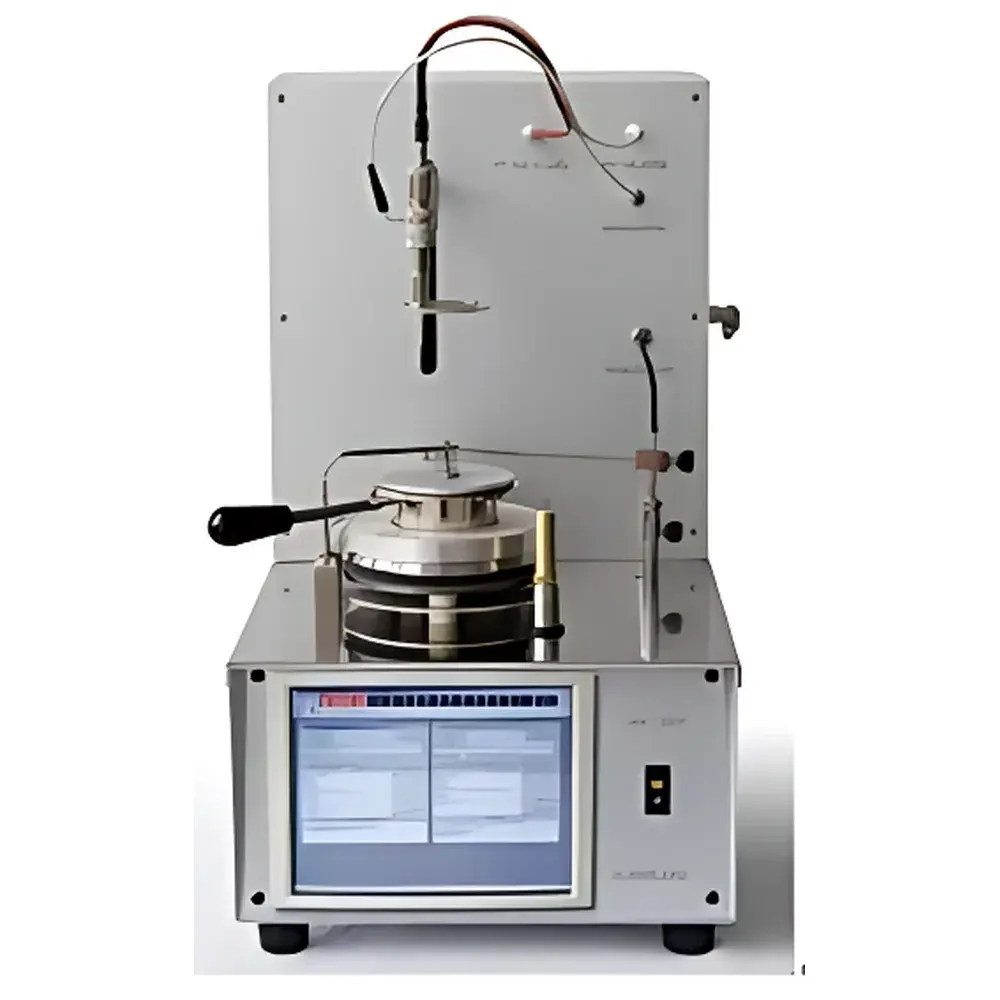
SDM 880AUT Cleveland Automatic Open-Cup Flash Point Tester
| Brand | SDM |
|---|---|
| Origin | Italy |
| Model | 880AUT |
| Test Method | Cleveland Open-Cup (COC) |
| Standards Compliance | ASTM D92, IP 36, DIN 51376, EN ISO 22592, ISO 2592 |
| Temperature Range | +79 °C to +400 °C |
| Temperature Accuracy | ±0.1 °C |
| Heating Power | 600 W |
| Dimensions | 46 × 31 × 57 cm |
| Weight | 20 kg |
| Sensor Type | Dual PT100 |
| Cup Material | Calibrated Brass (ASTM D92/IP 36 Compliant) |
| Ignition System | Dual Electronic Igniters with Pivot-Actuated Flame Delivery |
| Software Platform | Windows 2000/XP/Vista Native Application |
| Safety Features | Overtemperature Cut-off, Auto-Extinguishing on Ignition Confirmation |
Overview
The SDM 880AUT Cleveland Automatic Open-Cup Flash Point Tester is a precision-engineered instrument designed for the accurate and repeatable determination of flash point and fire point of petroleum products, lubricants, bituminous materials, and other combustible liquids with initial boiling points above 79 °C. It operates strictly in accordance with the Cleveland Open-Cup (COC) method — a standardized thermal ignition test defined by ASTM D92, IP 36, ISO 2592, EN ISO 22592, and DIN 51376. The instrument employs controlled electric heating via solid-state electronic regulators, coupled with dual high-stability PT100 temperature sensors: one immersed in the sample for real-time thermal monitoring, and a second dedicated to flame-sustained ignition detection during fire point determination. Flash point is identified by ionization-based flame detection upon momentary vapor ignition; fire point is confirmed when sustained combustion (>5 seconds) is detected by the secondary sensor, triggering automatic flame suppression. This dual-sensor architecture ensures unambiguous event discrimination and eliminates operator subjectivity.
Key Features
- Automated Cleveland open-cup methodology with full compliance to ASTM D92 and equivalent international standards
- Dual PT100 temperature sensing system: primary immersion probe for sample temperature control and secondary probe for objective fire point verification
- Electronically regulated heating element with overtemperature protection and fail-safe shutdown logic
- Calibrated brass test cup manufactured to exact dimensional and volumetric tolerances specified in ASTM D92 and IP 36
- Motorized pivot arm delivering two independent flame sources (manual or auto-actuated), ensuring consistent flame geometry and exposure timing
- Ionization-type flash detector with adjustable sensitivity and noise rejection algorithms for reliable low-energy vapor ignition recognition
- Epoxy-coated steel enclosure resistant to acid fumes and thermal degradation in laboratory environments
Sample Compatibility & Compliance
The 880AUT accommodates viscous and high-boiling petroleum derivatives including residual fuel oils, asphalt binders, heavy lubricating oils, and cutback asphalts. Its +79 °C to +400 °C operational range covers the full scope of COC-applicable materials per ASTM D92 Annex A1. All mechanical and thermal components — from cup geometry to flame delivery path — are validated against reference standard materials traceable to NIST or UKAS-accredited calibration laboratories. The system supports GLP-compliant operation through audit-trail-enabled software logging (user actions, method parameters, calibration events, and result timestamps). While not inherently 21 CFR Part 11 compliant, its data export functionality (CSV, PDF, graphical reports) facilitates integration into validated LIMS or QMS platforms requiring electronic record retention.
Software & Data Management
The native Windows-based application (compatible with Windows 2000 through Vista) provides modular access to analysis, calibration, diagnostics, and data processing functions. Users define custom test protocols — including ramp rate, dwell time, flame sweep frequency, and pass/fail criteria — via intuitive parameter encoding. Real-time temperature curves, flame event markers, and final flash/fire point values are displayed graphically during testing. Post-run, results can be exported in multiple formats: tabular CSV for statistical analysis, annotated PDF reports with embedded chromatogram-style thermal profiles, or direct printer output with configurable headers and footers. Calibration routines include multi-point verification using certified reference oils, with all coefficients stored securely within encrypted method files. Diagnostic logs capture heater response, sensor drift trends, and ignition system actuation history for preventive maintenance planning.
Applications
- Quality control of distillate and residual fuel oils in refinery QC labs
- Specification verification of bituminous binders per ASTM D36 and EN 1427
- Fire safety assessment of industrial lubricants under OSHA and NFPA guidelines
- Regulatory submission testing for transportation classification (UN TDG, ADR, IMDG Code)
- R&D screening of formulated hydrocarbon blends during oxidation stability studies
- Third-party certification testing accredited to ISO/IEC 17025 requirements
FAQ
What standards does the 880AUT fully comply with?
ASTM D92, IP 36, ISO 2592, EN ISO 22592, and DIN 51376 — all verified through interlaboratory round-robin testing and certified reference material validation.
Can the instrument distinguish flash point from fire point automatically?
Yes. Flash point is determined by ionization detection of transient vapor ignition; fire point is confirmed only upon sustained combustion (>5 s) detected by the secondary PT100 sensor, followed by automatic flame extinction.
Is the brass test cup supplied with calibration documentation?
Each cup is individually serialized and supplied with dimensional certification confirming compliance with ASTM D92 cup specifications (diameter, depth, fill level, handle orientation).
Does the software support automated report generation for regulatory audits?
It generates timestamped, user-attributed reports with full method traceability; however, electronic signature and audit trail features require integration with external validated document management systems.
What maintenance intervals are recommended for long-term accuracy?
Biannual verification using certified flash point standards (e.g., n-decane, tetradecane) is advised; annual inspection of flame delivery mechanics, sensor contact integrity, and heater insulation resistance is recommended per manufacturer service guidelines.




