
SEBA Flash-Com / Log-Com Water Level and Water Quality Monitoring System
| Origin | Germany |
|---|---|
| Manufacturer Type | Authorized Distributor |
| Origin Category | Imported |
| Model | SEBA Flash-Com / Log-Com |
| Pricing | Upon Request |
Overview
The SEBA Flash-Com / Log-Com Water Level and Water Quality Monitoring System is a field-deployable, autonomous environmental monitoring platform engineered for long-term, unattended operation in groundwater observation wells, surface water bodies, and municipal or industrial monitoring stations. Built upon SEBA’s proven telemetry architecture, the system integrates high-stability pressure-based water level sensing with multi-parameter electrochemical and optical sensor fusion—enabling simultaneous, time-synchronized acquisition of hydrostatic head, temperature, conductivity, pH, redox potential (ORP), dissolved oxygen (DO), and turbidity. Its measurement principle relies on piezoresistive transduction for water level (DS22/DST22), potentiometric and amperometric methods for pH/ORP/DO, conductometric cell technology for conductivity, and 860 nm LED-based nephelometry for turbidity. Designed to meet the operational rigor of ISO 14001-compliant environmental programs and EPA Method 160.1–aligned field protocols, the system supports regulatory-grade data continuity under harsh outdoor conditions—including extended temperature cycling, humidity exposure, and intermittent solar insolation.
Key Features
- Two-tier data logger architecture: Log-Com (battery-powered, ultra-low-power, 2+ year deployment) and Flash-Com (solar-recharged, higher memory capacity and extended sensor interface)
- Integrated GSM/GPRS modem (900/1800 MHz) with embedded antenna and dual-SIM support for redundant cellular connectivity
- Configurable SMS alerting: Up to four mobile numbers and one fax destination for threshold-triggered alarms (e.g., flood-level breach, DO depletion, pH excursion)
- Robust mechanical design: Cylindrical form factor (Ø168 mm) optimized for insertion into standard 4–6 inch monitoring wells; IP68-rated housing for submersible operation
- Energy-efficient architecture: Log-Com consumes <15 µA in sleep mode; Flash-Com supports MPPT solar charge control with LiFePO₄ or lead-acid battery banks
- Modular sensor compatibility: Seamless integration with DS22 (water level), DST22 (level + temperature), and MPS-D (8-parameter water quality probe) via standardized M12 connectors and SEBA’s proprietary digital bus protocol
Sample Compatibility & Compliance
The system is validated for continuous immersion in freshwater, brackish water, and wastewater matrices within defined parameter ranges (e.g., 0–100 mS/cm conductivity, 0–1000 NTU turbidity). All wetted components comply with EN 61326-1 (EMC for industrial environments) and RoHS 2011/65/EU. Sensor calibration traceability follows NIST-traceable standards where applicable (e.g., pH buffer solutions certified to ISO 3696 Grade 2). Data integrity meets GLP audit requirements through timestamped, non-volatile storage (512 KB flash memory, ~130,000 records) with cyclic overwrite protection and optional SD card expansion. The system supports 21 CFR Part 11-compliant electronic signatures when paired with DEMASdb software in controlled laboratory environments.
Software & Data Management
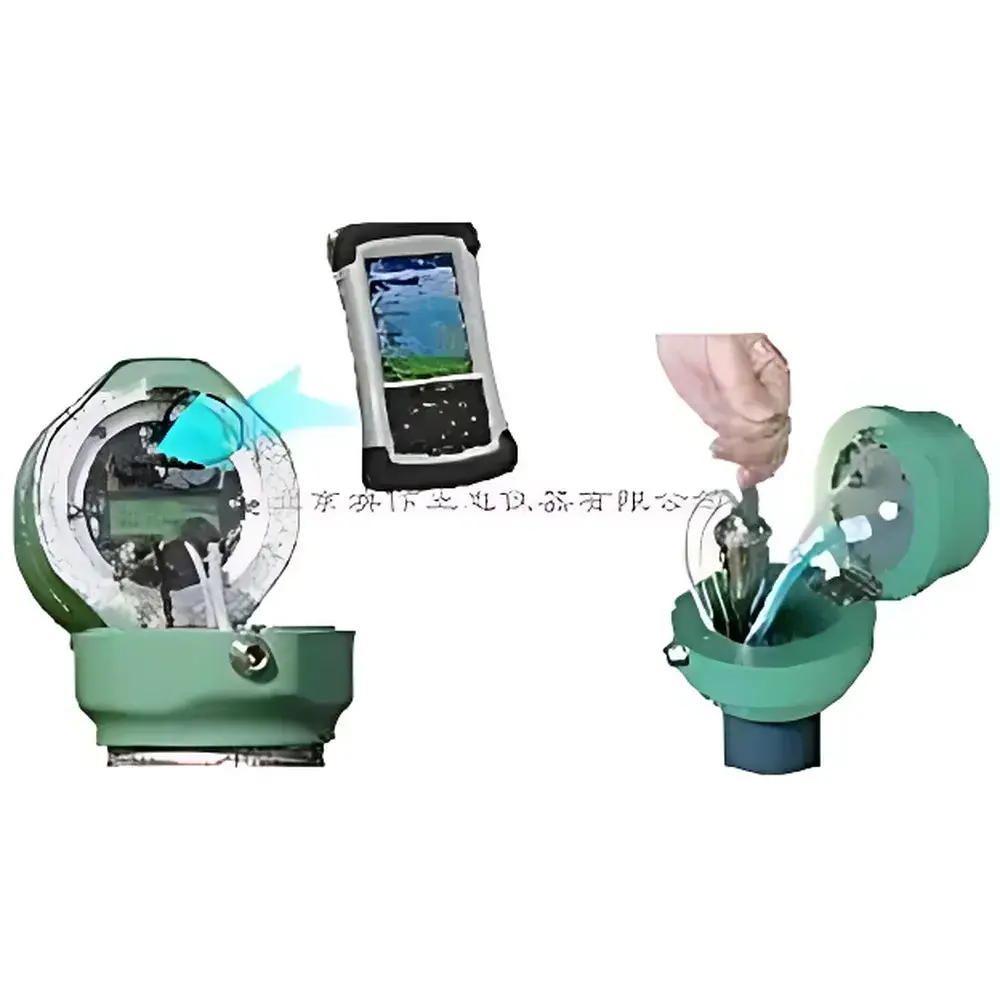
The HDA handheld readout unit—featuring Windows Mobile 2003, a 240×320 TFT touchscreen, and RS232/USB interfaces—enables local configuration, real-time diagnostics, and offline data retrieval. DEMASdb desktop software provides SQL-compatible database ingestion, automated graphing (time-series, scatter, overlay plots), statistical summary (min/max/mean/stdev), and export to CSV, Excel, or XML. Field data transmitted via GPRS are ingested into secure cloud portals or on-premise SCADA systems using MODBUS TCP or HTTP(S) RESTful APIs. Firmware updates and remote parameter reconfiguration are supported over-the-air without physical access.
Applications
- Groundwater level trend analysis for aquifer sustainability assessment (USGS NWIS-aligned)
- Wastewater treatment plant influent/effluent monitoring per ISO 20426 and EN 14181
- Drinking water distribution network leak detection via hydraulic gradient mapping
- Regulatory compliance reporting for EU Water Framework Directive (WFD) parameters
- Early-warning systems for agricultural runoff events (nitrate, turbidity, conductivity spikes)
- Climate-resilient infrastructure monitoring in flood-prone zones with SMS-based emergency alerts
FAQ
What power options are available for long-term deployment?
Log-Com operates on six 1.5 V alkaline cells (typical service life >2 years at 15-min logging interval); Flash-Com supports solar charging with configurable battery bank sizing for year-round operation in latitudes ≥45°N.
Can the MPS-D sensor be recalibrated in the field?
Yes—pH, ORP, and DO sensors support two-point field calibration using certified buffers and zero-oxygen solution; conductivity and turbidity modules include factory-set slope compensation with optional user-defined gain adjustment.
Is the system compatible with third-party SCADA platforms?
Yes—via standard GPRS data packets formatted as ASCII or JSON, supporting integration with Ignition, Siemens Desigo, or Schneider EcoStruxure using configurable delimiter and header settings.
What is the maximum recommended cable length between the logger and MPS-D sensor?
Up to 300 m using shielded twisted-pair cable (SEBA part no. KBL-300); signal integrity is maintained via differential RS-485 communication and active line termination.
Does the system support time-synchronized multi-node deployments?
Yes—internal RTC accuracy is ±10 ppm (±0.86 sec/day); optional GPS synchronization module (SEBA GPS-TIME) enables microsecond-level alignment across distributed networks.







