
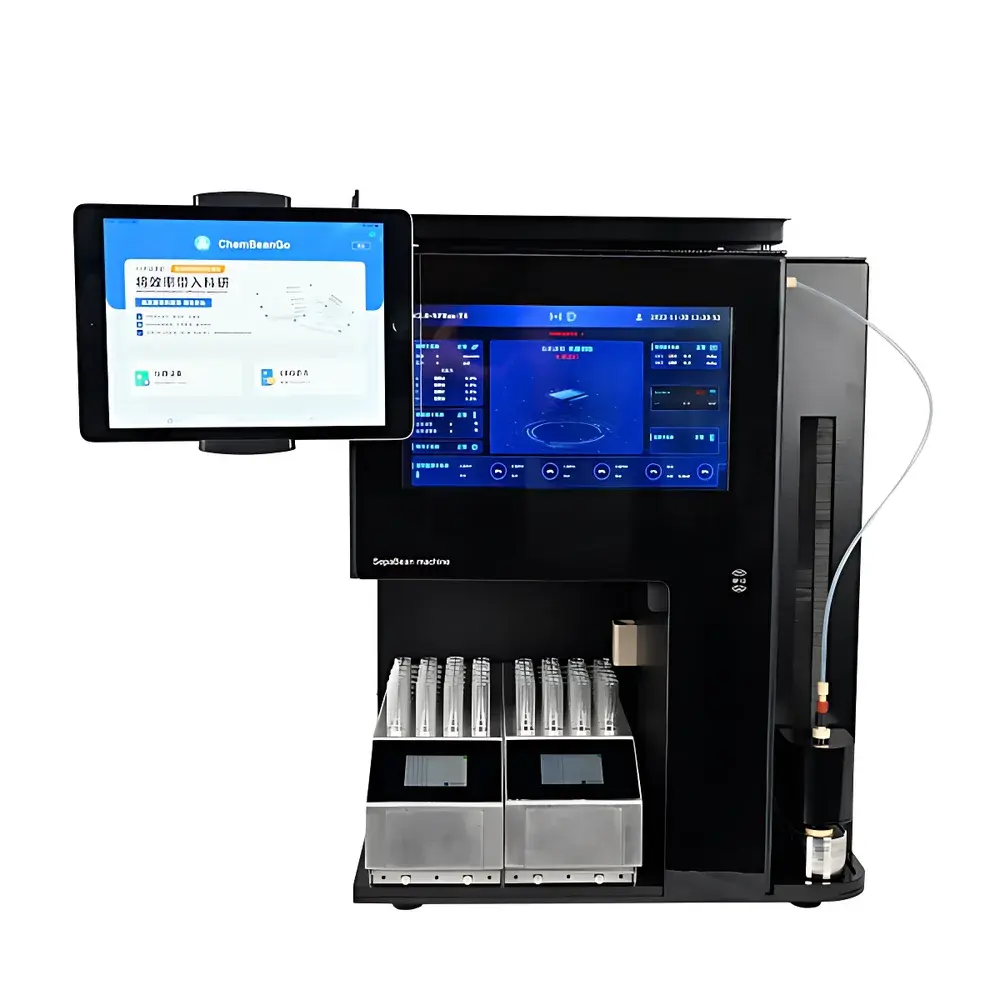
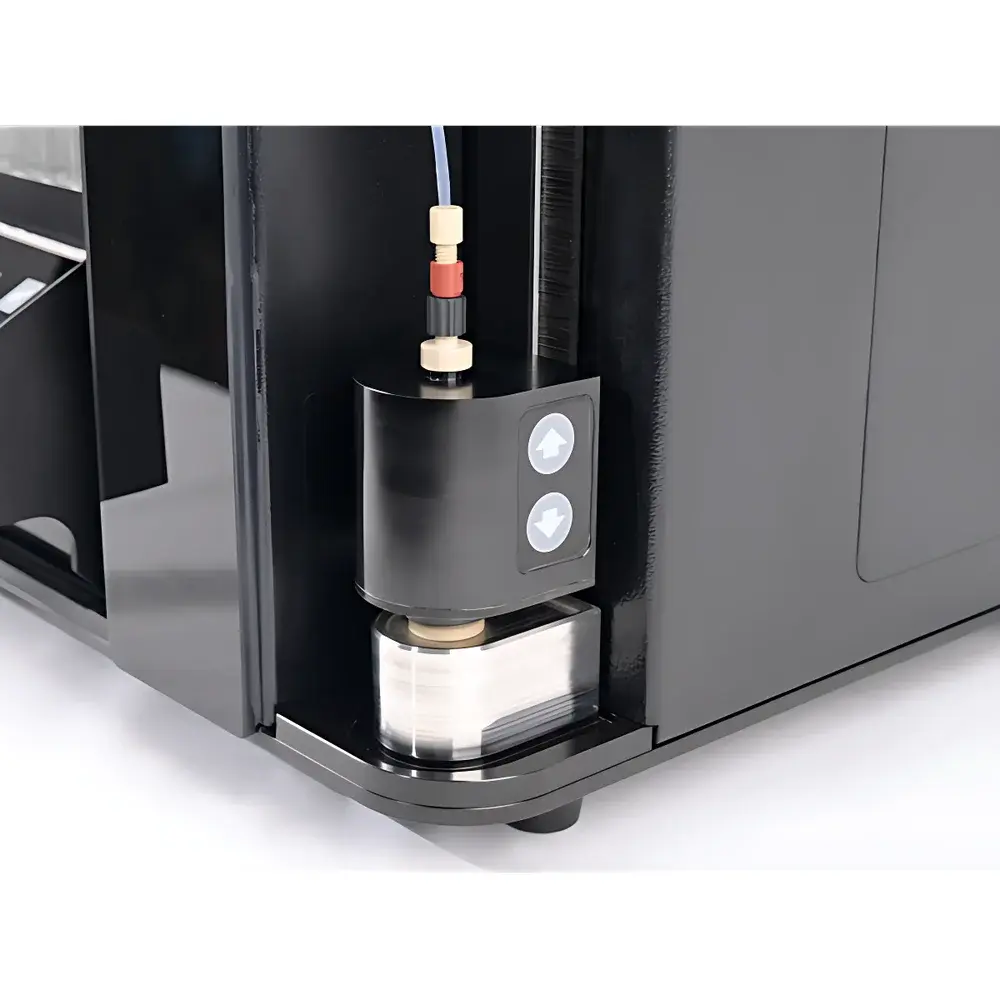
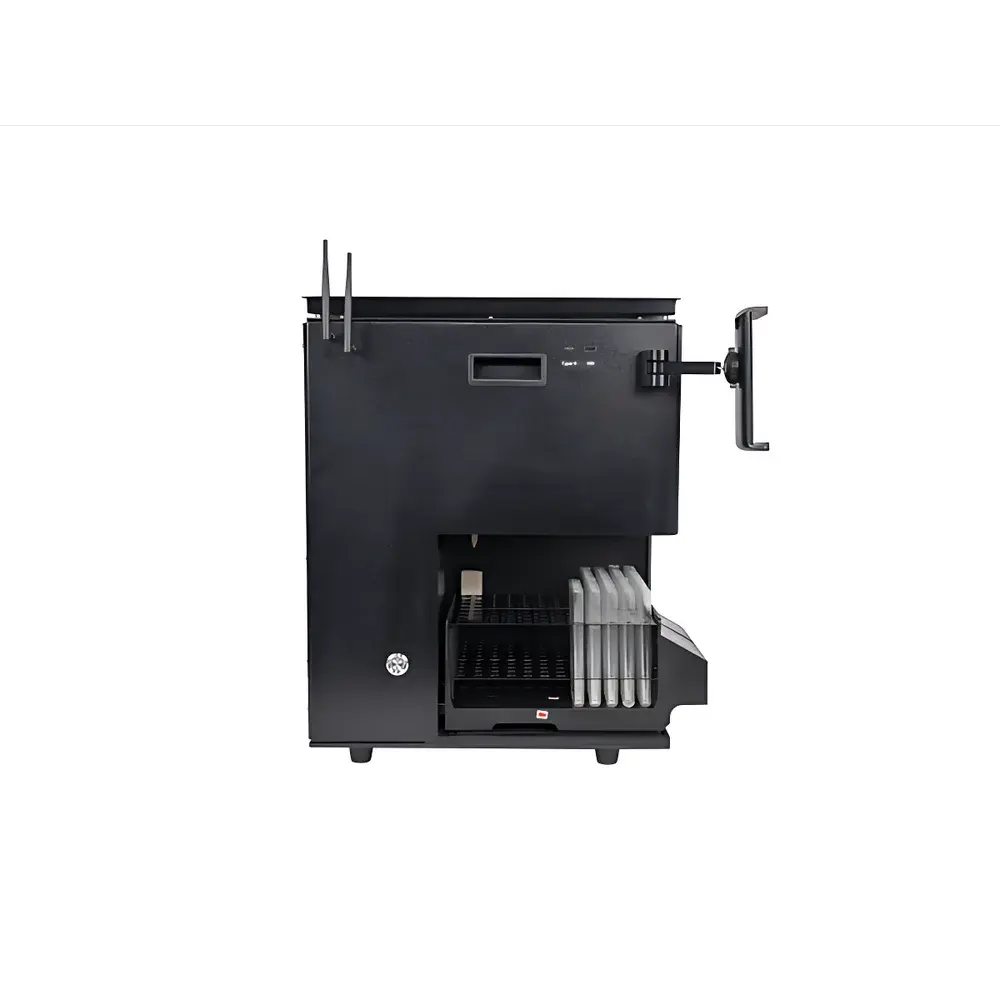
SepaBean Machine V2.0 Preparative Liquid Chromatography System
| Brand | Santai |
|---|---|
| Origin | Jiangsu, China |
| Manufacturer Type | Direct Manufacturer |
| Product Category | Domestic |
| Model | SepaBean Machine Standard Edition |
| Application Level | Laboratory Grade |
| Instrument Type | Medium-to-Low Pressure Preparative LC |
| Flow Rate Range | 0–200 mL/min |
| Flow Accuracy | RSD ≤ 2% |
| Flow Precision (Repeatability) | RSD ≤ 2% |
| Maximum Operating Pressure | 1.38 MPa (200 psi) |
| Wavelength Range | 200–800 nm |
| Wavelength Reproducibility | ±1 nm |
| Baseline Noise | ±5 × 10⁻⁵ AU |
| Data Acquisition Frequency | 10 Hz |
Overview
The SepaBean Machine V2.0 is a medium-to-low pressure preparative liquid chromatography (PLC) system engineered for high-reproducibility compound purification in academic, pharmaceutical, and fine chemical laboratories. Built upon a robust dual-pump gradient architecture with four independent solvent channels, it supports seamless switching between reversed-phase and normal-phase separation modes without manual reconfiguration. The system operates on classical liquid chromatographic principles—fractionation driven by differential partitioning of analytes across a stationary phase under controlled mobile-phase composition, flow rate, and detection wavelength. Its design prioritizes operational continuity, data integrity, and method portability—making it suitable for routine isolation of natural products, synthetic intermediates, and early-stage drug candidates where scalability from analytical to gram-scale prep is essential.
Key Features
- Quad-solvent delivery system enabling fully automated binary gradient formation and rapid polarity switching between RP and NP conditions
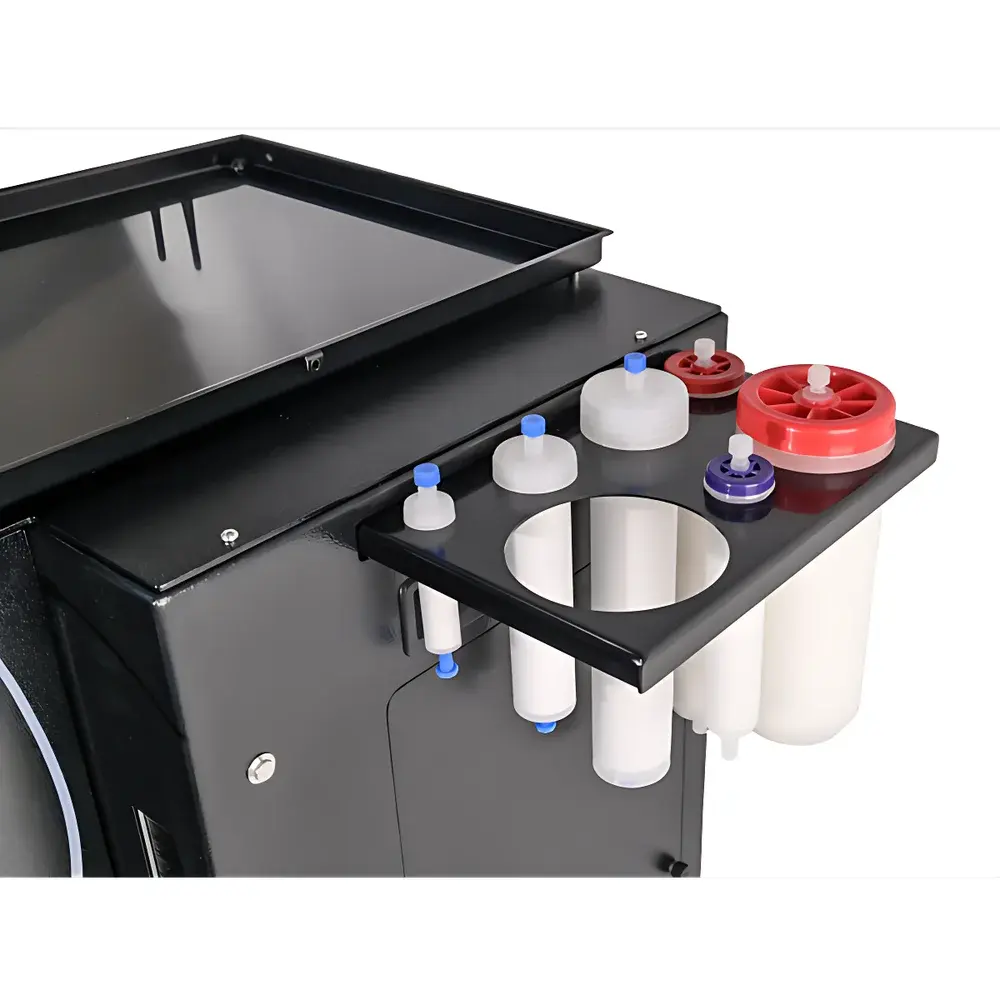
- Intelligent column rack accommodating preparative columns from 4 g to 330 g (ID 10–50 mm), equipped with RFID-based column identification for automatic method validation and parameter recall
- Flexible sample introduction: supports both liquid injection (via optional manual loop valve) and direct solid loading (e.g., crude extract slurry), minimizing pre-filtration steps
- DAD (Diode Array Detector) with full-spectrum acquisition (200–800 nm) and real-time peak purity assessment; optional ELSD integration available for non-UV-absorbing compounds
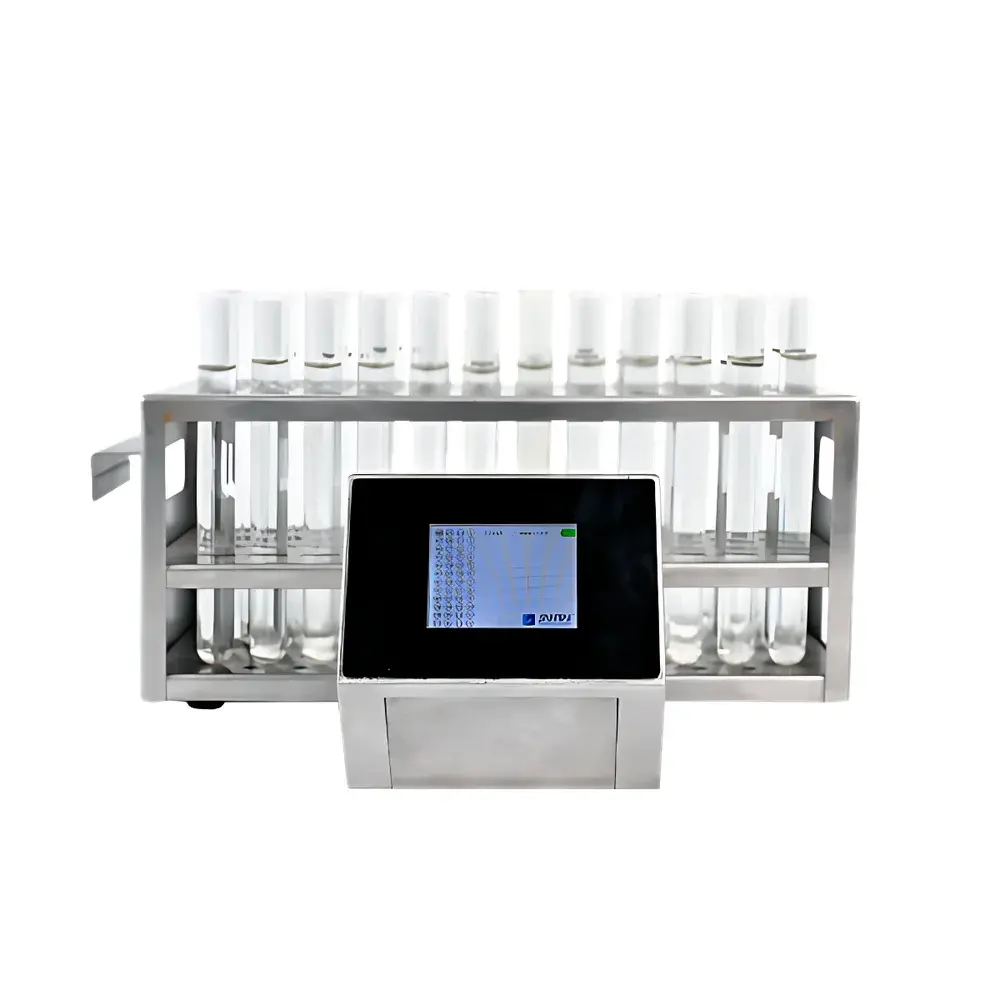
- Smart fraction collector with auto-calibrated tube rack recognition (standard configuration: 2 × 18 positions × 180 mm tubes); compatible with custom racks via user-defined geometry mapping
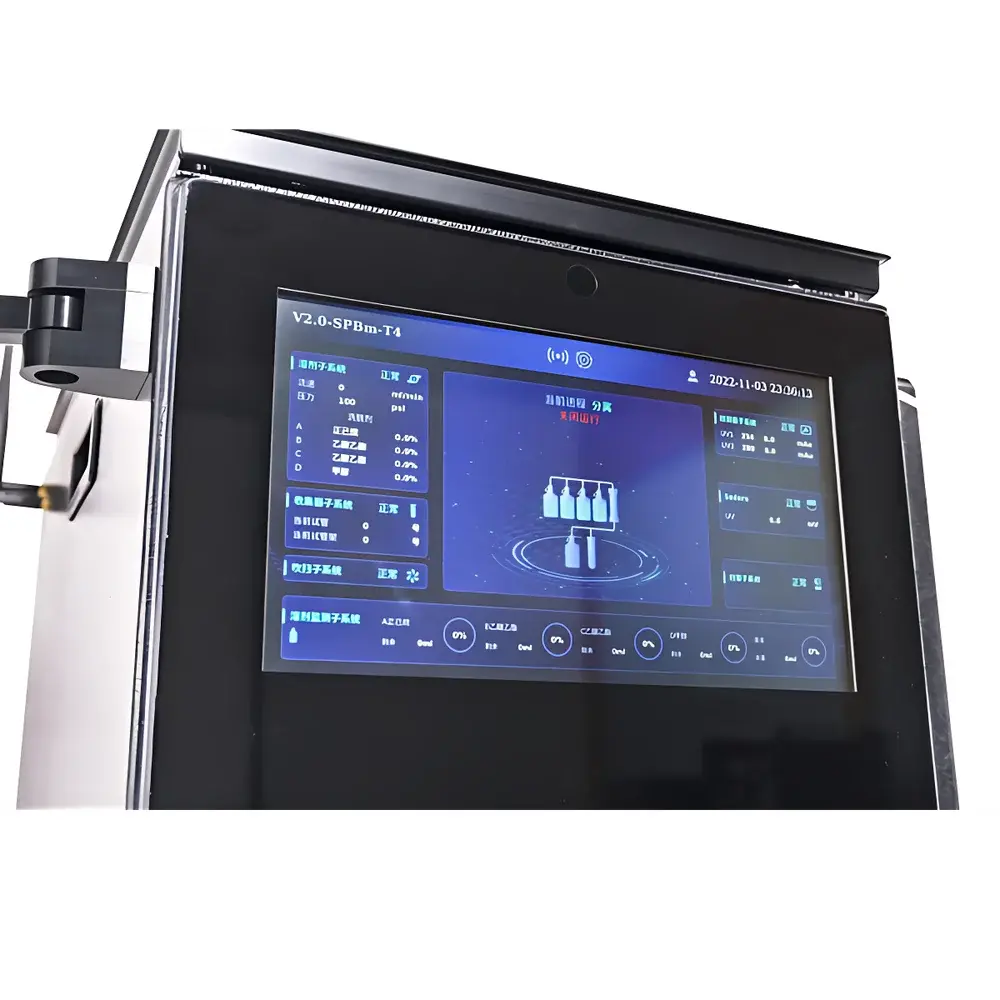
- 11.6-inch high-resolution capacitive touchscreen with embedded Linux-based control interface—no external PC required for standard operation
- Integrated safety subsystems: real-time pressure monitoring with configurable overpressure shutdown, solvent reservoir level sensing with low-level alerts, and leak-detection logic based on flow deviation thresholds
Sample Compatibility & Compliance
The SepaBean Machine V2.0 accommodates a broad range of sample matrices—including polar/nonpolar small molecules, peptides, alkaloids, flavonoids, and organometallic complexes—provided they are soluble in common LC-grade solvents (e.g., hexane, ethyl acetate, methanol, acetonitrile, water, TFA-modified buffers). Column compatibility spans silica, C18, amino, cyano, and diol phases. While not certified for GMP manufacturing environments, the system meets core functional requirements for GLP-compliant purification workflows: audit-trail-enabled method execution logging, electronic signature-ready user authentication (role-based access), and timestamped raw data archiving. It supports export of .csv and .cdf files compatible with third-party chromatographic software (e.g., Chromeleon, OpenLab CDS) for regulatory submission preparation per ICH Q2(R2) and USP .
Software & Data Management
The embedded firmware implements a network-aware distributed control architecture. When an instrument is occupied or offline, users may remotely view active method parameters, historical chromatograms, and collection maps via authenticated web portal access. Method templates can be downloaded, modified, and redeployed across any networked SepaBean unit—eliminating manual import/export. Fault-tolerant operation allows live method migration: if hardware failure occurs mid-run, the session state (gradient profile, current fraction index, UV trace buffer) is automatically transferred to a standby unit with identical column and detector configuration. All experimental metadata—including operator ID, timestamp, column lot number (via RFID), and environmental ambient logs—is stored in encrypted SQLite databases compliant with FDA 21 CFR Part 11 basic requirements (electronic records, audit trails, user permissions). The built-in method library receives biannual updates via secure OTA channel, ensuring continuous alignment with published isolation protocols from journals such as *Journal of Natural Products* and *Organic Process Research & Development*.
Applications
- Purification of natural product isolates from plant extracts, fungal cultures, or marine biomass
- Removal of synthetic by-products and catalyst residues during API intermediate refinement
- Chiral separation using polysaccharide-based preparative columns (e.g., Chiralpak AD-H, AS-H)
- Desalting and buffer exchange of peptide fractions prior to lyophilization
- Scale-up support for hit-to-lead medicinal chemistry campaigns requiring ≥10 mg quantities of purified analogs
- Quality control of reference standards for pharmacopoeial testing (e.g., EP, JP, USP monographs)
FAQ
Does the SepaBean Machine V2.0 support method transfer from analytical HPLC methods?
Yes—gradient time, %B, flow rate, and column dimensions can be scaled using standard PLC conversion equations (e.g., constant linear velocity or constant mass load approaches); the system includes a built-in scaling calculator.
Is the DAD module compliant with pharmacopeial wavelength accuracy requirements?
The ±1 nm wavelength reproducibility satisfies USP and EP 2.2.25 specifications for qualitative UV identification in preparative contexts.
Can the system operate unattended overnight?
Yes—equipped with automatic shutdown after run completion, solvent depletion protection, and email/SMS alerting (via optional gateway module) for critical events.
What file formats are generated during data acquisition?
Raw chromatograms (.cdf), peak tables (.csv), and collection logs (.json) are generated simultaneously; all are vendor-neutral and compatible with LIMS integration.
Is remote method development supported without physical access to the instrument?
Yes—web-based method editor allows full gradient programming, collection window definition, and detector parameter setup from any location; scheduled runs can be queued via calendar integration.



