
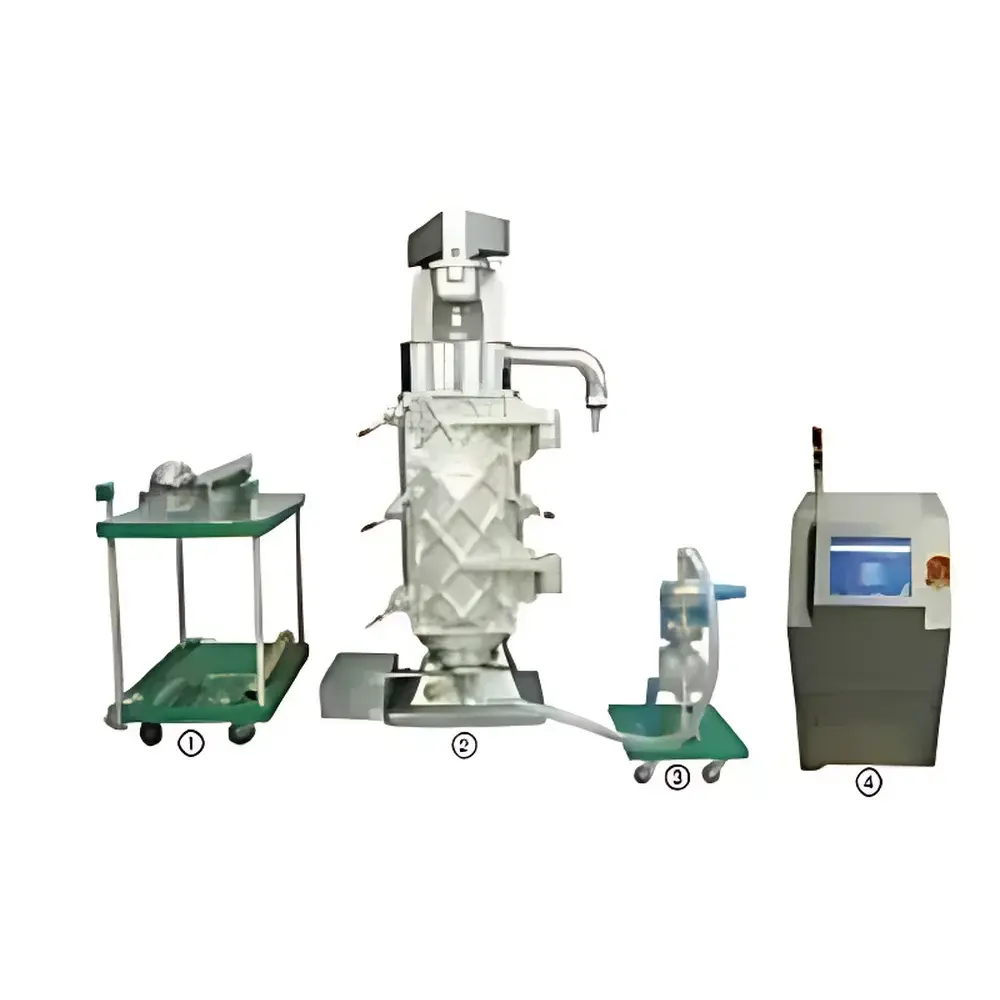
J-Series Tubular Continuous-Flow Centrifuge
| Origin | South Korea |
|---|---|
| Manufacturer Type | Authorized Distributor |
| Origin Category | Imported |
| Model | J-Series |
| Pricing | Available Upon Request |
Overview
The J-Series Tubular Continuous-Flow Centrifuge is an industrial-grade, high-efficiency separation system engineered for continuous processing of large-volume suspensions and emulsions in research laboratories and pilot-scale production environments. Operating on the principle of sedimentation under high centrifugal force (up to 18,000 × g), this tubular bowl centrifuge achieves precise phase separation through laminar flow dynamics within a vertically oriented, narrow-diameter rotating drum. Unlike batch centrifuges, the J-Series enables uninterrupted feed—sample introduction via integrated peristaltic or diaphragm pump—while simultaneously discharging clarified liquid (centrate) and concentrated solids (or multiple liquid phases) through dedicated outlets. Its design adheres to fundamental fluid mechanics governing particle settling velocity (Stokes’ law) and interfacial tension-driven liquid–liquid separation, making it particularly suitable for applications demanding consistent throughput, minimal operator intervention, and reproducible solid recovery.
Key Features
- Metal-clad chassis with reinforced structural integrity, engineered to withstand thermal cycling, ambient humidity fluctuations, and transient pressure surges during pump start-up and flow stabilization
- Dual-configurable rotor assembly: interchangeable tubular bowls optimized for either solid–liquid (two-phase) or liquid–liquid–solid (three-phase) separation, each featuring precision-machined internal geometry for controlled residence time distribution
- Integrated solids discharge mechanism enabling block-form cake collection—preserving structural integrity of sensitive biopolymers, microbial biomass, or crystalline precipitates for downstream lyophilization, solvent extraction, or analytical characterization
- Side-hinged access door with four independent mechanical interlocks compliant with EN 61000-6-2 and IEC 60204-1 safety standards; ensures full rotational stop before door release
- Threaded protective caps at both rotor shaft interface and bowl flange—preventing particulate ingress, lubricant contamination, and inadvertent contact during maintenance
- Intuitive LCD touch interface with real-time display of rotational speed (rpm), calculated RCF (×g), elapsed run time, and system status codes; supports programmable multi-step protocols with adjustable ramp rates
- Teflon®-lined inner surface of the tubular bowl—providing non-wetting, chemically inert, low-adhesion properties essential for rapid cleaning validation and minimizing cross-contamination between runs
- Acoustically damped enclosure achieving ≤68 dB(A) at 1 m distance; compact footprint (W × D × H: 720 × 650 × 1,350 mm) optimized for ISO Class 7 cleanroom integration or constrained laboratory spaces
Sample Compatibility & Compliance
The J-Series accommodates a broad range of feed streams including cell lysates, fermentation broths, crude oil emulsions, plant extract slurries, wastewater suspensions, and polymer dispersions. It maintains compatibility with aqueous, organic, and mixed-solvent systems—provided viscosity remains below 500 cP and particle size distribution falls within 0.5 µm to 200 µm. All wetted components meet USP Class VI biocompatibility requirements. The system supports GLP-compliant operation through audit-trail-enabled firmware (optional upgrade), aligning with FDA 21 CFR Part 11 data integrity guidelines when paired with validated networked data logging. Design conforms to ISO 13485:2016 for medical device-related separations and ASTM D4052 for density-based liquid phase quantification.
Software & Data Management
The embedded control firmware records timestamped operational parameters—including feed rate, rotor speed, temperature (via optional RTD sensor), and total processed volume—to internal flash memory (16 GB). Export options include CSV and PDF formats via USB 2.0 port. Optional Ethernet connectivity enables remote monitoring through secure HTTPS interface, supporting integration into LIMS platforms via RESTful API. Calibration logs, maintenance history, and user authentication events are retained for ≥12 months, fulfilling traceability requirements under ISO/IEC 17025 and EU Annex 11.
Applications
- Pharmaceutical Development: Recovery of monoclonal antibody aggregates, isolation of botanical active compounds (e.g., curcuminoids, saponins), concentration of mycelial biomass from fungal fermentations
- Environmental Engineering: Dewatering of tannery sludge, demulsification of petroleum hydrocarbon–water mixtures, removal of heavy metal–adsorbed activated carbon from industrial effluents
- Food & Beverage R&D: Clarification of cold-pressed olive oil, starch recovery from cereal processing liquors, separation of whey protein fractions from ultrafiltered dairy streams
- Chemical Synthesis: Catalyst recovery (e.g., Pd/C, Raney nickel), purification of pigment dispersions, phase-splitting in biphasic catalytic reactions (e.g., Suzuki coupling)
- Biotechnology: Harvest of microalgae for biofuel precursor extraction, clarification of viral vector suspensions prior to chromatographic polishing, concentration of exosome-enriched supernatants
FAQ
What is the maximum allowable feed solids concentration for stable continuous operation?
Typical upper limit is 15% w/w for most biological and colloidal suspensions; higher concentrations require pre-dilution or staged processing to prevent bowl clogging.
Can the J-Series be validated for GMP manufacturing use?
Yes—when equipped with IQ/OQ documentation packages, electronic signature capability, and 21 CFR Part 11-compliant software modules, it meets baseline requirements for Phase II/III clinical material processing.
Is rotor balancing required before each run?
No—the tubular bowl is factory-balanced and dynamically tested to ISO 1940 Grade G2.5; routine verification is only needed after major component replacement or impact event.
How often does the Teflon liner require replacement?
Under standard operating conditions and proper cleaning protocols, liner service life exceeds 5,000 operational hours or 10 years, whichever occurs first.
Does the system support CIP/SIP integration?
Yes—dedicated inlet/outlet ports and pressure-rated seals enable connection to centralized cleaning-in-place (CIP) systems; steam-in-place (SIP) compatibility requires optional high-temp gasket kit and thermal shielding.



