
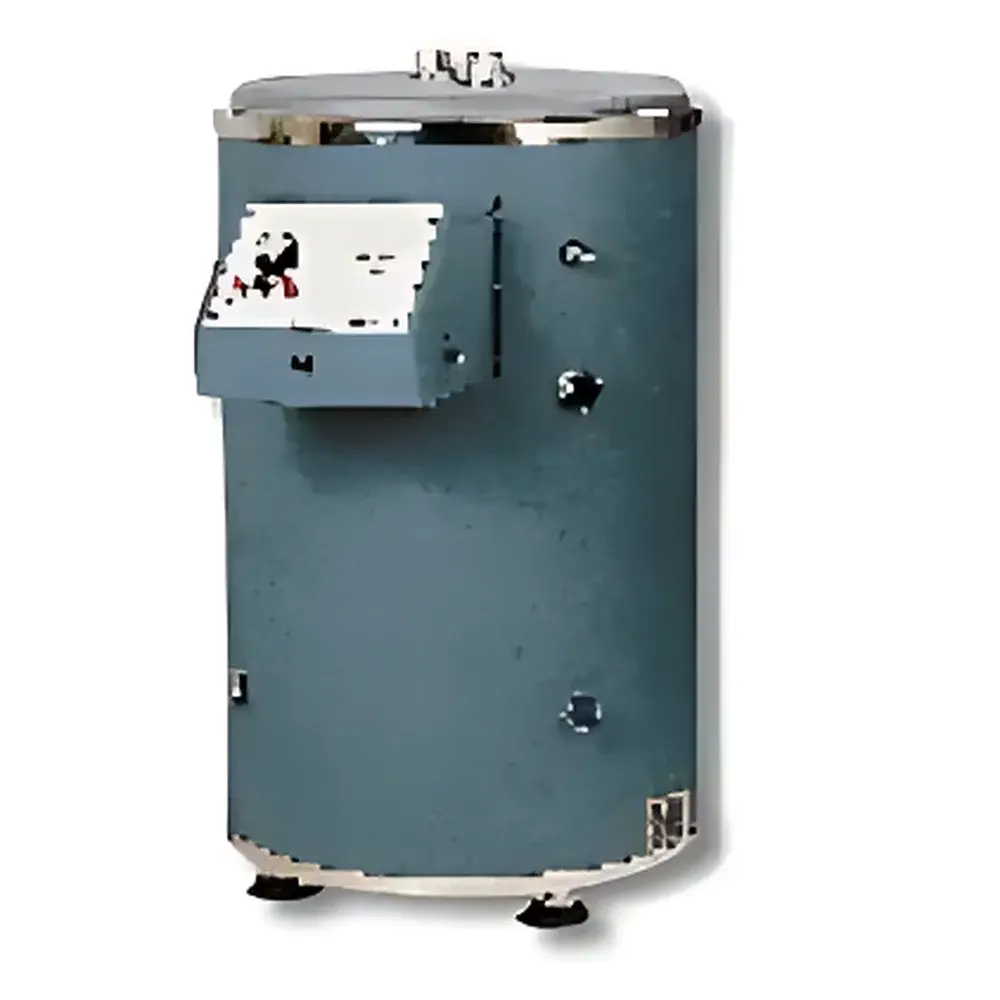
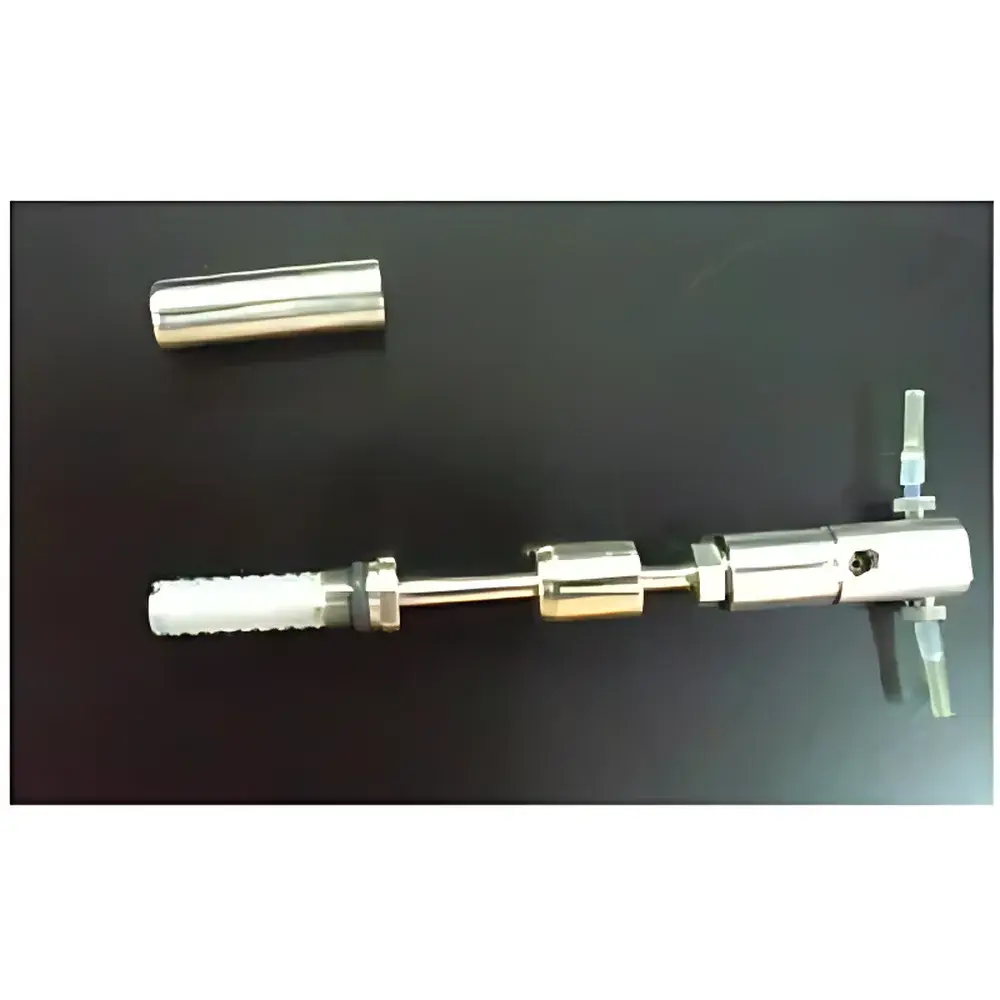
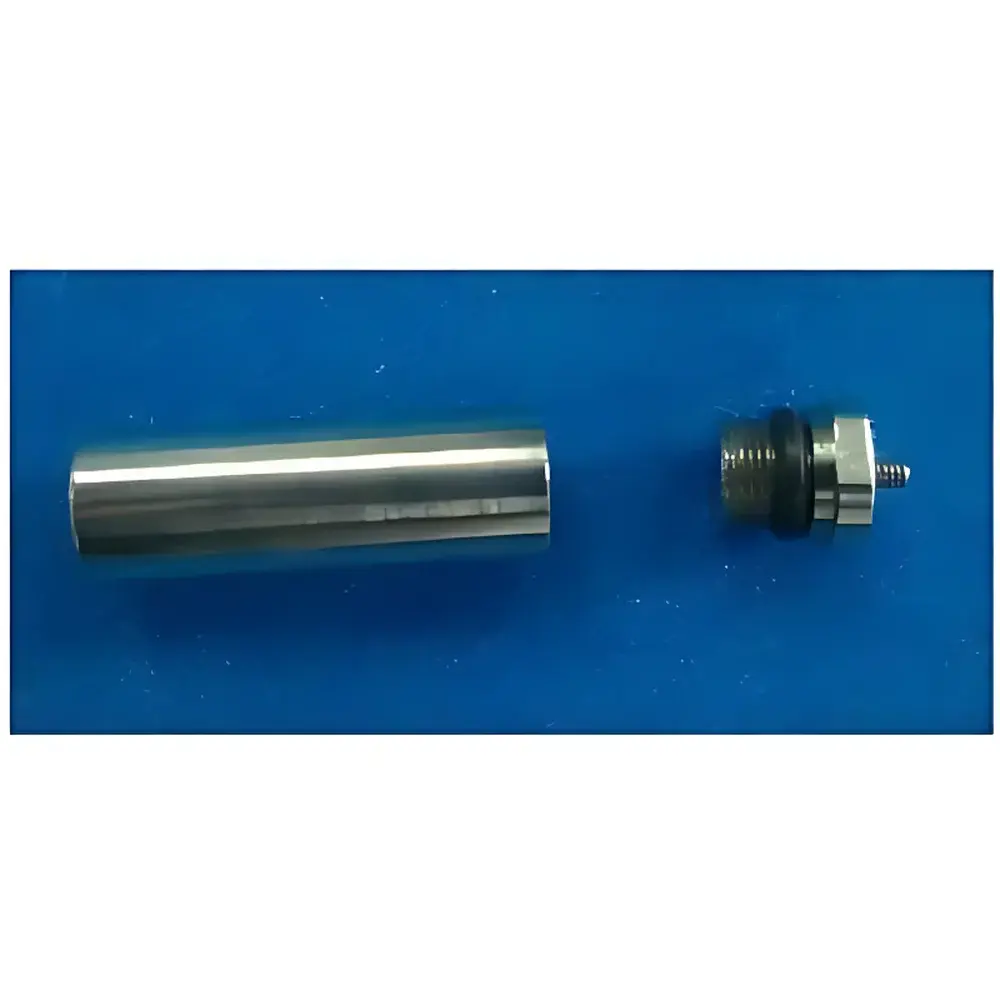
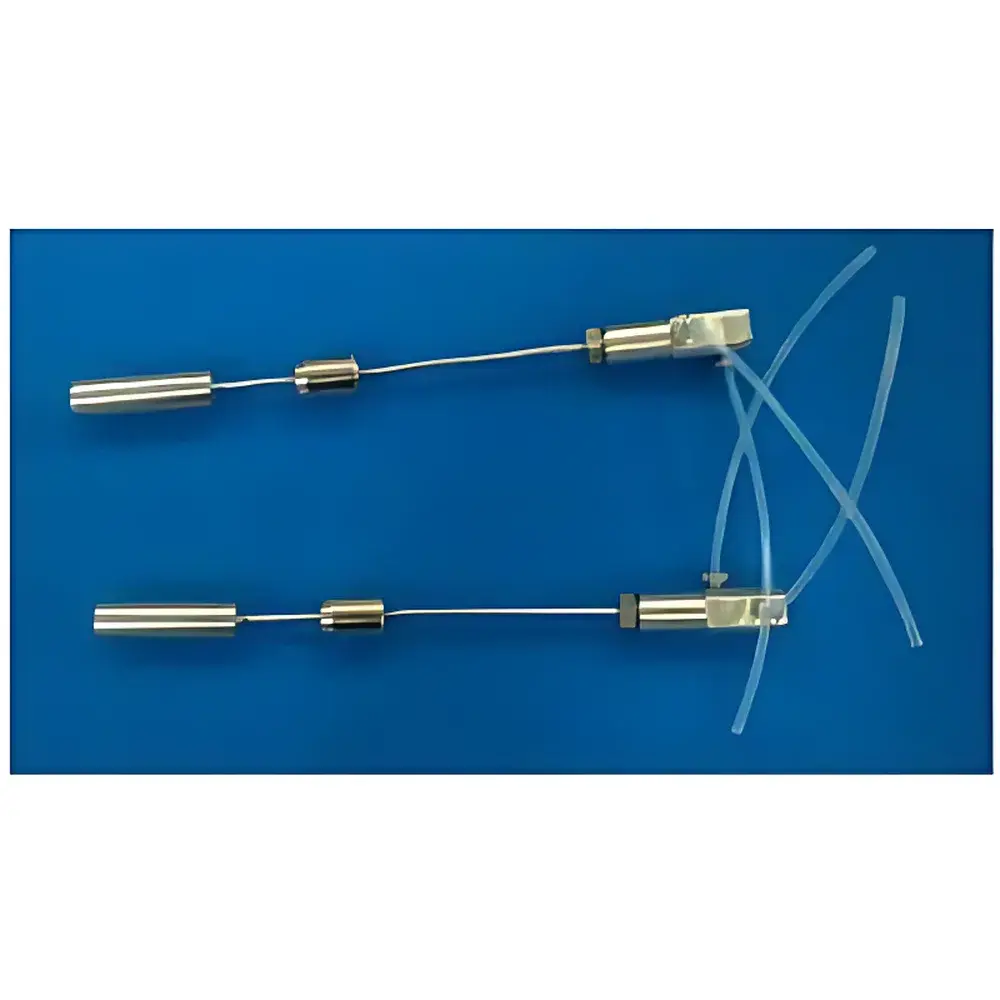
Setaram MS80 Microcalorimeter
| Origin | France |
|---|---|
| Manufacturer Type | Authorized Distributor |
| Origin Category | Imported Instrument |
| Model | MS80 |
| Pricing | Upon Request |
| Temperature Range | Ambient to 200 °C |
| Sample Cell Volume | 12.5 mL |
| Heat Flow Resolution | 0.08 µW |
| Baseline Noise | 0.1 µW |
| Configurations | 2-cell or 4-cell dual-isothermal design |
| Compatible Cell Types | Standard, Vacuum, Gas-Circulation, Liquid Heat Capacity, Solid Heat Capacity, Joule Calibration, and Mixing Cells |
Overview
The Setaram MS80 Microcalorimeter is the highest-sensitivity instrument in the Calvet calorimetry product line, engineered for ultra-low-heat-flow detection in isothermal and quasi-isothermal modes. Based on the three-dimensional symmetric Calvet sensor architecture—comprising concentric thermopile rings surrounding the sample and reference cells—the MS80 achieves exceptional thermal sensitivity and long-term baseline stability without requiring active feedback control. Its core measurement principle relies on absolute heat flow quantification via integrated thermopile voltage output, directly proportional to the temperature gradient across the sensor’s radial thermal resistance. This passive, zero-balance design eliminates drift artifacts common in power-compensation systems and enables reliable detection of heat flows as low as 0.08 µW—critical for studying slow kinetic processes such as battery self-discharge, catalytic surface aging, microbial metabolic heat production, and exothermic decomposition of reactive powders. The instrument operates over a controlled temperature range from ambient to 200 °C, with precise isothermal regulation maintained via Peltier-based thermal management and high-resolution Pt100 sensing.
Key Features
- Ultra-low detection limit: 0.08 µW heat flow resolution with <0.1 µW RMS baseline noise over 24-hour acquisitions
- Dual-isothermal configuration available in 2-cell or 4-cell variants, enabling simultaneous reference compensation and multi-sample screening
- Modular cell architecture supporting seven standardized cell types—including vacuum-rated, gas-circulation, liquid/solid heat capacity, mixing, and Joule calibration cells—for broad experimental flexibility
- Robust Calvet geometry ensures >95% enthalpy capture efficiency, minimizing radiative and convective losses typical in differential scanning calorimeters
- Integrated temperature control with ±0.01 °C stability at setpoint, validated per ISO 11357-1 and ASTM E1269 protocols
- Hermetically sealed furnace chamber with inert gas purge capability (N₂, Ar) for oxygen-sensitive measurements
Sample Compatibility & Compliance
The MS80 accommodates diverse physical forms—including solids (powders, electrodes, thin films), liquids (electrolytes, solvents, biological media), gases (via circulation cells), and heterogeneous mixtures—within its 12.5 mL nominal cell volume. Sample mass ranges from sub-milligram quantities (e.g., catalysts) to full 15–100 mL volumes depending on cell type. All cell designs comply with ISO/IEC 17025 requirements for metrological traceability, and thermal calibration is performed using certified Joule-effect standards traceable to NIST SRM 3451. The system supports GLP-compliant operation through configurable audit trails, electronic signatures, and data integrity controls aligned with FDA 21 CFR Part 11 Annex 11 expectations.
Software & Data Management
Acquisition and analysis are managed via Setaram’s C80/MS80-specific CALISTO software suite, which provides real-time heat flow monitoring, automated baseline subtraction, kinetic modeling (e.g., ASTM E698 Ozawa, Friedman), and thermodynamic integration (ΔH, Cp). Raw data are stored in vendor-neutral HDF5 format with embedded metadata (temperature, time, cell ID, operator, calibration history). Export options include CSV, Excel, and ASCII for third-party analysis in MATLAB, Origin, or Python-based scientific stacks. Software validation documentation (IQ/OQ/PQ) is available upon request to support regulated laboratory environments.
Applications
- Battery R&D: Quantifying self-discharge rates, SEI growth kinetics, and thermal runaway onset thresholds in Li-ion and solid-state cells
- Pharmaceutical stability: Detecting low-level exotherms during polymorphic transitions or moisture-induced degradation
- Catalysis science: Measuring adsorption/desorption enthalpies and surface reaction heats under controlled gas atmospheres
- Materials safety: Assessing thermal stability of nanomaterials, metal-organic frameworks (MOFs), and energetic compounds
- Life sciences: Monitoring real-time metabolic heat output from bacterial cultures, yeast fermentations, or tissue explants
- Geochemistry: Studying hydration/dehydration enthalpies of clays and cementitious systems
FAQ
What distinguishes Calvet calorimetry from DSC in microcalorimetric applications?
Calvet geometry captures >95% of total heat flow via omnidirectional thermopile integration, enabling absolute quantification without baseline extrapolation—unlike DSC, which measures relative temperature differences and requires careful baseline modeling.
Can the MS80 perform both isothermal and temperature-scanning experiments?
Yes—while optimized for high-stability isothermal mode, it supports linear heating ramps (0.01–2 °C/min) with active temperature tracking and dynamic heat flow correction.
Is remote operation supported for unattended long-duration runs?
Yes—CALISTO includes scheduled start/stop, email alerting on completion or fault conditions, and secure SSH-enabled access for centralized lab deployment.
How is calibration verified across the operating temperature range?
Joule calibration is performed at ≥3 points (25 °C, 100 °C, 200 °C) using NIST-traceable resistive heaters; cell-specific heat capacity calibrations are conducted with sapphire or synthetic ruby standards per ISO 11357-4.
Does the system meet regulatory requirements for pharmaceutical QC labs?
With optional 21 CFR Part 11 compliance package (electronic signatures, audit trail, role-based access), the MS80 satisfies GMP/GLP data integrity mandates for stability-indicating assays and formulation development.



