
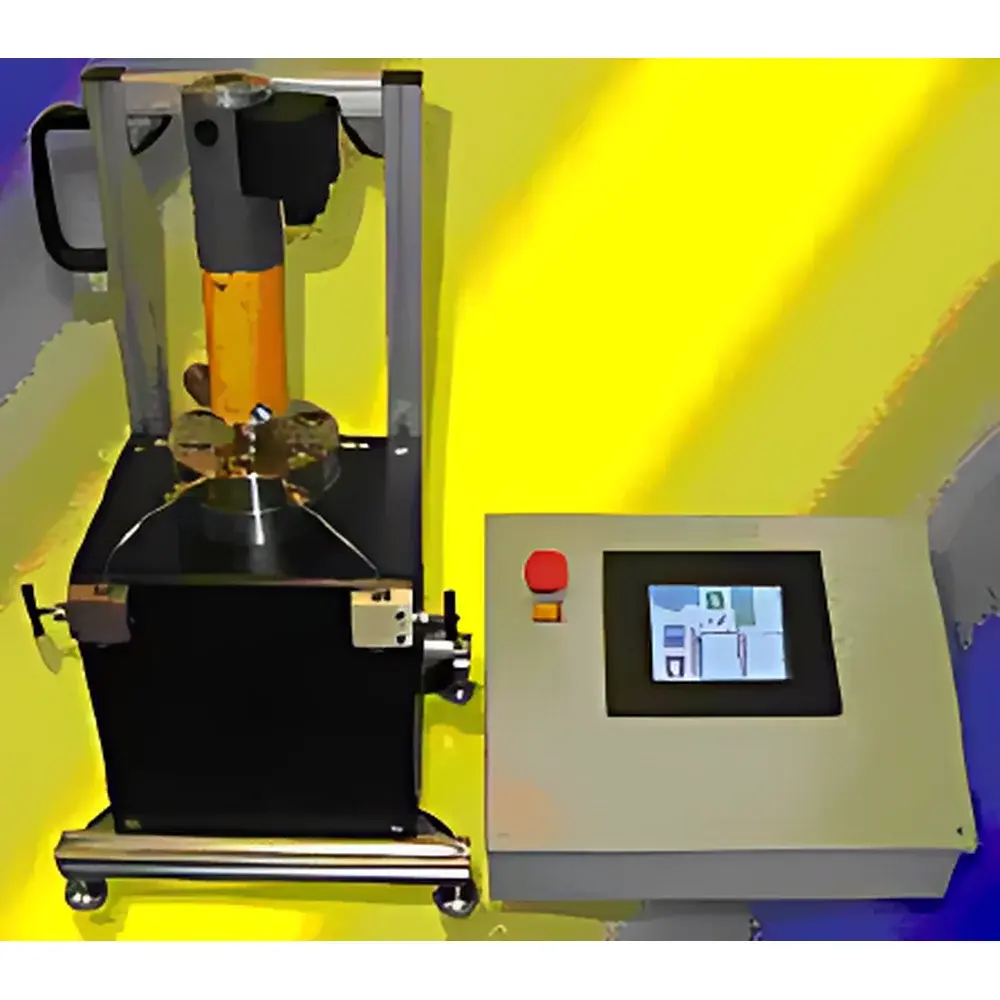
SFT HPR Series High-Temperature High-Pressure Chemical Reactor
| Brand | SFT |
|---|---|
| Origin | USA |
| Manufacturer Type | Authorized Distributor |
| Product Origin | Imported |
| Model | HPR Series |
| Max. Temperature | 350 °C |
| Max. Pressure | 68.9 MPa (10,000 psi) |
| Reaction Volume | 50 mL to 8 L |
| Stirring | Magnetic Drive Dual-Impeller |
| Safety | ASME-Compliant Vessel with Rupture Disc |
| Control Interface | Color Touchscreen with Closed-Loop PID Temperature & Speed Control |
| Data Output | RS-232 Serial Port |
| Optional Accessories | Sight Glass, Feed/Withdrawal Ports, Cooling Coil, Sample Loop, Reagent Addition Module |
| Compliance | Designed per ASME BPVC Section VIII Div. 1 |
| Typical Applications | Catalytic Synthesis, Hydrogenation, Oxidation, Polymerization, Supercritical Fluid Extraction (SFE), Isomerization, Dehydrogenation |
Overview
The SFT HPR Series High-Temperature High-Pressure Chemical Reactor is an engineered platform for conducting controlled chemical transformations under extreme thermodynamic conditions—specifically, up to 350 °C and 68.9 MPa (10,000 psi). Built upon rigorous pressure vessel standards, the system employs a robust ASME BPVC Section VIII Division 1–compliant design, ensuring structural integrity and operational safety during prolonged exposure to supercritical and near-critical process environments. Its core function is to enable precise kinetic and thermodynamic investigation of heterogeneous catalysis, solvent-free synthesis, and supercritical fluid–mediated reactions—including but not limited to hydrogenation, oxidation, polymerization, and plant-derived compound extraction. Unlike batch autoclaves with passive heating or manual pressure regulation, the HPR Series integrates active, closed-loop control of temperature, agitation speed, and real-time pressure monitoring—making it suitable for reproducible method development aligned with GLP and early-stage GMP process validation requirements.
Key Features
- ASME-certified pressure vessels available in two standard configurations: bolted closure rated to 2350 psi / 350 °C, and manually sealed variant rated to 10,000 psi / 200 °C—custom designs accommodate higher thermal–mechanical envelopes upon engineering review.
- Magnetic drive dual-impeller stirring system eliminates dynamic seals, preventing leakage and cross-contamination while maintaining torque stability across full operating temperature and pressure ranges.
- Integrated color touchscreen interface provides simultaneous access to PID-controlled heating, programmable ramp/soak temperature profiles, adjustable agitation speed (with feedback verification), and real-time pressure readout calibrated to NIST-traceable transducers.
- Factory-installed rupture disc assembly serves as primary overpressure protection, sized and certified per ASME requirements; optional secondary relief valves and pressure interlocks are available for enhanced safety layering.
- Modular architecture supports seamless integration with auxiliary systems—gas delivery manifolds, liquid reagent dosing modules, inline IR or UV-Vis flow cells, and downstream cold traps or fraction collectors—via standardized 1/4″ VCR or Swagelok fittings.
- Benchtop footprint and compact vertical orientation allow straightforward installation inside standard laboratory fume hoods (minimum 900 mm depth); all external surfaces are electropolished 316 stainless steel for corrosion resistance and cleanability.
Sample Compatibility & Compliance
The HPR Series accommodates a broad spectrum of chemically aggressive feedstocks—including aqueous, organic, and supercritical CO₂–based reaction media—as well as solid catalysts, powdered botanical extracts, and viscous polymer precursors. Vessel wetted parts consist exclusively of ASTM A182 F316 stainless steel, Inconel 718 fasteners, and Kalrez® 6375 or Chemraz® 585 O-rings—validated for compatibility with halogenated solvents, strong acids (e.g., HCl, H₂SO₄ ≤ 30 wt%), and oxidizing agents (e.g., H₂O₂, O₂ at elevated partial pressures). All units ship with full ASME U-stamp documentation, material test reports (MTRs), and hydrostatic test certification. The system meets mechanical safety requirements of ISO 10218-1 and supports audit readiness for FDA 21 CFR Part 11–compliant data logging when paired with validated third-party acquisition software.
Software & Data Management
While the embedded controller handles local operation via its touchscreen GUI, raw sensor data—including temperature (±0.5 °C), pressure (±0.25% FS), and rotational speed (±1 RPM)—are streamed continuously via RS-232 serial output. This interface enables direct acquisition into LabVIEW, MATLAB, or custom Python-based SCADA platforms using standard Modbus RTU or ASCII protocols. Timestamped datasets include event markers for setpoint changes, alarm triggers, and manual intervention points—facilitating traceability in regulated environments. Optional Ethernet gateway modules support OPC UA integration for enterprise-level MES connectivity. Audit trails, user access logs, and electronic signature capabilities require external software validation per ALCOA+ principles.
Applications
- Supercritical fluid extraction (SFE) of bioactive compounds from botanical matrices—optimized for terpenes, flavonoids, and alkaloids using tunable CO₂ density.
- Kinetic studies of heterogeneous catalytic reactions (e.g., Pd/C-mediated hydrogenations) under industrially relevant pressure–temperature regimes.
- Solvent-free condensation polymerizations requiring extended residence times above 250 °C and >50 MPa.
- Oxidative degradation pathway analysis of pharmaceutical intermediates under pressurized O₂ or air atmospheres.
- Hydrothermal carbonization and lignin depolymerization research in subcritical water media.
- Teaching laboratories performing advanced physical chemistry experiments on phase behavior, critical point determination, and reaction calorimetry.
FAQ
What pressure and temperature ratings apply to the standard HPR vessel configurations?
Standard bolted vessels are rated to 2350 psi and 350 °C; manually sealed variants operate up to 10,000 psi and 200 °C. Custom ASME-stamped vessels exceeding these limits are available subject to engineering review and extended lead time.
Is the system compatible with corrosive reagents such as hydrochloric acid or hydrogen peroxide?
Yes—wetted materials (316 SS, Inconel 718, Kalrez® 6375) have been verified for intermittent exposure to ≤30 wt% HCl and ≤35 wt% H₂O₂ below 150 °C. Continuous operation with aggressive media requires application-specific material review.
Can the reactor be integrated with online analytical instrumentation?
Yes—standard 1/4″ VCR ports and optional flanged interfaces support coupling to FTIR, Raman, or GC-MS sampling loops. Pressure-rated capillary tubing and back-pressure regulators are recommended for continuous flow-through analysis.
Does the system support automated reagent addition during a reaction?
An optional reagent addition module provides syringe-pump–driven metering with pressure-compensated injection, programmable via the touchscreen or external serial command.
What documentation is provided for regulatory compliance?
Each unit ships with ASME U-stamp nameplate, hydrotest certificate, MTRs for all pressure-retaining components, and a Factory Acceptance Test (FAT) report. IQ/OQ protocol templates are available upon request for GxP-aligned qualification.



