
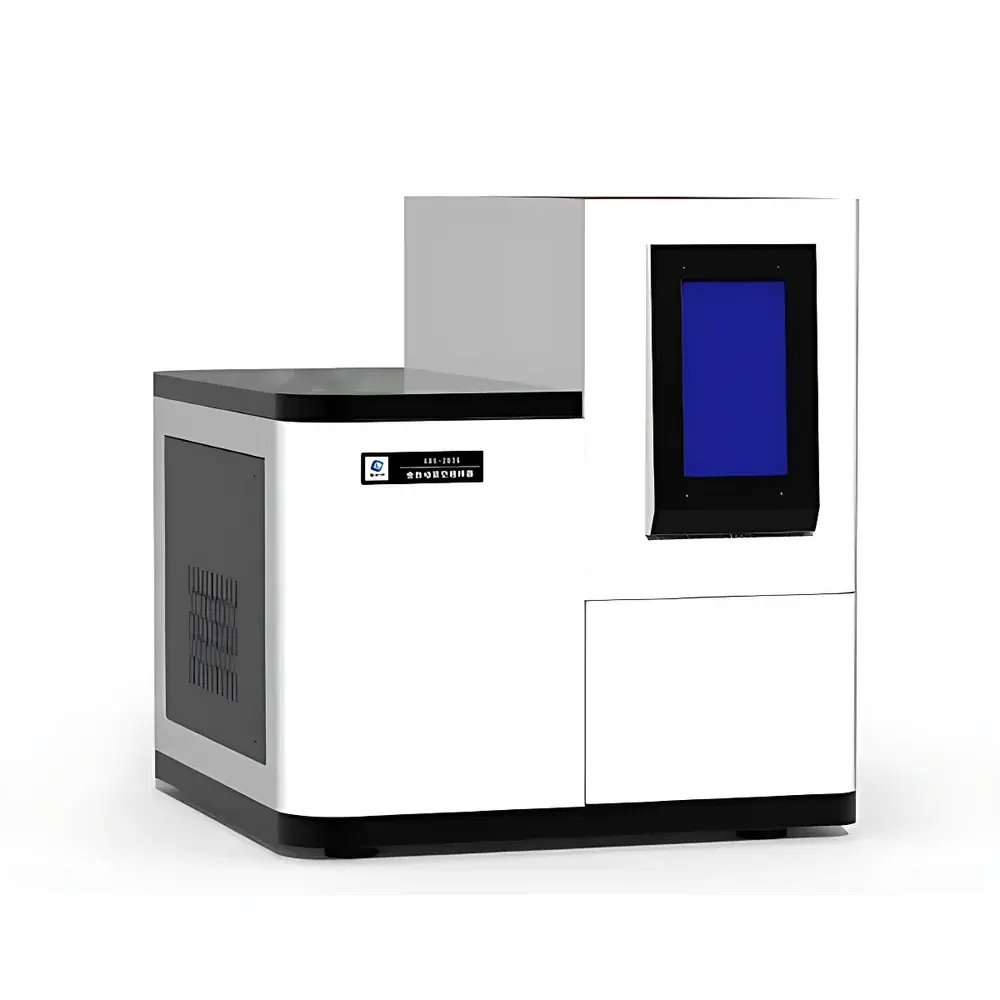
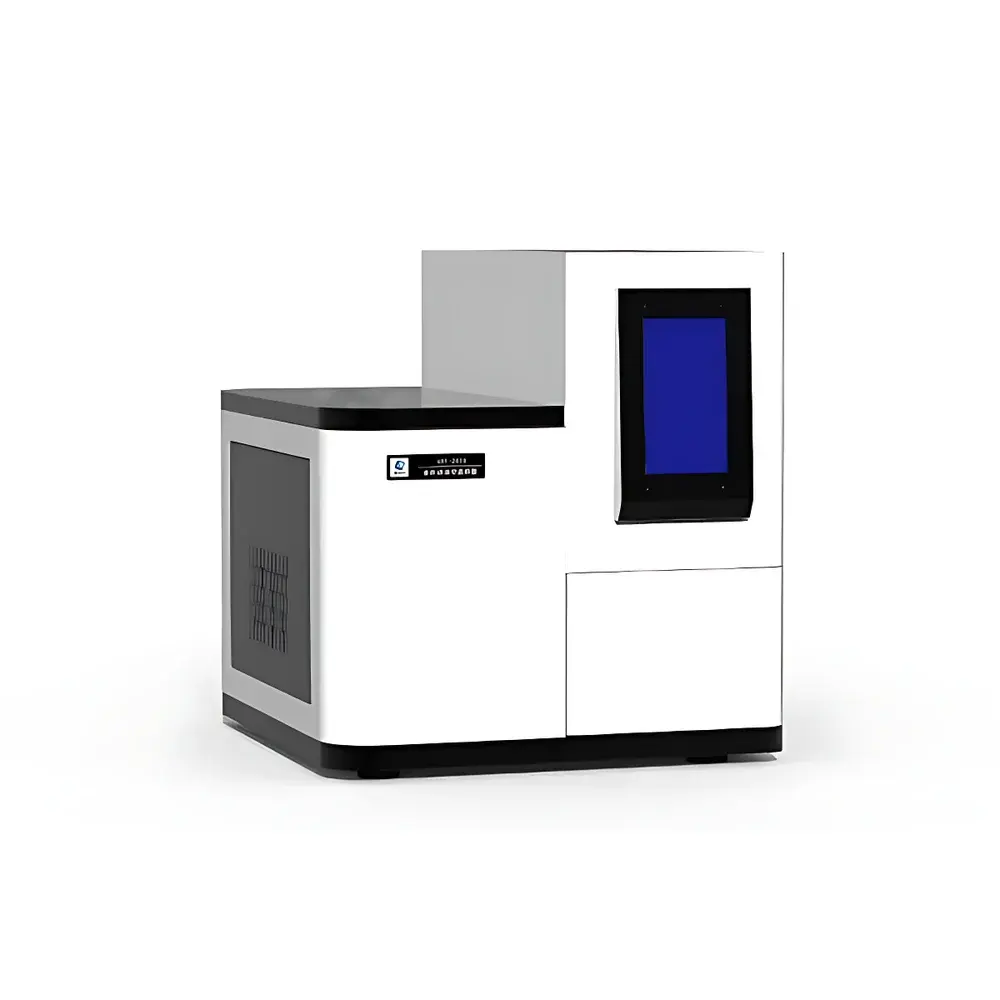
Shandong Luchuang AHS-2036 Fully Automated Static Headspace Sampler
| Brand | Shandong Luchuang |
|---|---|
| Origin | Shandong, China |
| Manufacturer Type | Direct Manufacturer |
| Instrument Type | Static Headspace Sampler |
| Automation Level | Fully Automatic |
| Sample Vial Heating Range | Ambient to 260 °C |
| Valve Heating Range | Ambient to 260 °C |
| Loop Volume | 1 mL |
| Temperature Control Accuracy | ±0.1 °C |
| Vial Capacity | 30/36 positions |
| Vial Size | 20 mL |
Overview
The Shandong Luchuang AHS-2036 Fully Automated Static Headspace Sampler is an engineered solution for high-throughput, trace-level volatile organic compound (VOC) analysis in compliance with standardized headspace–gas chromatography (HS-GC) methodologies. It operates on the principle of static headspace equilibrium: solid or liquid samples are sealed in thermostatted vials, heated to a defined temperature to establish vapor-phase partitioning of analytes, and the equilibrated headspace gas is transferred via pressurized positive displacement into a GC inlet. This technique eliminates matrix interference, minimizes contamination risk, and ensures robust quantitation of volatiles at sub-ppb concentrations—critical for environmental, forensic, pharmaceutical, and food safety applications.
Key Features
- 7-inch capacitive touchscreen interface with intuitive workflow navigation, enabling one-touch method launch and real-time parameter adjustment without software dependency.
- Full automation sequence: vial tray positioning, precise temperature ramping, pressure-controlled equilibration, loop filling, GC injection, post-injection valve/line purging, and automatic vial exchange—all executed without operator intervention.
- 36-position sample carousel with overlapping heating capability: multiple vials undergo independent thermal equilibration cycles simultaneously, reducing total analysis cycle time by up to 40% compared to sequential-only systems.
- Integrated safety architecture: overtemperature cut-off (±0.5 °C deviation threshold), ground-fault circuit interruption (GFCI), real-time electrical continuity monitoring, and self-diagnostic power-up initialization with fault localization reporting.
- Patented dual-stage purge system (ZL 2021 2 1874159.8): programmable reverse-flow flush of the sampling valve and transfer line between injections, eliminating carryover for high-sensitivity multi-matrix workflows.
- Heated, inert flow path: all critical components—including the 1 mL quantitative loop, sampling valve, and transfer tubing—are housed within a thermally insulated oven zone (up to 260 °C), eliminating cold spots and preventing analyte condensation or adsorption.
- Electric motor-driven actuation: no external carrier gas or compressed air required for mechanical operations—reducing infrastructure dependencies and operational hazards.
- Flexible injection modes: single-vial repeated injections, single-shot per vial, or multi-vial batch sequencing—configurable per method to optimize precision or throughput.
Sample Compatibility & Compliance
The AHS-2036 accommodates standard 20 mL crimp-top headspace vials (customizable for 10 mL, 50 mL, or 100 mL formats) and accepts both liquid and solid matrices—including aqueous solutions, soils, sediments, biological tissues, and packaged foodstuffs. Its thermal control stability (<±0.5 °C) and repeatability (RSD <1.0% for 100 ppm ethanol in water) meet the performance requirements of key regulatory methods: HJ 679–2013, HJ 741–2015, HJ 1067–2019, HJ 642–2013, GB/T 5750.8–2006, and GA/T 842–2019. While not certified to ISO/IEC 17025 or FDA 21 CFR Part 11 out-of-the-box, its audit-ready logging (timestamped event records, parameter change history, and error codes) supports GLP/GMP-aligned validation protocols when deployed with compliant chromatography data systems.
Software & Data Management
The instrument operates autonomously via embedded firmware; no PC is required for basic operation. Optional Ethernet or RS-232 connectivity enables bidirectional communication with third-party GCs and chromatography data systems (CDS). Synchronization triggers include TTL pulse output for GC start, analog voltage signals for status feedback, and digital handshake protocols for method coordination. All run logs—including vial ID, equilibration time, pressure setpoint, loop fill duration, and thermal deviation alerts—are stored internally with UTC timestamps and exportable via USB. When integrated with validated CDS platforms (e.g., OpenLab CDS, Chromeleon, or Empower), the AHS-2036 supports electronic signature-capable method locking and full 21 CFR Part 11 audit trails via external server configuration.
Applications
- Environmental testing: quantification of BTEX (benzene, toluene, ethylbenzene, xylenes), chlorinated solvents, and aldehydes in soil, groundwater, and wastewater per EPA Method 502.2 and Chinese HJ series standards.
- Forensic toxicology: blood alcohol concentration (BAC) determination per GA/T 842–2019, including calibration verification with internal standards (e.g., n-propanol).
- Pharmaceutical residual solvent analysis: Class 2 and 3 solvents (e.g., dichloromethane, acetone, ethyl acetate) in drug substances and products per ICH Q2(R2) and USP <467>.
- Food & beverage quality control: detection of off-flavor compounds (e.g., geosmin, 2-methylisoborneol), fermentation volatiles, and packaging migrants at low-ppb levels.
- Materials testing: VOC emissions profiling from adhesives, coatings, and polymer composites under controlled thermal desorption conditions.
FAQ
Is the AHS-2036 compatible with Agilent, Thermo Fisher, and Shimadzu GC systems?
Yes—it includes universal mechanical and electrical interfaces for all major GC models, with configurable trigger logic and voltage-level matching.
Can the 1 mL loop be replaced with alternative volumes?
Yes—0.5 mL, 2 mL, and 5 mL loops are available as factory-installed options; custom loop calibration files are provided.
Does the system support method validation per ICH guidelines?
The hardware meets critical parameters (precision, accuracy, linearity) specified in ICH Q2(R2); full validation requires user-executed IQ/OQ/PQ protocols using reference standards.
What maintenance intervals are recommended for long-term reliability?
Valve seal replacement every 10,000 injections; quarterly verification of temperature uniformity across the vial block and loop oven using NIST-traceable probes.
Is remote monitoring or control possible?
Basic status monitoring (run progress, error flags) is supported via Modbus TCP over Ethernet; full remote method editing requires integration with a validated CDS platform.





