
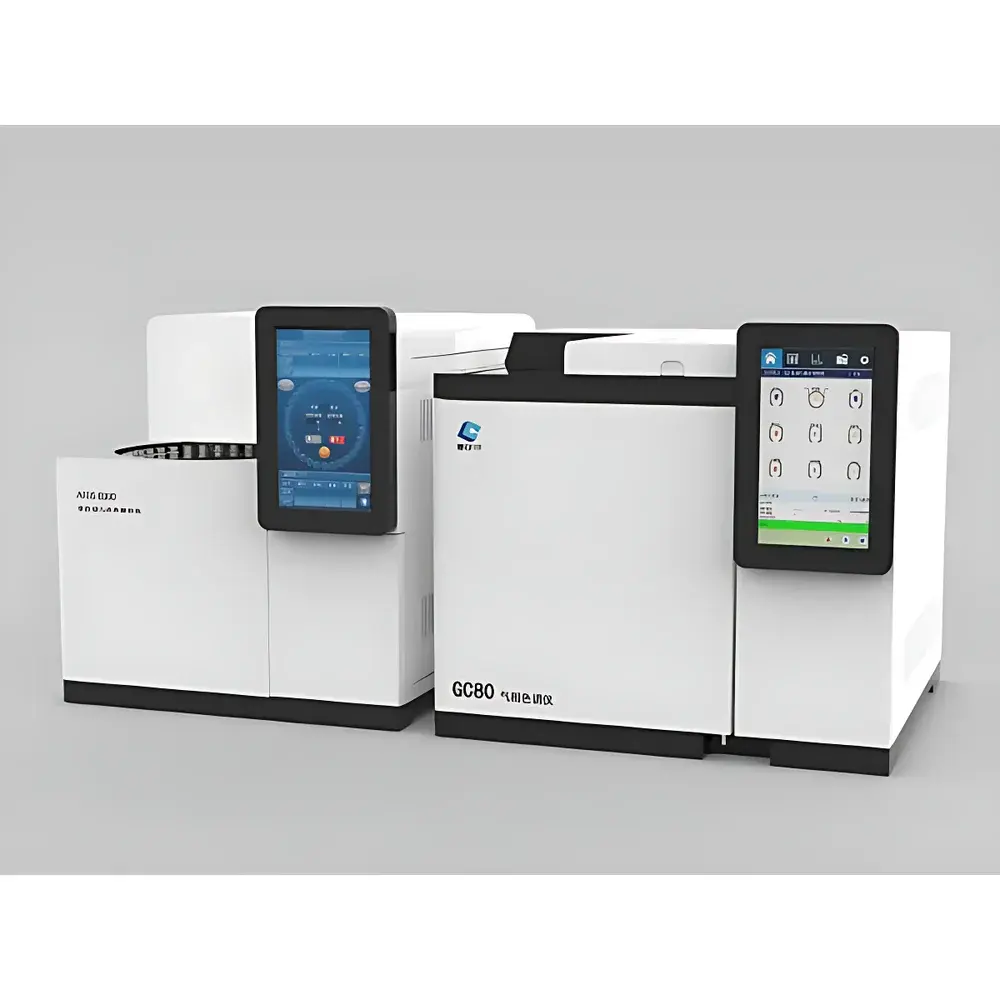
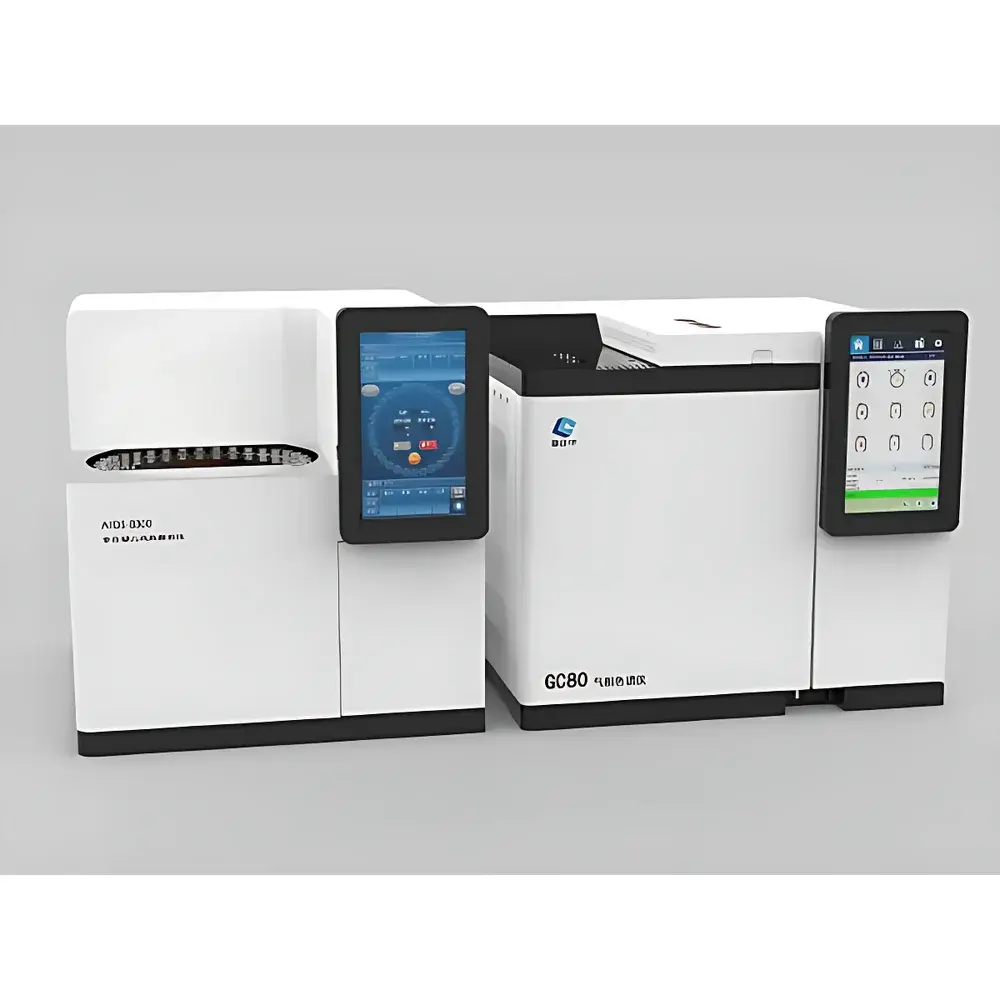
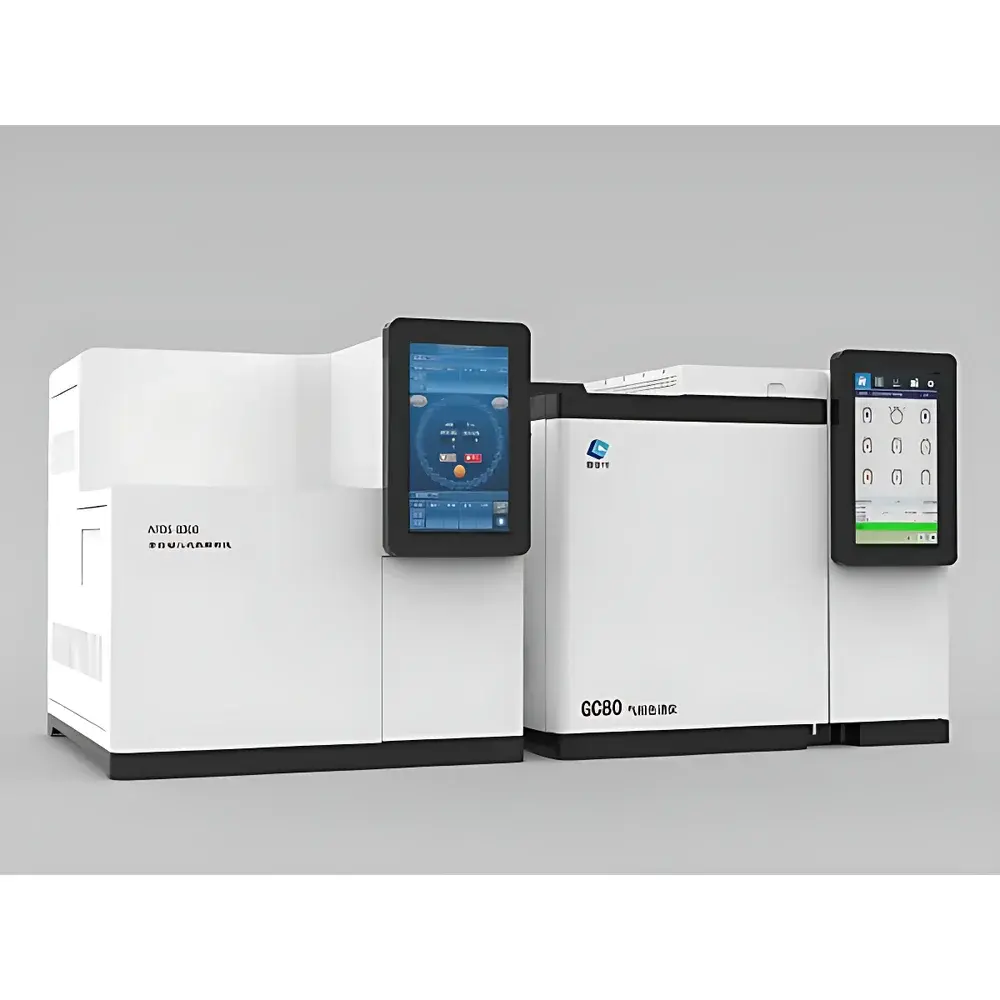
Shandong Luchuang GC-MS80 Gas Chromatography-Mass Spectrometry System
| Brand | Shandong Luchuang |
|---|---|
| Origin | Shandong, China |
| Manufacturer Type | OEM Manufacturer |
| Instrument Type | Single Quadrupole Mass Spectrometer |
| GC Configuration | Conventional GC-MS |
| Mass Range | 1–1000 amu |
| Resolution (Full Width at Half Maximum) | 1000–2000 |
| Sensitivity (Signal-to-Noise Ratio) | >300:1 (at m/z 69, per 1 pg octafluoronaphthalene) |
| Scan Speed | 15,000 u/s |
| Oven Ramp Rate | ≥125 °C/min |
| Pressure Control Accuracy | ±0.001 psi |
| Temperature Control Accuracy | ±0.01 °C |
| Max Oven Temperature | 450 °C |
| Cooling Rate | 3.5 min (300 °C → 100 °C at 25 °C ambient) |
Overview
The Shandong Luchuang GC-MS80 is a benchtop gas chromatography-mass spectrometry (GC-MS) system engineered for precision compound separation, identification, and quantification in regulated and research laboratories. It integrates a high-performance capillary gas chromatograph with a single quadrupole mass spectrometer operating under electron ionization (EI) mode. The system employs standard EI fragmentation libraries (e.g., NIST) and supports both full-scan and selected ion monitoring (SIM) acquisition modes. Its architecture conforms to fundamental GC-MS operational principles: volatile and semi-volatile analytes are separated on fused-silica capillary columns under precisely controlled temperature and carrier gas gradients, then ionized in the source, mass-filtered by the quadrupole, and detected via an electron multiplier. Designed for compliance-ready operation, the GC-MS80 supports audit-trail-enabled data acquisition and meets baseline requirements for GLP and ISO/IEC 17025 workflows when deployed with validated software configurations.
Key Features
- 10-inch capacitive color touchscreen interface with intuitive method-building workflow—enables rapid setup of multi-segment temperature programs, pressure/flow ramps, and detector parameters without keyboard input.
- Electronic Pressure Control (EPC) system for carrier gas (He, H₂, or N₂), split, and purge flows; pressure resolution ±0.001 psi, flow resolution ±0.001 mL/min; up to 8-step pressure/flow programming per method.
- Advanced thermal management architecture featuring optimized heat exchange pathways and high-stability platinum resistance thermometers (PRTs); achieves ±0.01 °C oven temperature accuracy across 99-stage programmable gradients.
- Modular inlet system supporting up to three simultaneously installed inlets; compatible with split/splitless, PTV, and cold-on-column configurations; six inlet options available for method flexibility and matrix-specific optimization.
- Multi-detector capability: accommodates up to four detectors—including FID, TCD, ECD, FPD, and NPD—with independent temperature control and signal processing; dual-FID or dual-TCD configurations supported for parallel analysis or internal standard verification.
- IoT-enabled instrument connectivity: real-time status monitoring, remote method execution, and secure data transfer via encrypted HTTP(S) protocols; firmware and method updates delivered over local network or cloud-managed infrastructure.
Sample Compatibility & Compliance
The GC-MS80 is validated for analysis of volatile organic compounds (VOCs), semi-volatile organic compounds (SVOCs), pesticides, pharmaceutical impurities, environmental pollutants (e.g., PAHs, PCBs, phthalates), and residual solvents. It supports standard column dimensions (0.18–0.53 mm ID, 10–60 m length) and common stationary phases (e.g., 5%, 35%, 50%, 65% phenyl polysiloxanes). All hardware and firmware comply with IEC 61000-6-3 (EMC) and IEC 61010-1 (safety) standards. When operated with compliant chromatography data systems (CDS), the platform satisfies functional requirements for 21 CFR Part 11 electronic records and signatures—including user authentication, audit trail generation, electronic signatures, and data integrity safeguards. Routine performance verification follows ASTM D3612 (petroleum hydrocarbons), EPA Method 8270 (SVOCs), and USP (chromatographic system suitability).
Software & Data Management
The system ships with Luchuang ChromaLink CDS v3.x—a Windows-based, 64-bit chromatography data system supporting method development, sequence execution, peak integration, spectral deconvolution, library searching (NIST MS Search), and report generation. Data files adhere to ANDI/NetCDF format for long-term archival and third-party interoperability. The software implements role-based access control (RBAC), automatic audit trail logging (including parameter changes, reprocessing events, and user logins), and configurable electronic signature workflows. Raw data, processed results, and metadata are stored in a relational database backend (Microsoft SQL Server Express or Enterprise), enabling structured querying, trend analysis, and integration with LIMS environments via ODBC or RESTful APIs. Optional validation packages include IQ/OQ documentation, test scripts, and UAT templates aligned with GxP expectations.
Applications
- Environmental testing: screening of soil, water, and air samples for chlorinated pesticides, brominated flame retardants, and petroleum hydrocarbons per EPA SW-846 methods.
- Food safety: detection of mycotoxins, veterinary drug residues, and packaging migrants in raw and processed foods.
- Pharmaceutical QC: residual solvent analysis (ICH Q3C), extractables/leachables profiling, and stability-indicating assay development.
- Forensic toxicology: confirmation and quantitation of drugs of abuse and metabolites in biological matrices using SIM and retention time locking.
- Polymer and materials science: identification of plasticizers, antioxidants, and degradation products in polymer extracts and leachates.
FAQ
What mass calibration procedures are supported?
The GC-MS80 supports automated mass calibration using perfluorotributylamine (PFTBA) or custom calibrants; daily calibration verification is recommended prior to quantitative runs.
Is the system compatible with third-party GC columns and consumables?
Yes—the instrument accepts all industry-standard 0.53 mm, 0.32 mm, and 0.25 mm fused-silica capillary columns from Agilent, Thermo Fisher, Restek, and Shimadzu, provided they meet standard ferrule and fitting specifications.
Can the software generate 21 CFR Part 11-compliant reports?
When configured with signed user accounts, enabled audit trails, and electronic signature prompts, ChromaLink CDS generates fully traceable, tamper-evident PDF reports meeting FDA and EMA regulatory expectations.
What maintenance intervals are recommended for the ion source and quadrupole?
Ion source cleaning is advised every 2–4 weeks under routine use; quadrupole tuning and detector gain calibration should be performed monthly or after major hardware service events.
Does the system support method transfer from other GC-MS platforms?
Method parameters (oven program, carrier gas flow, injection volume, scan range) can be imported and adapted; retention time indexing and spectral matching tools facilitate cross-platform method portability.





