
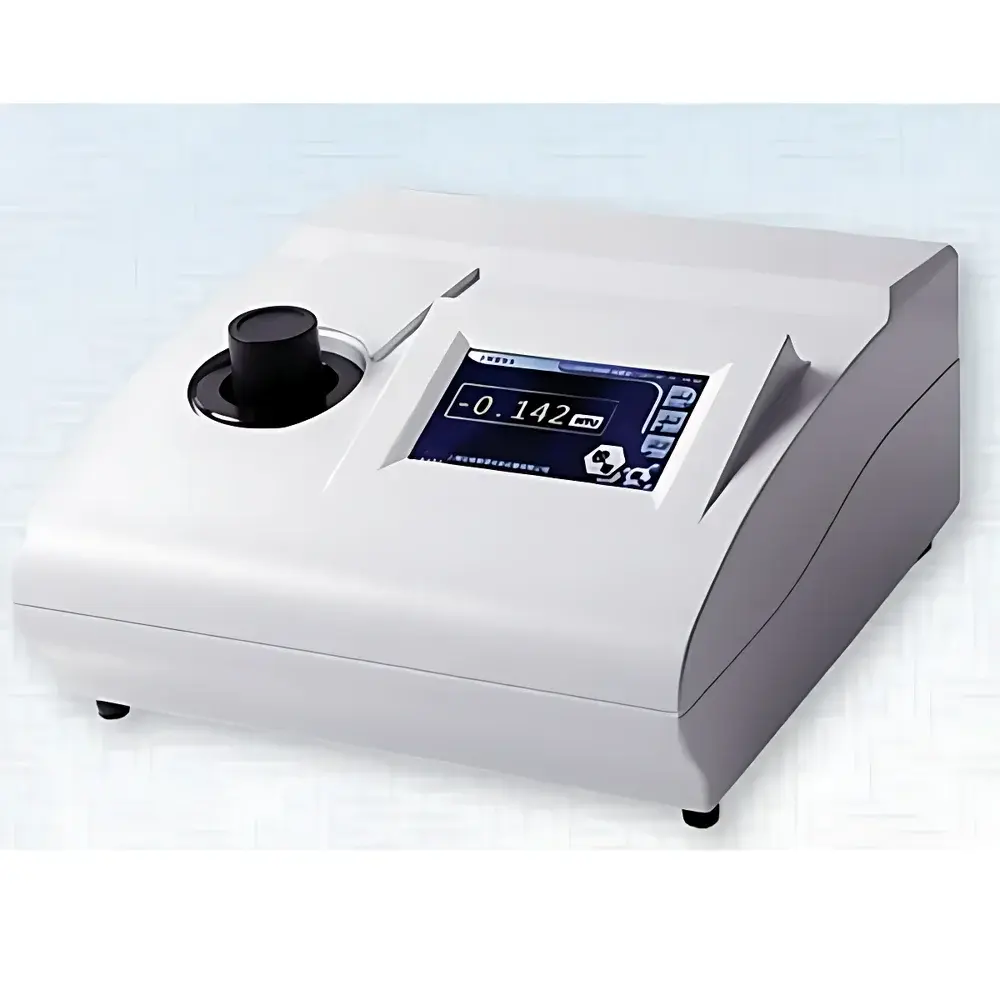
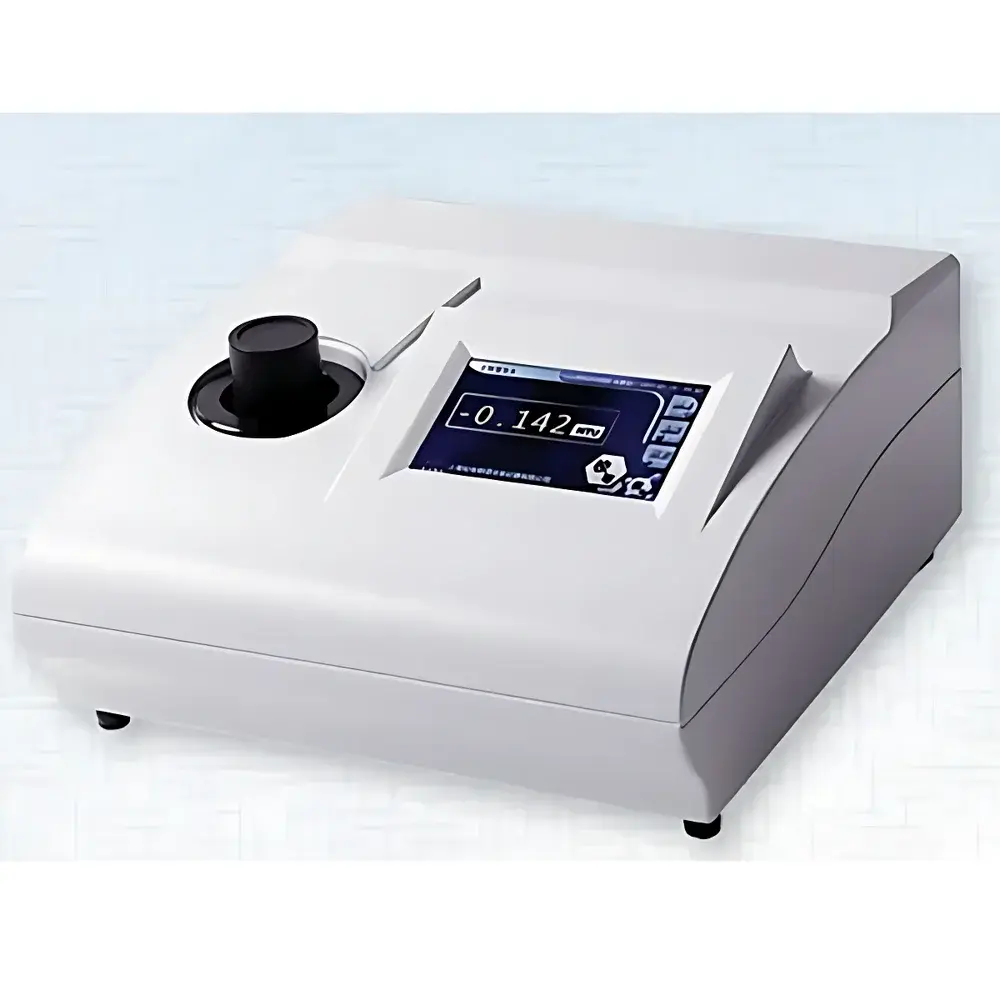
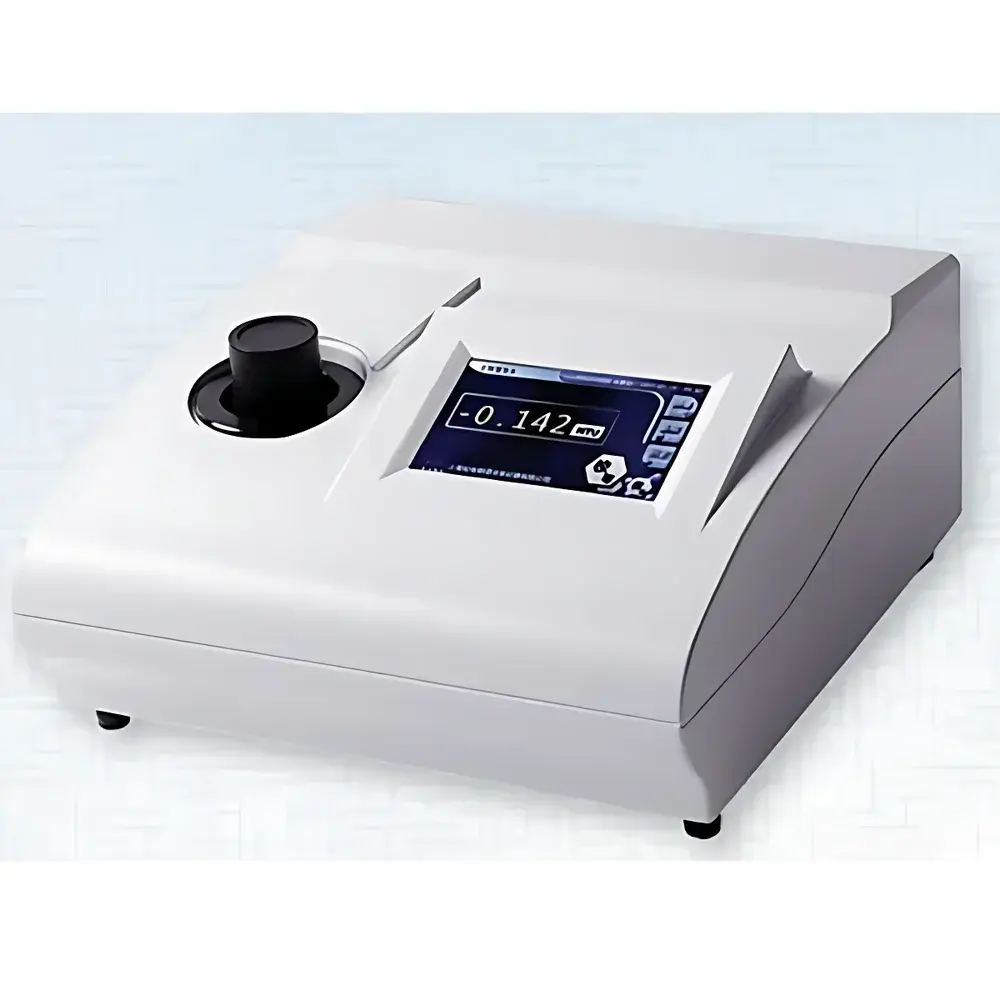
Shanghai INESA WGZ-4000 Portable Turbidimeter
| Brand | INESA (YDWG) |
|---|---|
| Origin | Shanghai, China |
| Model | WGZ-4000 |
| Type | Portable |
| Measurement Range | 0.000–20.00 NTU |
| Resolution | 0.001 NTU |
| Operating Temperature | 5–40 °C |
| Accuracy | ≤ ±2% |
| Compliance | ISO 7027, HJ 1075–2019, Chinese Pharmacopoeia General Chapter 0902 (Method II) |
Overview
The Shanghai INESA WGZ-4000 Portable Turbidimeter is a precision optical instrument engineered for quantitative measurement of turbidity in clear liquids—primarily aqueous samples—based on the principle of nephelometric detection (90° scattered light) combined with transmitted light ratio analysis. It operates in full compliance with ISO 7027:2016, which defines standardized conditions for formazin-based calibration and specifies the use of near-infrared (860 nm) light to minimize color interference. The instrument implements a dual-detector optical architecture: one photodiode measures scattered light at 90°, while a second monitors incident beam attenuation, enabling real-time ratio correction and automatic range switching across its full 0.000–20.00 NTU span. This design ensures high reproducibility in low-turbidity regimes critical for pharmaceutical water quality control (e.g., purified water, water for injection), municipal drinking water verification, and process monitoring in food & beverage and chemical manufacturing.
Key Features
- Microprocessor-controlled operation with 7-inch color TFT capacitive touchscreen interface—supports intuitive navigation, multilingual prompts (English/Chinese), and context-sensitive help
- Automatic gain adjustment and dynamic range switching between 0.000–0.999 NTU (high-sensitivity mode) and 1.00–20.00 NTU (broad-range mode)
- Multi-point calibration capability using certified formazin or AMCO-AE standards (up to 5 points), with traceable calibration certificate support
- Integrated averaging function: configurable 3–9 repeated measurements per sample, with statistical output (mean, SD, CV%) displayed and stored
- Robust mechanical design: IP65-rated enclosure for dust and splash resistance; shock-absorbing silicone gasketing; ergonomic handheld form factor with integrated carrying strap
- Onboard power management: AC adapter (220 V ±10%, 50 Hz ±1 Hz) with grounding requirement; optional rechargeable Li-ion battery pack (8 h typical runtime)
Sample Compatibility & Compliance
The WGZ-4000 is validated for use with transparent to slightly hazy liquid samples including purified water, WFI, saline solutions, buffer preparations, process streams, and treated effluents. It excludes opaque, highly colored, or strongly fluorescent matrices without prior dilution or pretreatment. Its optical path length (10 mm standard cuvette) and detector spectral response (860 ±30 nm LED source) conform to ISO 7027 requirements for method equivalence. Regulatory alignment includes full adherence to HJ 1075–2019 (“Determination of Turbidity in Water Quality—Nephelometric Method”) issued by China’s Ministry of Ecology and Environment, as well as Chinese Pharmacopoeia 2020 Edition General Chapter 0902 (Clarity Testing—Turbidimetric Method II). Data integrity meets GLP-compliant audit trail requirements: all calibrations, measurements, user logins, and parameter changes are time-stamped and non-erasable within internal memory.
Software & Data Management
Data storage supports up to 1,000 measurement records with embedded metadata: sample ID, operator ID, date/time stamp, calibration status, NTU value, SD, and measurement mode. Export options include direct USB-Mass Storage mode (U-disk plug-and-play), USB-to-PC serial communication (virtual COM port), and CSV-formatted reports compatible with LIMS and Excel. The included PC software (WGZ-Link v3.2) enables batch data visualization, trend analysis, report generation (PDF/Excel), and electronic signature capture for 21 CFR Part 11–aligned environments. Audit logs record every access event—including failed login attempts—and retain history for ≥18 months.
Applications
- Pharmaceutical QC labs: clarity testing of APIs, injectables, and purified water per USP , EP 2.2.1, and ChP 0902
- Municipal water treatment: raw intake, coagulation/flocculation monitoring, filter effluent verification
- F&B production: sugar syrups, dairy whey, brewing wort, and final rinse water assessment
- Environmental field testing: surface water, groundwater, and wastewater discharge compliance (e.g., EPA Method 180.1 equivalent)
- Chemical R&D: colloidal stability studies, polymer emulsion characterization, catalyst suspension homogeneity checks
FAQ
What calibration standards are supported?
Formazin primary standard (FTU), AMCO-AE secondary standard (FNU), and custom user-defined standards with assigned NTU values.
Does the instrument support 21 CFR Part 11 compliance?
Yes—when used with WGZ-Link software v3.2 and configured with role-based user accounts, electronic signatures, and immutable audit trails.
Can it measure samples with strong coloration?
Color compensation is not implemented; highly colored samples (>100 Pt-Co units) require dilution or alternative methods (e.g., spectrophotometric absorbance correction).
Is the cuvette interchangeable with other turbidimeters?
It uses a proprietary 10-mm square quartz cuvette (WGZ-CUV-10Q) with O-ring sealing; standard Starna or Hach cuvettes are not mechanically or optically compatible.
How often should recalibration be performed?
Daily verification with zero and mid-range standards is recommended; full multi-point calibration required after maintenance, lamp replacement, or if drift exceeds ±1% of reading.





