
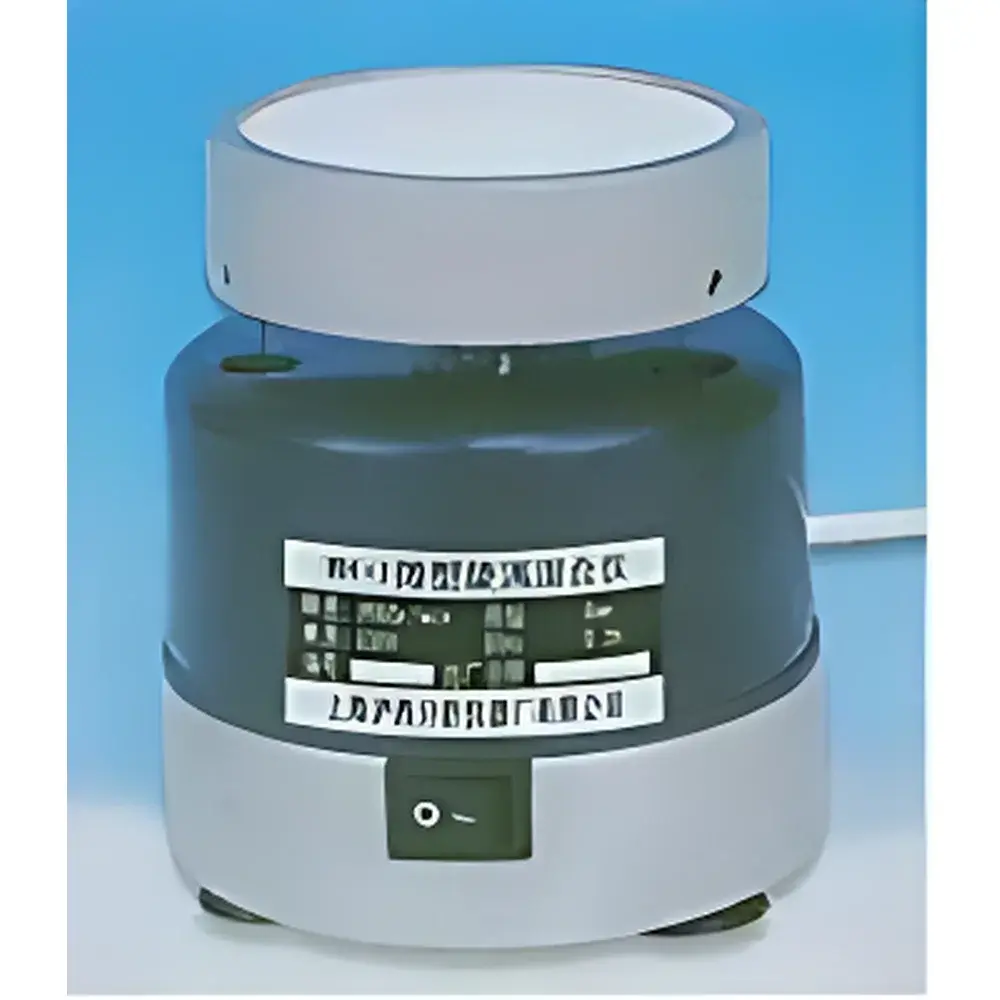
Shanghai-made WH-1 / WH-2 / WH-3 / XW-80A Vortex Mixers
| Origin | Shanghai, China |
|---|---|
| Manufacturer Type | Authorized Distributor |
| Origin Category | Domestic (PRC) |
| Models | WH-1, WH-2, WH-3, XW-80A |
| Operating Frequency | 2000 rpm (WH-1, WH-2), 2800 rpm (WH-3, XW-80A) |
| Dimensions | Φ110×120 mm (WH-1, WH-2), Φ140×140 mm (WH-3, XW-80A) |
| Weight | 2.0 kg (WH-1, WH-2), 2.5 kg (WH-3, XW-80A) |
| Mixing Mode | Orbital vibration for powder–liquid and liquid–liquid homogenization |
| Control Options | Continuous or momentary (WH-2), fixed-speed (WH-3), high-torque continuous (XW-80A) |
Overview
The WH-1, WH-2, WH-3, and XW-80A series are compact, benchtop orbital vortex mixers engineered for reproducible, contamination-free homogenization of small-volume samples in life science, clinical diagnostics, and analytical chemistry laboratories. These instruments operate on the principle of eccentric orbital motion—driving a rubber cup platform in a rapid circular trajectory—to induce controlled vortex formation within tubes, vials, and flasks. Unlike magnetic stirrers or overhead shakers, vortex mixers generate no external magnetic field, eliminating interference with magnetically sensitive reagents (e.g., paramagnetic contrast agents or iron oxide nanoparticles) and ensuring compatibility with sterile or ESD-safe workflows. Designed for routine use in radioimmunoassay (RIA), ELISA preparation, cell suspension, reagent reconstitution, and dissolution testing of poorly soluble compounds (e.g., erythromycin staining solutions), each model delivers consistent energy transfer across sample containers without requiring immersion probes or consumable parts.
Key Features
- Robust aluminum alloy chassis with non-slip silicone rubber platform for secure tube retention during high-frequency operation
- Fixed-speed drive mechanism with precision-machined cam assembly ensuring long-term mechanical stability and minimal speed drift
- WH-2 variant includes momentary (touch) activation mode for precise timing control in time-sensitive protocols
- WH-3 and XW-80A models feature enhanced motor torque and optimized eccentric mass distribution to sustain 2800 rpm under load—critical for viscous or particulate-laden suspensions
- No external power supply required beyond standard 100–240 V AC input; low power consumption (<15 W) supports continuous operation in multi-instrument lab environments
- Compact footprint (Φ110 × 120 mm or Φ140 × 140 mm) enables integration into biosafety cabinets, cold rooms, or crowded benchtops without compromising accessibility
Sample Compatibility & Compliance
These vortex mixers accommodate standard laboratory vessels including 0.2–50 mL microcentrifuge tubes, culture tubes (12 × 75 mm, 15 × 100 mm), glass vials, conical flasks (up to 125 mL), and separatory funnels. The orbital motion efficiently resuspends precipitated analytes, disperses lyophilized powders, and homogenizes immiscible phases without foaming or splashing when operated within recommended fill volumes (≤75% capacity). While not certified to IEC 61010-1 or ISO/IEC 17025 as standalone analytical instruments, their mechanical design conforms to general electrical safety requirements for Class I laboratory equipment. Units are routinely deployed in GLP-compliant labs for sample preparation prior to HPLC, UV-Vis spectroscopy, or microbiological assay—where traceability of mixing parameters is maintained via operator logbooks or LIMS-integrated workflow documentation.
Software & Data Management
The WH-series mixers are hardware-only devices with no embedded firmware, touchscreen interface, or digital connectivity. This analog architecture eliminates cybersecurity vulnerabilities, firmware update dependencies, and calibration drift associated with microprocessor-controlled units. Operational consistency relies on mechanical repeatability rather than software-defined setpoints—making them suitable for regulated environments where validation focuses on physical performance verification (e.g., frequency measurement using optical tachometry per ASTM E2917) rather than software audit trails. For labs requiring electronic recordkeeping, integration is achieved through external timers, programmable lab automation controllers, or LIMS-triggered manual logging of batch-specific mixing duration and mode selection.
Applications
- Routine homogenization of serum, plasma, or urine specimens prior to immunoassay or PCR setup
- Reconstitution of lyophilized antibodies, enzymes, or diagnostic standards in low-volume buffers
- Dispersion of nanoparticle suspensions (e.g., TiO₂, SiO₂ colloids) for DLS or TEM sample prep
- Mixing of viscous solutions such as glycerol-based storage media or agarose gels prior to casting
- Accelerated dissolution testing of crystalline pharmaceutical actives (e.g., macrolide antibiotics) under non-agitated conditions
- Cell pellet resuspension in flow cytometry or viability assays where shear-sensitive populations require gentle yet thorough dispersion
FAQ
What is the maximum recommended tube size for WH-1 and WH-2 models?
Standard 15 mL conical tubes and 12 × 75 mm culture tubes are fully supported; larger vessels may exhibit reduced vortex efficiency due to platform diameter constraints.
Can these mixers be used inside a CO₂ incubator or cold room?
Yes—provided ambient temperature remains between 5 °C and 40 °C and relative humidity does not exceed 80% non-condensing. No internal electronics or lubricants susceptible to thermal contraction are present.
Is speed calibration required or traceable to national standards?
While not supplied with factory calibration certificates, users may verify rotational frequency using a handheld optical tachometer referenced to NIST-traceable standards (e.g., Fluke 971 or equivalent) as part of routine equipment qualification.
Do WH-3 and XW-80A differ functionally beyond rated speed?
Yes—the XW-80A incorporates reinforced motor windings and a higher-inertia drive shaft to maintain nominal 2800 rpm under sustained load, whereas WH-3 is optimized for intermittent duty cycles in teaching labs.
Are replacement cups or platform inserts available?
Standard silicone rubber cups (Φ11 mm and Φ14 mm inner diameters) are field-replaceable and stocked by authorized distributors; custom adapters for microplates or PCR strips are not supported.



