
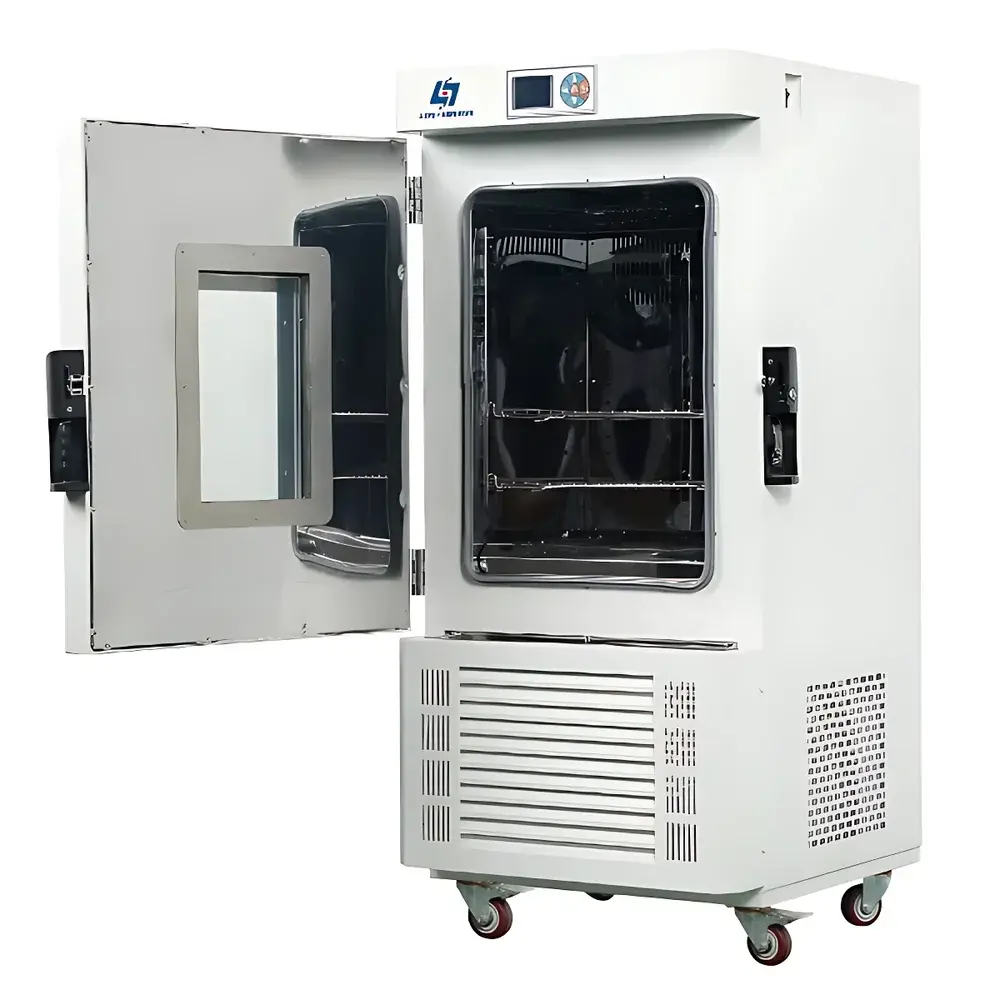
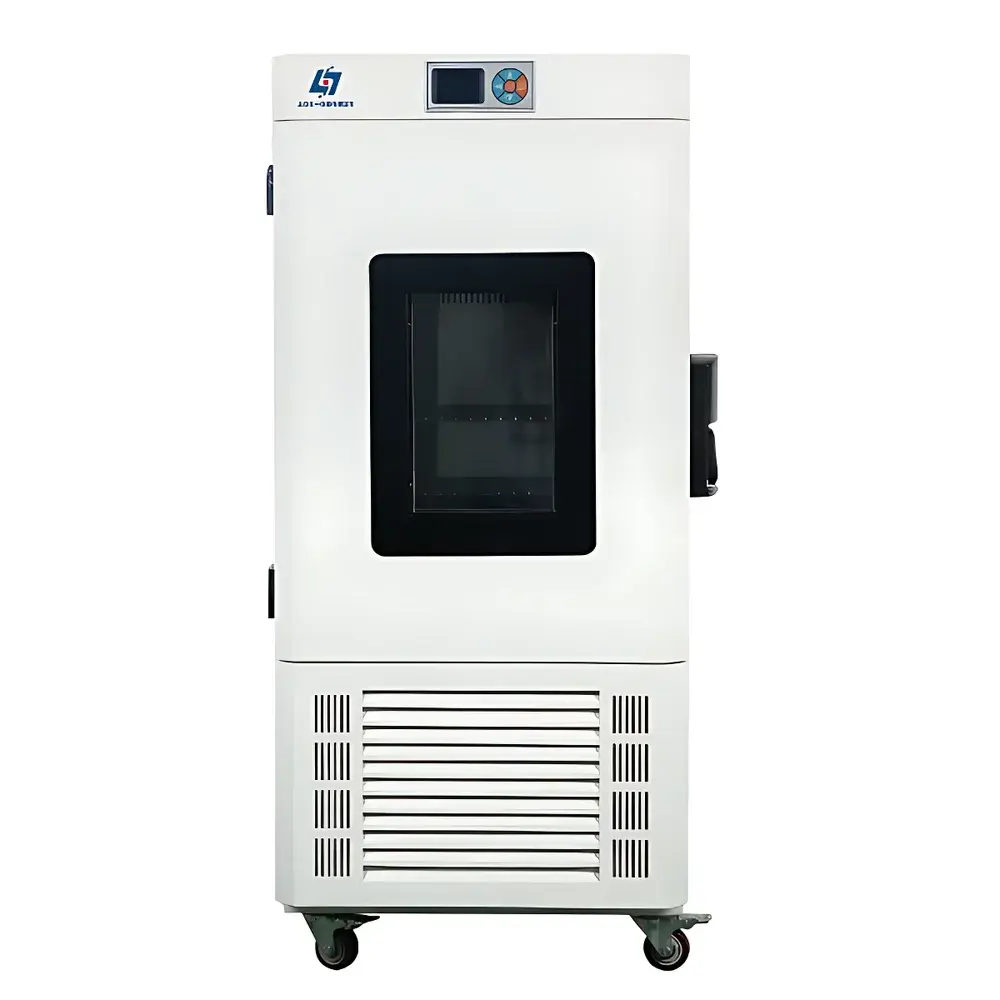
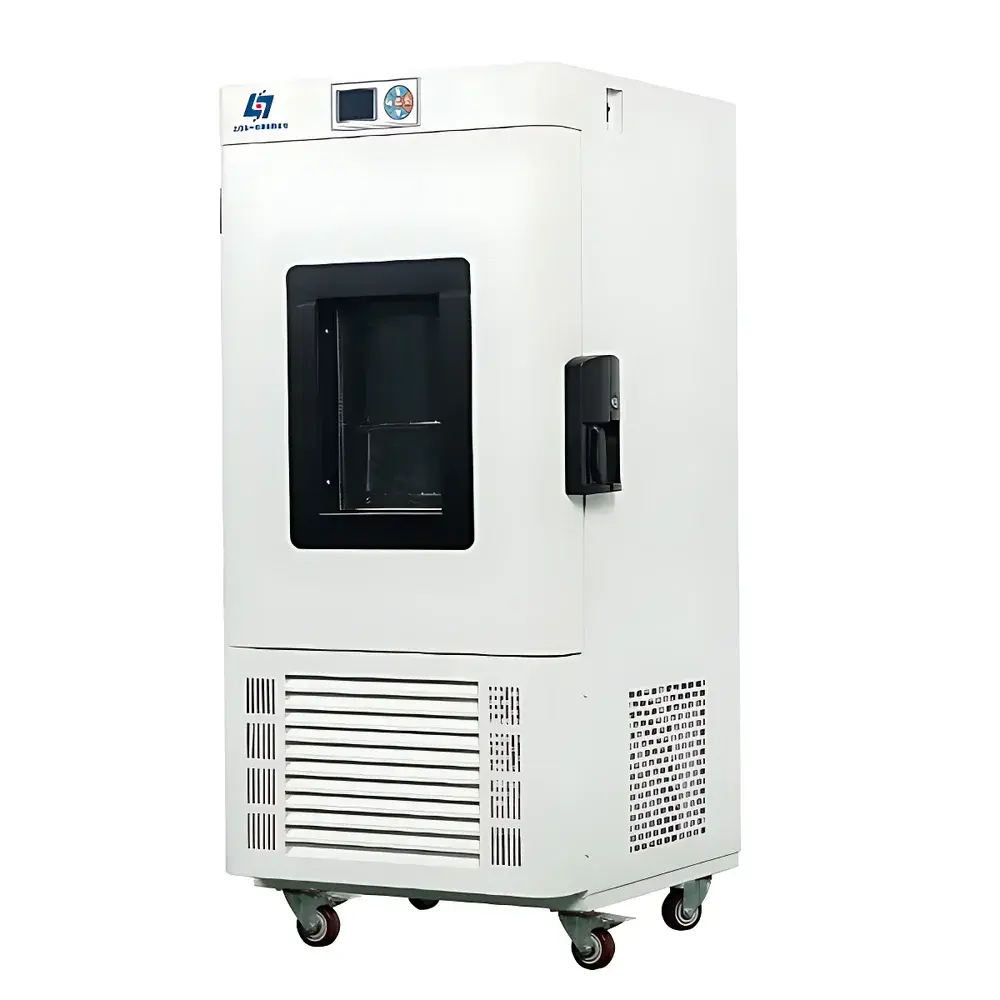
Shanghai RightOne LRH-250CL Low-Temperature Incubator & Cold Storage Chamber
| Brand | Shanghai RightOne (shyy) |
|---|---|
| Origin | Shanghai, China |
| Manufacturer Type | Direct Manufacturer |
| Country of Origin | China |
| Model | LRH-250CL |
| Cooling Method | Compressor-Based Refrigeration |
| Temperature Range | −40 °C to +65 °C |
| Temperature Resolution | 0.1 °C |
| Temperature Uniformity | ±0.5 °C (both at high and low setpoints) |
| Capacity | 250 L |
| External Dimensions | 870 × 930 × 1810 mm (W × D × H) |
Overview
The Shanghai RightOne LRH-250CL is a dual-function low-temperature incubator and cold storage chamber engineered for precise thermal control across a wide operational range—from −40 °C to +65 °C. Unlike standard refrigerated incubators limited to mild sub-zero operation, the LRH-250CL employs a high-efficiency dual-stage compressor refrigeration system with environmentally compliant R134a/R406a blended refrigerant, enabling stable cryogenic maintenance without liquid nitrogen or external chillers. Its design adheres to fundamental principles of forced-air convection thermoregulation: a certified-grade centrifugal circulation fan—paired with an optimized asymmetric air duct architecture—ensures laminar airflow distribution and minimizes thermal stratification. This configuration delivers uniform temperature distribution throughout the 250 L stainless-steel working chamber (580 × 500 × 850 mm), validated under ISO 15265-compliant empty-chamber testing conditions (ambient 20 °C, 50% RH, no vibration or EMI interference). The unit meets baseline functional requirements for GLP-aligned laboratory environments where reproducible low-temperature conditioning, long-term biostability studies, and controlled environmental simulation are critical.
Key Features
- Microprocessor-based PID temperature controller with auto-tuning, real-time deviation correction, and self-diagnostic startup sequence
- 5.7-inch backlit LCD interface supporting multi-parameter concurrent display: setpoint, actual chamber temperature, elapsed time, and remaining hold duration
- Electrostatically coated cold-rolled steel exterior with seamless mirror-finish 304 stainless-steel interior; fully rounded internal corners (R ≥ 15 mm) for ISO 14644-compliant cleanability
- Double-glazed, low-emissivity inner glass door with magnetic gasket seal—maintains thermal integrity during visual inspection without perturbing chamber stability
- Four-point adjustable leveling feet plus dual-mode casters (swivel + lockable)—enabling both positional flexibility and seismic-grade static anchoring
- Non-volatile memory retention for all user-defined parameters; automatic recovery after power interruption with configurable restart behavior (cold-start vs. resume)
- Energy-optimized thermal insulation using CFC-free polyurethane foam (≥80 mm thickness in side/wall panels, ≥100 mm in door)
Sample Compatibility & Compliance
The LRH-250CL accommodates diverse biological and material science sample formats—including stacked 15/50 mL conical tubes, standard Petri dishes (up to 150 mm diameter), multi-well plates, cryovials (2 mL–5 mL), and sealed ampoules—via three adjustable stainless-steel shelves (load capacity: 15 kg/shelf, max 45 kg total). Its −40 °C capability supports short-term cryopreservation of sensitive reagents (e.g., restriction enzymes, fluorescent dyes, RNA standards), while the +65 °C upper limit enables accelerated stability testing per ICH Q1A(R3). Though not certified to UL 61010-1 or EN 61000-6-3 out-of-the-box, the unit’s electrical architecture complies with CE-mandated EMC immunity thresholds and includes built-in overtemperature cut-off (independent mechanical backup limiter available as optional add-on). It satisfies core functional criteria referenced in ASTM E2875 (Standard Guide for Low-Temperature Environmental Chambers) and aligns with routine QC validation protocols under ISO/IEC 17025 Clause 5.10.
Software & Data Management
Standard configuration includes RS485 serial interface (Modbus RTU protocol) and USB host port for firmware updates and data export. Optional accessories expand connectivity: a PC-based monitoring suite (supplied on encrypted USB drive) logs timestamped temperature traces at user-selectable intervals (1–300 seconds), generates PDF audit trails with digital signatures, and exports CSV-compatible datasets compliant with FDA 21 CFR Part 11 Annex 11 metadata requirements (user authentication, change history, electronic signature fields). An embedded thermal printer (optional) produces hard-copy records meeting GLP documentation standards for temperature excursions, calibration verifications, and daily chamber checks. All logged data retains traceability to NIST-traceable reference thermistors calibrated annually per ISO/IEC 17025-accredited procedures.
Applications
- Cryostorage of heat-labile diagnostics: monoclonal antibodies, ELISA kits, PCR master mixes, and lyophilized standards
- Controlled-environment microbiological assays: psychrophilic bacterial growth profiling (e.g., Pseudomonas fluorescens, Yersinia enterocolitica) and fungal sporulation kinetics
- Vaccine stability assessment per WHO TRS 999 Annex 8 (real-time and accelerated conditions)
- Material science testing: polymer crystallization kinetics, battery electrolyte viscosity profiling, and semiconductor wafer preconditioning
- Environmental simulation: cold-chain validation for transport packaging (ASTM D3103), freeze-thaw cycling per ISO 11607-2
- Long-term archival of clinical biospecimens (serum, plasma, PBMCs) prior to LN2 transfer
FAQ
What is the minimum sustainable temperature with full 250 L load?
At rated ambient (20 °C, 50% RH), the chamber maintains −38 °C ±0.8 °C under full shelf loading (45 kg), verified per ISO 15265 Annex B.
Can the unit operate continuously at −40 °C?
Yes—continuous operation is supported with scheduled defrost cycles (automated every 6–12 hours depending on humidity load); manual defrost override is accessible via service menu.
Is validation support documentation included?
Factory-installed IQ/OQ documentation templates (Word/PDF) are provided; PQ protocols must be developed in-house per site-specific SOPs and qualified against user-defined acceptance criteria.
What safety certifications does the base model carry?
CE marking (2014/30/EU EMC Directive, 2014/35/EU LVD Directive); RoHS 2011/65/EU compliance confirmed via SGS test report #SHG23-XXXXX.
How is temperature uniformity verified during installation qualification?
Using nine calibrated Class A PT100 probes (±0.1 °C accuracy) positioned per ISO 15265 Figure 2 grid; spatial deviation must remain ≤±1.0 °C across all measurement points at steady state.





