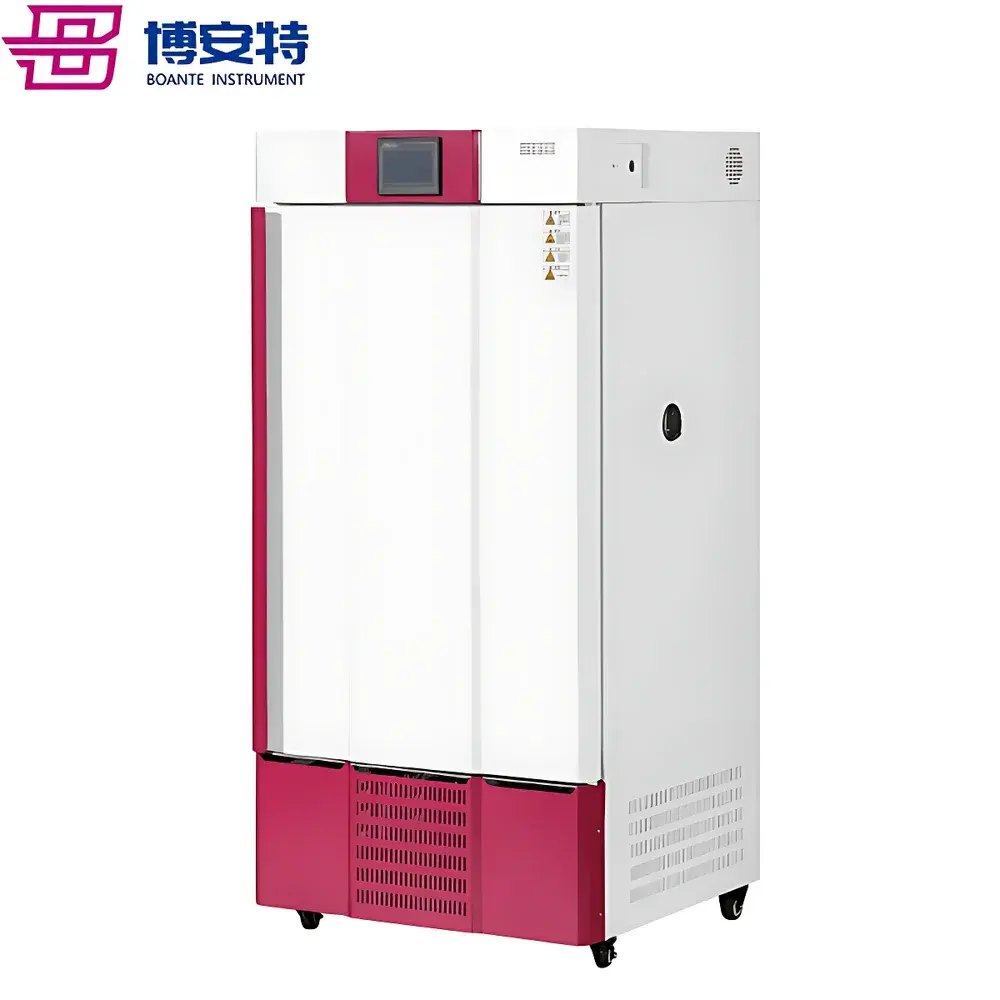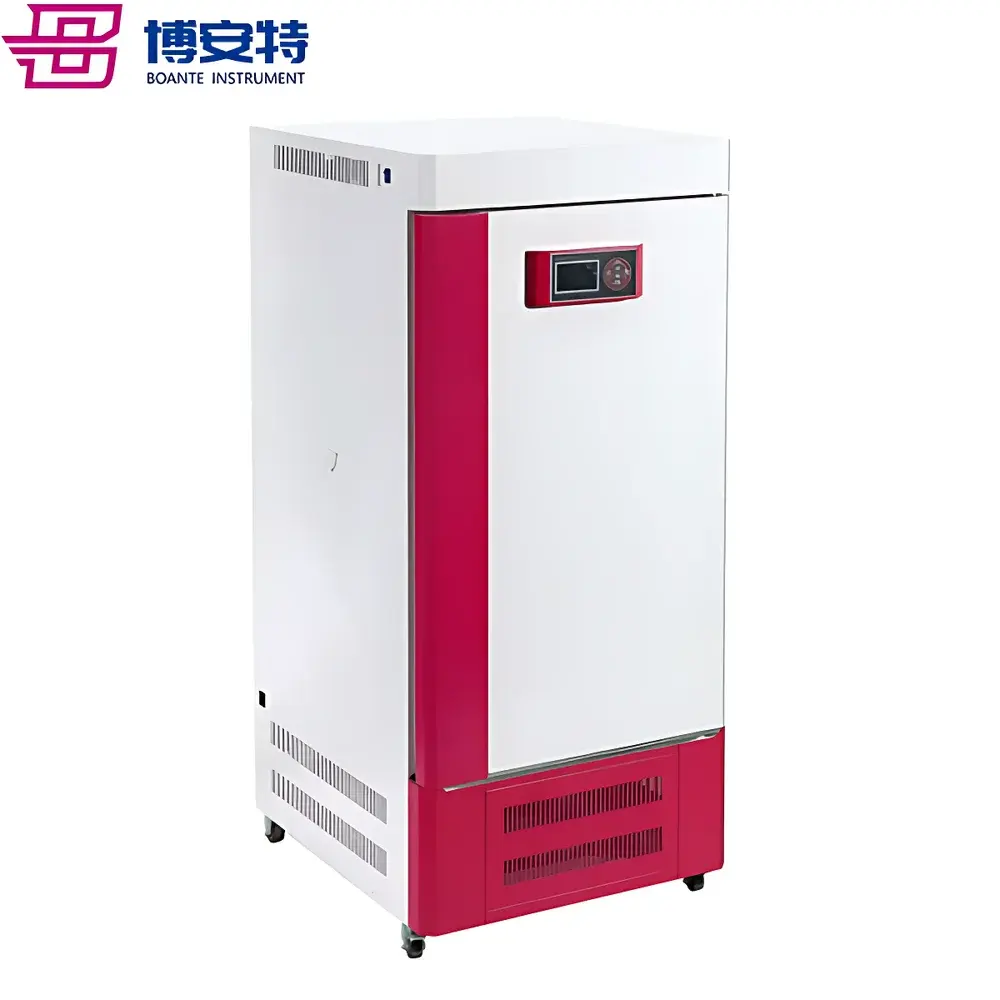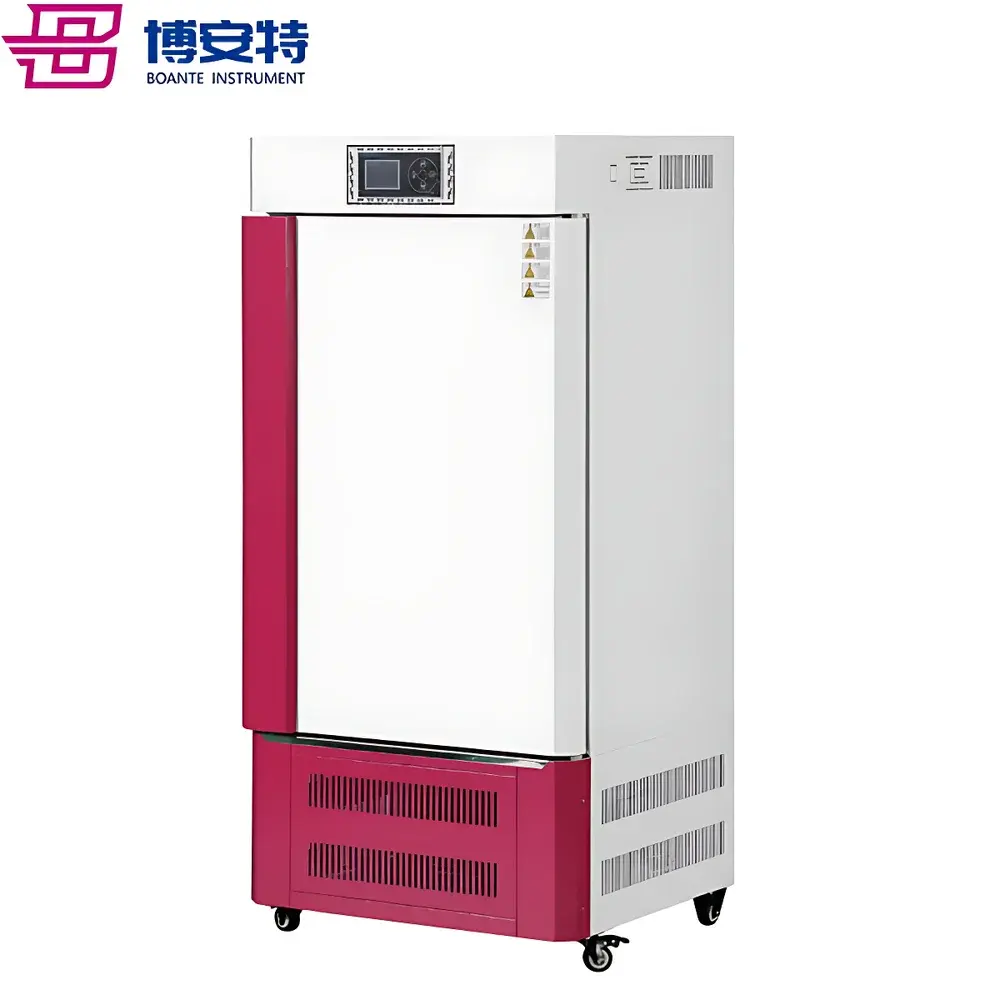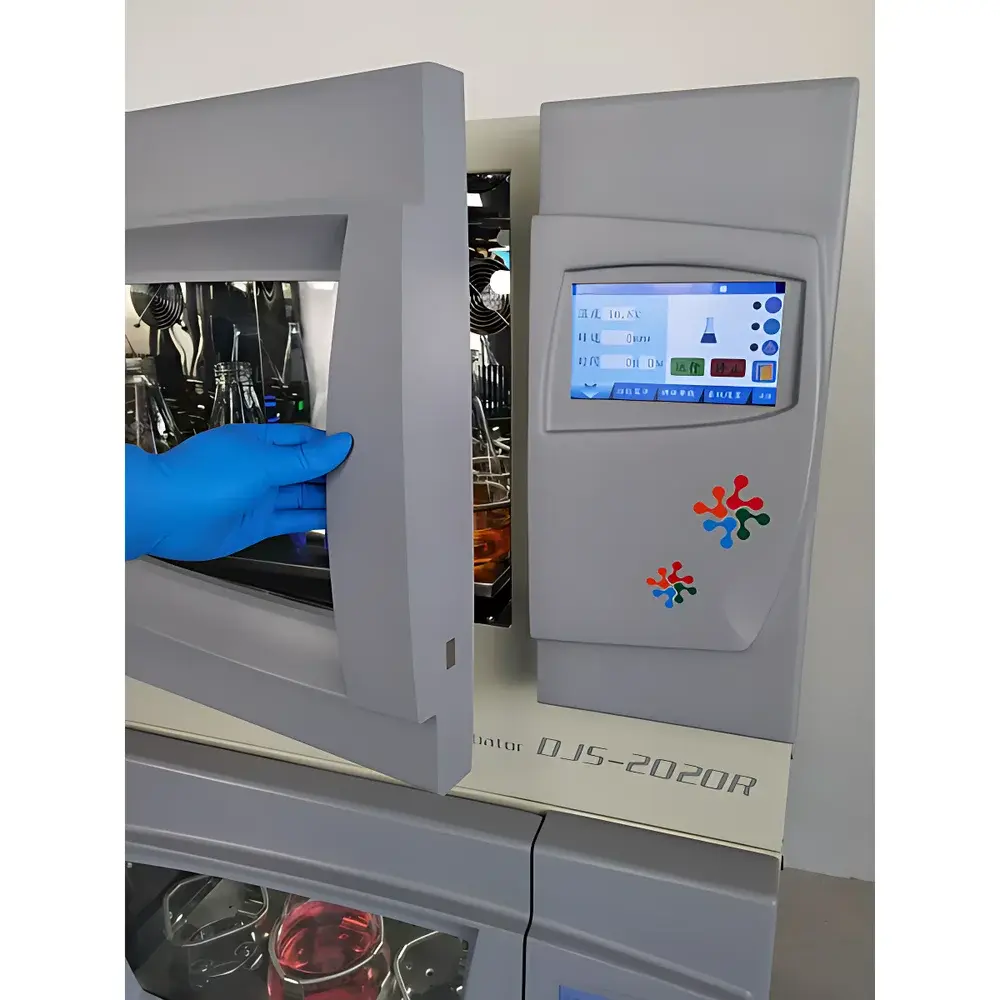
Shanghai Shiping GS-2020R Plus Stackable High-Speed Temperature-Controlled Orbital Shaker
| [Brand | Shanghai Shiping |
|---|---|
| Origin | Shanghai, China |
| Manufacturer Type | Direct Manufacturer |
| Instrument Type | Orbital Shaker |
| Model | GS-2020R Plus |
| Oscillation Frequency Range | 20–800 rpm (up to 1200 rpm optional) |
| Orbit Diameter | Φ3 mm (±1.5 mm) |
| Temperature Range | 4–60 °C |
| Temperature Uniformity | ≤±0.5 °C |
| Temperature Accuracy | ±0.1 °C |
| Chamber Volume | 125 L |
| Shelf Dimensions | 542 × 445 mm |
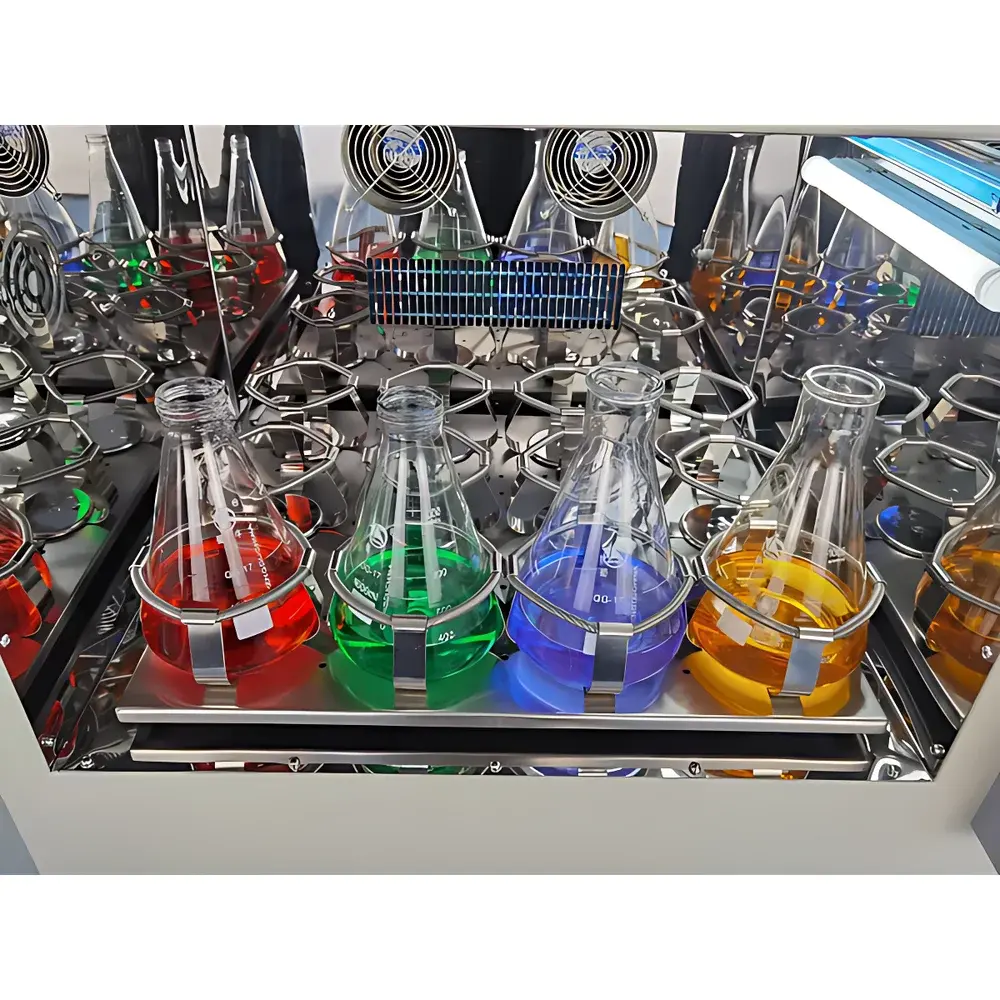
| Max Load Capacity | 30 × 250 mL flasks, or 20 × 500 mL, or 12 × 1000 mL, or 6 × 2000 mL, or 5 × 3000 mL |
| Power Supply | AC 200–240 V, 50–60 Hz |
| Net Weight | 214 kg (single unit) |
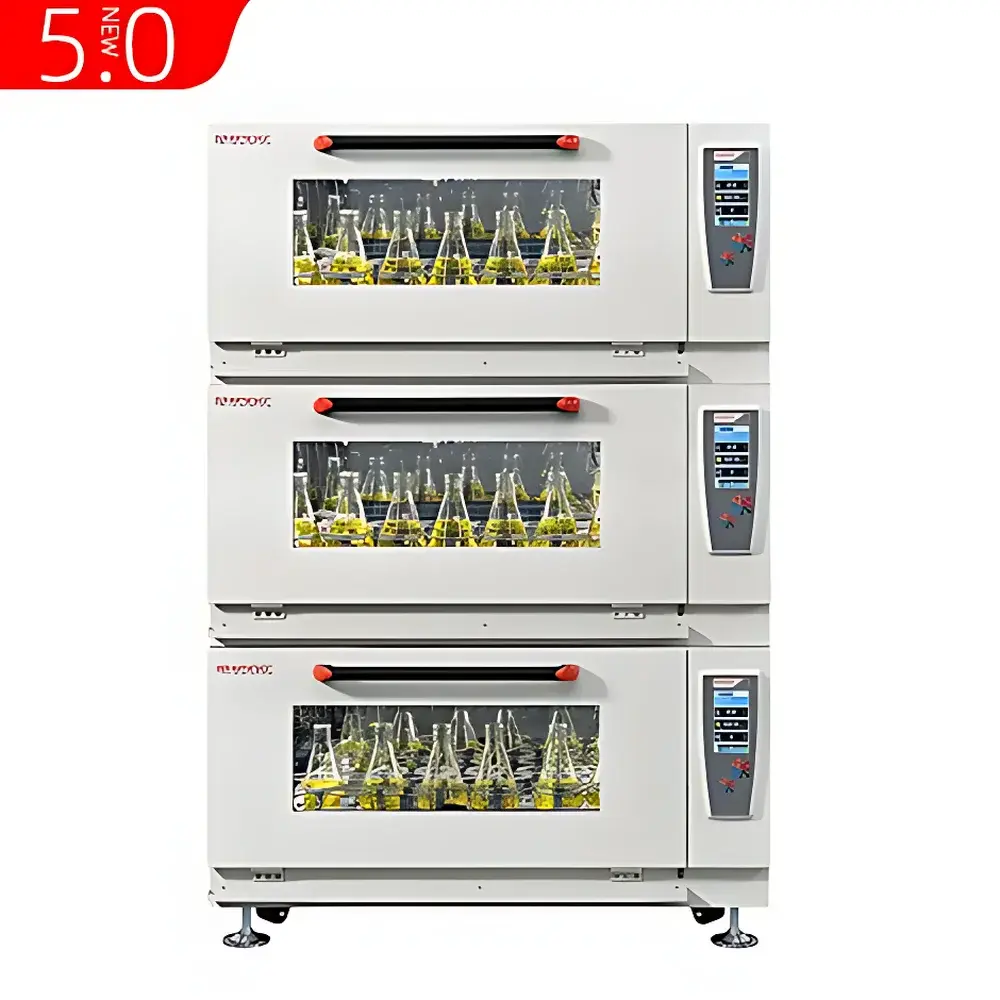
| Stackable Units | Up to 3 units |
| Compliance | GMP-compliant chamber design, ISO 13485-aligned manufacturing process] |
Overview
The Shanghai Shiping GS-2020R Plus is a stackable, high-performance orbital shaker engineered for precise temperature-controlled cultivation and agitation of biological samples under demanding laboratory conditions. It operates on the principle of controlled orbital motion—generating uniform circular displacement (Φ3 mm orbit) at programmable speeds—to ensure homogeneous suspension, optimal oxygen transfer, and consistent shear environment for microbial growth, enzyme kinetics, cell culture expansion, and biochemical reaction monitoring. Designed for continuous operation in regulated environments, the system integrates refrigeration, heating, and PID-based environmental scanning control to maintain stable thermal conditions across its full 4–60 °C operating range—even at ambient temperatures as low as −18 °C. Its robust mechanical architecture supports uninterrupted 24/7 operation in QC labs, bioprocess development suites, and GLP-compliant research facilities.
Key Features
- Stackable Modular Design: Supports vertical stacking of up to three identical units to maximize floor space efficiency without compromising airflow or thermal stability—ideal for high-throughput fermentation screening or parallel strain optimization.
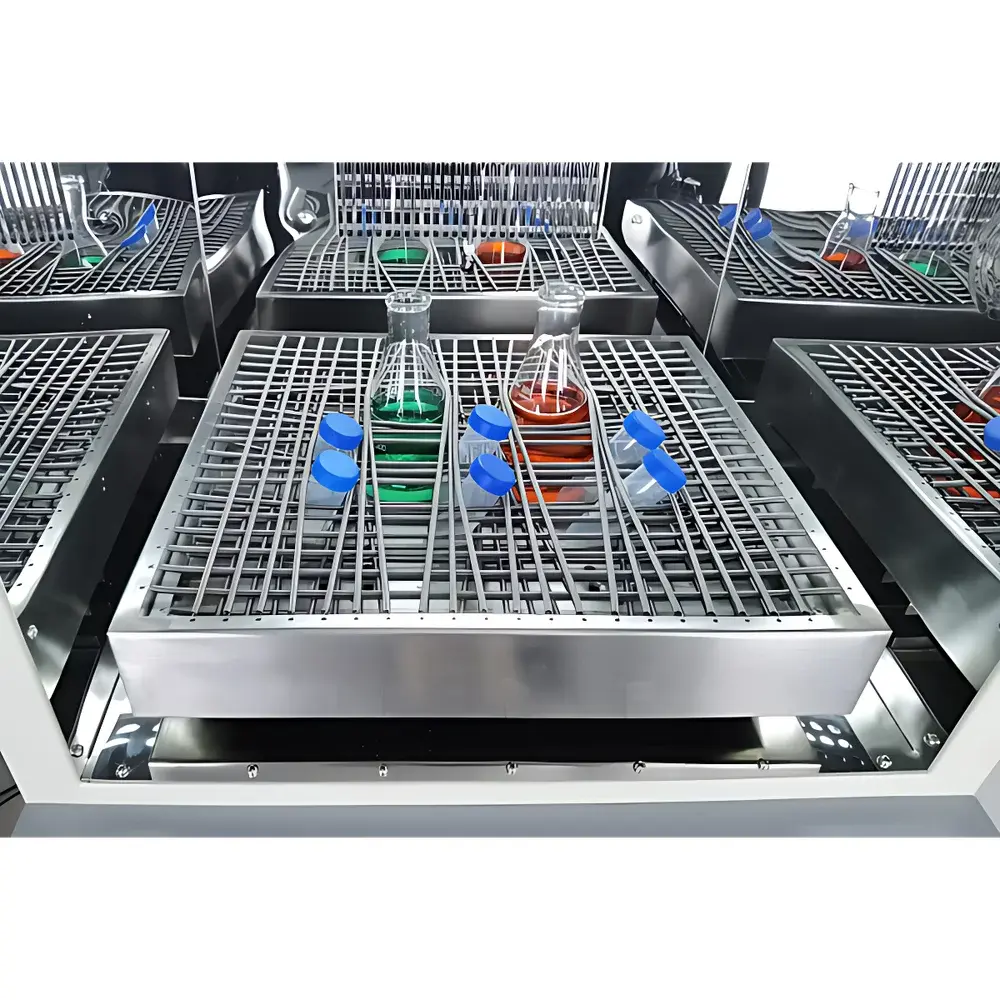
- GMP-Compliant Stainless Steel Chamber: Interior constructed from electropolished 304 stainless steel with seamless arc-corner geometry, facilitating rapid cleaning, residue-free decontamination, and compliance with pharmaceutical cleanroom standards (e.g., EU Annex 1, USP <1117>).
- High-Fidelity Thermal Control: Dual-mode (heating/cooling) system featuring an inverter-driven compressor using R134a refrigerant, delivering frost-free operation, energy savings exceeding 30%, and long-term temperature stability (±0.1 °C accuracy, ≤±0.5 °C uniformity).
- Precision Mechanical Drive: Single-axis balanced drive mechanism based on parallelogram dynamic balancing eliminates mechanical friction and harmonic vibration—ensuring low-noise (<55 dB), low-maintenance, and high-reproducibility oscillation over extended duty cycles.
- Advanced Human-Machine Interface: 7-inch true-color capacitive touchscreen with intuitive icon-driven navigation, real-time curve display, multi-segment program scheduling (5 programs × 30 segments), and configurable alarm thresholds for temperature, speed, and sensor faults.
- Triple-Layer Safety Architecture: Includes independent over-temperature cutoff, overspeed shutdown, leakage current protection, motor overload detection, and fail-safe UV sterilization mode—meeting IEC 61010-1 safety requirements for laboratory equipment.
Sample Compatibility & Compliance
The GS-2020R Plus accommodates a wide variety of vessel configurations via interchangeable platforms: standard bottle clamps (stainless steel mirror-finish, 360° elasticity, 420 HB hardness), spring-loaded trays, microplate adapters (supports up to two 96-well plates per shelf), tube racks, and adhesive pads. All contact surfaces are fabricated from corrosion-resistant 304 stainless steel (brushed or mirror-finished), ensuring compatibility with aggressive media including acidic buffers, organic solvents, and enzymatic digestion reagents. The chamber’s forced convection airflow pattern and uniform heat distribution meet ASTM E145-22 Class II performance criteria for laboratory ovens and incubators. Device firmware supports audit trail generation, user-level access control (three-tier permission hierarchy), and electronic record retention—facilitating compliance with FDA 21 CFR Part 11, EU Annex 11, and ISO/IEC 17025 documentation requirements.
Software & Data Management
Built-in data logging captures time-stamped records of setpoints, actual values, alarms, and operational events with configurable intervals (1 s to 60 min). Historical datasets—including real-time temperature/speed curves and deviation reports—are exportable via USB interface in CSV format for downstream analysis in MATLAB, Python, or LIMS platforms. Optional Ethernet/WiFi module enables remote monitoring and parameter adjustment through secure web-based dashboard (TLS 1.2 encrypted), supporting integration into centralized lab infrastructure. Software architecture includes full audit trail functionality with immutable timestamps, operator ID tagging, and change justification fields—fully aligned with ALCOA+ principles for data integrity in regulated environments.
Applications
- Bacterial and yeast culture expansion for bioreactor inoculum preparation
- Protein expression optimization in E. coli and Pichia pastoris systems
- Enzyme activity assays requiring controlled thermal and agitation profiles
- Hybridization and nucleic acid amplification protocols (e.g., qPCR master mix equilibration)
- Cell suspension culture of mammalian and insect lines under low-shear conditions
- Environmental microbiology studies involving soil/water sample enrichment
- Pharmaceutical stability testing per ICH Q5C guidelines
- Food safety validation (e.g., pathogen enrichment per ISO 6579-1)
FAQ
What is the maximum allowable load per shelf when operating at 1200 rpm?
The rated capacity remains unchanged at 214 kg total unit weight; however, sustained operation above 800 rpm is recommended only with balanced loads ≤75% of maximum flask volume to preserve mechanical longevity and thermal homogeneity.
Does the system support IQ/OQ/PQ documentation packages?
Yes—factory-supplied validation templates (including protocol drafts, test scripts, and summary reports) are available upon request and conform to GAMP5 v5.1 guidance for Category 3–4 laboratory instruments.
Can the unit be integrated into a Building Management System (BMS)?
Via optional Modbus TCP or BACnet/IP gateway module, enabling real-time status telemetry (temperature, speed, alarm state) and remote start/stop commands within enterprise-wide facility monitoring networks.
Is the UV lamp compliant with ISO 15858 for germicidal irradiation?
The 8 W UV-C lamp emits at 254 nm with intensity calibrated to deliver ≥40 µW/cm² at 15 cm distance—sufficient for surface decontamination per ISO 15858 Annex A recommendations.
What maintenance schedule is recommended for long-term reliability?
Biannual inspection of drive belt tension, bearing lubrication (sealed-for-life bearings require no routine greasing), and condenser coil cleaning; annual calibration verification of temperature and speed sensors using NIST-traceable reference standards.