
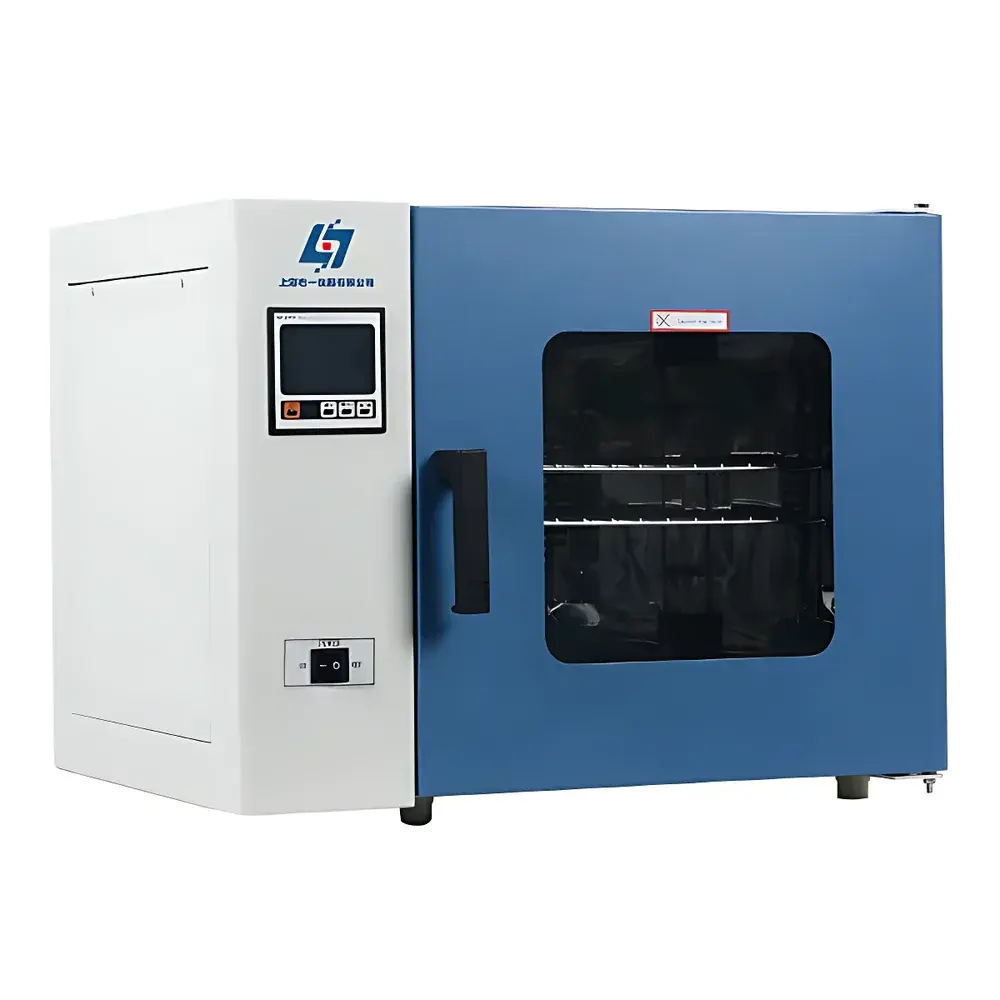
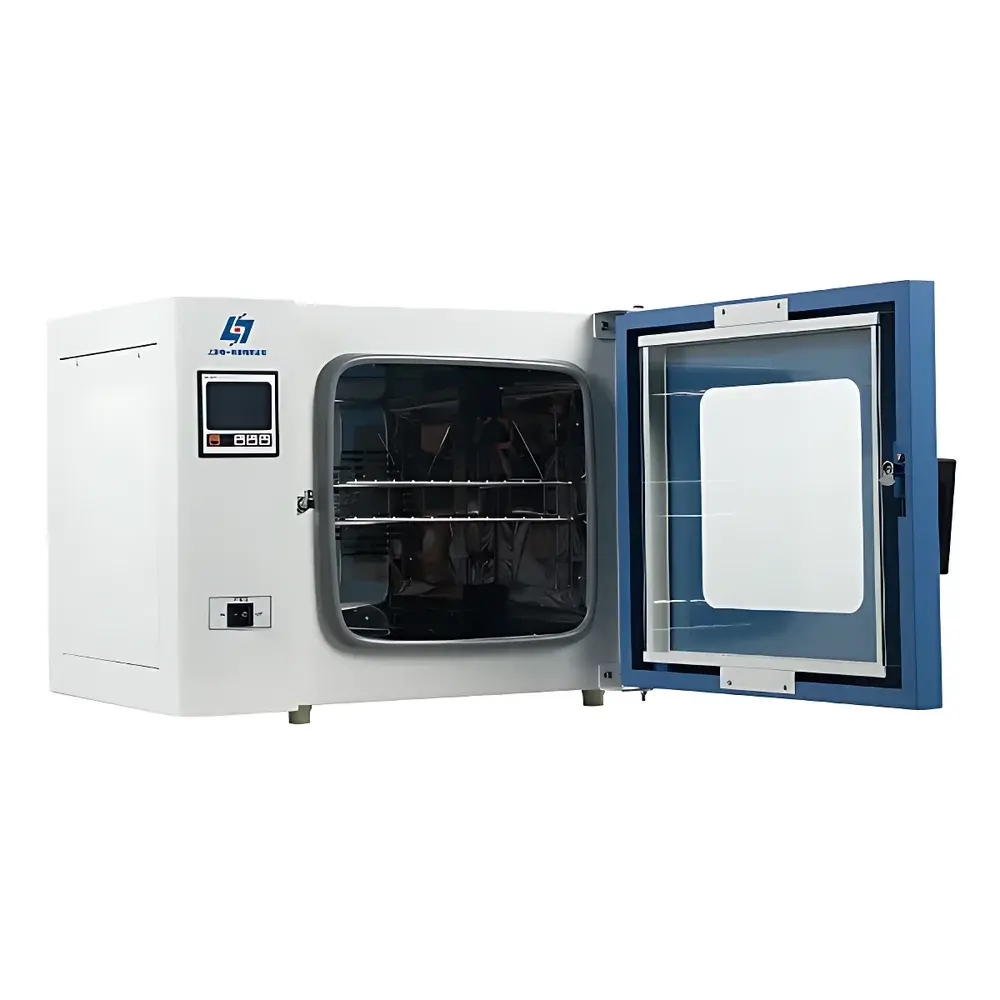
Shanghai Youyi DHG-9075A Precision Forced-Air Drying Oven
| Brand | Shanghai Youyi (SHYY) |
|---|---|
| Origin | Shanghai, China |
| Manufacturer | Yes |
| Type | Precision Drying Oven |
| Temperature Range | RT+20°C to 300°C |
| Temperature Uniformity | ±2.5% at 100°C |
| Temperature Fluctuation | ±1°C |
| Temperature Resolution | 0.1°C |
| Internal Dimensions (W×D×H) | 450×400×450 mm |
| External Dimensions (W×D×H) | 735×615×630 mm |
| Interior Material | Mirror-Finish Stainless Steel |
| Heating Method | Electric Resistive Heating |
| Power Consumption | 1550 W |
| Working Environment | 5–40°C ambient, ≤80% RH |
| Compliance | GB/T 30435–2013 |
Overview
The Shanghai Youyi DHG-9075A is a precision forced-air drying oven engineered for laboratory and industrial applications requiring stable thermal environments up to 300°C. It operates on the principle of convection-based heat transfer, utilizing a rear-mounted centrifugal blower and optimized air duct architecture to ensure uniform airflow distribution across the chamber. Unlike natural convection ovens, this model employs active air circulation—driven by a high-efficiency fan—to minimize thermal gradients and accelerate drying, curing, or conditioning processes. Its design conforms to GB/T 30435–2013, the Chinese national standard governing performance, safety, and metrological requirements for electric heating drying ovens. The unit is suitable for routine use in quality control laboratories, R&D facilities, and production support environments where repeatability, traceability, and operational safety are critical.
Key Features
- Microprocessor-based PID temperature controller with intuitive LCD menu interface — displays setpoint, real-time chamber temperature, and remaining hold time simultaneously.
- Robust thermal architecture: mirror-finish stainless steel interior (304 grade), cold-rolled steel exterior with electrostatic epoxy coating, and high-temperature silicone door gasket ensuring long-term sealing integrity.
- Optimized forced-air circulation system with rear-mounted blower and directional ducting — achieves ±2.5% temperature uniformity (measured per GB/T 30435 at 100°C, empty chamber).
- Dual-layer tempered glass observation window with integrated anti-fog design — enables continuous visual monitoring without compromising thermal stability or operator safety.
- Comprehensive safety redundancy: independent mechanical over-temperature cut-off (optional), power-loss parameter retention with auto-restart functionality, and audible/visual alarm activation upon deviation beyond ±1°C.
- Modular ventilation management: rear-mounted automatic intake/exhaust ports with passive moisture egress — eliminates need for manual vent adjustment during prolonged drying cycles.
Sample Compatibility & Compliance
The DHG-9075A accommodates a wide range of sample types including glassware, metal components, polymer films, pharmaceutical excipients, botanical extracts, and electronic substrates. Its 80 L effective volume (450 × 400 × 450 mm internal) supports multi-tier loading via adjustable stainless steel shelves (2 standard trays included). All materials in contact with the chamber — interior lining, shelf supports, and gasketing — comply with ISO 8573-1 for non-contaminating surfaces and exhibit no outgassing under sustained 300°C operation. While not certified to UL or CE for direct export, its electrical architecture meets IEC 61010-1:2010 requirements for laboratory equipment safety. For regulated environments, optional RS485 communication enables integration into GLP/GMP-compliant data logging systems adhering to FDA 21 CFR Part 11 audit trail specifications when paired with validated software.
Software & Data Management
The base configuration includes embedded firmware supporting programmable hold times (1–9999 minutes), ramp-soak profiles, and event-triggered alarms. Optional accessories expand digital capability: an RS485 interface (with Modbus RTU protocol support) allows bidirectional communication with SCADA or LIMS platforms; an embedded thermal printer provides hard-copy records of temperature logs compliant with ISO/IEC 17025 documentation requirements; and a multi-segment programmable controller (up to 30 segments) enables complex thermal protocols for material aging or accelerated stability testing. All logged data — including timestamps, setpoints, deviations, and alarm events — are timestamped with millisecond resolution and stored internally for ≥30 days (configurable retention).
Applications
This drying oven serves validated thermal processes across multiple sectors: residual solvent removal in API synthesis (per ICH Q5C guidelines), moisture content determination in food-grade powders (AOAC 950.46), pre-conditioning of composite specimens prior to tensile testing (ASTM D638), sterilization of reusable lab tools via dry-heat exposure (USP ), and thermal cycling of PCB assemblies during reliability qualification (IPC-TM-650 2.6.7). Its stable 300°C ceiling also supports ash content analysis (AOAC 942.05), catalyst calcination, and ceramic sintering pre-bake steps — provided samples remain chemically inert within the specified temperature band.
FAQ
What is the maximum recommended operating temperature for continuous use?
The DHG-9075A is rated for continuous operation at 300°C. Prolonged exposure above this limit may compromise sensor calibration, gasket elasticity, and insulation integrity.
Does the oven include validation documentation for IQ/OQ protocols?
Factory-supplied as-delivered calibration certificates (NIST-traceable PT100 sensor) are available upon request. Full IQ/OQ documentation packages require site-specific execution by qualified personnel using third-party thermocouple mapping hardware.
Can the unit be operated under inert atmosphere conditions?
Yes — an optional inert gas inlet port (with calibrated float flowmeter, 0–10 L/min range) permits nitrogen or argon purging to suppress oxidation during heat treatment of sensitive alloys or battery electrode materials.
Is remote monitoring supported out of the box?
No native Ethernet or Wi-Fi connectivity is integrated; however, the RS485 interface (optional add-on) enables connection to industrial gateways or PC-based monitoring software using standard serial-to-Ethernet converters.
What maintenance intervals are recommended for optimal performance?
Blower motor lubrication and door gasket inspection are advised every 12 months or after 2000 operational hours. Chamber cleanliness should be verified before each high-temperature run to prevent organic residue carbonization.



