
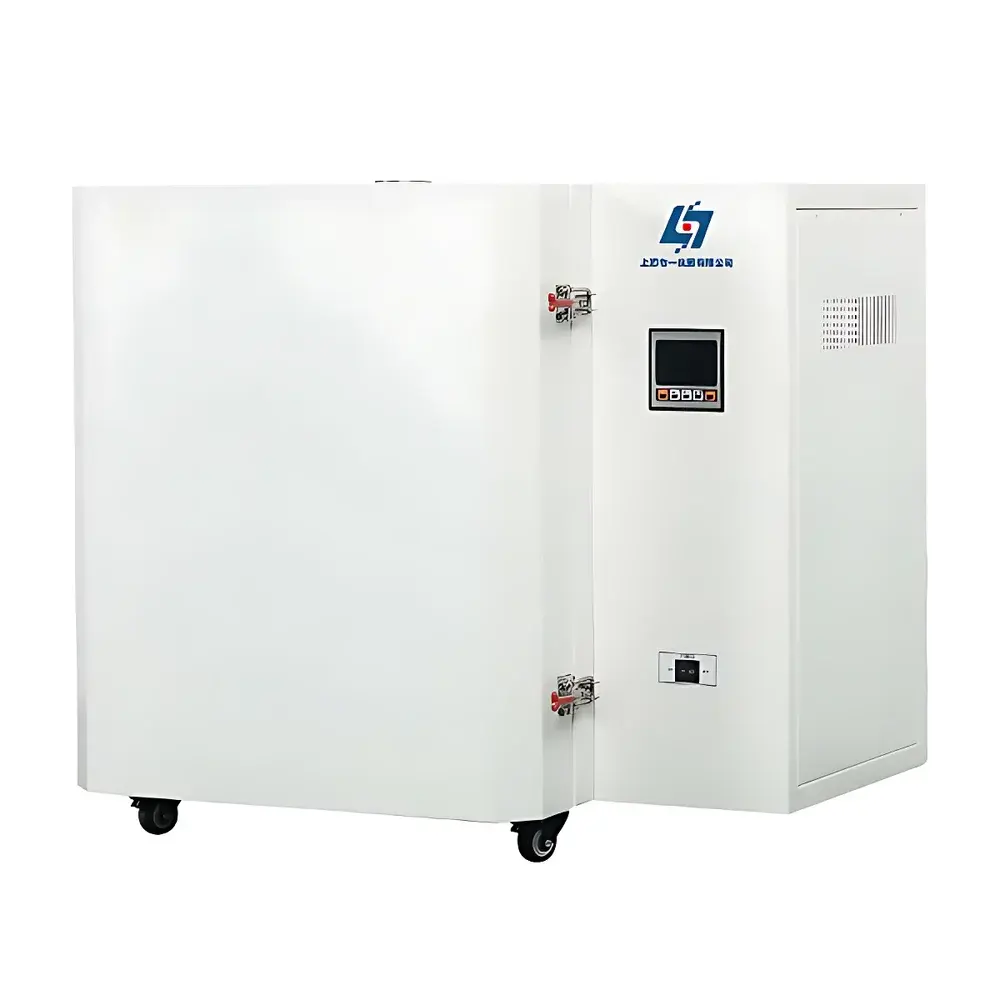
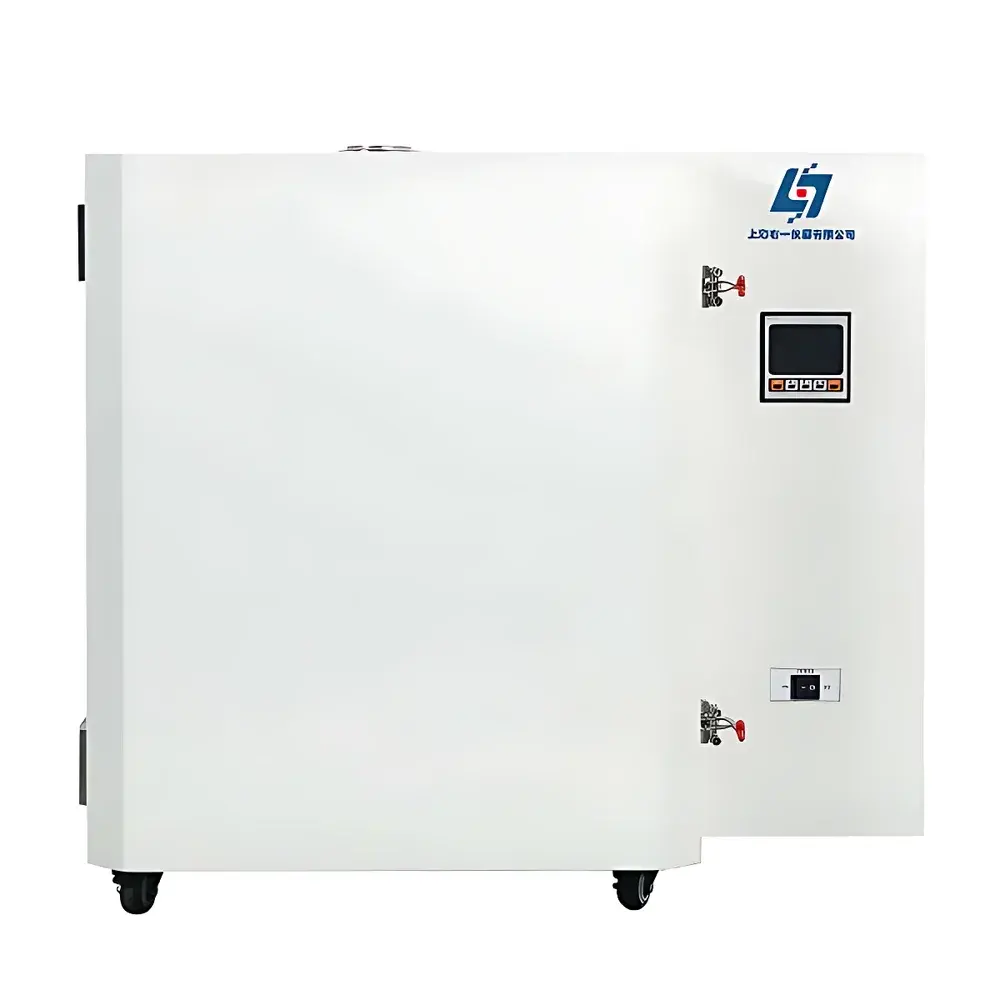
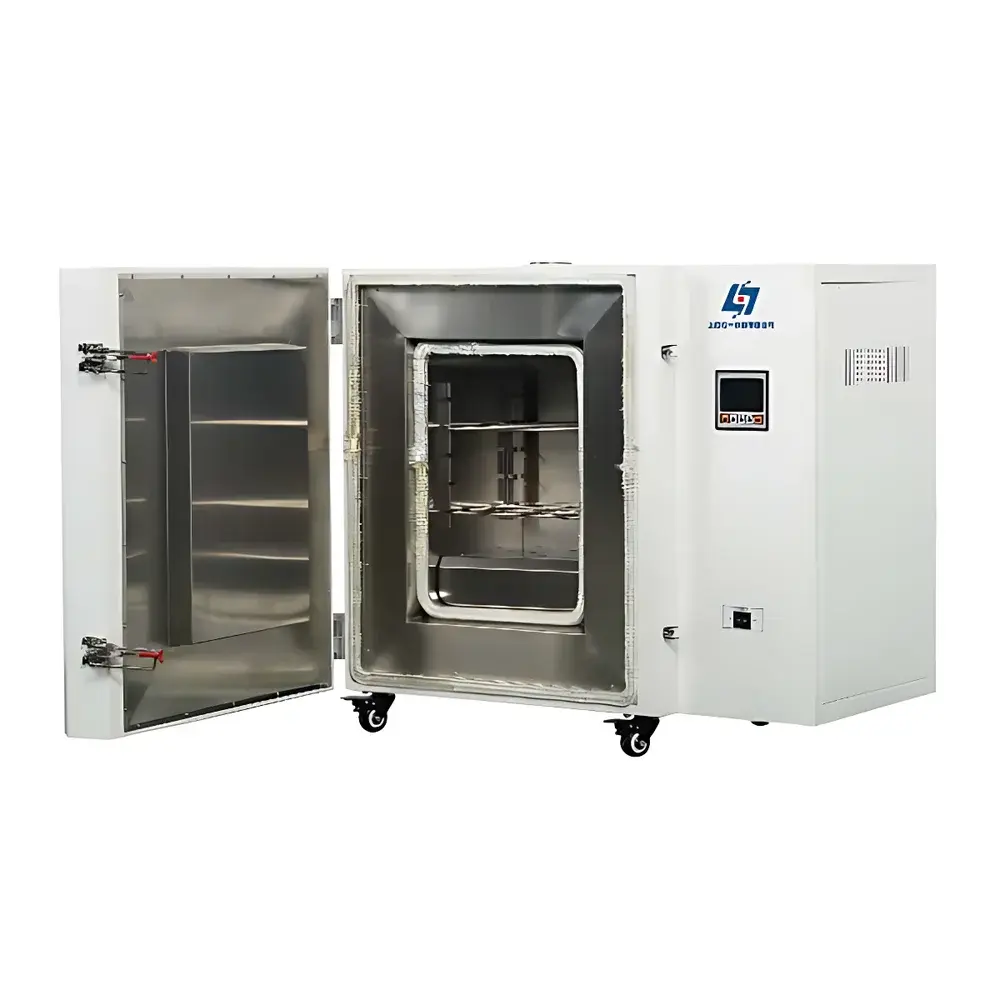
Shanghai Youyi DHG-9249AH High-Temperature Forced-Air Drying Oven
| Brand | Shanghai Youyi (SHYY) |
|---|---|
| Origin | Shanghai, China |
| Manufacturer Type | Direct Manufacturer |
| Instrument Type | High-Temperature Drying Oven |
| Temperature Range | RT+20°C to 600°C |
| Temperature Fluctuation | ±2.0°C |
| External Dimensions | 870 × 780 × 1100 mm |
| Internal Chamber Dimensions | 500 × 600 × 750 mm |
| Temperature Resolution | ±1°C |
| Chamber Material | Mirror-Finish Stainless Steel (SUS304) |
| Heating Method | Electric Resistance Heating |
| Temperature Uniformity | ±2.5% (measured at 100°C, empty chamber) |
Overview
The Shanghai Youyi DHG-9249AH is a precision-engineered high-temperature forced-air drying oven designed for rigorous thermal processing in research laboratories, quality control environments, and industrial R&D settings. Operating on the principle of convective heat transfer via a high-efficiency centrifugal blower system, it delivers stable, uniform thermal conditions across its 225 L stainless-steel working chamber (500 × 600 × 750 mm). With a maximum operating temperature of 600°C and programmable control down to ambient +20°C, the unit supports critical applications including ash content determination (per ASTM E1755), thermal aging of polymeric materials (ISO 188), pre-conditioning of ceramic substrates, catalyst calcination, and residual solvent removal from coated components. Its robust architecture—featuring dual-layer insulation with high-density glass fiber, ceramic-fiber door gasketing, and cold-rolled steel exterior with electrostatic epoxy coating—ensures long-term dimensional stability and minimal thermal drift under continuous duty cycles.
Key Features
- Microprocessor-based PID temperature controller with 4.3-inch LCD interface, supporting setpoint programming, real-time monitoring, timer function (0–9999 min), power limiting, and auto-tuning capability
- Pre-heating air chamber design: incoming ambient air is pre-warmed and thoroughly mixed before entering the working chamber, minimizing thermal gradients during ramp-up and improving transient response
- High-performance multi-blade centrifugal fan with adjustable airflow modulation, enabling optimized convection patterns for enhanced temperature homogeneity (±2.5% at 100°C, per IEC 60068-3-5)
- Double-wall construction with 100 mm thick glass fiber insulation between chamber and outer casing; reduces surface temperature rise and improves energy efficiency
- Ceramic rope door seal rated for continuous operation up to 600°C—resistant to thermal degradation, compression set, and oxidation over extended service life
- Adjustable stainless-steel shelving system with quick-release clip mechanism; standard configuration includes 2 shelves (expandable to 13)
- Power-fail recovery mode with non-volatile parameter memory: automatically resumes prior setpoints and timing sequences after interruption
Sample Compatibility & Compliance
The DHG-9249AH accommodates a broad range of sample formats—including crucibles, Petri dishes, metal trays, quartz boats, and polymer molds—within its spacious, corrosion-resistant chamber. All internal surfaces are fabricated from mirror-finish SUS304 stainless steel, ensuring compatibility with mildly acidic or alkaline residues and facilitating rapid cleaning between runs. The oven meets structural and safety requirements outlined in GB/T 5170.2–2017 (Electrical Equipment for Environmental Testing – Temperature Test Equipment) and complies with general laboratory equipment safety standards per IEC 61010-1. Optional RS485 communication enables integration into centralized lab management systems supporting audit trails compliant with GLP and GMP documentation frameworks (e.g., FDA 21 CFR Part 11 when paired with validated software).
Software & Data Management
While the base model operates via embedded firmware, optional accessories extend digital functionality: an RS485 interface (with included PC software) permits remote monitoring, data logging, and export of time-stamped temperature profiles in CSV format. The optional intelligent program controller supports up to 30 segments of ramp-soak profiles, ideal for complex thermal protocols such as sintering cycles or stepwise dehydration. An embedded thermal printer (optional) provides hard-copy records for SOP adherence and regulatory submissions. All firmware updates are performed via USB port without requiring factory service intervention.
Applications
- Thermal gravimetric analysis (TGA) sample preparation and pre-drying
- Moisture content testing per ISO 11885, ASTM D2231, and USP <731>
- Heat treatment of metallurgical specimens and brazing fixtures
- Drying and curing of electrode coatings in battery R&D
- Ash residue quantification in food, pharmaceutical, and environmental samples
- Accelerated aging studies of elastomers and thermoset composites
- Pre-baking of PCB assemblies and semiconductor packaging substrates
FAQ
What is the maximum continuous operating temperature?
The DHG-9249AH is rated for continuous operation at 600°C. Short-term excursions beyond this limit are not recommended and may compromise sensor calibration and gasket integrity.
Is the oven suitable for inert atmosphere processing?
Yes—when equipped with the optional inert gas inlet kit (including brass fitting, ceramic-sealed valve, and calibrated rotameter), the chamber can be purged with nitrogen or argon to prevent oxidation during high-temperature treatments.
How is temperature uniformity verified?
Uniformity is measured using nine calibrated PT100 sensors placed in a 3×3 grid at the center plane of the empty chamber, per IEC 60068-3-5 methodology. Reported values reflect deviation from the setpoint at steady state.
Can the oven be integrated into a LIMS or MES platform?
With the RS485 interface and Modbus RTU protocol support, the unit can transmit real-time temperature data and status flags to enterprise-level systems, provided appropriate middleware and validation documentation are in place.
What maintenance is required for long-term reliability?
Routine inspection of door seal compression, cleaning of air intake filters every 200 operational hours, and annual verification of temperature sensor accuracy using NIST-traceable reference standards are recommended.



