
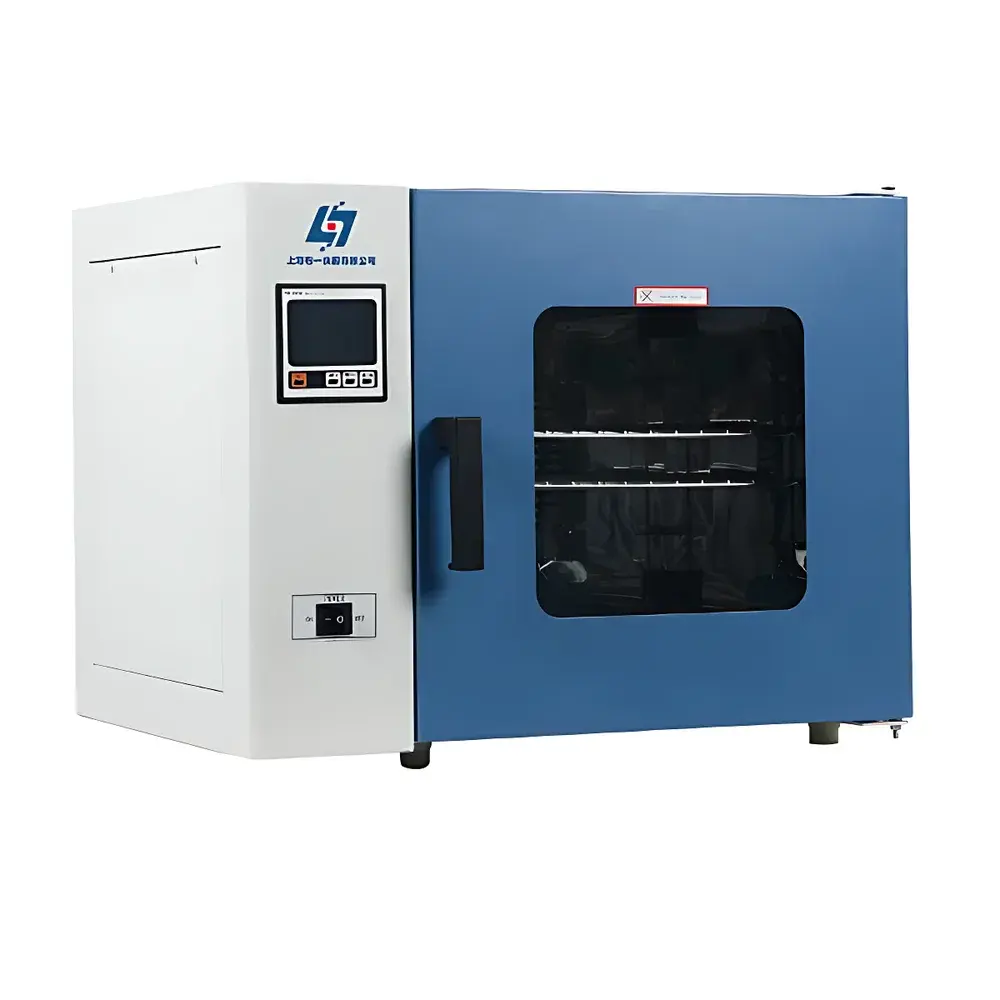
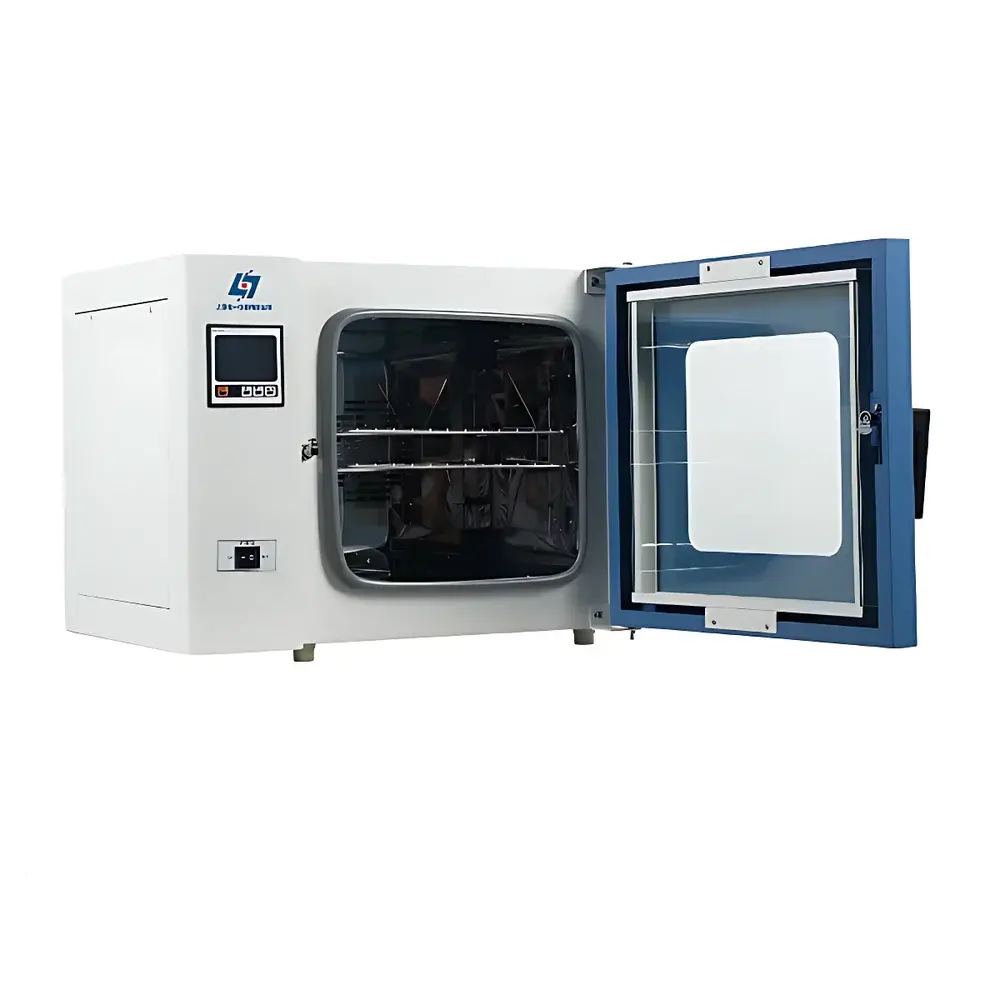
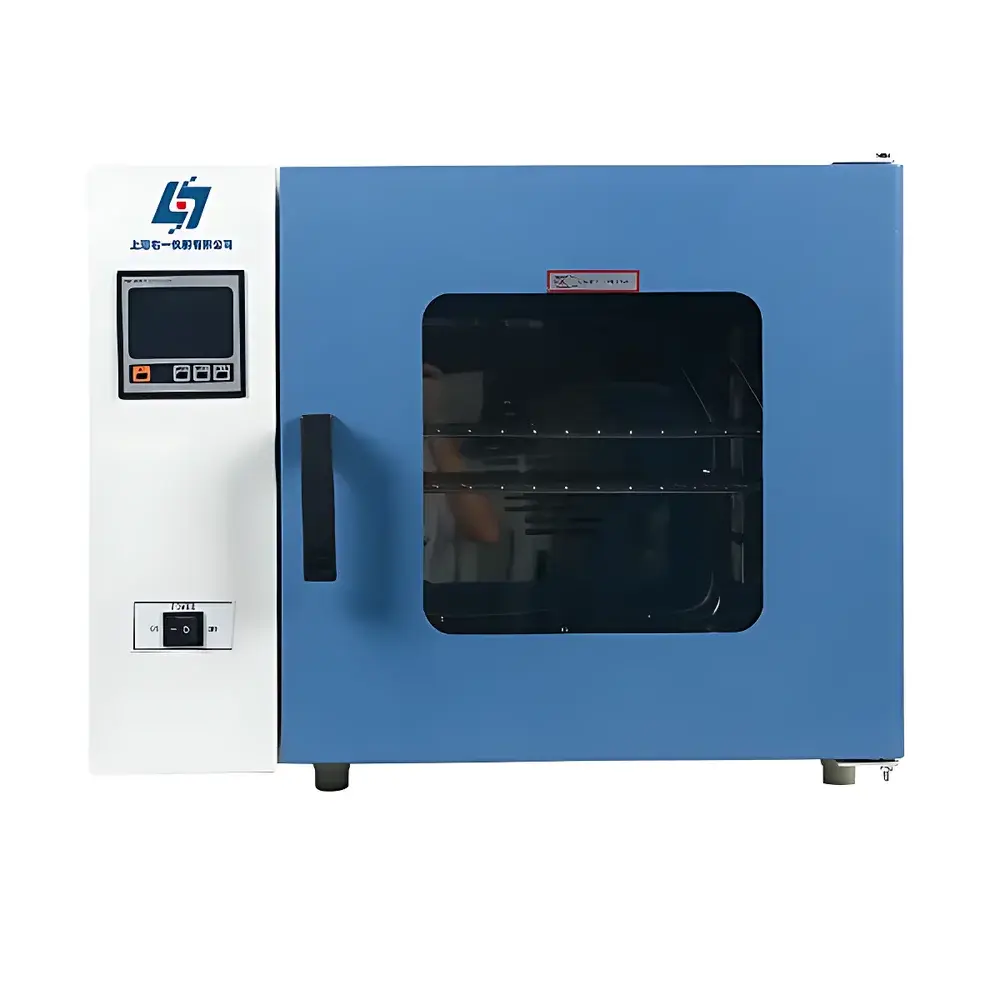
Shanghai Youyi GRX-9203A Forced-Convection Hot-Air Sterilization Oven (Dry Heat Autoclave)
| Brand | Shanghai Youyi (SHYY) |
|---|---|
| Origin | Shanghai, China |
| Manufacturer Type | Direct Manufacturer |
| Instrument Category | Dry Heat Sterilization Oven |
| Model | GRX-9203A |
| Temperature Range | RT+10°C to 250°C |
| Temperature Uniformity | ±2.5% |
| Temperature Fluctuation | ±1°C |
| Temperature Resolution | 0.1°C |
| Internal Chamber Dimensions (W×D×H) | 600×595×650 mm |
| External Dimensions (W×D×H) | 880×800×830 mm |
| Chamber Material | Mirror-Finish Stainless Steel (SUS304) |
| Door | Double-Layer Tempered Glass Viewing Window with High-Temperature Silicone Gasket |
| Power Rating | 2500 W |
| Operating Ambient Temperature | +5°C to +40°C |
| Standard Load Capacity | 220 L |
| Timer Range | 1–9999 minutes |
| Safety Features | Independent Over-Temperature Cut-Off, Power-Failure Data Retention, Auto-Recovery on Power Resumption |
Overview
The Shanghai Youyi GRX-9203A Forced-Convection Hot-Air Sterilization Oven is a precision-engineered dry heat sterilization system designed for reliable microbial inactivation in pharmaceutical, clinical, microbiological, and academic laboratories. Unlike moist-heat methods, dry heat sterilization relies on sustained elevated temperatures to induce irreversible oxidative damage to cellular components—including lipid peroxidation of membranes, denaturation of structural and enzymatic proteins, and electrolyte concentration-induced cytotoxicity. At temperatures ≥160°C maintained for ≥2 hours—or ≥170°C for ≥1 hour—the GRX-9203A achieves SAL (Sterility Assurance Level) of 10⁻⁶ for bacterial spores such as *Geobacillus stearothermophilus*, in accordance with ISO 17665-1 and USP . Its forced-air circulation architecture ensures rapid thermal equilibration and minimizes cold spots, enabling consistent validation across the entire 220 L chamber volume.
Key Features
- Microprocessor-based PID temperature control system with real-time digital display, offering 0.1°C resolution and ±1°C stability under no-load conditions per ASTM E2294.
- Forced convection design with axial fan and optimized baffle configuration ensures uniform airflow distribution—validated at ±2.5% temperature uniformity across all three axes (horizontal, vertical, depth).
- Mirror-finish SUS304 stainless steel interior chamber, corrosion-resistant and non-porous, facilitating cleanroom-compatible decontamination and compliance with ISO 14644-1 Class 7/8 surface requirements.
- Dual-layer tempered glass observation window with high-temperature silicone gasket (rated to 300°C), providing unobstructed visual monitoring without thermal leakage or condensation.
- Independent mechanical over-temperature safety cut-off (non-resettable fuse) activated above 270°C, operating independently from the main controller for fail-safe protection.
- Intelligent power-loss recovery: All setpoints, timer values, and operational history are retained in non-volatile memory; system resumes prior state upon re-energization.
- Ergonomic adjustable stainless steel shelving (standard: 3 shelves, load-rated to 15 kg/shelf), compatible with standard ISO/IEC 17025-compliant calibration trays and biological indicators.
Sample Compatibility & Compliance
The GRX-9203A accommodates a broad range of heat-stable materials requiring depyrogenation or sterility assurance: glassware (vials, pipettes, Petri dishes), metal instruments (forceps, scalpels), ceramic components, and silicone tubing. It is unsuitable for plastics, rubber, or liquids. Validation-ready design supports IQ/OQ/PQ protocols per FDA 21 CFR Part 11 (when paired with optional RS485 interface and audit-trail-capable software). Meets EN 61010-1:2019 for laboratory equipment safety and complies with IEC 60068-2-2 (dry heat testing) environmental stress methodology. Optional calibrated PT100 probe ports (25 mm or 50 mm) enable third-party thermocouple insertion for mapping studies aligned with EU GMP Annex 15 and WHO TRS 961.
Software & Data Management
While the base unit operates via intuitive LCD menu navigation (English-language interface), optional connectivity modules extend its traceability and regulatory utility. The RS485 communication port (add-on, $600) enables integration with LabVantage, Empower, or custom SCADA systems using Modbus RTU protocol. Paired with the optional embedded thermal printer ($1,500), users generate time-stamped, tamper-evident hardcopy records of cycle parameters—including start/end time, peak temperature, dwell duration, and alarm events—for GLP/GMP documentation. Multi-segment programmable controller ($1,500) supports up to 30 ramp-hold steps, essential for depyrogenation cycles requiring controlled heating/cooling profiles per USP .
Applications
- Depyrogenation of glass and stainless-steel components used in aseptic processing (e.g., vial stoppers, filling needles, filter housings).
- Sterilization of heat-stable labware prior to endotoxin testing (LAL assay) or microbial limit testing (USP /).
- Drying and pre-sterilization conditioning of culture media components and lyophilization accessories.
- Thermal validation of packaging integrity for sterile barrier systems exposed to dry heat environments.
- Accelerated aging studies for medical device packaging per ISO 11607-1, utilizing controlled 60–80°C sub-sterilization regimes.
FAQ
What is the minimum recommended sterilization cycle for routine use?
For general microbiological sterilization of clean, dry glassware, 180°C for 30 minutes is validated; for depyrogenation of glass vials, 250°C for 45 minutes is required per USP .
Can the GRX-9203A be used for moisture-sensitive samples?
Yes—dry heat eliminates water-related degradation risks (e.g., hydrolysis, oxidation catalysis) inherent in autoclaving, making it ideal for anhydrous powders, desiccants, and hydrophobic polymers.
Is calibration certificate included with shipment?
No—calibration is performed at factory using NIST-traceable reference standards, but formal ISO/IEC 17025 calibration reports are available upon request at additional cost.
How often should temperature uniformity mapping be performed?
Per EU GMP Annex 15, initial qualification requires 3 consecutive successful cycles; requalification is mandated after major maintenance, relocation, or every 12 months—whichever occurs first.
Does the oven support remote monitoring via Ethernet or Wi-Fi?
Not natively; however, the RS485 interface allows connection to industrial gateways for protocol translation into Ethernet/IP or MQTT, enabling cloud-based monitoring in validated infrastructure.



