
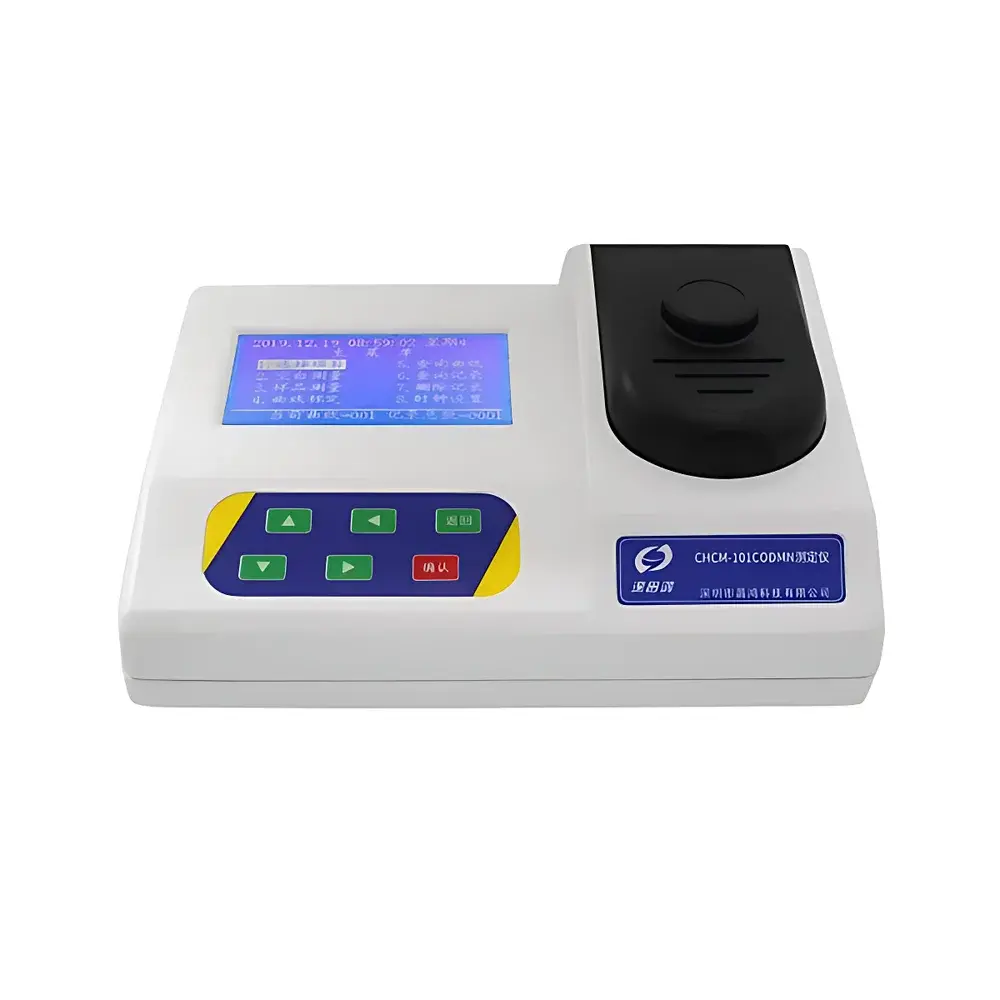
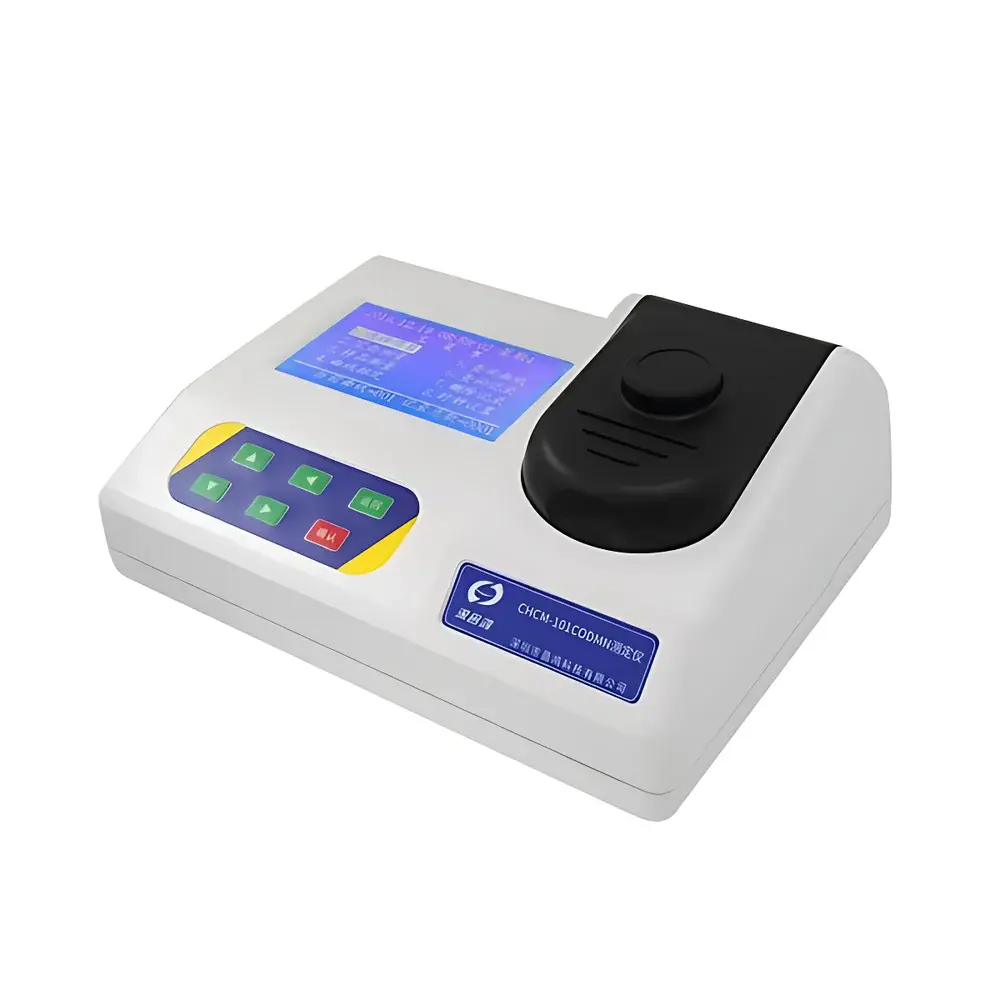
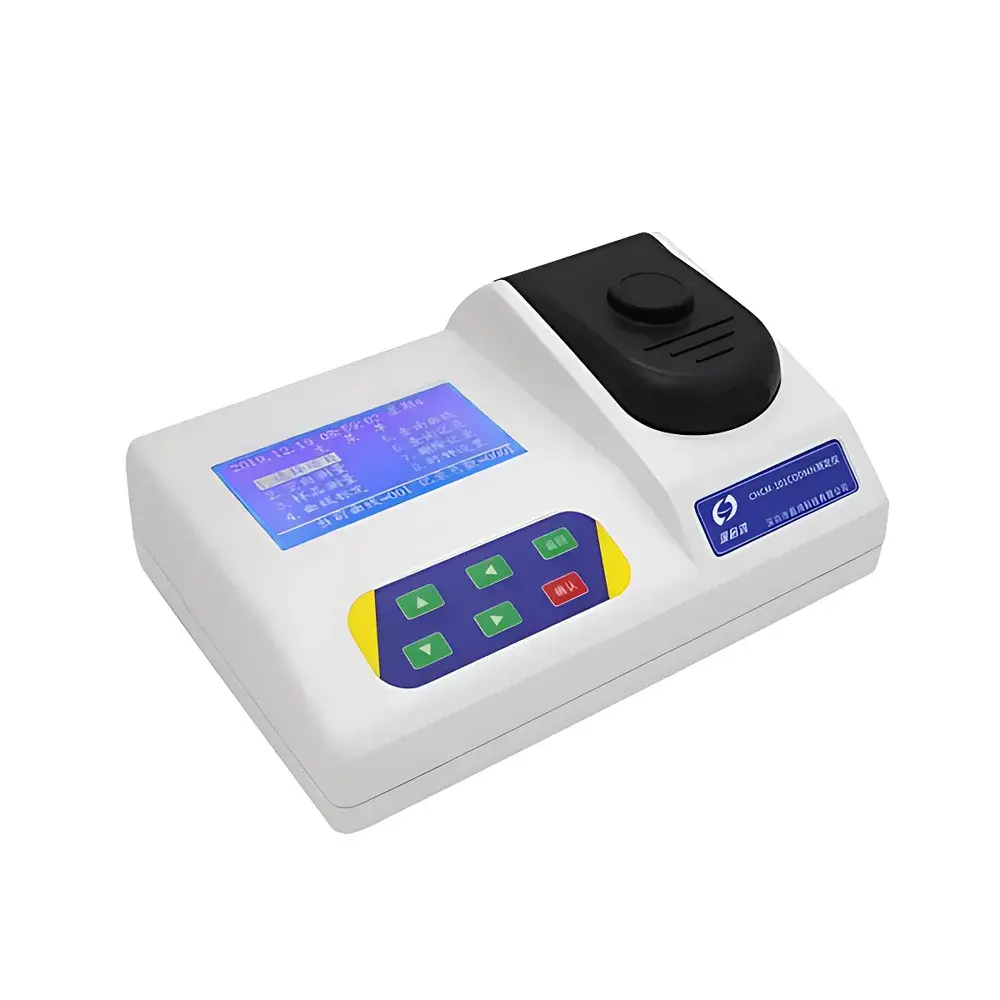
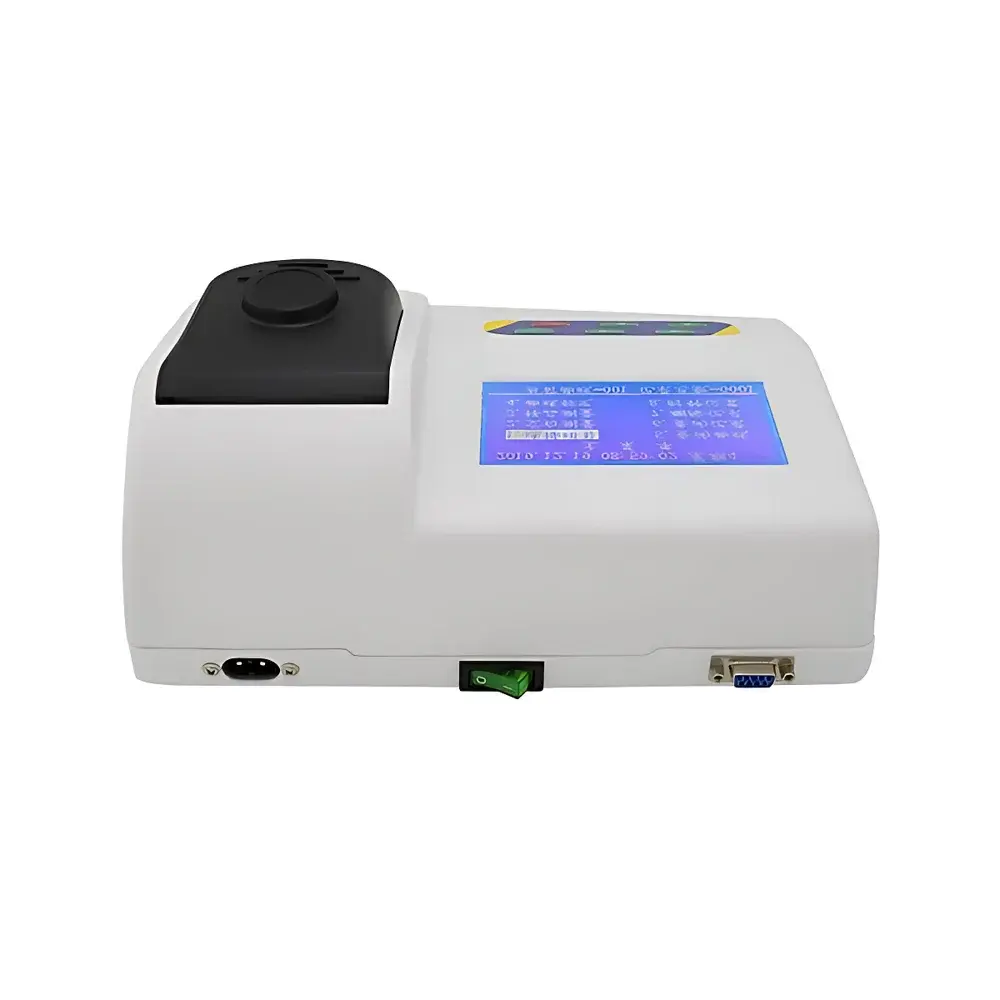
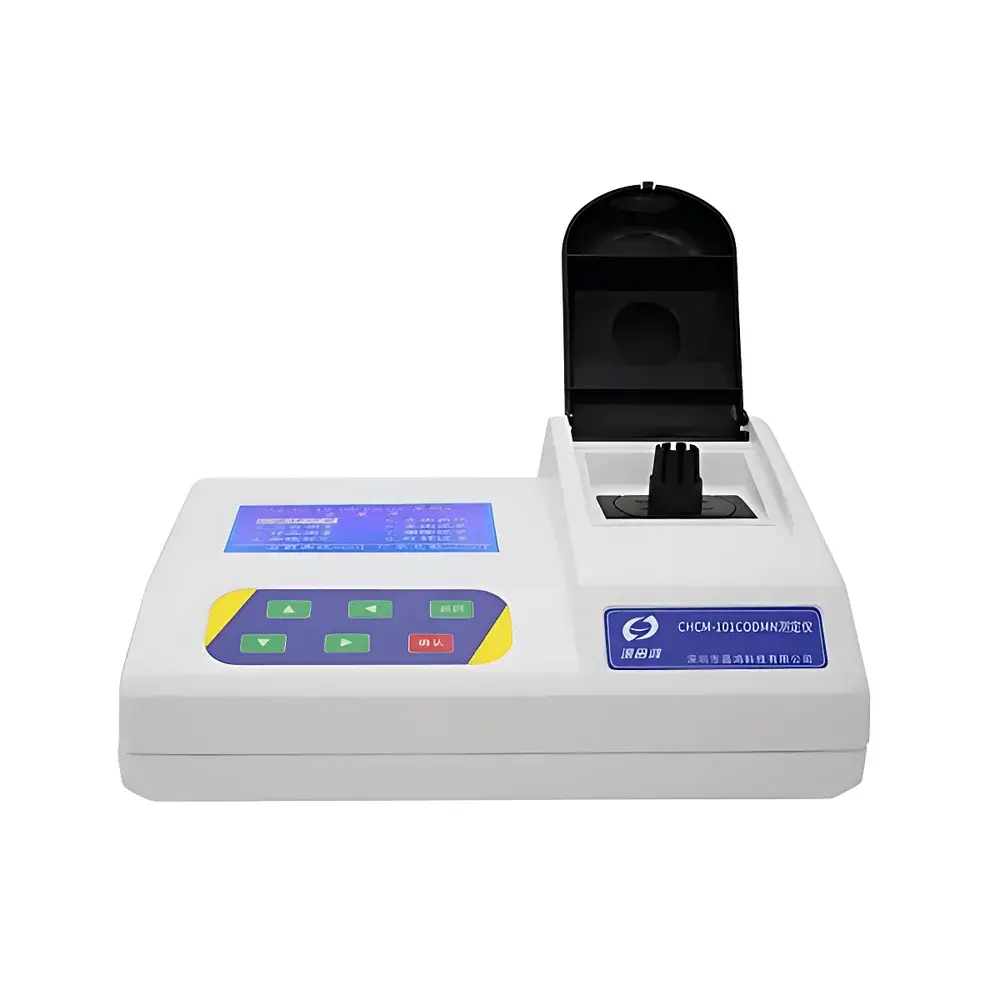
Shenchanghong CHCM-101 Potassium Permanganate Index (CODMn) Analyzer
| Brand | Shenchanghong |
|---|---|
| Model | CHCM-101 |
| Origin | Guangdong, China |
| Type | Laboratory Benchtop Analyzer |
| Measurement Principle | Acidic Potassium Permanganate Oxidation with Photometric Detection at 525 nm |
| Measurement Range | 0–10 mg/L (dilutable for higher concentrations) |
| Detection Limit | 0.2 mg/L |
| Resolution | 0.01 mg/L |
| Accuracy | ±4% of reading |
| Repeatability | ≤3% RSD |
| Digestion Temperature | 100 °C ±1.5 °C |
| Digestion Time | 30 min |
| Optical Stability | ≤0.002 A / 20 min |
| Dimensions | 266 × 220 × 130 mm |
| Weight | 1.0 kg |
| Data Storage | Up to 1000 measurement records with non-volatile memory |
| Built-in Calibration Curves | 20 user-selectable curves |
| Display | Backlit LCD with Chinese interface |
| Housing Material | Corrosion-resistant molded ABS |
Overview
The Shenchanghong CHCM-101 Potassium Permanganate Index (CODMn) Analyzer is a dedicated benchtop instrument engineered for the quantitative determination of the permanganate index—commonly referred to as CODMn—in surface water, drinking water, groundwater, and low-pollution wastewater samples. Unlike dichromate-based COD (CODCr) methods, CODMn employs acidic potassium permanganate as the oxidant under controlled thermal conditions (100 °C ±1.5 °C for 30 minutes), making it suitable for regulatory compliance with national and regional standards for clean water assessment (e.g., GB/T 5750.7–2006, ISO 8467:1993, and APHA Standard Methods 5210 B). The analyzer integrates digestion and photometric detection into a single, reusable quartz-glass digestion-cuvette, minimizing cross-contamination and procedural variability. Absorbance is measured at 525 nm using a narrow-band interference optical system paired with a high-intensity, long-life cold light source—ensuring stable baseline performance and high signal-to-noise ratio over extended operational cycles.
Key Features
- Integrated digestion–detection cuvette design: Chemically resistant, borosilicate-based tube rated for repeated use (>500 cycles) without optical degradation or thermal deformation.
- Optical architecture: Dual-beam compensated photometry with temperature-stabilized LED source and precision 525 nm interference filter; optical drift ≤0.002 A over 20 minutes.
- Embedded calibration management: Supports up to 20 preloaded or user-defined calibration curves; automatic curve selection based on sample dilution factor.
- Data integrity assurance: Non-volatile flash memory retains ≥1000 measurement records—including date/time stamp, operator ID, dilution factor, and raw absorbance—with full retention during power loss.
- Robust mechanical construction: Injection-molded ABS housing with IP32-rated enclosure; resistant to common laboratory reagents including sulfuric acid, phosphoric acid, and KMnO4 solutions.
- Electromagnetic resilience: Incorporates V/F conversion circuitry, software watchdog timers, and redundant error-checking routines to maintain operational reliability in shared lab environments with variable power quality.
Sample Compatibility & Compliance
The CHCM-101 is validated for use with clarified, low-turbidity aqueous matrices meeting ISO 8467 requirements for suspended solids (<5 mg/L) and chloride ion concentration (<300 mg/L). It complies with methodological prerequisites for GB/T 5750.7–2006 (China’s Standard Method for Drinking Water Quality Analysis) and aligns with the procedural framework of ISO 8467:1993 for permanganate oxidizability. While not designed for high-chloride or highly colored industrial effluents, it supports sample pretreatment protocols including vacuum filtration (0.45 µm membrane) and matrix-matched standard addition for trace-level validation. Instrument output meets GLP documentation requirements when paired with external audit logs; data export via USB supports traceable reporting compatible with LIMS integration.
Software & Data Management
The embedded firmware provides a unified Chinese-language interface for all operations—calibration, blanking, measurement, curve editing, and data review—without requiring external PC software. All parameters are stored in EEPROM with write-cycle protection. Measurement records include timestamp (RTC-backed), operator code input, digestion batch ID, and auto-calculated concentration with uncertainty propagation based on calibration curve residuals. Export functionality supports CSV format via USB mass-storage mode, enabling post-acquisition statistical analysis (e.g., ANOVA, control charting per ISO/IEC 17025:2017 Clause 7.7). No proprietary drivers or cloud dependencies are required.
Applications
- Drinking water quality surveillance in municipal treatment plants and distribution networks.
- Environmental monitoring of rivers, lakes, and reservoirs under national surface water classification schemes (e.g., Class I–III per China’s Environmental Quality Standards for Surface Water GB 3838–2002).
- Source water assessment for bottled water production facilities.
- Educational laboratories conducting standardized water chemistry experiments per APHA or national curriculum guidelines.
- Field-deployable QA/QC verification when operated from portable power supplies (12 V DC input option available).
FAQ
What is the difference between CODMn and CODCr?
CODMn uses potassium permanganate under mild acidic conditions and reflects oxidizable organic matter in relatively clean waters; CODCr employs potassium dichromate under strong acidic reflux and measures broader organic load, including refractory compounds.
Can the CHCM-101 measure samples with turbidity or particulates?
No—samples must be filtered through a 0.45 µm membrane prior to analysis to avoid scattering artifacts and ensure adherence to ISO 8467 optical path requirements.
Is the instrument compliant with FDA 21 CFR Part 11?
The CHCM-101 does not include electronic signature or audit-trail modules required for Part 11 compliance; however, its raw data export and immutable storage support retrospective validation in regulated environments when used with complementary documentation systems.
How often should the optical system be verified?
We recommend quarterly verification using NIST-traceable neutral density filters or certified liquid standards (e.g., potassium permanganate reference solutions at 2.0 and 8.0 mg/L).
What maintenance is required for long-term stability?
Annual inspection of digestion heater uniformity and photometer zero/baseline drift; replacement of cuvettes only upon visible etching or >0.005 A baseline shift after blanking.
Related Products







