
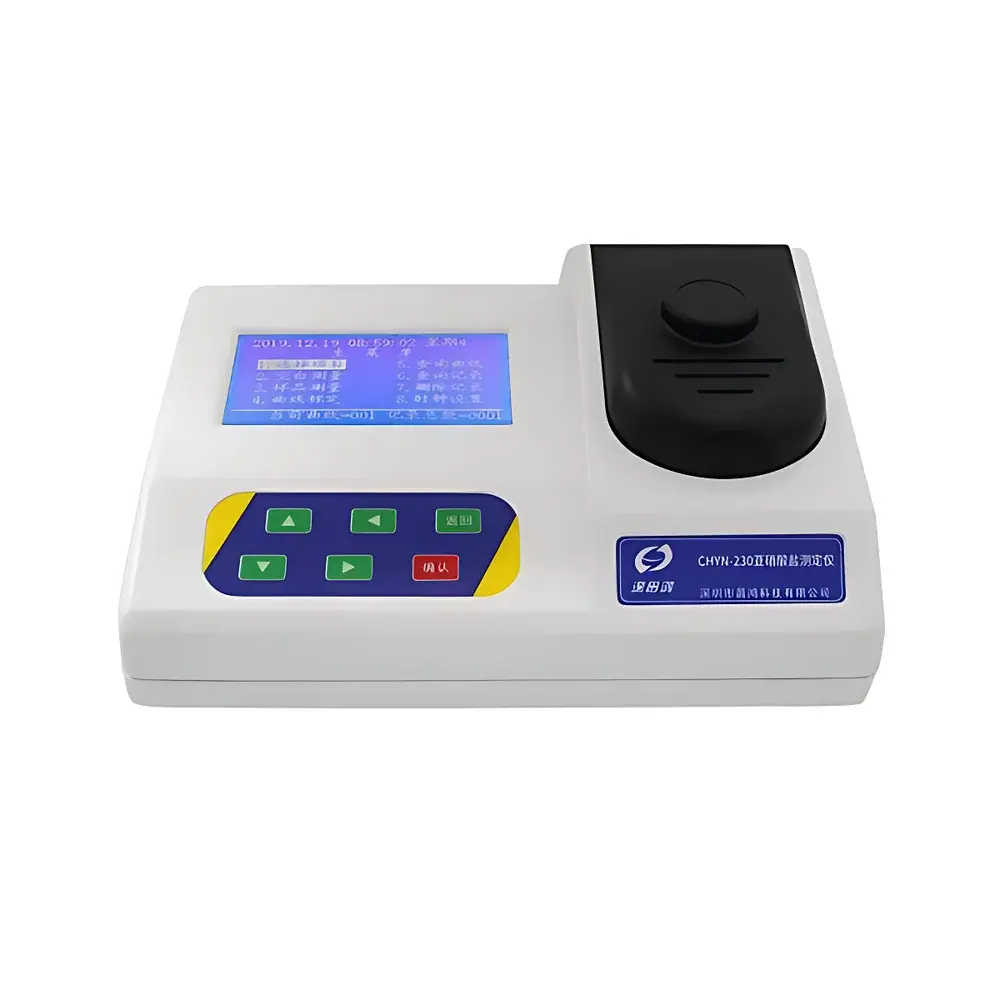
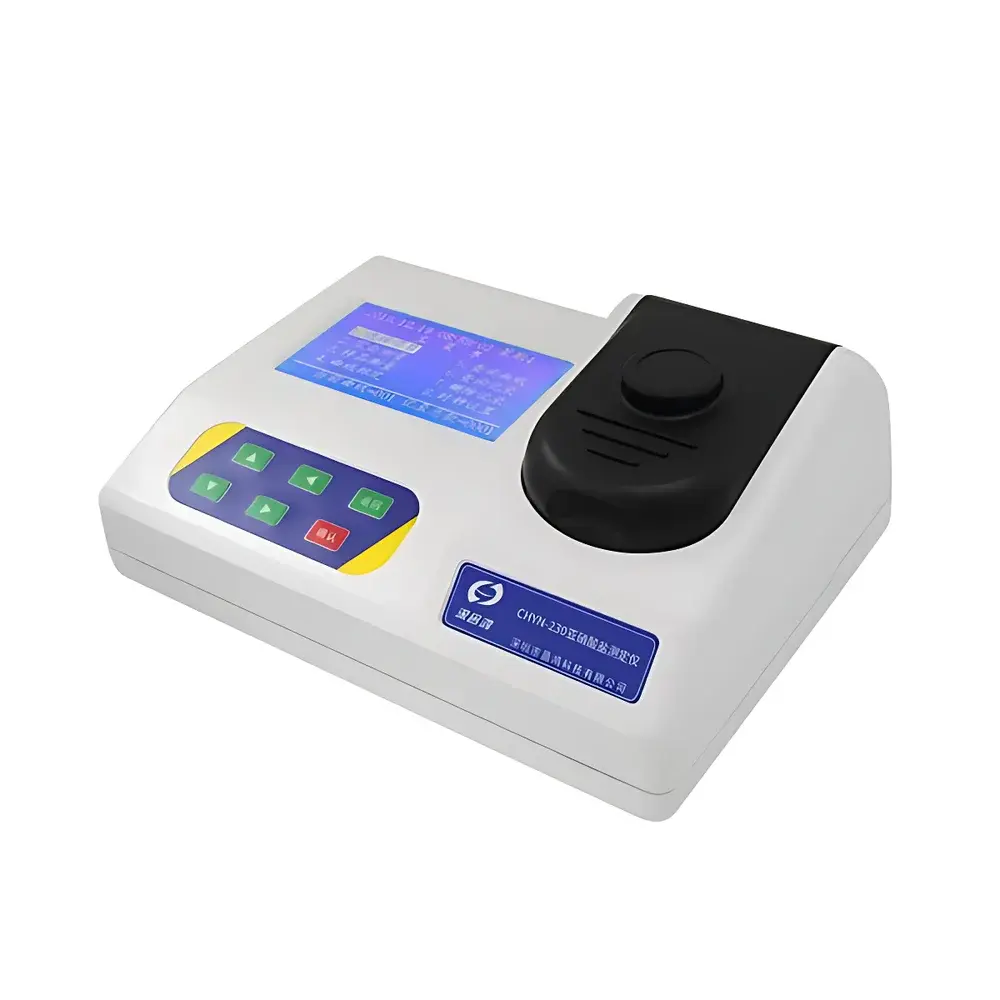
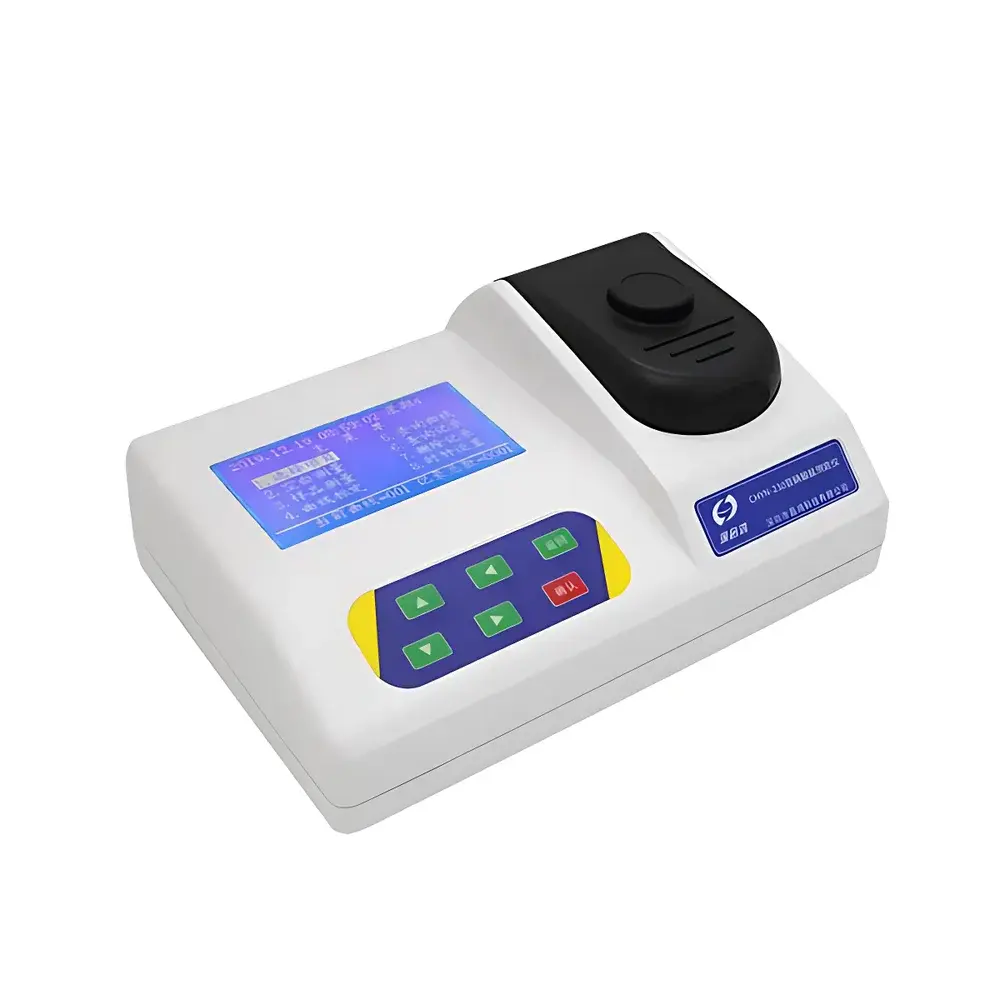
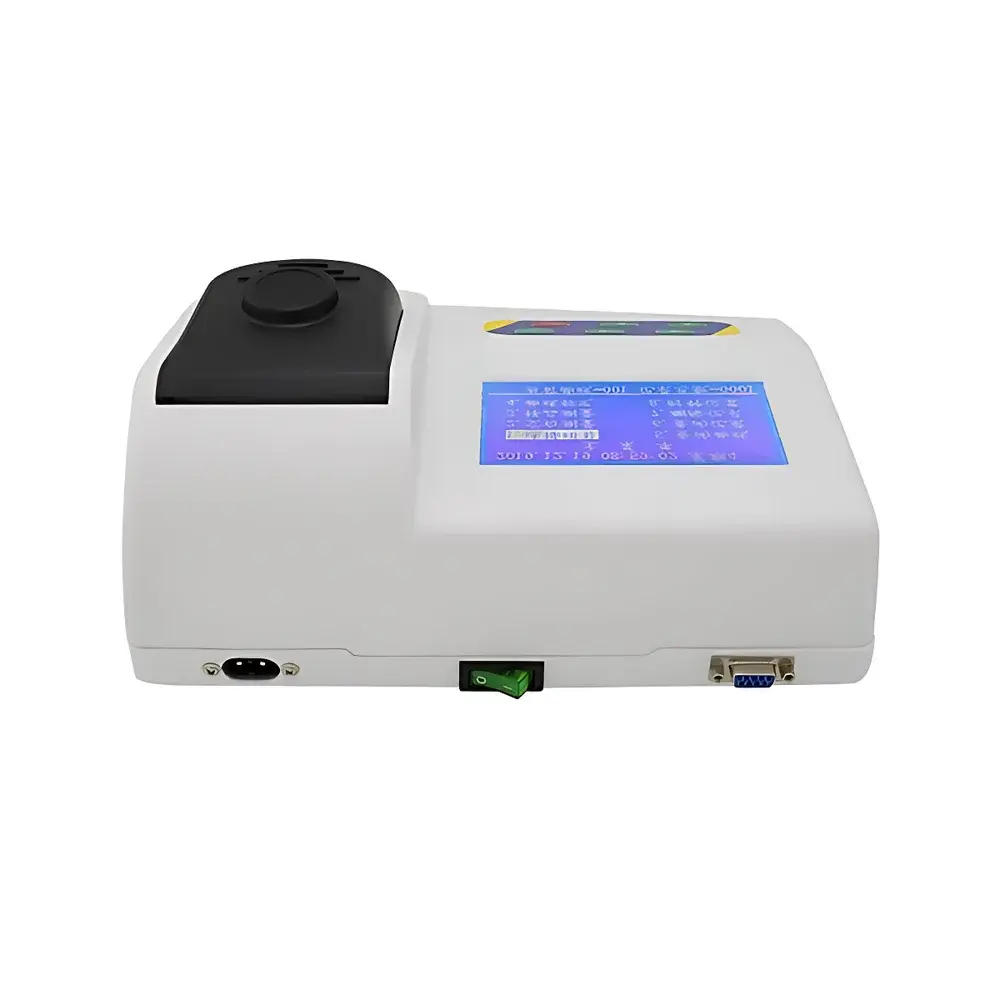
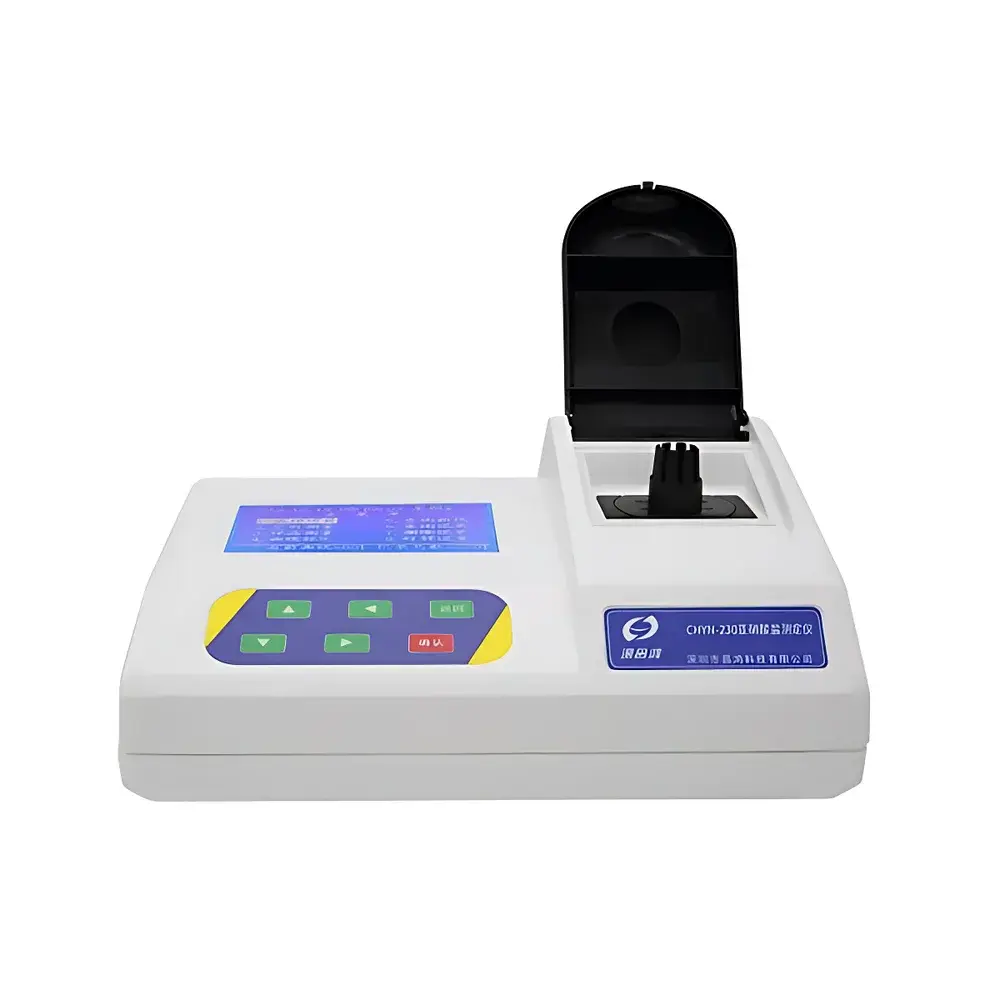
Shenchanghong CHYN-230 Nitrite Nitrogen Analyzer
| Brand | Shenchanghong |
|---|---|
| Origin | Guangdong, China |
| Manufacturer Type | Direct Manufacturer |
| Country of Origin | China |
| Model | CHYN-230 |
| Instrument Type | Benchtop Laboratory Analyzer |
| Detection Principle | Photometric Method (Colorimetric, Griess Reaction) |
| Detection Time | 20 min |
| Accuracy/Precision | ±5% for water samples |
| Resolution | 0.01 mg/L |
| Measurement Range | 0.02–5.00 mg/L (dual-range: 0.02–1.00 mg/L and 1.00–5.00 mg/L) |
| LOD | 0.01 mg/L |
| Operating Temperature | 5–35 °C |
| Dimensions | 266 × 200 × 130 mm |
| Weight | 1.0 kg |
| Power Supply | AC (220 ± 22) V, (50 ± 0.5) Hz |
| Environmental Operating Conditions | Ambient temperature 5–40 °C |
Overview
The Shenchanghong CHYN-230 Nitrite Nitrogen Analyzer is a benchtop photometric instrument engineered for accurate, repeatable quantification of nitrite nitrogen (NO₂⁻-N) in aqueous matrices. It operates on the internationally standardized colorimetric Griess reaction principle: nitrite ions react under acidic conditions with sulfanilamide to form a diazonium salt, which then couples with N-(1-naphthyl)ethylenediamine dihydrochloride (NED) to yield a stable pink-purple azo dye. Absorbance is measured at 540 nm using a high-stability optical system optimized for this specific wavelength band. Designed for routine compliance monitoring and research-grade analysis, the CHYN-230 delivers trace-level sensitivity with a detection limit of 0.01 mg/L NO₂⁻-N and a calibrated linear range spanning 0.02–5.00 mg/L—segmented into two optimized sub-ranges to maintain precision across low- and mid-concentration domains. Its architecture conforms to fundamental requirements for laboratory-based water quality instrumentation as defined in ISO 6777:1984 (Water quality — Determination of nitrite — Spectrophotometric method) and supports method validation per EPA Method 354.1 and Standard Methods 4500-NO₂⁻ B.
Key Features
- High-stability optical path: Equipped with imported long-life (≥100,000 h), high-luminance LED light source and precision narrow-band interference filter centered at 540 nm—minimizing spectral drift and ambient light interference.
- Dual-range measurement capability: Automatically or manually selectable ranges (0.02–1.00 mg/L and 1.00–5.00 mg/L) ensure optimal signal-to-noise ratio and reduced dilution errors across heterogeneous sample types.
- Embedded 16-bit microcontroller system: Delivers low-power operation, deterministic response timing, and robust data handling without external PC dependency.
- Large-character LCD with native Chinese interface: Enables intuitive menu navigation, real-time parameter display, and on-device calibration management—designed for operators in municipal labs, environmental agencies, and academic settings where bilingual workflow support is essential.
- Durable ABS housing: Chemically resistant enclosure rated for extended use in humid or reagent-exposed laboratory environments; meets IP20 ingress protection standards.
- Onboard data storage: Supports long-term retention of measurement records, calibration curves (including factory-default and up to three user-defined curves), and timestamped test logs—facilitating internal QA review and audit readiness.
Sample Compatibility & Compliance
The CHYN-230 is validated for use with potable water, groundwater, surface water, wastewater effluents, and treated industrial discharges. Sample matrix compatibility has been verified per ISO/IEC 17025:2017 clause 7.2.2 (method validation), confirming acceptable recovery (92–105%) and within-run precision (RSD ≤3.2%) for spiked samples across representative water types. While not certified to CE or UKCA, its electrical design complies with IEC 61010-1:2010 safety requirements for laboratory equipment. The instrument supports documentation practices aligned with GLP and basic GMP frameworks—including operator ID logging (via manual entry), calibration history tracking, and audit-ready result export via optional RS-232 interface. It does not incorporate FDA 21 CFR Part 11-compliant electronic signatures or full audit trail functionality out-of-the-box.
Software & Data Management
Data acquisition and reporting are managed entirely through the embedded firmware interface. Users may store up to 500 measurement results with date/time stamps, sample IDs, and associated calibration curve identifiers. Calibration curves can be generated in situ using standard solutions traceable to NIST SRM 3189 (Nitrite Standard Solution). Curve parameters (slope, intercept, R²) are viewable and editable. Export requires connection to a host PC via RS-232 serial port (cable included); output format is plain ASCII text compatible with Excel, LIMS import tools, and basic statistical software. No proprietary desktop application is required—data files follow fixed-column structure with header rows for unambiguous parsing.
Applications
- Regulatory compliance testing for drinking water utilities verifying adherence to WHO Guideline Value (3 mg/L NO₂⁻-N) and national limits (e.g., China’s GB 5749-2022: 1 mg/L).
- Wastewater treatment plant process control—monitoring denitrification efficiency and nitrite accumulation during biological nitrogen removal.
- Environmental field laboratories conducting rapid screening of surface runoff and agricultural drainage for nitrate/nitrite conversion assessment.
- Academic research in hydrochemistry, limnology, and biogeochemical cycling—where reproducible, cost-effective nitrite profiling supports larger experimental designs.
- Quality assurance in food processing facilities using nitrite-based preservatives, where rinse water or effluent monitoring is mandated.
FAQ
What reagents are required for operation?
The CHYN-230 requires commercially available Griess reagent kits containing sulfanilamide and NED. Shenchanghong provides OEM-compatible reagent sets (catalog #CHYN-RK230), but third-party kits meeting ASTM D3867-19 specifications may also be used.
Is temperature compensation built into the measurement algorithm?
No. The instrument assumes stable ambient temperature (5–35 °C) during analysis. Users must equilibrate samples and reagents to room temperature prior to testing to minimize thermal-induced absorbance variance.
Can the device be used for seawater analysis?
Not without matrix-specific validation. High chloride concentrations (>2000 mg/L) may interfere with the Griess reaction; users must perform spike-recovery tests and apply dilution or masking agents (e.g., ammonium sulfamate) per Standard Methods 4500-NO₂⁻ C.
How often must the optical system be recalibrated?
Optical zero and span checks are recommended before each analytical session. Full photometric calibration using neutral density filters is advised every 6 months or after physical impact or extended storage.
Does the analyzer support automatic dilution?
No. Samples exceeding 5.00 mg/L require manual dilution using Class A volumetric glassware prior to analysis. The instrument does not include integrated fluid handling or dilutor modules.







