
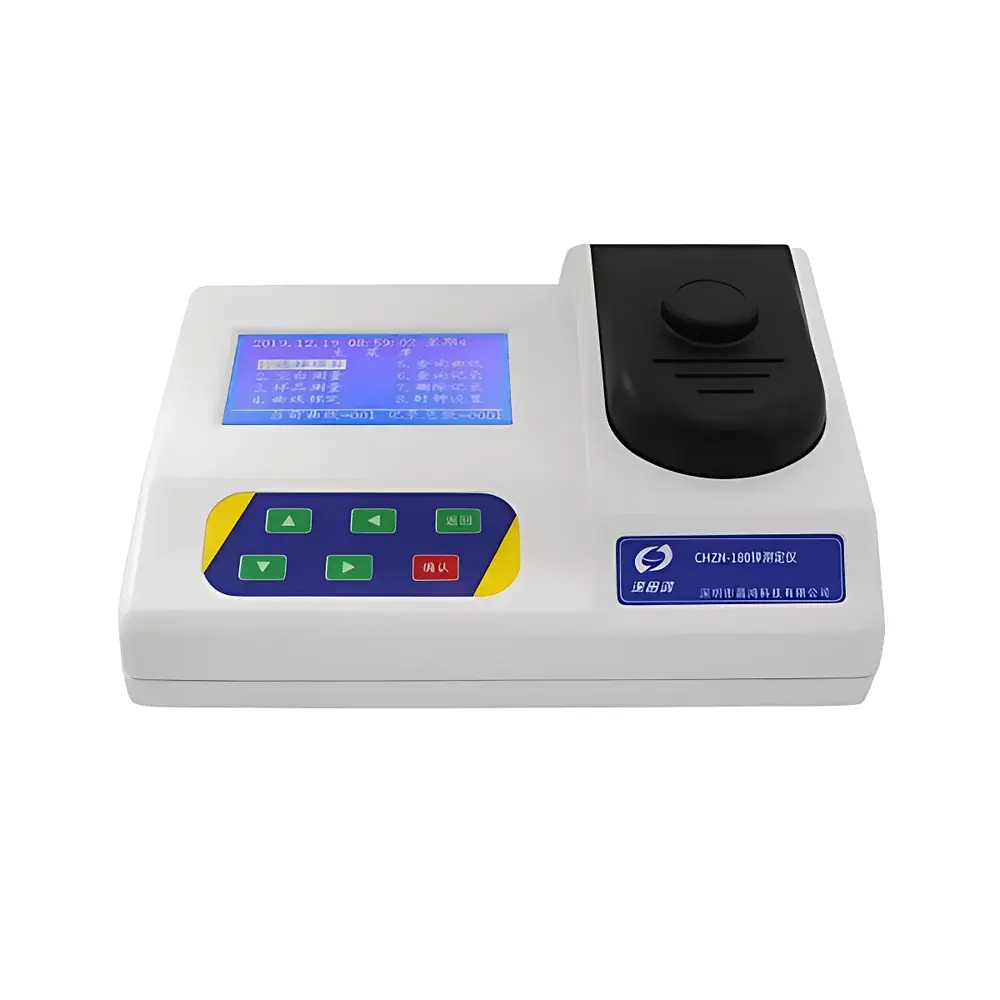
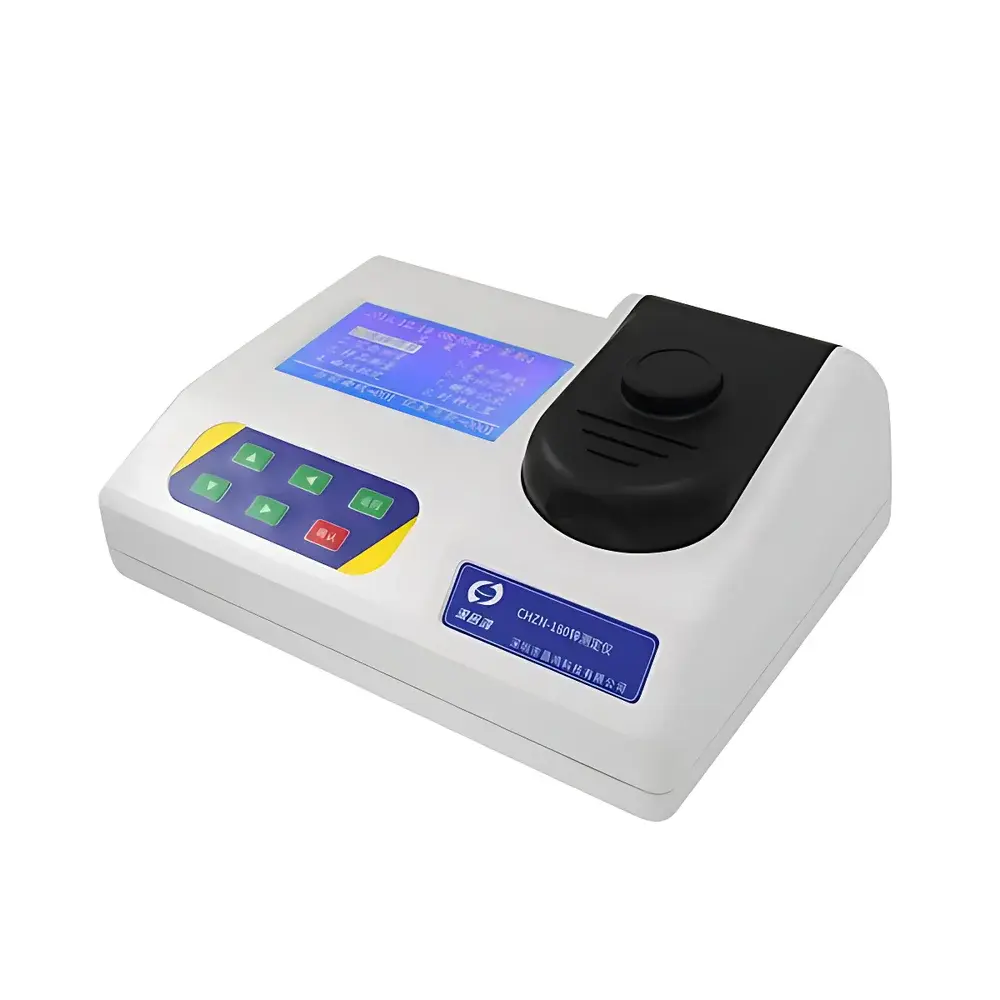
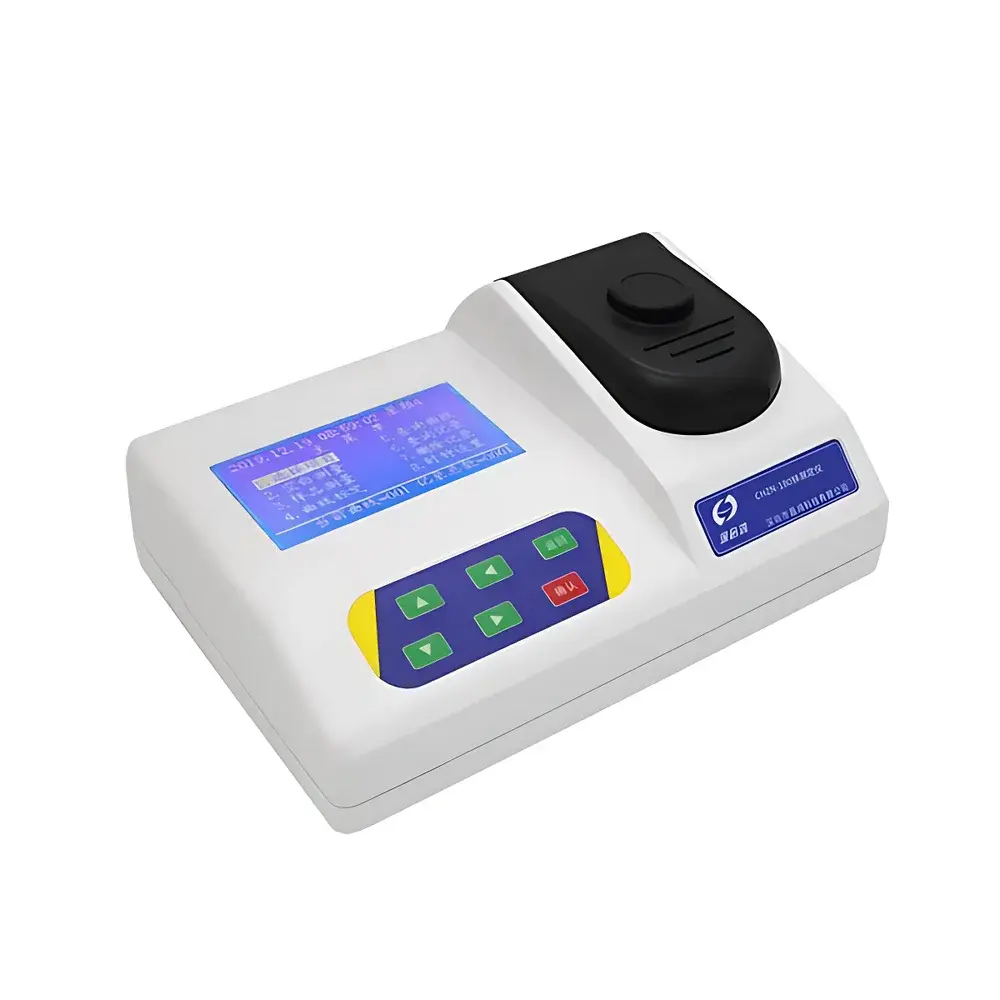
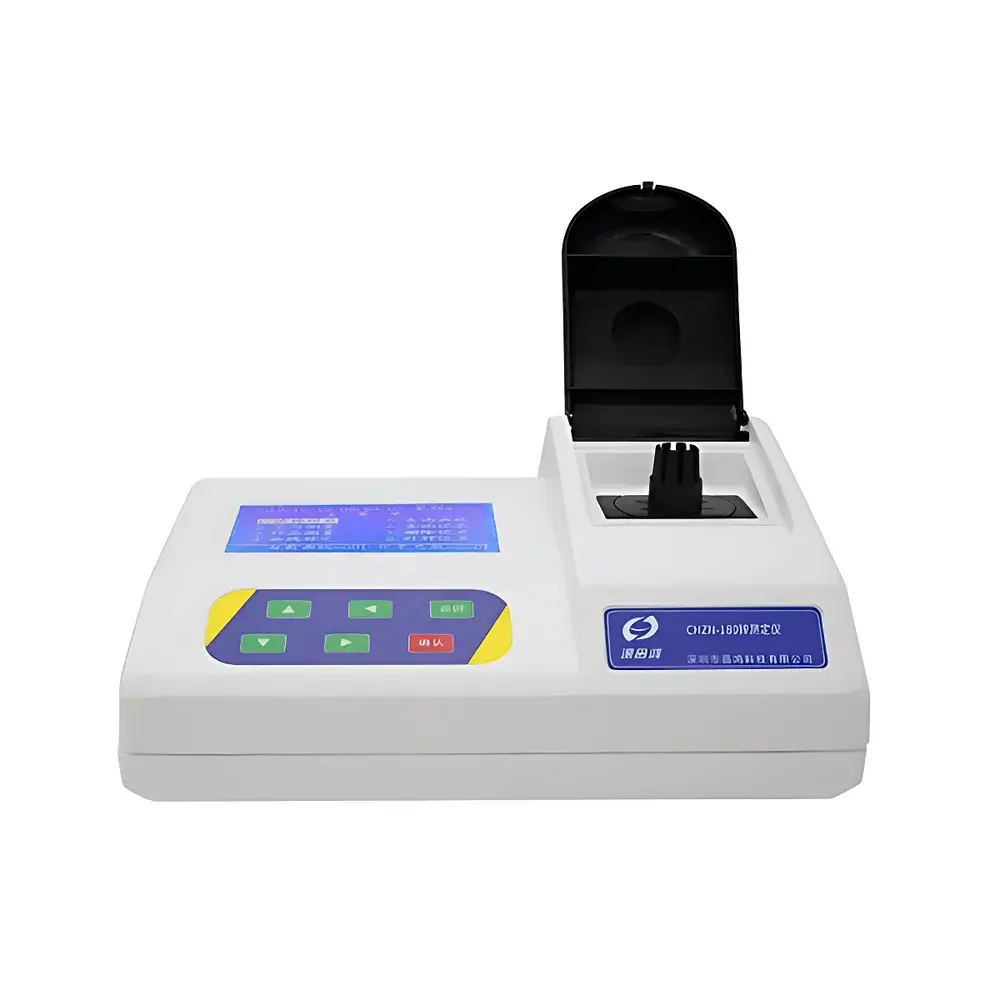
Shenchanghong CHZN-180 Zinc Analyzer
| Brand | Shenchanghong |
|---|---|
| Origin | Guangdong, China |
| Manufacturer Type | Direct Manufacturer |
| Origin Category | Domestic (China) |
| Model | CHZN-180 |
| Instrument Type | Benchtop Laboratory Analyzer |
| Detection Principle | Photometric Method (Visible Spectrophotometry) |
| Target Analyte | Zinc (Zn²⁺) in Aqueous Samples |
| Measurement Range | 0.2–5.00 mg/L |
| Accuracy | ≤ ±5% |
| Repeatability | ≤ 3% |
| Optical Stability | Absorbance Drift < 0.002 A within 20 min |
| Resolution | 0.01 mg/L |
| Dimensions (H×W×D) | 130 × 266 × 200 mm |
| Weight | < 1.0 kg |
| Operating Temperature | 5–40 °C |
| Relative Humidity | ≤ 85% RH |
| Power Supply | AC 220 V ± 10%, 50 Hz ± 0.5 Hz |
| Electromagnetic & Vibration Requirements | Low-interference environment |
Overview
The Shenchanghong CHZN-180 Zinc Analyzer is a benchtop photometric instrument engineered for precise, routine quantification of dissolved zinc (Zn²⁺) in environmental water samples—including surface water, groundwater, wastewater effluents, and drinking water sources. It operates on the principle of visible-spectrum spectrophotometry, utilizing a stable, high-brightness imported light source coupled with a narrow-band interference filter system to isolate the characteristic absorption wavelength of the Zn²⁺–chromogenic reagent complex (typically formed via reaction with dithizone or similar ligands under controlled pH conditions). This optical architecture ensures minimal spectral interference and high signal-to-noise ratio, enabling reliable detection at low concentrations within the defined linear range of 0.2–5.00 mg/L. Designed for laboratory-based compliance monitoring and quality control workflows, the CHZN-180 meets fundamental performance criteria aligned with ISO 7027 (water quality — determination of turbidity) and ASTM D1688 (standard test methods for copper in water), serving as a technically appropriate tool for laboratories implementing EPA Method 200.7 (ICP-OES) screening protocols or conducting pre-screening prior to confirmatory analysis.
Key Features
- Imported long-life, high-intensity tungsten-halogen light source with integrated thermal stabilization for consistent photometric output over extended operation cycles.
- Narrow-band optical filter system (center wavelength ±2 nm tolerance) optimized for Zn²⁺-specific colorimetric assays, minimizing interferences from coexisting transition metals (e.g., Cu²⁺, Ni²⁺, Co²⁺) when sample pretreatment is applied.
- High-stability optical path design achieving absorbance drift < 0.002 A over 20 minutes—critical for batch analysis reproducibility and calibration integrity.
- Backlit 128×64 dot-matrix LCD display with full Chinese character interface and intuitive menu navigation, supporting both English and Chinese language modes (firmware-configurable).
- Dual-curve storage capability: factory-calibrated Zn²⁺ reference curve preloaded, plus one user-definable calibration curve for method validation or matrix-specific compensation.
- Robust housing fabricated from post-molded ABS polymer with enhanced chemical resistance to common reagents (e.g., HCl, EDTA, buffer solutions) and environmental humidity exposure.
- Low-power 16-bit microcontroller architecture enabling stable real-time signal processing, auto-zero function, and internal memory retention (up to 500 measurement records) without external power backup.
Sample Compatibility & Compliance
The CHZN-180 is validated for use with clarified, filtered aqueous samples meeting standard pretreatment requirements per ISO 5667-3:2018 (water quality — sampling — guidance on preservation and handling of water samples). Sample matrices must be free of suspended solids (>0.45 µm filtration recommended), excessive turbidity (0.5 mg/L requires quenching with sodium thiosulfate). While not certified to GLP or GMP Annex 11 standards, its design supports traceable operation in regulated environments: all calibrations are timestamped and stored with operator ID fields (via optional PC connectivity), and measurement logs include raw absorbance values, concentration outputs, and pass/fail flags against user-set action limits. The instrument complies with GB/T 27025–2019 (equivalent to ISO/IEC 17025) general requirements for competence of testing and calibration laboratories when operated within specified environmental conditions (5–40 °C, ≤85% RH, stable AC supply).
Software & Data Management
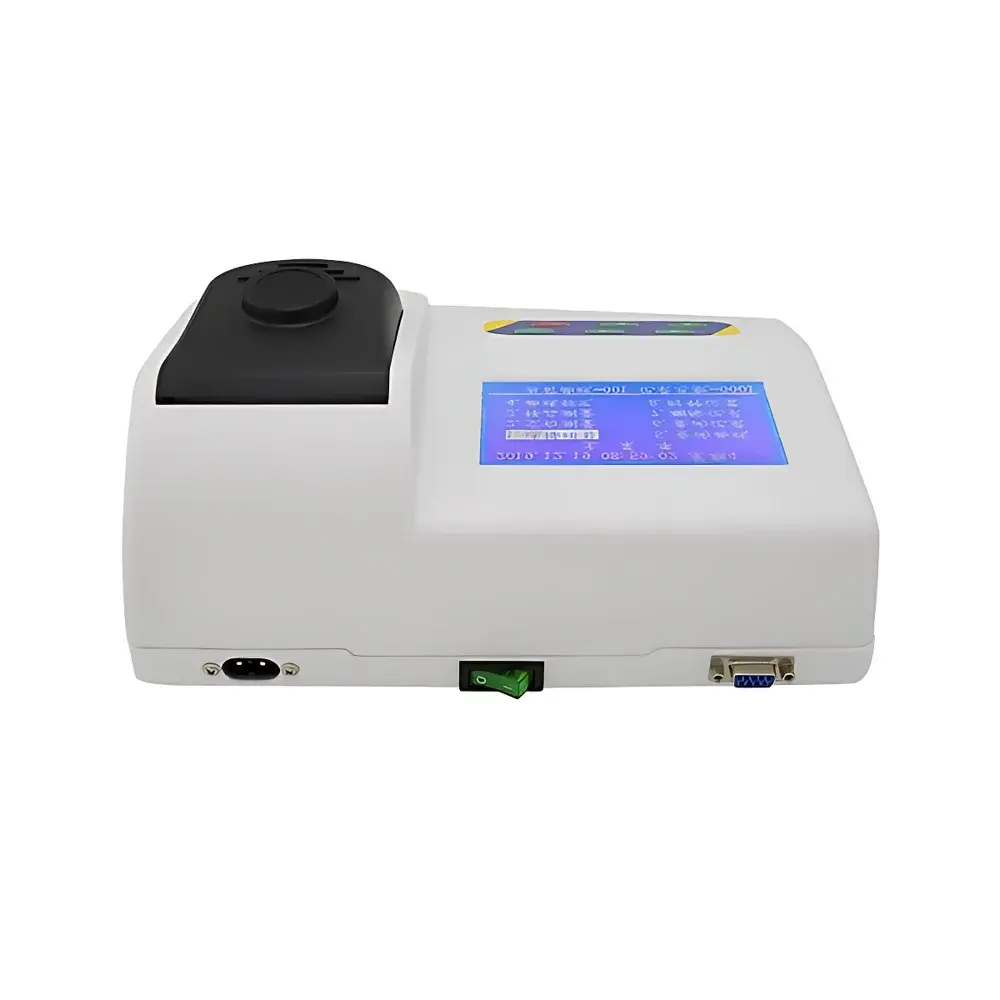
Data export is supported via standard RS-232 serial interface (DB9 male connector) compatible with Windows-based terminal emulators (e.g., Tera Term, PuTTY) or custom LIMS integration scripts. Raw data packets include sample ID, measurement time (YYYY-MM-DD HH:MM:SS), absorbance (A), calculated Zn concentration (mg/L), and QC status flag. Internal non-volatile memory retains up to 500 measurement entries with automatic overwrite logic. Firmware supports field-upgradable calibration coefficients and language localization through secure UART bootloader mode—requiring authenticated access credentials. No cloud connectivity or proprietary software suite is bundled; the device operates autonomously with no dependency on external applications for core functionality.
Applications
- Regulatory compliance monitoring for zinc discharge limits under local environmental protection ordinances (e.g., China’s GB 8978–1996, EU WFD Annex X).
- Drinking water safety verification in municipal utilities and rural water supply systems, particularly where galvanized pipe corrosion is suspected.
- Effluent quality control in electroplating, battery manufacturing, and metal finishing facilities.
- Field-deployable lab support for environmental consultancies conducting site investigation and remediation verification.
- Educational use in university analytical chemistry and environmental engineering laboratories for teaching photometric assay fundamentals and QA/QC practices.
FAQ
What sample preparation is required prior to analysis?
Samples must be filtered through a 0.45 µm membrane filter and adjusted to pH 4.0–5.5 using acetate buffer. Free chlorine should be quenched if present; iron interference may require masking with ascorbic acid.
Can the CHZN-180 measure other heavy metals?
No—it is optically and chemically configured exclusively for zinc quantification. Separate analyzers or ICP-MS/OES platforms are required for multi-element analysis.
Is the instrument compliant with US EPA or ISO certification requirements?
It is not EPA-certified nor ISO 17025-accredited as a standalone device; however, it satisfies performance criteria referenced in EPA Method 200.7 Appendix B and ISO 6603-1 for photometric zinc determination when used within validated laboratory SOPs.
How often does the calibration curve require verification?
Daily calibration verification is recommended for routine QC; full recalibration every 72 hours or after reagent lot changes, per ISO/IEC 17025 Clause 7.7.1.
Does the analyzer support GLP audit trails?
Basic audit logging (operator ID, timestamps, calibration history) is embedded; full 21 CFR Part 11 compliance requires external LIMS integration and digital signature infrastructure beyond the instrument’s native capabilities.
Related Products







