

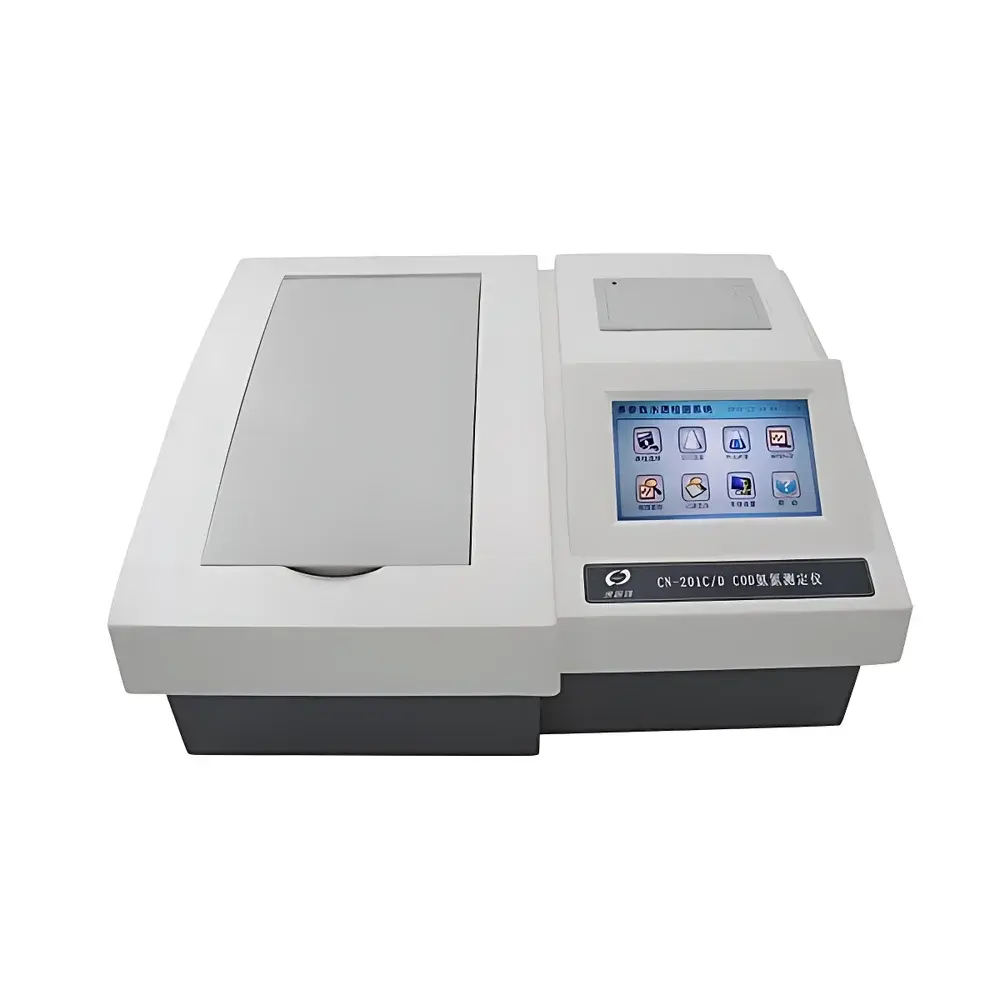
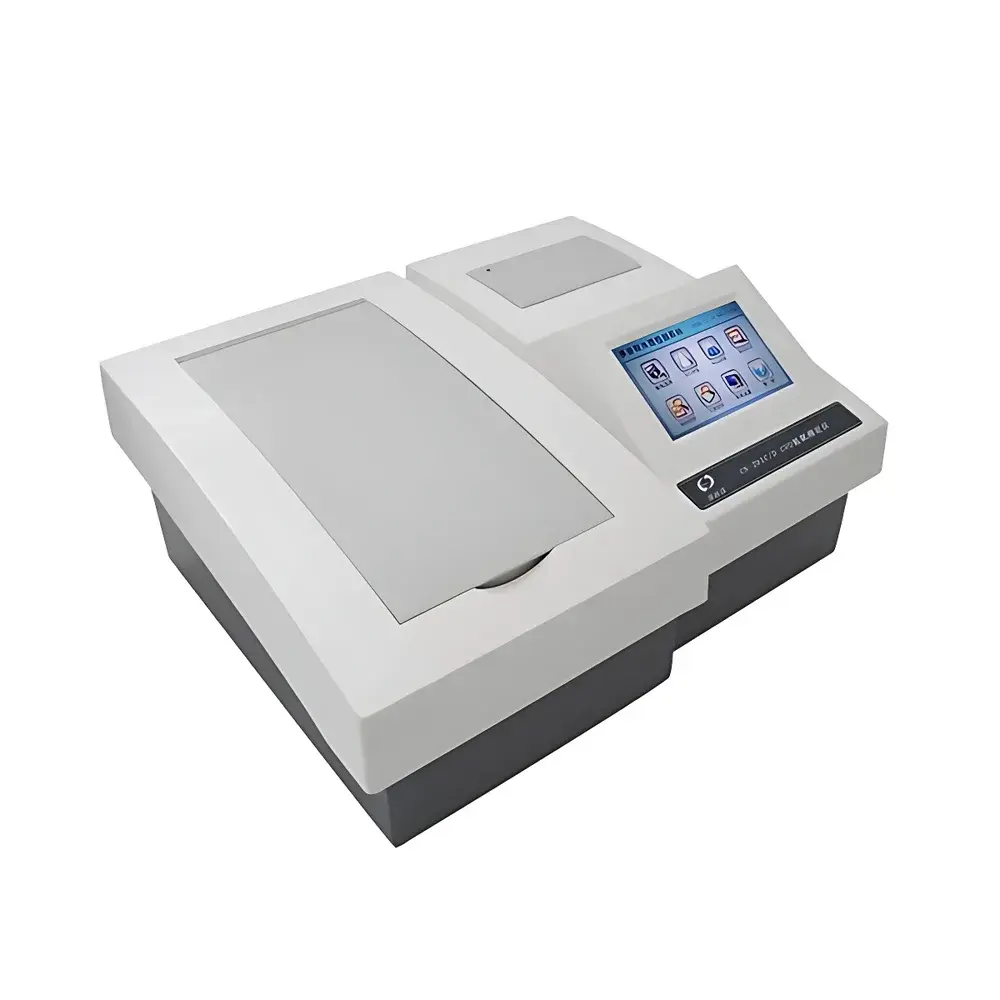
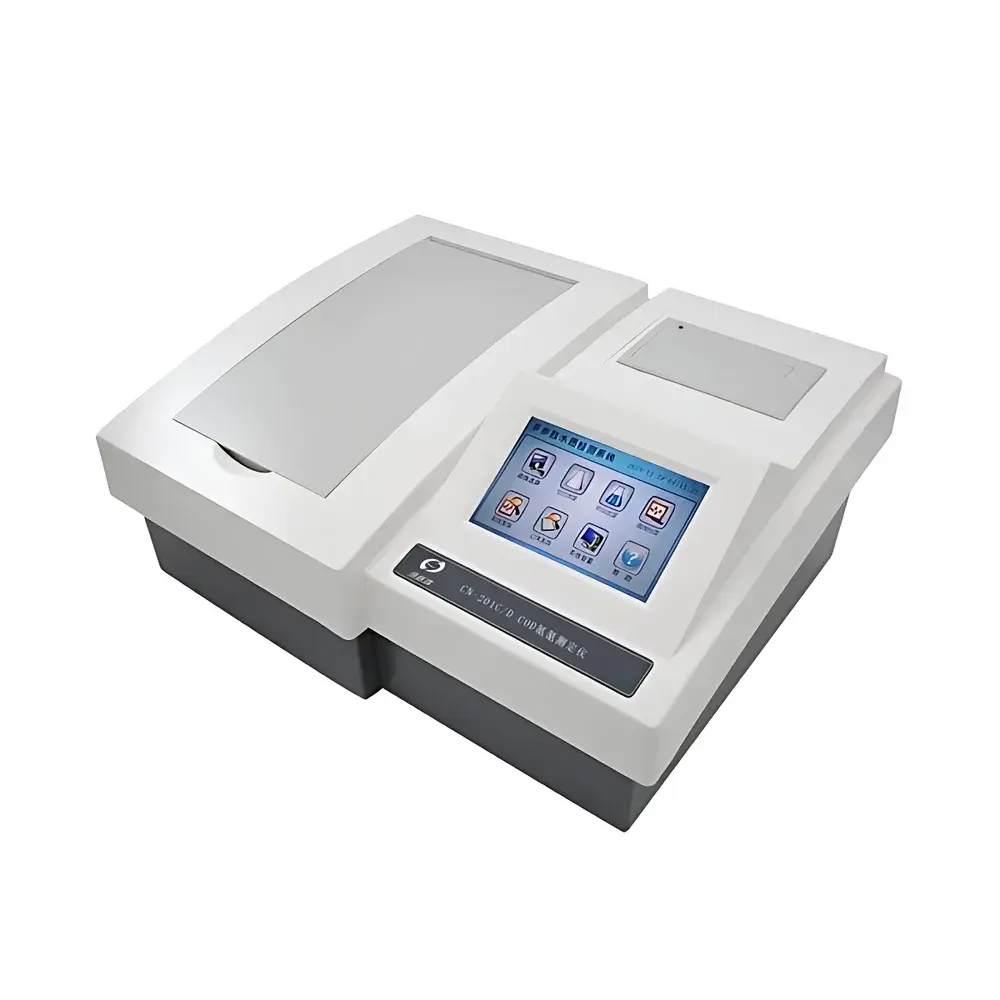
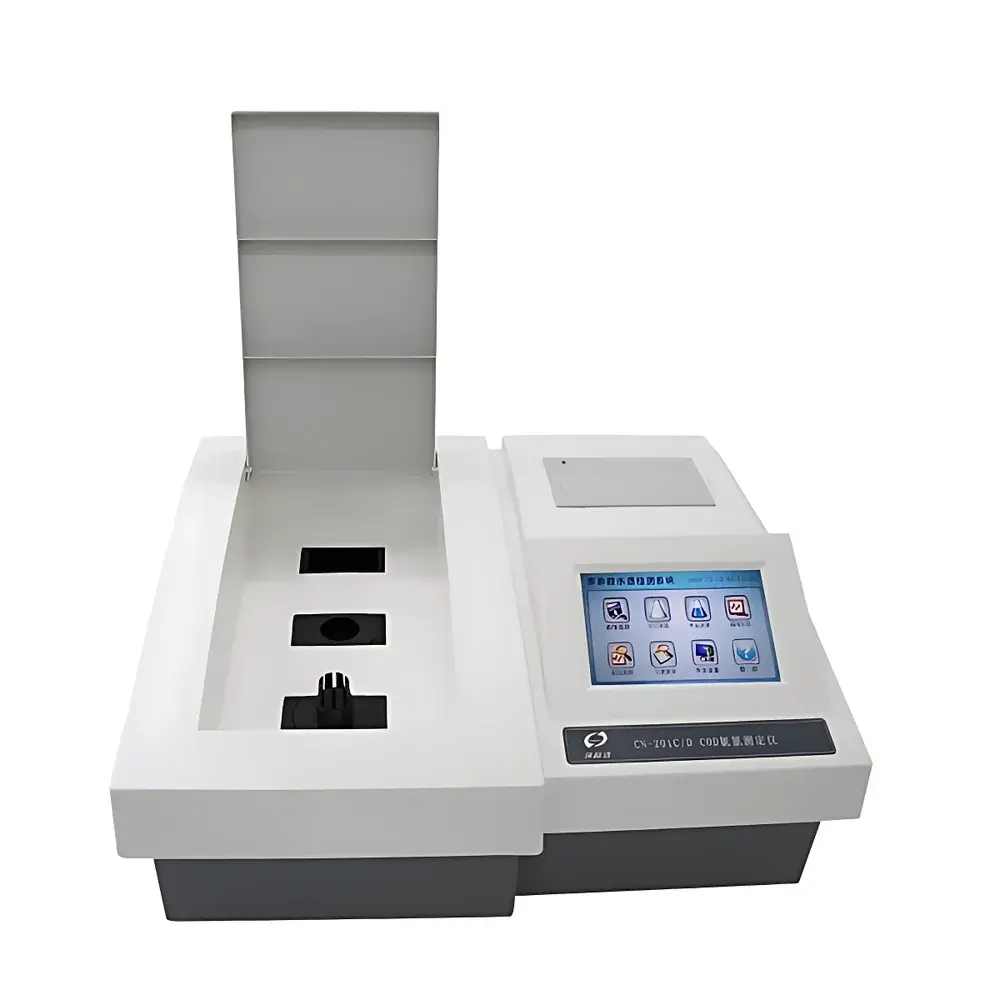
Shenchanghong CN-201C/D COD and Ammonia Nitrogen Analyzer
| Brand | Shenchanghong |
|---|---|
| Origin | Guangdong, China |
| Manufacturer Type | Manufacturer |
| Country of Origin | China |
| Model | CN-201C/D |
| Instrument Type | Laboratory Benchtop Analyzer |
| Measurement Principle | Colorimetric Method (COD: Rapid Digestion + Optical Absorption |
| NH₃-N | Nesslerization) |
| COD Range | 5–2000 mg/L (extendable to 20,000 mg/L) |
| NH₃-N Range | 0.02–25 mg/L |
| Accuracy | COD ≤ ±5% FS |
| Repeatability | ≤ ±3% |
| Chloride Interference Tolerance (COD) | ≤ 2000 mg/L Cl⁻ |
| Temperature Control Precision | ≤ ±1.0 ℃ (Host), ±0.5 ℃ (Digestion Unit) |
| Digestion Temp Range | Ambient to 200 ℃ (default COD: 165 ℃) |
| Digestion Time | Programmable 1–9999 min (standard COD: 15 min) |
| Optical Stability | Absorbance drift < 0.002 A over 20 min |
| Sample Throughput | 16 samples per run (optional 20/25/36-position digestion blocks) |
| Display | 3.5-inch color TFT touchscreen (320×240), bilingual UI (English/Chinese) |
| Data Storage | CN-201C — 300 calibration curves + 1000 test records |
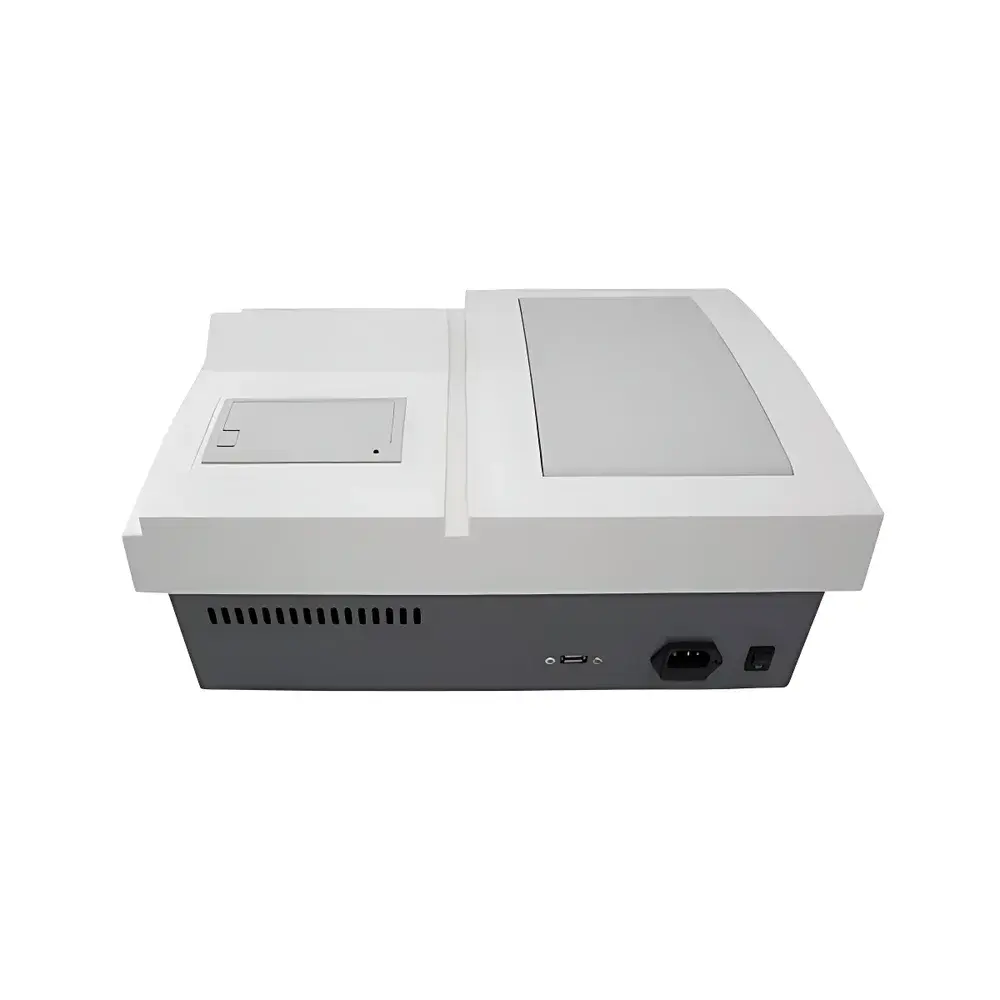
| Interface | USB port for data export to PC |
| Power Consumption | < 500 W |
| Dimensions (Host) | 400 × 310 × 158 mm |
| Weight (Host) | 5 kg |
| Dimensions (DIS-16B Digester) | 355 × 260 × 135 mm (excl. shield) |
| Weight | 5.5 kg |
Overview
The Shenchanghong CN-201C/D is a dual-parameter benchtop spectrophotometric analyzer engineered for precise, routine quantification of chemical oxygen demand (COD) and ammonia nitrogen (NH₃-N) in aqueous environmental samples. It implements standardized colorimetric methodologies compliant with widely accepted water quality testing protocols: rapid closed-vessel digestion followed by optical absorption measurement at 610 nm for COD determination (based on dichromate oxidation under acidic conditions), and Nessler reagent-based complexation for NH₃-N detection at 420 nm. The instrument’s modular architecture—comprising an independent optical measurement unit and a thermally regulated digestion module—ensures long-term photometric stability by eliminating thermal cross-talk between heating and detection subsystems. Designed for laboratories requiring regulatory-grade reproducibility, the CN-201C/D supports method validation under ISO 8467 (COD) and ISO 7150-1 (ammonia nitrogen), and facilitates traceability through embedded audit-ready data logging.
Key Features
- Modular dual-unit design: Separated digestion block and optical analyzer prevent thermal interference, enhancing absorbance stability and measurement repeatability.
- PID-controlled digestion system with ±0.5 ℃ temperature accuracy across 0–200 ℃ range; programmable time setting from 1 to 9999 minutes for method flexibility beyond standard EPA 410.4 or HJ 828–2017 protocols.
- High-brightness, long-life cold-light source (LED-based) ensures minimal spectral drift and consistent photometric response over extended operational cycles.
- Bilingual 3.5-inch color touchscreen interface (320×240 resolution) with intuitive icon-driven navigation, supporting both English and Chinese language modes without firmware reload.
- Extensive onboard data management: CN-201C stores up to 300 calibration curves and 1,000 test records; CN-201D expands capacity to 3,500 curves and 100,000 records with timestamped metadata.
- Dual-wavelength optical path optimized for low-concentration NH₃-N detection (0.02 mg/L LOD) and high-range COD analysis (up to 20,000 mg/L with dilution protocol).
- USB interface enables secure export of raw absorbance values, calibration parameters, and QC logs to external PCs for further statistical analysis or LIMS integration.
- One-touch system recovery function restores factory defaults and recalibrates critical optical offsets, minimizing downtime during routine maintenance or user error correction.
Sample Compatibility & Compliance
The CN-201C/D accepts standard 16 mm round glass or quartz digestion vials (16-position default block), with optional upgrade paths to 20-, 25-, or 36-position configurations for higher throughput. It accommodates turbid, colored, or chloride-rich wastewater matrices—demonstrating validated resistance to chloride interference up to 2000 mg/L Cl⁻ during COD digestion. All measurements adhere to internationally recognized performance criteria: repeatability ≤ ±3%, accuracy within ±5% FS (COD) and ±3% FS (NH₃-N), and optical drift < 0.002 A over 20 minutes. The instrument meets general requirements for GLP-compliant environmental testing laboratories and supports documentation practices aligned with ISO/IEC 17025:2017 clause 7.7 (result reporting) and US EPA guidance for field-deployable lab instruments. While not certified under FDA 21 CFR Part 11, its audit trail functionality—including operator ID tagging, timestamped calibrations, and immutable record storage—facilitates internal validation for QA/QC workflows.
Software & Data Management
Data handling is performed entirely onboard via embedded real-time operating system firmware. Each test record includes sample ID, measurement date/time, operator code (if enabled), digestion parameters (temperature/duration), calibration curve ID, raw absorbance value, and final concentration result. Curve storage supports multi-point linear and polynomial regression models, with automatic selection based on concentration range. USB export generates CSV-formatted files compatible with Microsoft Excel, LabArchives, or proprietary LIMS platforms. No cloud connectivity or remote access capabilities are implemented—ensuring full data sovereignty and compliance with institutional cybersecurity policies. Firmware updates are delivered via offline USB stick, preserving integrity of validated configurations in regulated environments.
Applications
This analyzer serves municipal wastewater treatment plants conducting daily effluent monitoring per national discharge standards (e.g., China’s GB 18918–2002); university research labs studying nutrient cycling in freshwater ecosystems; third-party environmental testing facilities performing contract analysis for industrial clients; and drinking water utilities verifying pretreatment efficiency prior to disinfection. Its robustness against matrix interferences makes it suitable for leachate analysis from landfill sites, textile dyeing effluents, and food processing wastewaters. The expandable COD range (up to 20,000 mg/L) enables direct analysis of undiluted high-strength industrial streams, reducing manual dilution errors and improving workflow efficiency.
FAQ
What digestion methods does the CN-201C/D support?
It implements rapid acid-dichromate digestion for COD (aligned with HJ 828–2017 and ISO 6060) and Nessler reagent color development for ammonia nitrogen (per HJ 535–2009 and ISO 7150-1).
Can the instrument be used for other parameters besides COD and NH₃-N?
No—the optical hardware and preloaded calibration algorithms are dedicated exclusively to COD and ammonia nitrogen. Additional parameters require separate analyzers.
Is the digestion block compatible with standard EPA-approved vials?
Yes—it accepts 16 mm outer-diameter borosilicate glass vials conforming to ASTM D1253 specifications for COD digestion tubes.
How is traceability ensured during calibration?
Each calibration event is timestamped and linked to reference standard lot numbers; curve coefficients and baseline offsets are stored with version control and cannot be overwritten without administrative authentication.
Does the CN-201D offer enhanced optical performance compared to the C model?
Yes—the D variant features upgraded photodiode signal conditioning, reduced dark-current noise, and refined wavelength filtering, resulting in improved signal-to-noise ratio for sub-0.1 mg/L NH₃-N measurements.
Related Products







