
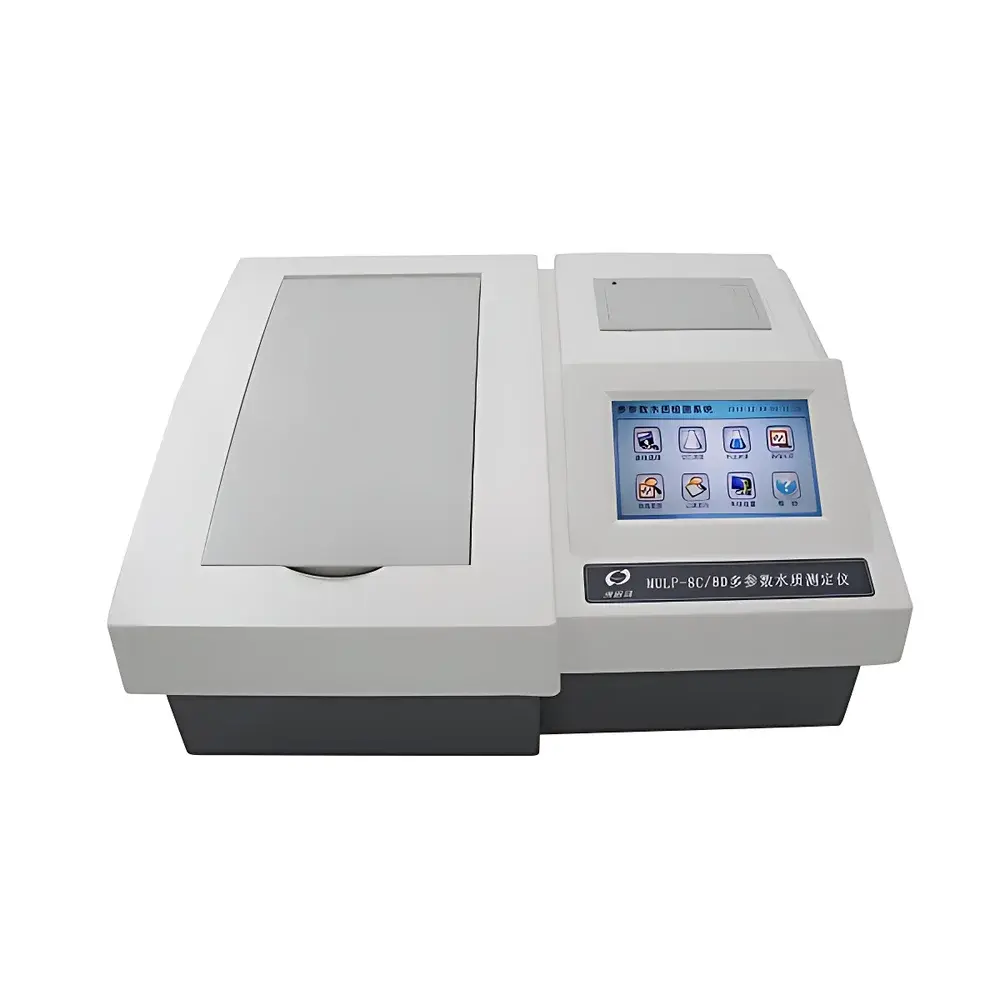
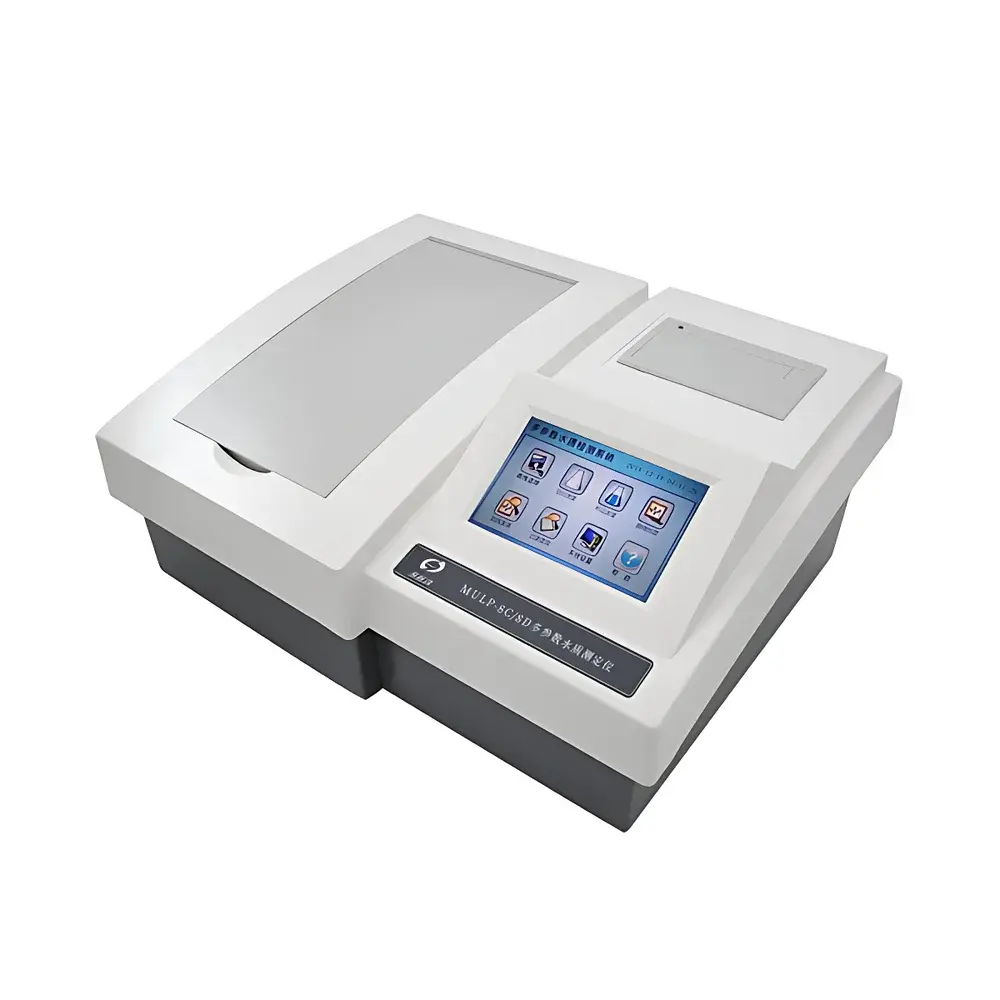
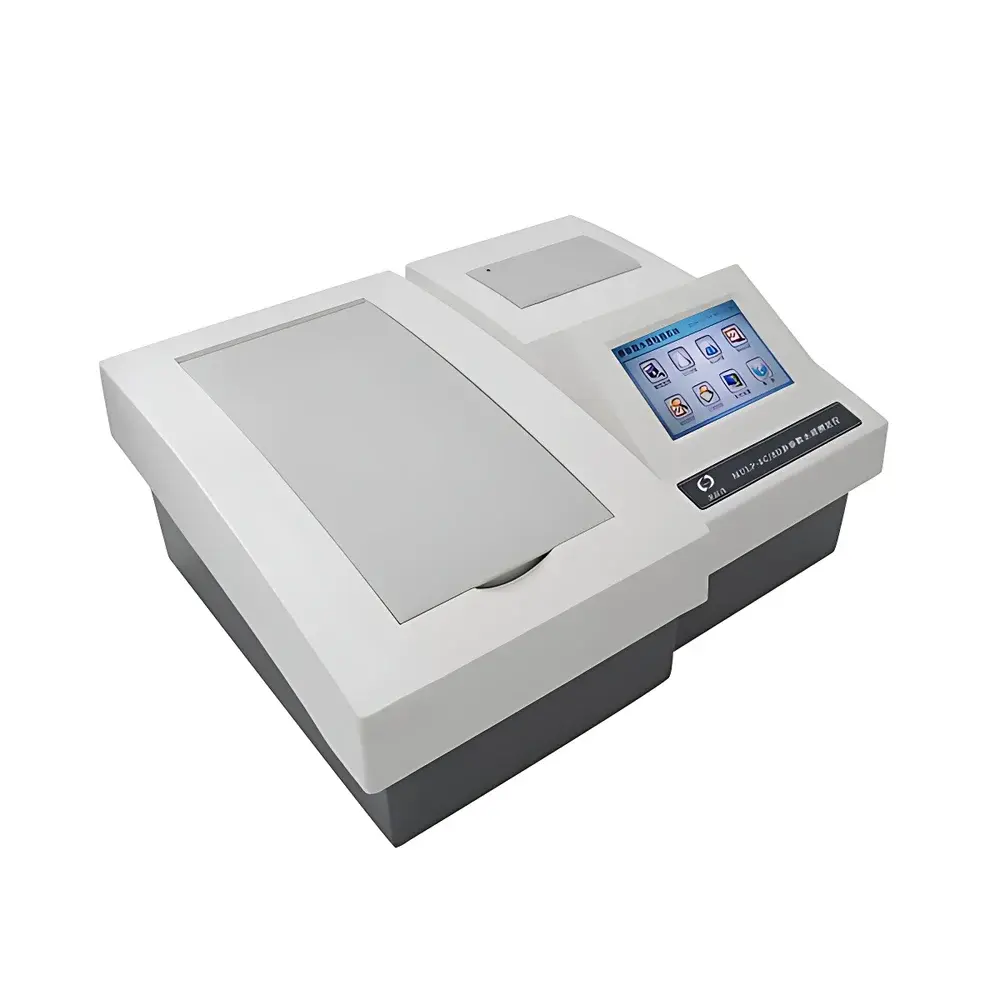
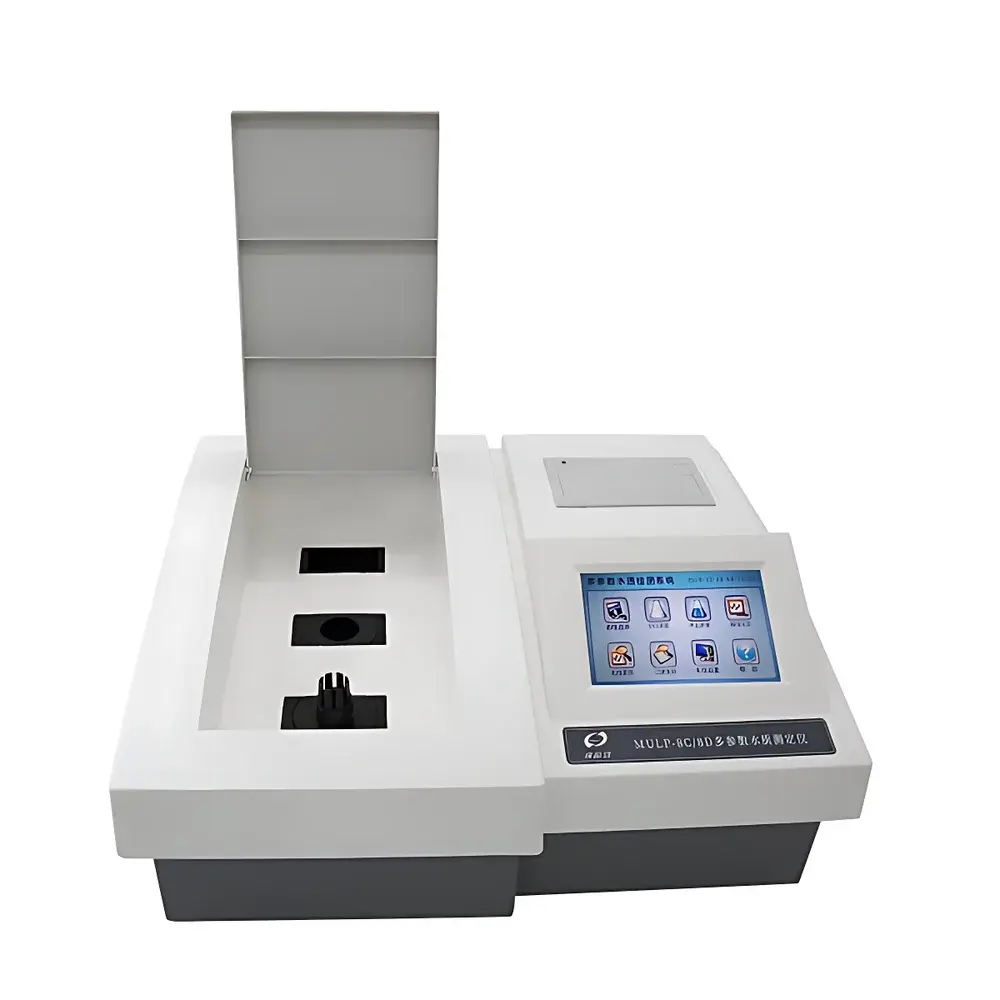
Shenchanghong MULP-8C / MULP-8D Multi-Parameter Water Quality Analyzer
| Brand | Shenchanghong |
|---|---|
| Origin | Guangdong, China |
| Manufacturer Type | Direct Manufacturer |
| Country of Origin | China |
| Model | MULP-8C / MULP-8D |
| Instrument Type | Laboratory Water Quality Analyzer |
| Measurable Parameters | Multi-parameter (up to ~100 water quality indicators) |
| Wavelength Options | 340, 420, 440, 470, 520, 540, 560, 610, 630, 660, 680, 700 nm |
| Absorbance Accuracy | ±0.005 AU |
| Absorbance Range | −2.000 to +2.000 AU |
| Concentration Measurement Uncertainty | ≤5% (typical), ≤10% (for select parameters) |
| Display | 5-inch color TFT capacitive touchscreen (bilingual: Chinese/English) |
| Data Storage | MULP-8C — 300 calibration curves + 1,000 measurement records |
| Light Intensity Adjustment | 16-level programmable intensity control |
| Calibration Modes | Linear or piecewise (multi-point segmented) calibration |
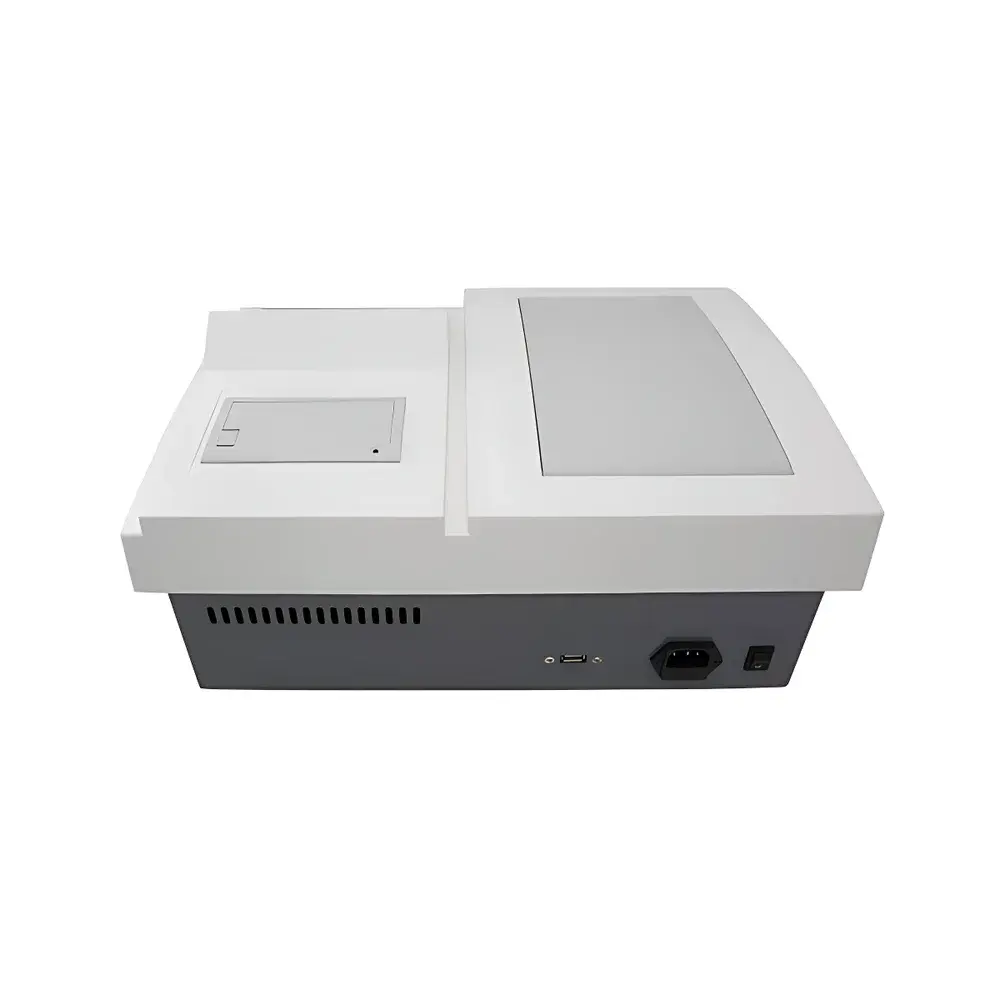
| Built-in Functions | Password-protected system access, automatic zero/self-calibration, one-click factory reset, USB data export, thermal printer interface |
| Power Supply | AC 220 V (165–240 V), 30 W |
| Dimensions | 400 × 310 × 158 mm |
| Weight | 5 kg |
| Operating Environment | 10–35 °C, ≤90% RH (non-condensing) |
Overview
The Shenchanghong MULP-8C and MULP-8D are laboratory-grade spectrophotometric multi-parameter water quality analyzers engineered for precise, reproducible quantification of up to approximately 100 common water quality parameters—including COD, ammonia nitrogen, total phosphorus, nitrate, nitrite, fluoride, chloride, hardness, iron, manganese, copper, zinc, chromium, turbidity (via formazin-equivalent correlation), and many others—based on the Beer-Lambert law. These instruments employ single-wavelength absorbance photometry: a stabilized light source passes through a precisely aligned optical path, and the transmitted intensity is measured by a high-stability silicon photodiode detector. The resulting absorbance value (A = log10(I0/I)) is converted into concentration using preloaded or user-defined calibration functions. Designed for routine environmental monitoring laboratories, municipal water testing facilities, and educational institutions, the MULP series supports method flexibility through selectable wavelengths (12 discrete options from 340 nm to 700 nm), programmable light intensity control (16 levels), and dual calibration models—linear regression and piecewise (segmented) interpolation—to accommodate non-linear response characteristics observed in certain chemical assays.
Key Features
- 5-inch high-resolution color capacitive touchscreen with intuitive bilingual (Chinese/English) GUI and responsive navigation
- Programmable wavelength selection across 12 standardized bands (340–700 nm), enabling compliance with widely adopted standard methods (e.g., ISO 6060, HJ 535–2009, EPA 365.2)
- Dual calibration architecture: linear fitting for robust parameters; multi-point piecewise calibration for analytes exhibiting curvature (e.g., low-concentration phosphate, high-range COD)
- Advanced optical stabilization: MULP-8D incorporates an upgraded optical module with enhanced thermal drift compensation and reduced stray light, yielding improved long-term baseline stability and repeatability
- Comprehensive data security: password-protected system configuration, operator ID tagging during calibration, full audit trail of calibration timestamps and personnel codes
- Scalable storage architecture: MULP-8C supports 300 user-defined calibration curves and 1,000 measurement records; MULP-8D expands capacity to 3,500 curves and 100,000 records—with full metadata retention (standard values, corresponding absorbances, calibration date/time, operator ID)
- Integrated quality assurance tools: real-time self-diagnostic checks, automatic zero-point correction before each measurement cycle, and one-click factory recovery for firmware, default curves, and system settings
Sample Compatibility & Compliance
The MULP-8C/8D is intended for use with aqueous samples prepared according to standardized digestion and colorimetric protocols—typically in conjunction with the DIS-16B, DIS-20B, DIS-25B, or DIS-36B series block digesters (sold separately). It accommodates standard 10 mm, 20 mm, or 30 mm rectangular cuvettes (quartz or high-transmission optical plastic), and supports both direct liquid measurement and solid-phase extraction eluates. While not certified for regulatory submission under ISO/IEC 17025 or EPA Contract Lab Program (CLP) requirements without site-specific validation, the instrument’s design aligns with foundational principles of GLP-compliant operation: traceable calibration, operator authentication, immutable record timestamping, and full data export via USB mass storage. Its measurement uncertainty profile (≤5% typical, ≤10% for select analytes) meets performance expectations for internal QA/QC, process monitoring, and Tier-2 environmental surveillance per national guidelines (e.g., China’s HJ/T 91–2019, US EPA Method Compendium Chapter 4).
Software & Data Management
Data handling is implemented via embedded firmware—not external PC software—ensuring deterministic operation and immunity to OS-level interference. All measurements are time-stamped and tagged with operator ID (if enabled). Records support granular retrieval by date range, parameter name, or batch ID. Printing is supported via integrated thermal printer interface (RS232 or USB-serial emulation); exported files follow plain-text CSV format compatible with Excel, LIMS, or statistical analysis platforms. No cloud connectivity or remote telemetry is included—consistent with secure laboratory network policies. Audit logs capture all critical events: calibration initiation, curve modification, password changes, and system resets—enabling retrospective review during internal audits or regulatory inspections.
Applications
- Routine analysis of drinking water, surface water, groundwater, wastewater effluents, and industrial process water
- Environmental compliance monitoring per municipal discharge permits and national water quality standards
- Educational laboratories requiring modular, hands-on instruction in spectrophotometric analysis and calibration theory
- Quality control in water treatment plants, aquaculture operations, and food/beverage production facilities
- Field-deployable lab backup: compact footprint (400 × 310 × 158 mm) and low power draw (30 W) facilitate benchtop integration in mobile labs or satellite testing stations
FAQ
What digestion equipment is compatible with the MULP-8C/8D?
The analyzer is designed to work with Shenchanghong’s DIS-16B, DIS-20B, DIS-25B, and DIS-36B digital block digesters, which provide temperature-controlled, programmable heating for COD, total phosphorus, and other oxidizable parameter digestions.
Does the instrument comply with FDA 21 CFR Part 11?
No—this is a standalone laboratory instrument without electronic signature capability, audit trail export, or role-based electronic access controls required for Part 11 compliance. It supports GLP-aligned practices but is not validated for regulated GxP environments.
Can calibration curves be transferred between MULP-8C and MULP-8D units?
Yes—calibration data (curves and records) are stored in standardized binary format on USB drives and are fully interoperable across both models, enabling centralized method deployment across multiple instruments.
Is spectral scanning supported?
No—the MULP series performs fixed-wavelength photometry only. It does not include a monochromator or diode array; wavelength selection is discrete and manually or programmatically assigned prior to measurement.
What maintenance is required to ensure long-term accuracy?
Annual verification using NIST-traceable neutral density filters or certified reference standards is recommended. Optical path cleaning with lens-grade tissue and isopropanol should be performed weekly if used in high-dust or high-humidity environments.







