
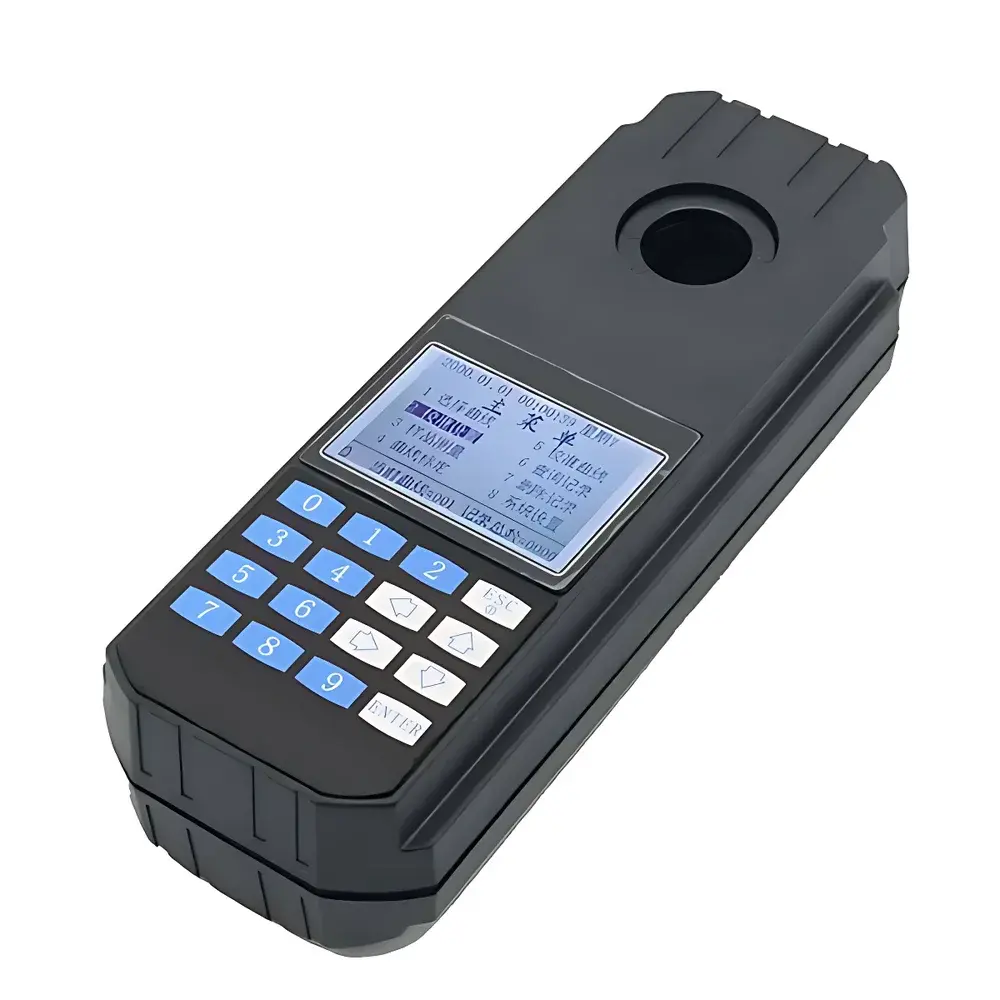
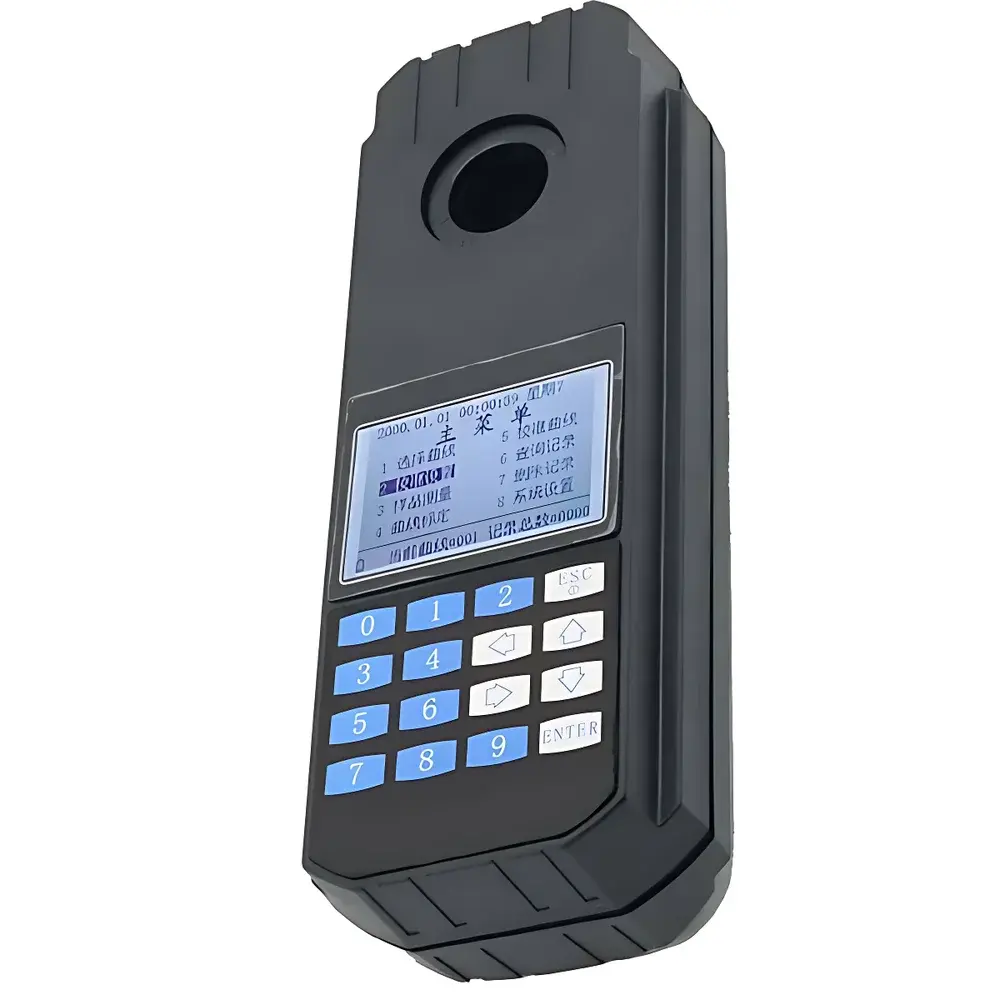
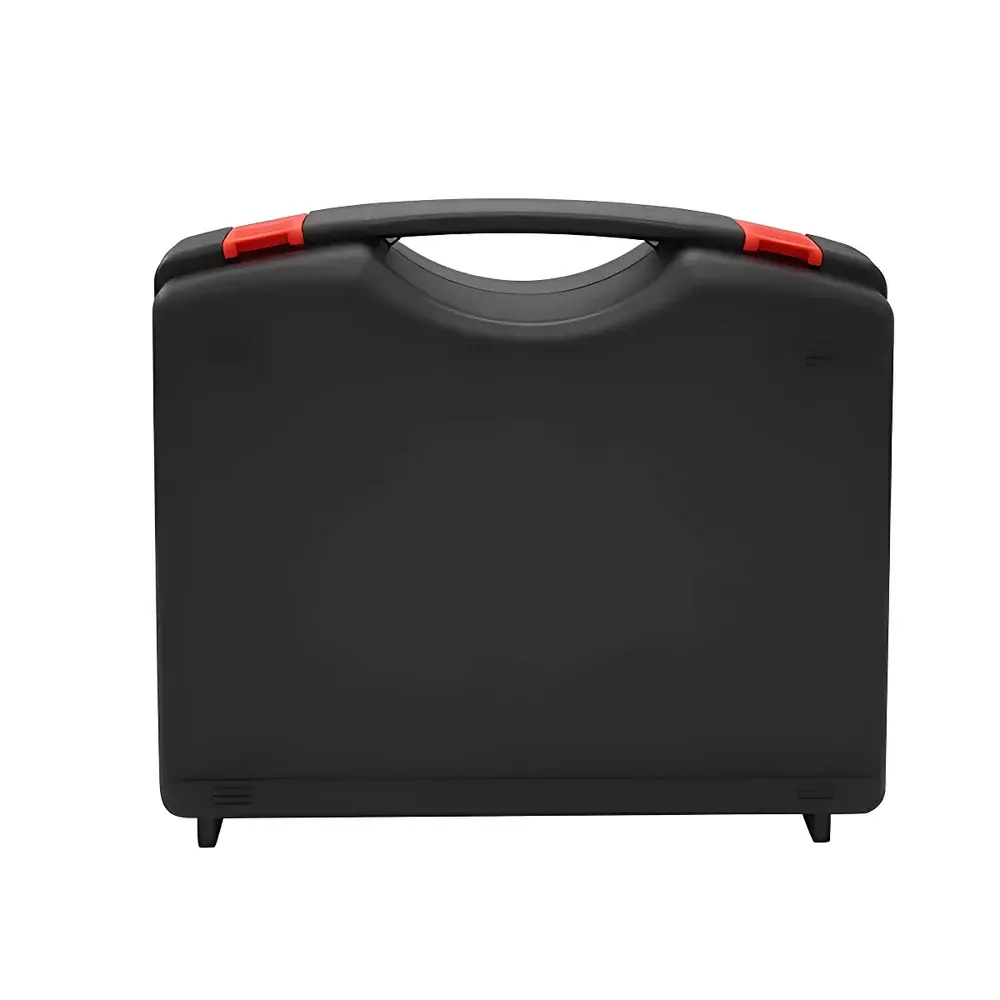
Shenchanghong PCHAS-175 Portable Arsenic Photometer
| Brand | Shenchanghong |
|---|---|
| Origin | Guangdong, China |
| Manufacturer Type | Direct Manufacturer |
| Country of Origin | China |
| Model | PCHAS-175 |
| Instrument Type | Portable |
| Detection Principle | Photometric Method (Colorimetric) |
| Target Analyte | Arsenic (As) |
| Analysis Time | 20 min |
| Accuracy | ≤ ±5% |
| Precision (Repeatability) | ≤ 3% |
| Resolution | 0.004 mg/L |
| Measurement Range | 0.004–0.500 mg/L |
| Optical Drift | < 0.002 A within 20 min |
| Dimensions (H×W×D) | 80 mm × 230 mm × 55 mm |
| Weight | 500 g |
| Operating Temperature | 5–40 °C |
| Relative Humidity | ≤ 85% RH |
| Power Supply | AC 220 V ± 10%, 50 Hz ± 0.5 Hz |
| IP Rating | IP65 |
| Data Storage | 10 calibration curves + 199 timestamped measurement records (including absorbance, transmittance, and As concentration with yyyy-mm-dd hh:mm:ss) |
| Data Protection | Built-in power-fail memory retention |
| Housing Material | Molded ABS polymer |
Overview
The Shenchanghong PCHAS-175 Portable Arsenic Photometer is a field-deployable, benchtop-compatible analytical instrument engineered for rapid, on-site quantification of inorganic arsenic (As(III)/As(V)) in aqueous matrices. It operates on the validated photometric (colorimetric) principle—specifically, the silver diethyldithiocarbamate (Ag-DDTC) method per ISO 10560:1994 and EPA Method 206.1—where arsenic species react with reagents to form a stable red-colored complex proportional to concentration. Absorbance is measured at a precisely defined wavelength using a narrow-band optical filter paired with a high-stability, long-life (100,000-hour) cold LED source. This architecture eliminates thermal drift and ambient light interference, ensuring consistent photometric performance under variable environmental conditions. Designed for regulatory compliance workflows, the PCHAS-175 supports trace-level detection down to 0.004 mg/L, covering WHO drinking water guideline values (10 µg/L) and national standards such as China’s GB 5749-2022 and US EPA’s Maximum Contaminant Level (MCL) of 10 µg/L.
Key Features
- Integrated microprocessor-controlled photometry with auto-zeroing and real-time absorbance compensation
- High-contrast backlit LCD display supporting intuitive menu navigation and direct concentration readout in mg/L
- IP65-rated molded ABS housing—resistant to dust, water ingress, and chemical splashes during field deployment
- Onboard data management: stores up to 10 user-defined calibration curves and 199 timestamped results with full metadata (date, time, absorbance, %T, concentration)
- Built-in power-loss protection preserves calibration parameters and measurement history without battery backup
- Compact form factor (230 × 80 × 55 mm; 500 g) optimized for backpack or vehicle-mounted operation in remote sampling campaigns
- Optical stability verified to < 0.002 A drift over 20 minutes—meeting ISO 7027-1:2016 requirements for photometric repeatability
Sample Compatibility & Compliance
The PCHAS-175 is validated for use with raw and treated drinking water, surface water, groundwater, municipal wastewater, and industrial effluents—provided samples are pre-filtered (≤ 0.45 µm) and free of turbidity-inducing particulates. Sample pretreatment follows standard digestion protocols where required (e.g., potassium persulfate oxidation for total arsenic). The instrument conforms to key international performance criteria: accuracy ≤ ±5% (per ISO/IEC 17025:2017 clause 7.7), repeatability ≤ 3% RSD (n = 6 at mid-range), and linearity (r² ≥ 0.999) across its 0.004–0.500 mg/L working range. Its operational envelope (5–40 °C, ≤85% RH) aligns with ASTM D511-22 and GB/T 5750.6-2023 field testing provisions. While not FDA 21 CFR Part 11-compliant out-of-the-box, audit-ready data export (via optional USB interface) supports GLP/GMP-aligned documentation practices.
Software & Data Management
Data acquisition and reporting are fully embedded within the device firmware—no external PC or proprietary software is required for routine operation. All measurements include automatic timestamping (year-month-day hour:minute:second), absorbance (A), transmittance (%T), and calculated As concentration. Calibration curves may be generated in situ using standard solutions traceable to NIST SRM 3160a (arsenic in water). Stored datasets can be exported via USB-C (optional accessory) in CSV format for integration into LIMS or statistical analysis platforms (e.g., JMP, Minitab). Firmware supports field-upgradable calibration libraries and includes diagnostic self-tests for optical path integrity and LED output verification.
Applications
- Field screening of arsenic contamination in rural drinking water sources (wells, springs, boreholes)
- Regulatory monitoring at water treatment plants and distribution system entry points
- Environmental site assessments for mining-impacted aquifers and legacy industrial zones
- Emergency response during natural disasters affecting water infrastructure
- Academic and NGO-led water quality surveys in resource-constrained settings
- QA/QC verification of laboratory ICP-MS or HG-AFS results prior to sample submission
FAQ
What arsenic species does the PCHAS-175 detect?
It measures total inorganic arsenic (As(III) and As(V)) after appropriate pre-reduction or oxidation—consistent with ISO 10560:1994 methodology.
Is digestion required for all sample types?
Digestion is recommended for wastewater and high-organic-content samples to ensure complete release of bound arsenic; filtered drinking water and surface water typically require only colorimetric reaction.
Can the instrument be used in humid or dusty field environments?
Yes—the IP65 enclosure provides certified protection against dust ingress and low-pressure water jets, enabling reliable operation in monsoon-prone or arid field conditions.
How is calibration traceability maintained?
Users perform calibrations using certified reference materials (CRMs); the device logs calibration date, operator ID (manually entered), and curve statistics to support ISO/IEC 17025 documentation requirements.
What power options are available for extended off-grid use?
The unit operates from AC mains only; however, external 12 V DC power banks (with regulated 220 V AC inverters) have been validated for >8 hours of continuous operation in pilot deployments.







