
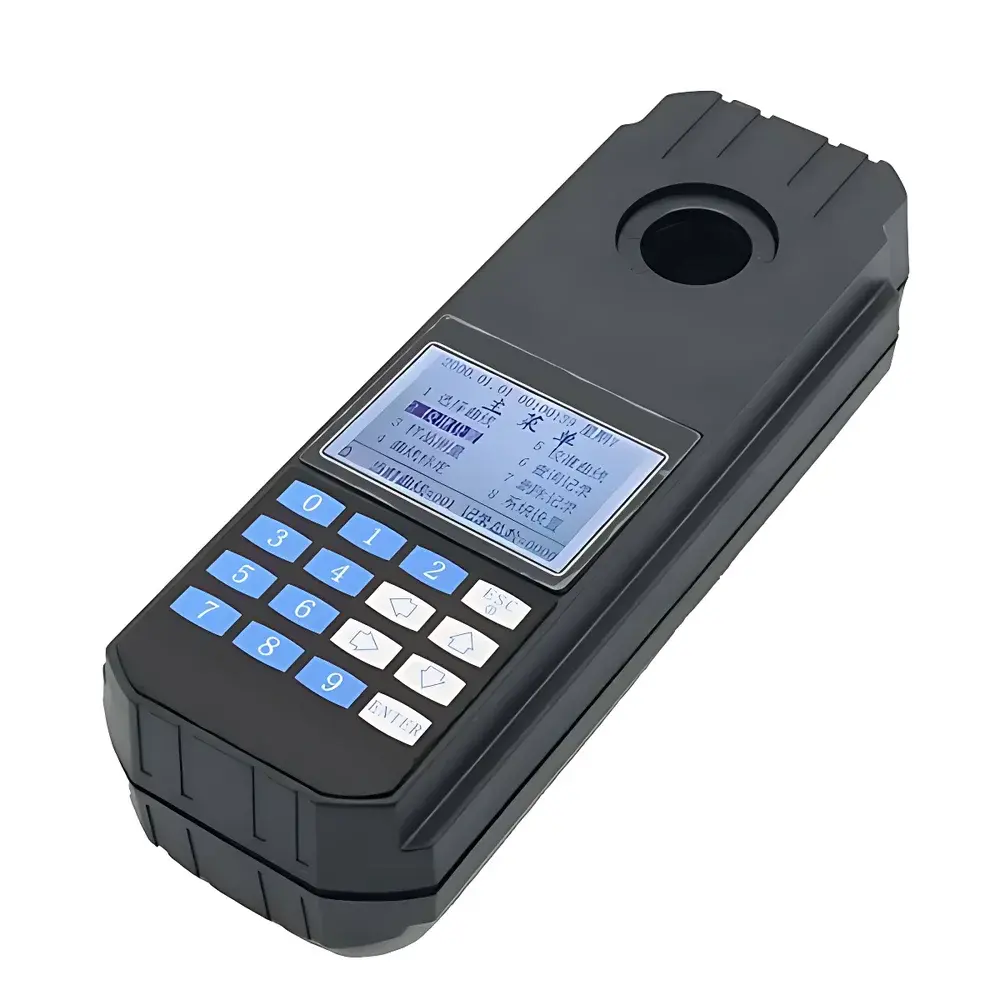
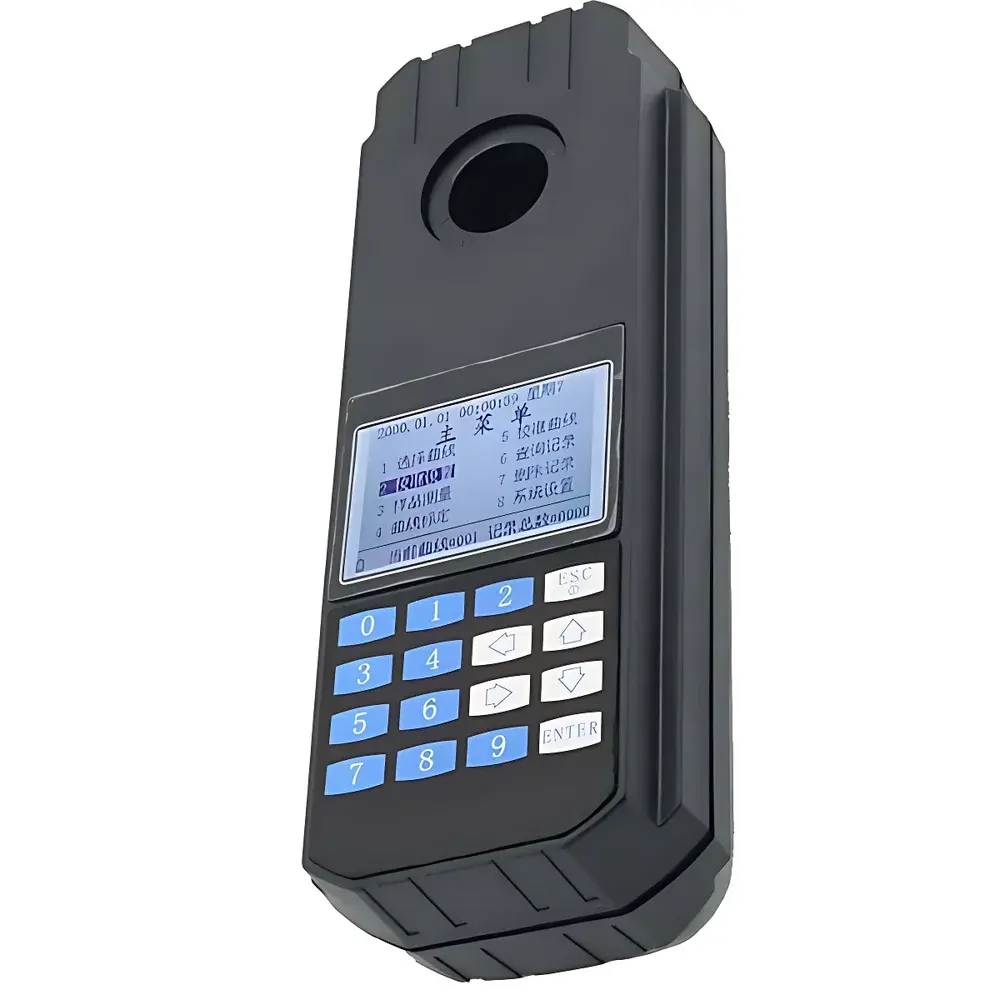
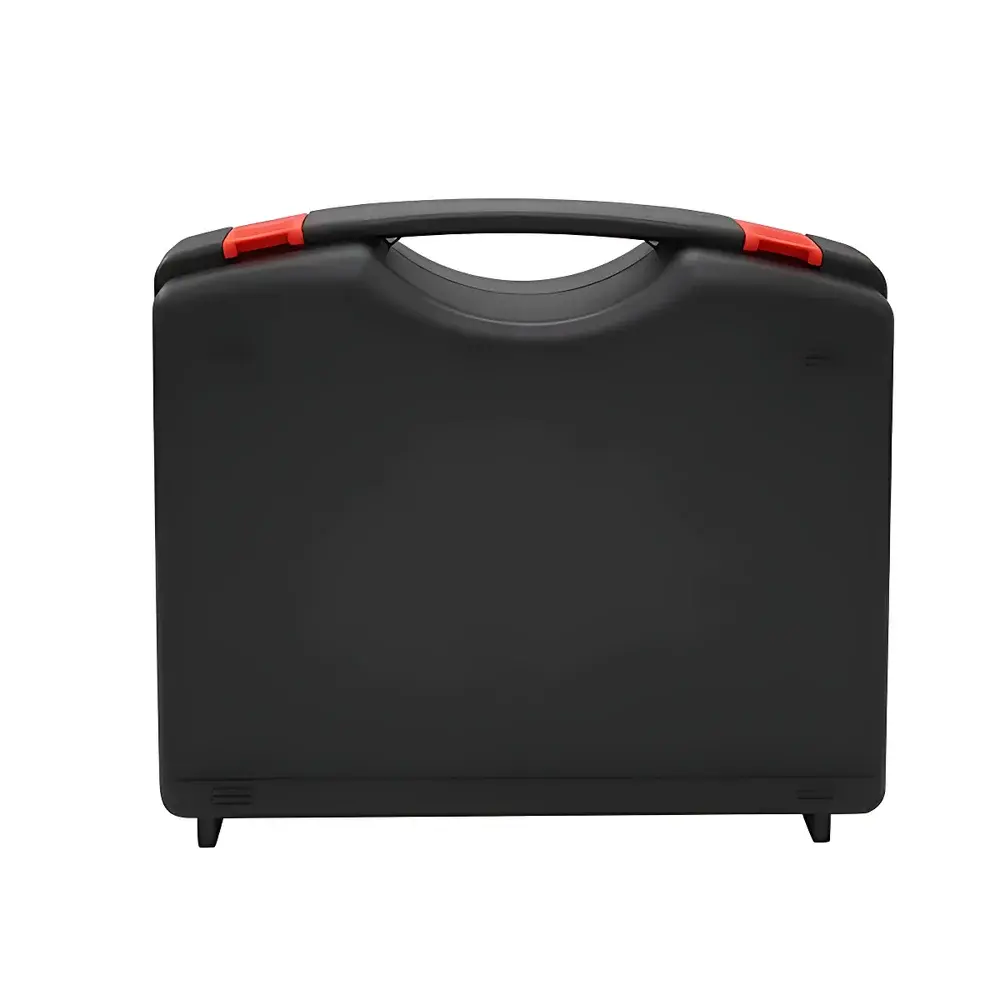
Shenchanghong PCHBE-182 Beryllium Photometric Analyzer
| Brand | Shenchanghong |
|---|---|
| Origin | Shenzhen, China |
| Manufacturer Type | Direct Manufacturer |
| Country of Origin | China |
| Model | PCHBE-182 |
| Instrument Type | Portable |
| Detection Principle | Photometry (Colorimetric Method) |
| Target Analyte | Beryllium (Be) in aqueous matrices |
| Analysis Time | 20 min |
| Accuracy | ≤ ±5% |
| Repeatability | ≤ 3% |
| Resolution | 0.001 mg/L |
| Measurement Range | 0.001–0.10 mg/L |
| Optical Drift | < 0.002 A within 20 min |
| Dimensions | 80 mm × 230 mm × 55 mm |
| Weight | 500 g |
| Operating Temperature | 5–40 °C |
| Relative Humidity | ≤ 85% |
| Power Supply | 4 × AA batteries |
| Protection Rating | IP65 |
| Data Storage | 20 calibration curves + 199 timestamped measurement records (including absorbance, transmittance, and concentration with yyyy-mm-dd hh:mm:ss) |
Overview
The Shenchanghong PCHBE-182 Beryllium Photometric Analyzer is a field-deployable, microprocessor-controlled instrumentation system engineered for the quantitative determination of dissolved beryllium (Be²⁺) in water samples using standardized colorimetric photometry. It operates on the principle of selective complexation between beryllium ions and a proprietary chromogenic reagent—typically a derivative of eriochrome cyanine R or similar high-selectivity ligand—under controlled pH and masking conditions. The resulting colored complex exhibits strong absorbance in the visible spectrum, enabling quantification via Beer-Lambert law-based calibration. Designed for compliance with EPA Method 200.7 (Inductively Coupled Plasma–Atomic Emission Spectrometry) screening workflows and ISO 11929:2019 uncertainty framework for photometric measurements, the PCHBE-182 delivers trace-level sensitivity (detection limit ≈ 0.001 mg/L) without requiring laboratory infrastructure. Its compact form factor and battery-powered operation make it suitable for on-site monitoring at drinking water intake points, effluent discharge sites, mining-impacted surface waters, and industrial wastewater treatment facilities.
Key Features
- Monochromatic cold-light source with narrow-band interference optical path, ensuring minimal spectral stray light and long-term photometric stability (<0.002 A drift over 20 min).
- 16-bit low-power microcontroller architecture optimized for energy efficiency and signal integrity in variable ambient lighting.
- Backlit LCD display with intuitive menu navigation; supports real-time concentration readout in mg/L, plus simultaneous absorbance (A) and transmittance (%T) values.
- IP65-rated ABS polymer housing—resistant to corrosion, dust ingress, and water splashing—validated for outdoor deployment in humid or chemically aggressive environments.
- Integrated data logger with non-volatile memory: stores up to 20 user-defined calibration curves and 199 full measurement records, each embedded with ISO 8601-compliant timestamps (year-month-day hour:minute:second).
- Automatic zeroing and blank compensation routines reduce operator-induced variability; built-in power-loss protection retains calibration and measurement history during battery replacement.
Sample Compatibility & Compliance
The PCHBE-182 is validated for use with clarified, filtered aqueous samples including potable water, groundwater, surface water, municipal wastewater, and industrial process effluents. Sample pretreatment—such as acid digestion (per EPA 3010B or ISO 15587-1)—is required for total beryllium analysis in suspended particulate or organically bound matrices. Interference mitigation is achieved through selective masking agents included in the supplied reagent kit (e.g., fluoride for aluminum suppression, citrate for iron control). The instrument meets functional requirements aligned with ISO/IEC 17025:2017 for field-testing equipment and supports audit-ready documentation for GLP and ISO 14001 environmental management systems. While not a certified reference method, its performance characteristics are traceable to NIST SRM 1643e (Trace Elements in Natural Water) and consistent with US EPA’s recommended performance criteria for portable photometers under Method 200.9.
Software & Data Management
No external software installation is required for basic operation. All calibration, measurement, and data review functions are executed onboard. Calibration curves may be generated using standard addition or multi-point linear regression (up to 6 standards). Timestamped datasets can be exported manually via optional USB-C adapter (not included) for integration into LIMS or Excel-based QA/QC reporting. Audit trails—including date/time stamps, operator ID fields (user-configurable), and calibration verification logs—are retained internally and support regulatory review per FDA 21 CFR Part 11 principles when used in GMP-aligned environmental monitoring programs.
Applications
- Routine surveillance of beryllium concentrations at public water supply sources and distribution networks.
- Compliance monitoring for industrial dischargers subject to local or national Be limits (e.g., China’s GB 5749-2022, EU Drinking Water Directive Annex I parametric value of 0.005 mg/L).
- Site investigation and remediation validation at legacy aerospace or nuclear facility sites where beryllium alloy machining residues may leach into soil or groundwater.
- Field-based tiered assessment prior to lab submission—reducing analytical turnaround time and cost for high-volume screening.
- Educational use in environmental science laboratories for teaching instrumental analysis fundamentals and water quality parameter interrelationships.
FAQ
What sample volume is required for analysis?
A minimum of 5 mL of filtered, neutral-pH water sample is required per test. Pre-filtration through a 0.45 µm membrane is recommended for turbid or particulate-laden samples.
Is digestion necessary for all sample types?
Yes—total beryllium quantification requires hot acid digestion (HNO₃/HF or HNO₃/HClO₄) per ISO 15587-2. The PCHBE-182 measures only dissolved (filterable) Be unless paired with an approved digestion module.
How often must the instrument be recalibrated?
Calibration is recommended before each batch of samples, or every 4 hours during continuous use. Verification with a mid-range check standard should occur every 10 analyses.
Can the device measure other metals?
No—the optical filters and reagent chemistry are specifically optimized for beryllium. Cross-reactivity with Al³⁺, Cr³⁺, or Fe³⁺ is minimized but not eliminated; co-determination requires dedicated analyzers.
What is the shelf life of the included reagent kit?
Unopened reagents retain stability for 18 months when stored at 2–8 °C. Once reconstituted, working solutions must be used within 72 hours under refrigerated, light-protected conditions.
Related Products







