
Shenchanghong PCHBR-307 Portable Bromide Analyzer for Water
| Brand | Shenchanghong |
|---|---|
| Model | PCHBR-307 |
| Measurement Range | 0.10–5.00 mg/L (dilutable beyond range) |
| Resolution | 0.01 mg/L |
| Accuracy | ≤5% FS |
| Repeatability | ≤3% |
| Optical Stability | ≤0.002 A/20 min |
| Dimensions (H×W×D) | 266 × 200 × 130 mm |
| Power Consumption | 30 W |
| Weight | 500 g |
| Light Source | Imported high-brightness LED (100,000 h lifetime) |
| Filter System | Narrow-band optical filter |
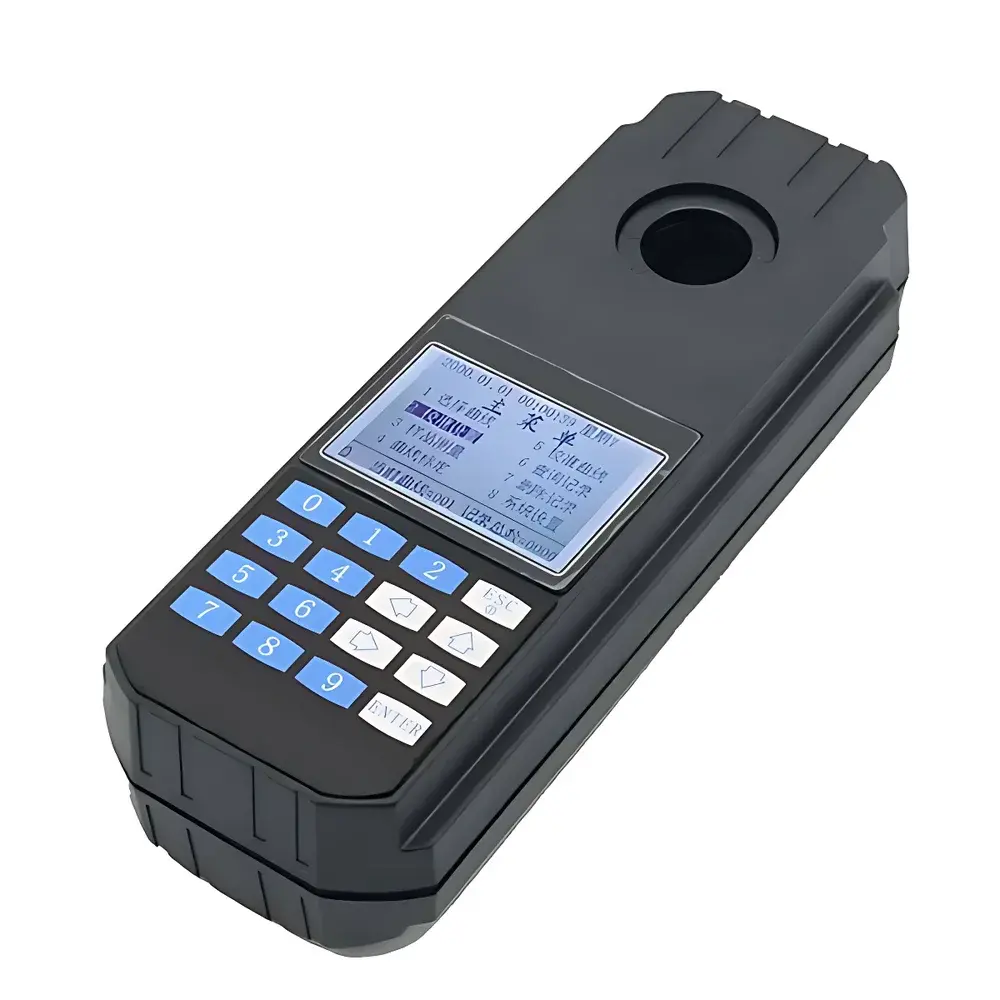
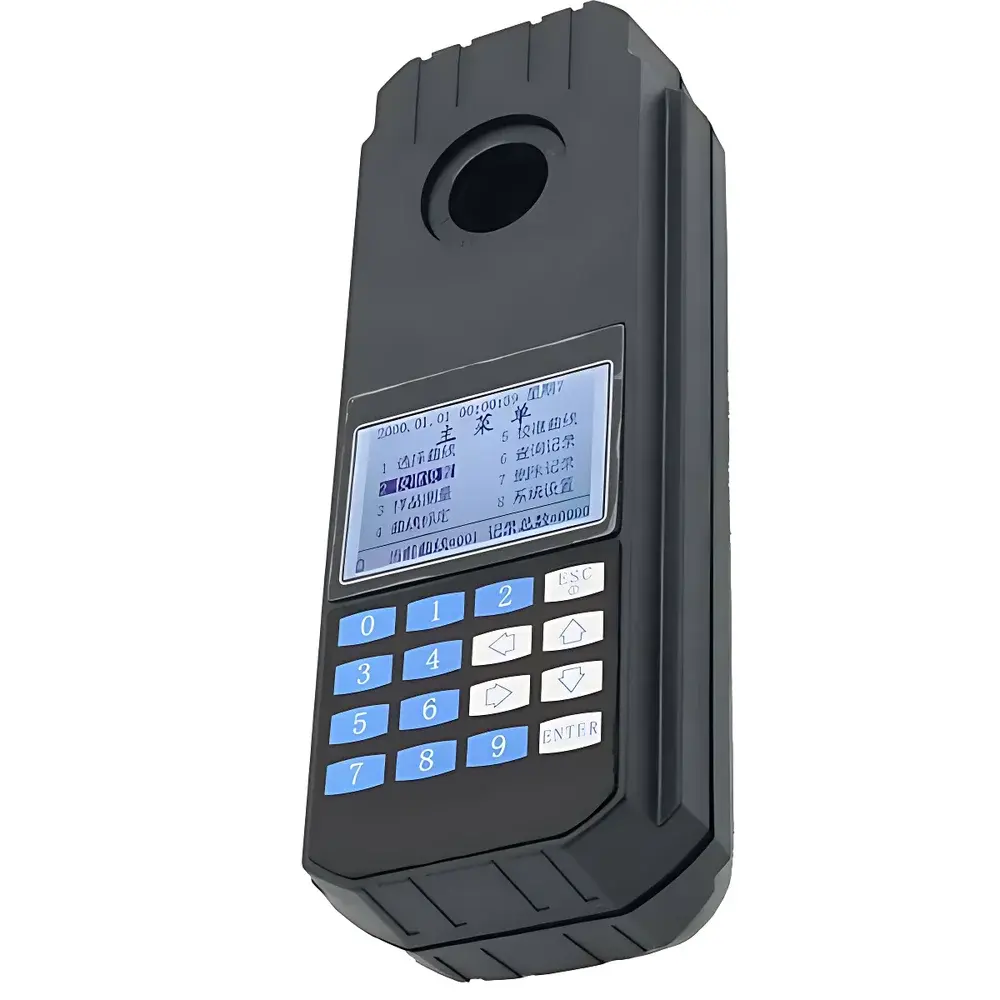
| Display | Backlit LCD with Chinese menu interface |
| Data Storage | 10 calibration curves + 199 timestamped measurement records (including absorbance, transmittance, and date/time stamp) |
| Housing Material | Corrosion-resistant ABS polymer |
| Microcontroller | Low-power 16-bit MCU |
| Compliance | Designed for field-deployable water quality testing per standard colorimetric methodology |
Overview
The Shenchanghong PCHBR-307 Portable Bromide Analyzer is a dedicated photometric instrument engineered for rapid, on-site quantification of bromide ion (Br⁻) concentration in aqueous samples using standardized colorimetric analysis. It operates on the principle of selective chromogenic reaction—bromide reacts with specific reagents under controlled pH and oxidant conditions to form a stable colored complex, the absorbance of which is measured at a defined wavelength (typically within the visible spectrum, e.g., 460–480 nm). This method aligns with established spectrophotometric approaches referenced in ISO 10304-1 (water quality — determination of dissolved anions by liquid chromatography), ASTM D3370 (standard practices for sampling water), and EPA Method 300.1 (determination of anions by ion chromatography), though the PCHBR-307 implements a simplified, field-optimized adaptation suitable for routine screening where laboratory-grade IC or ICP-MS infrastructure is unavailable. Its compact, battery-compatible design (with optional DC input) supports deployment across remote monitoring sites, mobile laboratories, and emergency response units.
Key Features
- High-stability optical architecture featuring a long-life imported LED light source (rated ≥100,000 hours) coupled with a precision narrow-band interference filter—minimizing spectral drift and ambient light interference for consistent photometric performance.
- Integrated 16-bit low-power microcontroller platform ensures reliable signal processing, real-time correction, and low thermal noise—critical for maintaining repeatability under variable environmental conditions (e.g., 10–40 °C operating range).
- Backlit monochrome LCD display with full Chinese-language menu navigation enables intuitive operation without external software or PC dependency—ideal for field technicians with varying technical backgrounds.
- Dual-mode data retention: non-volatile memory preserves up to 10 user-defined calibration curves and 199 timestamped measurement entries (YYYY-MM-DD HH:MM:SS), including absorbance (A), transmittance (%T), and calculated bromide concentration (mg/L).
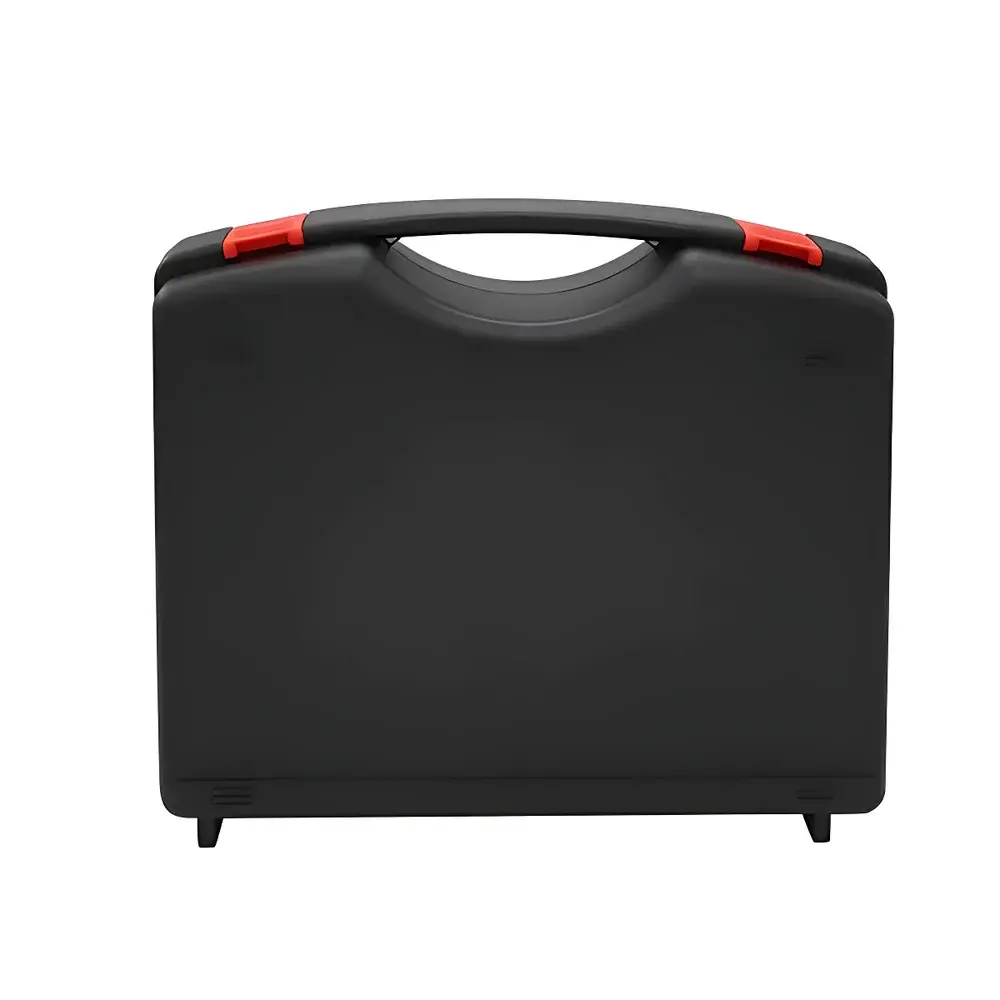
- Ruggedized housing constructed from injection-molded ABS polymer offers resistance to moisture, mild acids, alkalis, and mechanical impact—validated for transport in standard portable cases under ISO 13355 (packaging for instruments).
- Modular reagent kit included—pre-formulated, stabilized chemistry optimized for bromide selectivity in freshwater, wastewater, and desalinated effluent matrices; compatible with standard 10-mm pathlength glass cuvettes.
Sample Compatibility & Compliance
The PCHBR-307 is validated for use with clarified, low-turbidity water samples (turbidity <5 NTU) from municipal drinking water supplies, surface water bodies, groundwater wells, industrial process streams, and treated effluents. Interference mitigation protocols are embedded in the assay procedure—for example, pre-reduction steps to suppress nitrite interference and masking agents to minimize chloride cross-reactivity (up to 200 mg/L Cl⁻). While not certified to ISO/IEC 17025 as a standalone testing method, the instrument’s metrological characteristics—including ≤3% repeatability and ≤5% full-scale error—meet internal QA/QC thresholds recommended in APHA Standard Methods 4500-Br⁻ B (colorimetric method) and support GLP-aligned field data collection. All firmware and calibration logic comply with basic traceability requirements for audit-ready documentation.
Software & Data Management
No proprietary desktop software is required for basic operation. However, timestamped measurement logs can be manually transcribed or exported via optional USB-to-serial adapter (not bundled) for integration into LIMS or Excel-based reporting workflows. The onboard memory maintains chronological integrity and prevents data corruption during power interruption—a feature aligned with FDA 21 CFR Part 11 principles for electronic record retention, though formal electronic signature functionality is not implemented. Calibration curve coefficients are stored with creation timestamps and operator ID fields (user-definable), supporting multi-shift usage in municipal water utilities.
Applications
- Regulatory compliance monitoring of bromide in drinking water sources (per WHO provisional guideline value of 0.01 mg/L and US EPA unregulated contaminant monitoring rule priorities).
- Process control in desalination plants where bromide oxidation forms bromate—a known disinfection by-product regulated under EU Directive 98/83/EC.
- Environmental impact assessment of coal-fired power plant cooling water discharges and oilfield produced water reinjection systems.
- Field verification of bromide removal efficiency in activated carbon or reverse osmosis pilot studies.
- Emergency response screening following accidental chemical releases involving brominated flame retardants or pharmaceutical manufacturing effluents.
FAQ
What sample pretreatment is required before analysis?
Samples must be filtered through a 0.45 µm membrane filter to remove suspended solids. High-chloride or high-organic-content samples may require dilution or matrix-matched calibration.
Can the instrument measure bromide in seawater?
Not directly—the high chloride background (>19,000 mg/L) causes significant interference; specialized ion-selective electrode or IC methods are recommended for marine applications.
Is the reagent kit stable at ambient temperature?
Yes—the supplied dry-powder and liquid reagents retain efficacy for ≥12 months when stored unopened at 2–30 °C; opened kits should be used within 60 days.
Does the device support external power sources?
Yes—it accepts 12 V DC input (center-positive, 2.1 mm barrel jack), enabling operation from vehicle power outlets or portable power stations.
How often should calibration be verified?
Daily verification with a mid-range standard (e.g., 2.50 mg/L Br⁻) is recommended for routine monitoring; full multi-point calibration every 7 days or after reagent lot change.







