
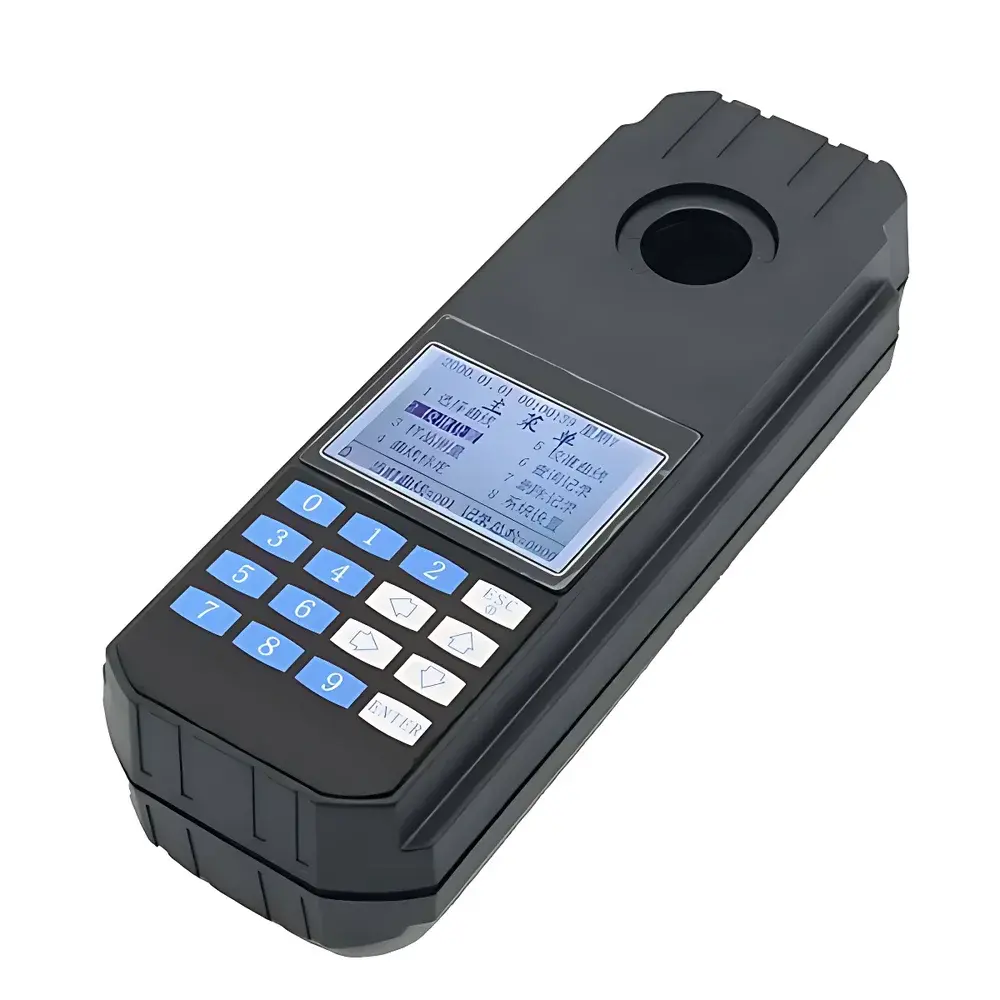
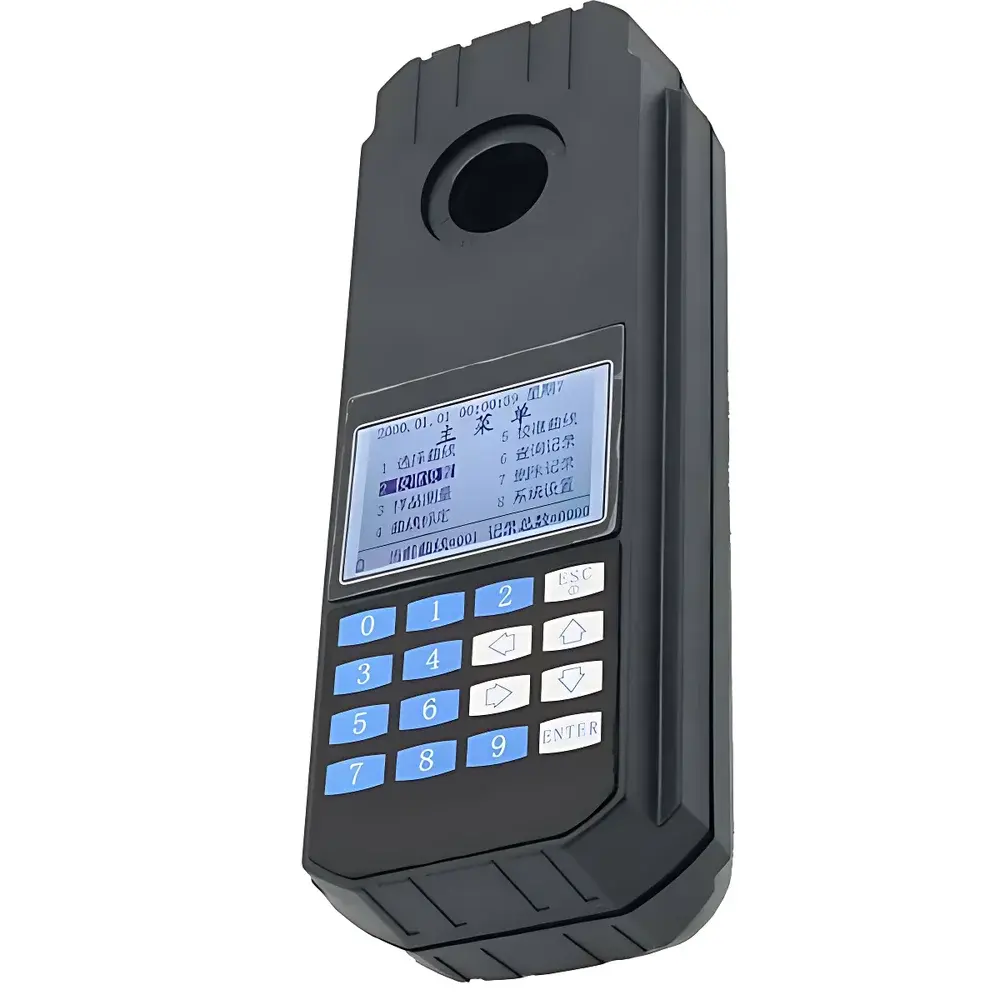
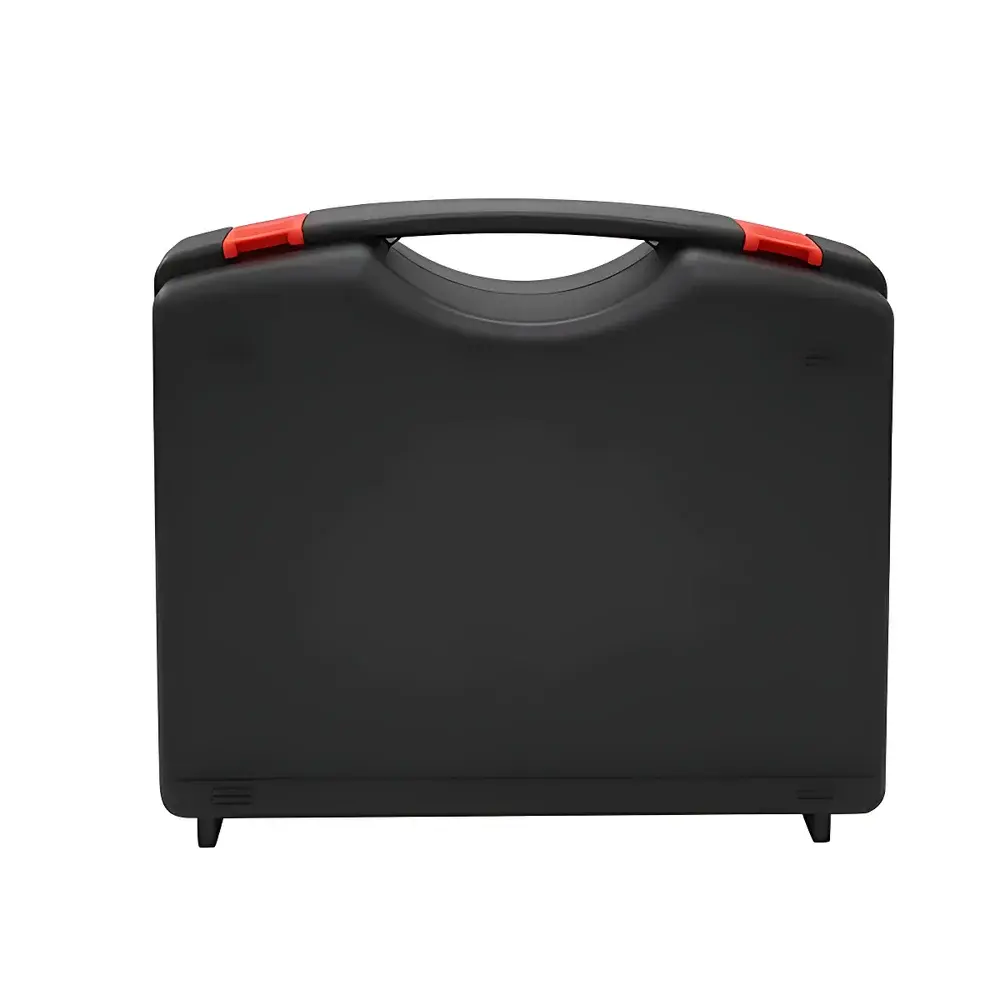
Shenchanghong PCHCD-170 Portable Cadmium Analyzer
| Brand | Shenchanghong |
|---|---|
| Origin | Shenzhen, China |
| Manufacturer Type | Direct Manufacturer |
| Country of Origin | China |
| Model | PCHCD-170 |
| Instrument Type | Portable |
| Detection Principle | Photometric (Colorimetric) Method |
| Target Analyte | Cadmium (Cd²⁺) |
| Analysis Time | 20 min |
| Accuracy | ±5% of Full Scale (F.S.) |
| Resolution | 0.01 mg/L |
| Measurement Range | 0.01–0.50 mg/L |
| Repeatability | ≤3% RSD |
| Dimensions | 80 mm × 230 mm × 55 mm |
| Weight | 500 g |
| Power Supply | 4 × AA batteries |
| Operating Temperature | 5–40 °C |
| Relative Humidity | ≤85% RH |
| Protection Rating | IP65 |
| Data Storage | 20 calibration curves + 199 measurement records with timestamp (YYYY-MM-DD hh:mm:ss), concentration, absorbance, and transmittance |
Overview
The Shenchanghong PCHCD-170 Portable Cadmium Analyzer is a field-deployable photometric instrument engineered for rapid, on-site quantification of dissolved cadmium (Cd²⁺) in water samples. It operates on the principle of colorimetric analysis—specifically, the reaction of cadmium ions with a selective chromogenic reagent to form a stable colored complex whose absorbance at a defined wavelength (typically 520–560 nm) is linearly proportional to analyte concentration. This method complies with standard reference procedures including EPA Method 200.7 (ICP-OES) validation benchmarks and ISO 8692:2012 (water quality—determination of cadmium by spectrophotometry), enabling trace-level detection within the legally relevant range for drinking water (WHO guideline: 3 µg/L), surface water, and wastewater effluents. The analyzer integrates a high-stability optical path with a narrow-band interference filter and a 100,000-hour lifetime high-brightness LED source, minimizing spectral drift and ambient light interference—critical for reproducible field measurements under variable lighting and temperature conditions.
Key Features
- True handheld architecture: Compact dimensions (80 × 230 × 55 mm) and lightweight design (500 g) optimized for single-handed operation during field surveys, emergency response, or routine municipal inspections.
- Robust environmental protection: IP65-rated enclosure constructed from impact-resistant ABS polymer, ensuring reliable performance in dusty, humid, or light-rain conditions typical of riverbanks, industrial discharge points, or groundwater monitoring wells.
- Low-power embedded control: 16-bit ultra-low-power microcontroller enables up to 6 months of standby time on four standard AA alkaline batteries—eliminating dependency on external power sources during extended deployments.
- Integrated data integrity: Onboard non-volatile memory stores up to 20 user-defined calibration curves and 199 timestamped measurement records, each containing concentration (mg/L), absorbance (AU), transmittance (%T), and full ISO 8601-compliant timestamps (year, month, day, hour, minute, second).
- Optical stability assurance: Factory-aligned optical train with thermally compensated LED source and precision interference filter eliminates need for frequent zeroing or recalibration between sample batches.
Sample Compatibility & Compliance
The PCHCD-170 is validated for use with clarified, filtered aqueous matrices—including raw surface water, treated drinking water, municipal wastewater, and leachate from landfill monitoring wells—provided turbidity remains below 5 NTU (per ISO 7027). Sample pretreatment (e.g., acid digestion per EPA Method 3010B) is required for total cadmium determination in suspended solids or sediment extracts. The instrument meets functional requirements outlined in GB/T 5750.6–2023 (China Standard for Drinking Water Quality—Determination of Metals) and supports audit-ready workflows aligned with GLP and ISO/IEC 17025 documentation practices. While not FDA 21 CFR Part 11-certified out-of-the-box, its immutable timestamped data logs and curve versioning support traceability in regulated environmental QA/QC programs.
Software & Data Management
Data export is supported via USB-C interface (optional adapter cable) to Windows-based desktop software (supplied), enabling batch export to CSV or Excel formats with automatic metadata tagging. The software allows curve validation (linear regression R² ≥ 0.995), outlier flagging, and report generation compliant with CNAS-CL01:2018 reporting clauses. All stored calibrations retain creation date, operator ID (manually entered), and reagent lot number fields—facilitating internal audit trails and method verification per ISO 17025 clause 7.7.
Applications
- Rapid screening of cadmium contamination at industrial outfalls and electroplating facility discharge points.
- Field verification of treatment efficacy in ion-exchange or coagulation-flocculation systems targeting heavy metal removal.
- Emergency response deployment following suspected heavy metal spills in rivers or reservoirs.
- Compliance monitoring for municipal water utilities performing quarterly cadmium checks per national drinking water standards.
- Educational use in environmental science laboratories requiring portable, low-maintenance instrumentation for student-led water quality fieldwork.
FAQ
What sample volume is required for one measurement?
A minimum of 5 mL of pre-filtered water sample is required per test; supplied disposable cuvettes are calibrated for 10-mm pathlength measurements.
Can the instrument measure other metals besides cadmium?
No—the PCHCD-170 is dedicated exclusively to cadmium quantification using its proprietary reagent formulation and fixed-wavelength optical configuration. Cross-reactivity with zinc, lead, or copper is suppressed through chelator selectivity and pH-controlled reaction kinetics.
Is digestion required for total cadmium analysis?
Yes—this instrument measures only dissolved (filterable) cadmium. For total recoverable cadmium, samples must undergo hot nitric-perchloric acid digestion (EPA Method 3015A) prior to analysis.
How often does the calibration curve require verification?
Calibration stability is verified daily in routine use; the instrument’s built-in blank check function allows rapid zero-point confirmation before each sampling session.
Does the device support connectivity to LIMS platforms?
Direct LIMS integration is not natively supported; however, exported CSV files contain structured headers compatible with common LIMS import modules (e.g., LabWare, STARLIMS) when mapped via configuration templates.







