
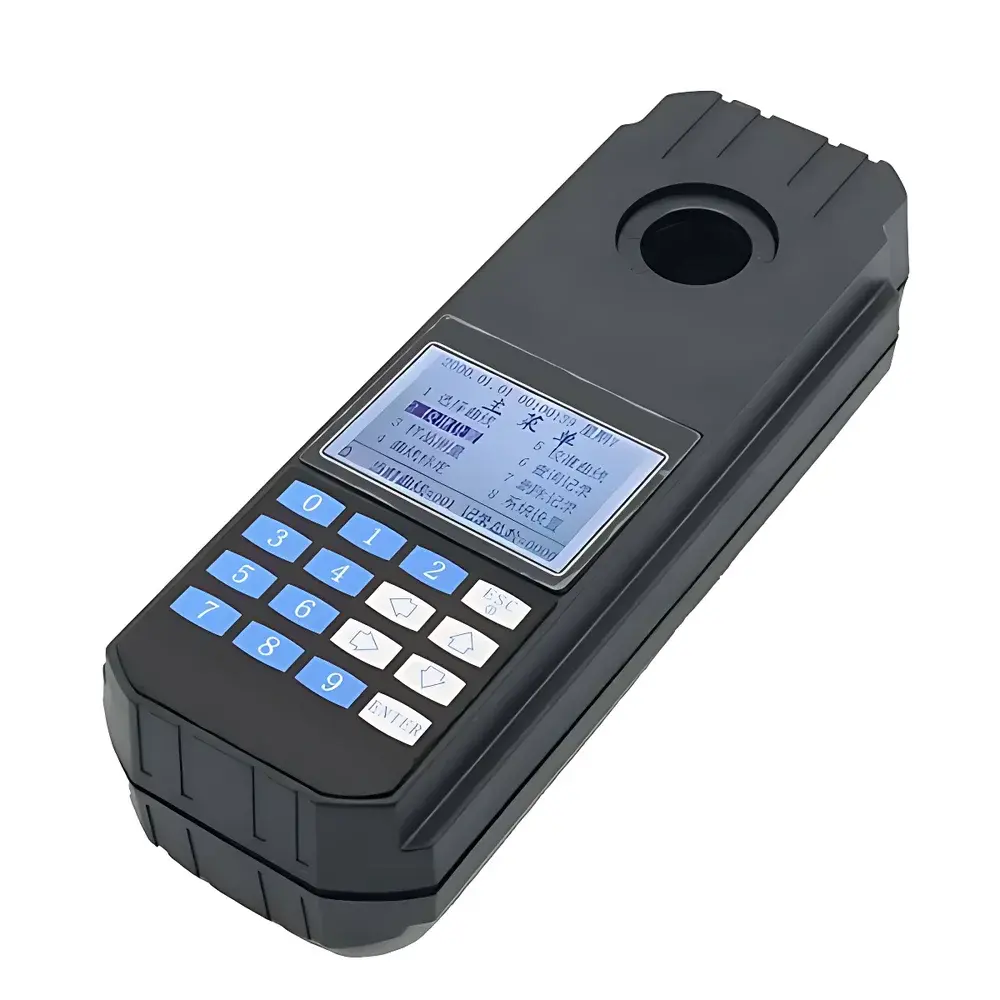
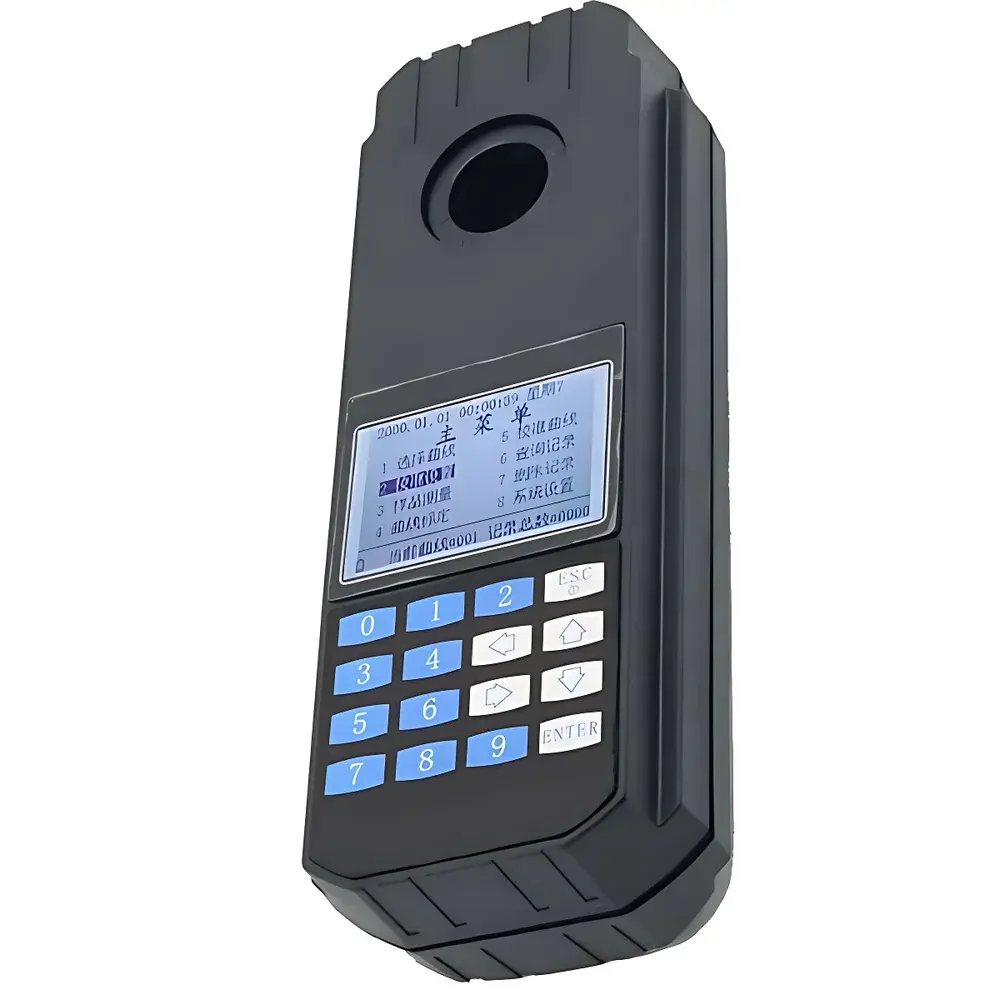
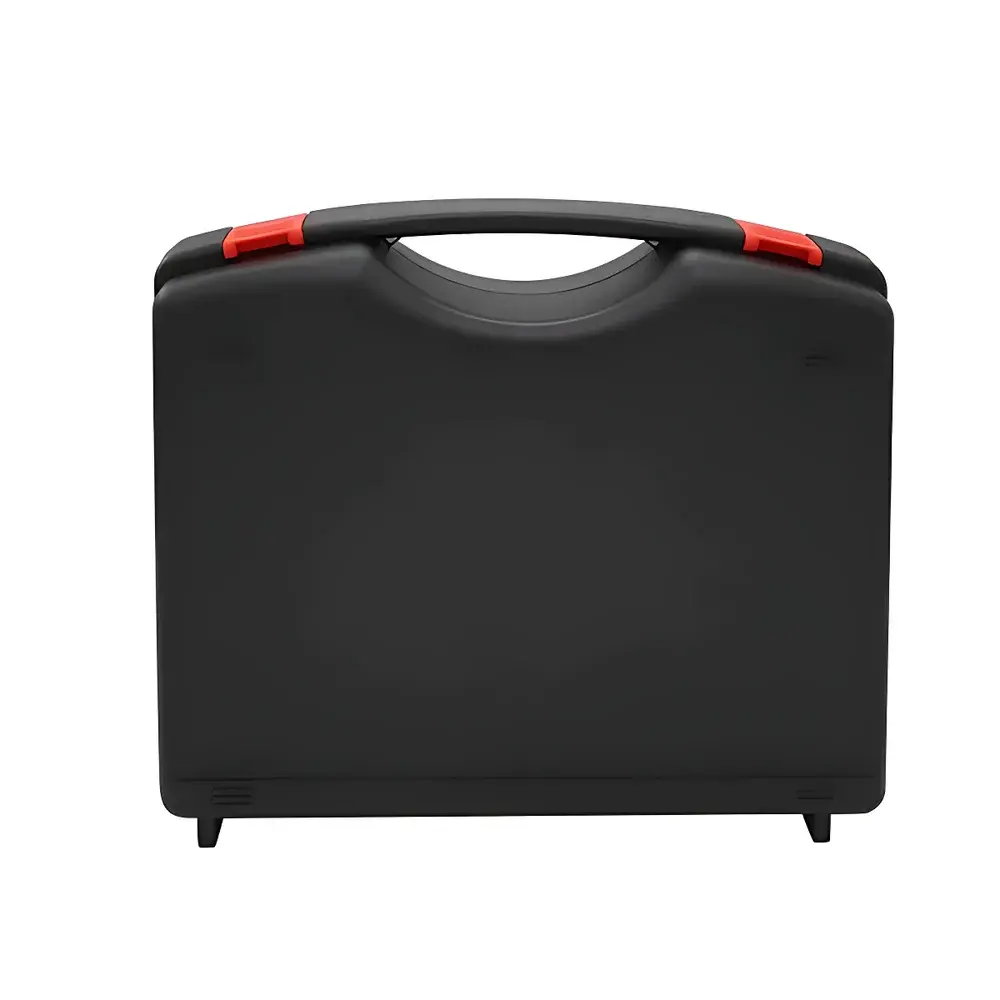
Shenchanghong PCHNI-120 Portable Nickel Analyzer
| Brand | Shenchanghong |
|---|---|
| Origin | Shenzhen, China |
| Manufacturer Type | Direct Manufacturer |
| Product Origin | Domestic (China) |
| Model | PCHNI-120 |
| Instrument Type | Portable |
| Detection Principle | Photometric Method (Visible Spectrophotometry) |
| Target Analyte | Nickel (Ni²⁺) |
| Measurement Range | 0.02–1.00 mg/L |
| Accuracy | ±5% of Full Scale (F.S.) |
| Repeatability | ≤3% RSD |
| Resolution | 0.02 mg/L |
| Response Time | 20 min per sample |
| Dimensions | 80 × 230 × 55 mm |
| Weight | 500 g |
| Power Supply | 4 × AA alkaline batteries (up to 6 months standby) |
| Operating Temperature | 5–40 °C |
| Relative Humidity | ≤85% RH |
| Protection Rating | IP65 |
| Data Storage | 20 calibration curves + 199 measurement records with timestamp (YYYY-MM-DD hh:mm:ss), absorbance, transmittance, and concentration |
Overview
The Shenchanghong PCHNI-120 Portable Nickel Analyzer is a field-deployable photometric instrument engineered for rapid, on-site quantification of dissolved nickel (Ni²⁺) in aqueous environmental samples—including surface water, groundwater, wastewater effluents, and drinking water sources. It operates on the principle of visible-light spectrophotometry, utilizing a stable, high-intensity imported LED light source (rated lifetime >100,000 hours) coupled with a narrow-band optical filter system to isolate the characteristic absorption wavelength associated with the nickel–dimethylglyoxime (Ni–DMG) complex at ~530 nm. This selective photometric detection ensures minimal spectral interference from common coexisting ions (e.g., Fe³⁺, Cu²⁺, Co²⁺) when appropriate masking agents and pH control are applied per standard method protocols. Designed for compliance with established regulatory frameworks—including EPA Method 7191B (for Ni by DMG colorimetry) and ISO 8577 (Water quality — Determination of nickel — Spectrophotometric method)—the PCHNI-120 delivers trace-level sensitivity with a lower detection limit of 0.02 mg/L and full-scale linearity across 0.02–1.00 mg/L. Its compact handheld form factor, rugged ABS housing, and IP65 ingress protection enable reliable operation under variable ambient conditions typical of field sampling campaigns.
Key Features
- High-stability optical architecture featuring a long-life, high-brightness LED source and precision narrow-band interference filters—ensuring consistent photometric performance and minimizing drift due to ambient light or thermal fluctuation.
- Integrated 16-bit low-power microcontroller enabling extended battery operation: up to 6 months in standby mode and ≥1,000 measurements per set of four AA alkaline cells.
- Ergonomic, handheld design (80 × 230 × 55 mm; 500 g) with IP65-rated enclosure—resistant to dust ingress and low-pressure water jets—suitable for deployment in humid, outdoor, or industrial environments.
- Onboard data management supporting storage of up to 20 user-defined calibration curves and 199 timestamped measurement records, each including concentration (mg/L), absorbance (A), transmittance (%T), and full ISO 8601-compliant timestamps (year, month, day, hour, minute, second).
- Pre-configured method logic aligned with standardized nickel colorimetric procedures, including built-in cuvette alignment guidance and automatic zeroing routines to reduce operator-dependent variability.
Sample Compatibility & Compliance
The PCHNI-120 is validated for use with clarified, filtered water samples meeting standard pretreatment requirements outlined in ISO 8577 and ASTM D1688. Sample matrix effects are mitigated through recommended acid digestion (for total Ni) or direct analysis (for dissolved Ni) following filtration through 0.45 µm membrane filters. Interference suppression is achieved using citrate or EDTA masking agents and controlled pH adjustment (pH 8–10) prior to DMG reagent addition. The instrument supports adherence to GLP documentation standards via traceable timestamped records and does not require external PC connectivity for routine operation—making it suitable for auditable field reporting in municipal water utilities, environmental consultancies, and third-party testing laboratories. While not certified to FDA 21 CFR Part 11 out-of-the-box, raw data export (via optional USB adapter) enables integration into compliant LIMS environments where electronic record integrity controls are externally managed.
Software & Data Management
All calibration and measurement operations are executed locally without embedded operating systems or cloud dependencies. Calibration curves may be generated using up to six standard points (0.02, 0.10, 0.25, 0.50, 0.75, 1.00 mg/L Ni), with linear or quadratic regression options selectable via menu navigation. Stored curves retain slope, intercept, correlation coefficient (r²), and date/time of creation. Measurement records include full metrological context: sample ID (user-entered alphanumeric tag), operator ID, ambient temperature (logged at time of reading), and raw photometric values. Data export functionality (via optional USB-C interface kit) produces CSV-formatted files compatible with Excel, LabArchives, and validated laboratory informatics platforms. Firmware updates are performed offline using signed binary files distributed via Shenchanghong’s technical support portal.
Applications
- Regulatory monitoring of nickel discharge limits in industrial wastewater (e.g., electroplating, alloy manufacturing, battery recycling facilities) per local environmental permits.
- Rapid screening of groundwater near former mining sites or metal-processing zones to assess Ni migration and plume delineation.
- Field verification of nickel removal efficiency in active treatment systems (e.g., ion exchange, coagulation-flocculation, adsorption columns).
- Compliance checks for drinking water supplies against WHO guideline value (0.02 mg/L) and national standards (e.g., China GB 5749-2022, EU Directive 98/83/EC).
- Educational use in university environmental science labs for teaching fundamental principles of colorimetric analysis and trace metal speciation.
FAQ
What sample preparation is required prior to analysis?
Samples must be filtered through a 0.45 µm membrane filter to remove suspended solids. For total nickel determination, acid digestion (HNO₃/HCl mixture, hotplate or microwave-assisted) is required prior to neutralization and DMG complexation.
Is the instrument compatible with international standard methods?
Yes—the optical configuration and reagent protocol align with ISO 8577 and EPA Method 7191B. Validation reports documenting method equivalence are available upon request from Shenchanghong Technical Support.
How is calibration verified in the field?
A certified reference material (CRM) solution of nickel (e.g., NIST SRM 1643e) can be measured daily as a continuing calibration check; deviation exceeding ±5% F.S. triggers recalibration.
Can the device be used in direct sunlight?
No—while the optical system incorporates ambient light rejection, measurements should be conducted in shaded conditions or using the supplied opaque cuvette cap to prevent stray-light-induced error.
Does the analyzer support multi-ion capability?
No—the PCHNI-120 is dedicated exclusively to nickel quantification. Shenchanghong offers parallel models (e.g., PCHCR-120 for chromium, PCHCU-120 for copper) with optimized optical paths and reagent sets for individual metals.
Related Products







