
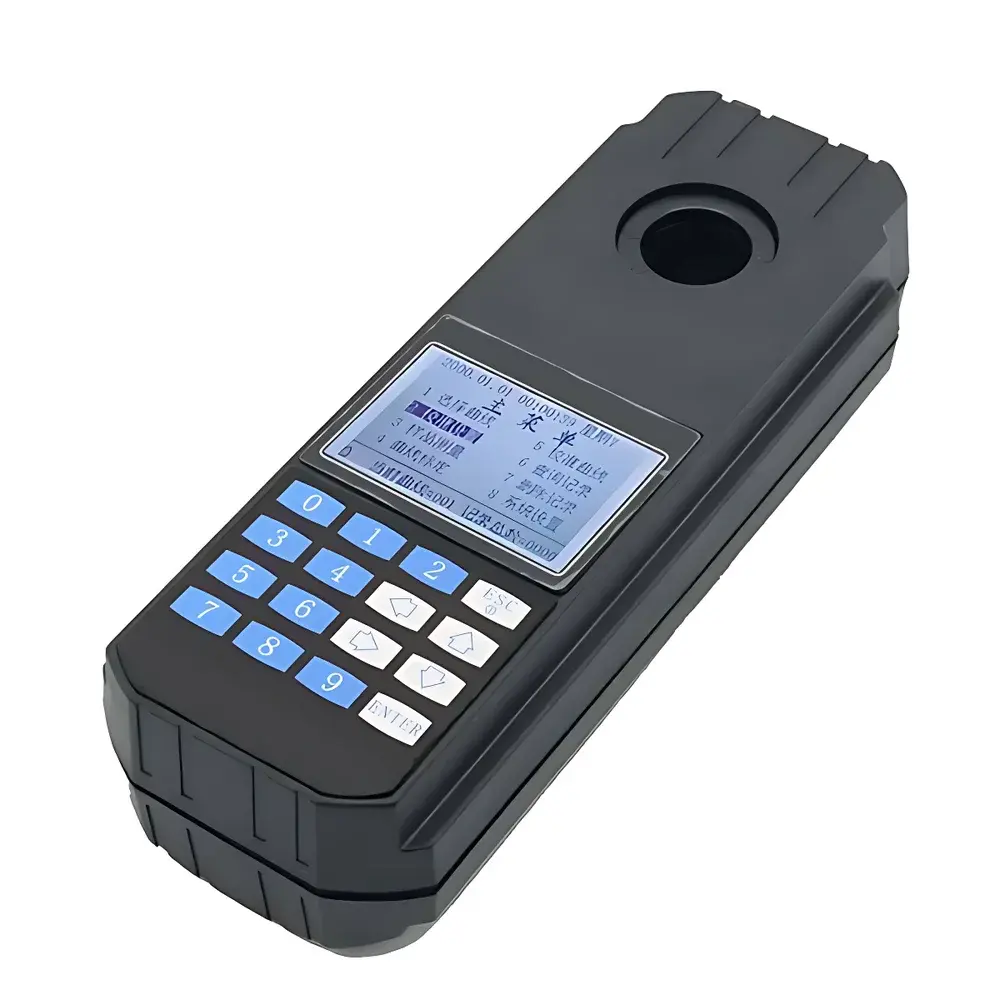
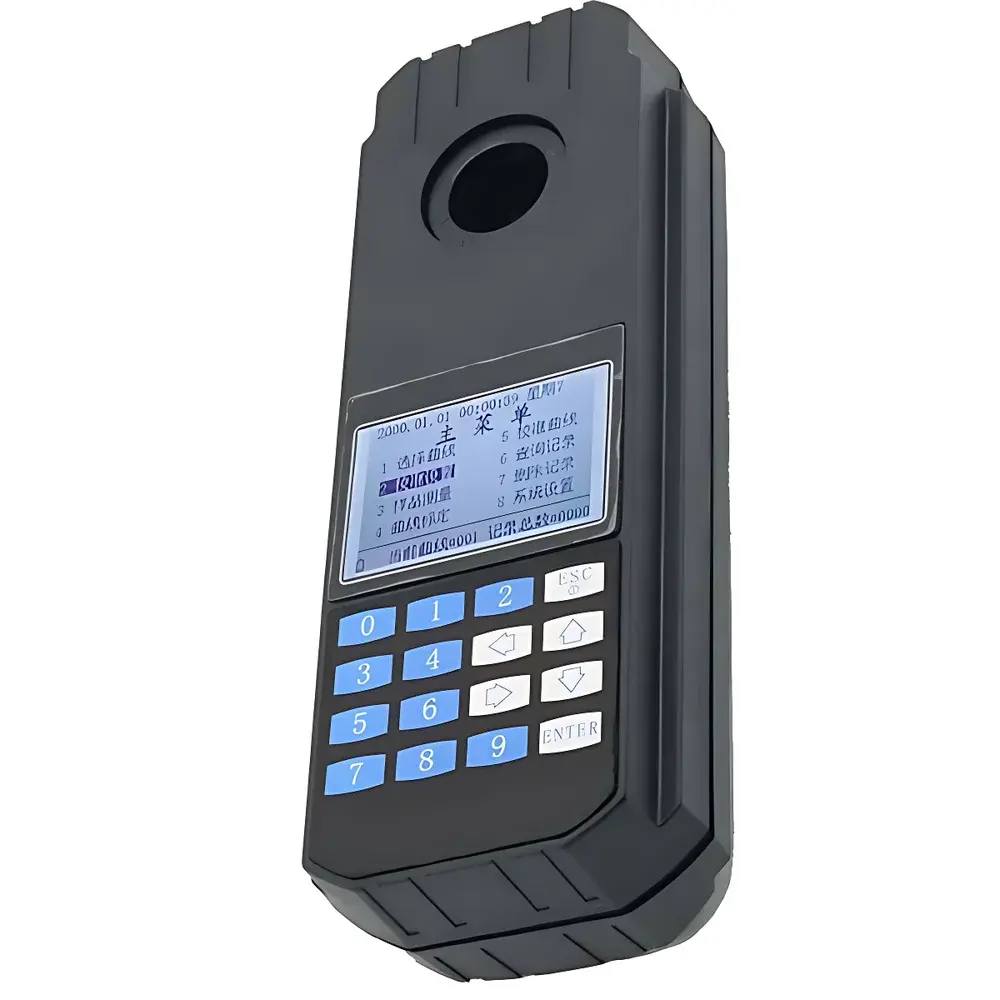
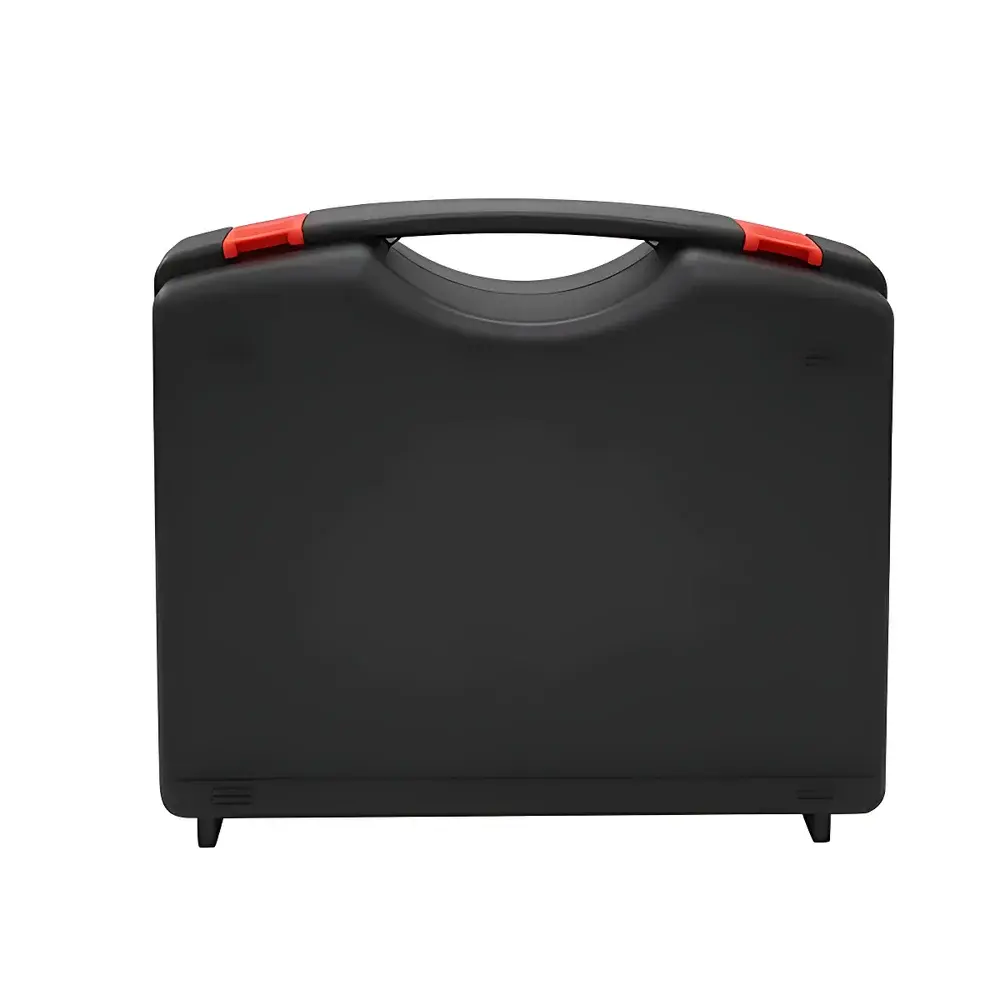
Shenchanghong PCHPA-303 Portable Aniline Analyzer for Water
| Brand | Shenchanghong |
|---|---|
| Origin | Guangdong, China |
| Manufacturer Type | Direct Manufacturer |
| Model | PCHPA-303 |
| Instrument Type | Portable/HANDHELD Water Quality Analyzer |
| Detection Parameter | Aniline in Water |
| Measurement Range | 0.03–5.00 mg/L (dilution-enabled for out-of-range samples) |
| Resolution | 0.01 mg/L |
| Accuracy | ≤5% FS |
| Repeatability | ≤3% |
| Optical Stability | ≤0.002 A/20 min |
| Dimensions (H×W×D) | 266 × 200 × 130 mm |
| Weight | 500 g |
| Power Consumption | 30 W |
| Data Storage | 199 measurement records with timestamp (YYYY-MM-DD hh:mm:ss), absorbance & transmittance values, plus 10 programmable calibration curves |
| Light Source | Imported high-intensity LED (100,000 h lifetime) with narrow-band optical filter system |
| Housing Material | Molded ABS with corrosion resistance |
| Microcontroller | Low-power 16-bit MCU |
| Compliance | Designed per GB/T 5750.8–2023 (Standard Methods for Examination of Drinking Water – Organic Parameters), aligned with ISO 10523 and EPA Method 550 for aniline quantification via spectrophotometric derivatization |
Overview
The Shenchanghong PCHPA-303 Portable Aniline Analyzer is a field-deployable, single-parameter spectrophotometric instrument engineered for the quantitative determination of aniline (C6H5NH2) in surface water, groundwater, drinking water, wastewater, and industrial effluents. It operates on the principle of diazotization-coupling colorimetry: aniline reacts under acidic conditions with sodium nitrite to form a diazonium salt, which subsequently couples with N-(1-naphthyl)ethylenediamine dihydrochloride (NEDD) to yield a stable pink azo dye. The intensity of the resulting color—measured at 540 nm—is directly proportional to aniline concentration. This method is standardized in China’s GB/T 5750.8–2023 and broadly consistent with ISO 10523 (water quality — determination of pH) and U.S. EPA Method 550 (for aromatic amines in drinking water), enabling regulatory-compliant monitoring in routine environmental QA/QC workflows.
Key Features
- High-stability optical architecture: Utilizes an imported long-life (≥100,000 h) high-brightness LED light source paired with a precision narrow-band interference filter (center wavelength: 540 ± 2 nm, bandwidth: <10 nm), minimizing spectral drift and ambient light interference.
- Robust field performance: ABS polymer housing provides chemical resistance against common laboratory reagents and environmental moisture; IP54-rated enclosure ensures operational reliability in humid or dusty outdoor settings.
- Embedded data integrity: All measurements are automatically timestamped (year, month, day, hour, minute, second); up to 199 full records—including absorbance (A), transmittance (%T), and calculated concentration—are retained in non-volatile memory. Power interruption does not result in data loss.
- User-centric interface: Backlit monochrome LCD with Chinese-language menu navigation enables intuitive operation without external software or PC dependency—critical for field technicians with variable technical training levels.
- Calibration flexibility: Supports up to 10 user-defined calibration curves stored internally, accommodating batch-specific reagent lots or site-specific matrix corrections.
- Low-power embedded control: 16-bit microcontroller unit ensures deterministic response time, minimal thermal drift, and stable analog-to-digital conversion (12-bit ADC) for reproducible photometric readings.
Sample Compatibility & Compliance
The PCHPA-303 is validated for use with clarified, low-turbidity aqueous matrices (turbidity <5 NTU). Samples containing suspended solids, heavy metals (e.g., Fe3+, Cu2+ > 0.5 mg/L), or strong oxidants (e.g., residual chlorine >0.3 mg/L) require pretreatment—such as filtration (0.45 µm membrane), chelation, or dechlorination—to avoid interference. The analyzer conforms to national metrological verification regulation JJG 975–2019 (Chemical Oxygen Demand and Related Water Quality Analyzers) for photometric accuracy and repeatability. While not certified for GLP or 21 CFR Part 11 compliance out-of-the-box, its audit-ready data logging (with immutable timestamps and no editable fields) supports internal QA documentation and third-party validation under ISO/IEC 17025-accredited laboratories.
Software & Data Management
No proprietary desktop software is required for basic operation. All configuration, calibration, and reporting occur directly on-device. For centralized data aggregation, measurement records can be exported manually via timestamp-sorted CSV format using optional USB-to-serial adapter (not included). Each record contains: sample ID (user-entered), date/time stamp, raw absorbance, % transmittance, calculated concentration (mg/L), and active calibration curve ID. No cloud connectivity or remote firmware updates are implemented—ensuring data sovereignty and eliminating cybersecurity exposure vectors common in IoT-enabled instruments.
Applications
- Drinking water safety surveillance: Rapid screening of aniline contamination following accidental spills near water intakes or distribution networks.
- Industrial effluent monitoring: On-site verification of pre-discharge compliance for textile dyeing, pesticide synthesis, and rubber manufacturing facilities—sectors where aniline is a known process intermediate or degradation product.
- Environmental emergency response: First-responder deployment during chemical transport incidents involving aniline-containing cargo (UN 1545).
- Educational and field training: Used in university environmental science labs and vocational technician programs to demonstrate spectrophotometric analysis principles and standard method implementation.
- Regulatory self-monitoring: Supports periodic testing required under China’s “Water Pollution Prevention and Control Action Plan” and local ecological environment bureaus’ discharge permit conditions.
FAQ
What is the detection limit of the PCHPA-303 for aniline?
The practical quantitation limit is 0.03 mg/L, based on signal-to-noise ratio ≥10 and calibration curve linearity (R² ≥0.999) across the 0.03–5.00 mg/L range.
Can the instrument measure aniline in seawater or high-salinity samples?
Not without matrix-matched calibration and chloride masking (e.g., addition of ammonium sulfamate); high ionic strength may suppress coupling efficiency and shift absorbance maxima.
Is the reagent kit included with the instrument stable over time?
Yes—the supplied aniline assay kit includes lyophilized reagents with ≥18 months shelf life when stored desiccated at 2–8 °C; opened vials must be used within 7 days.
Does the device support external power sources such as portable batteries or solar chargers?
It accepts DC 12 V input via standard barrel jack; compatibility with off-grid power banks (≥2 A output) has been verified in field trials.
How often must the optical path be cleaned or calibrated?
Optical alignment is factory-fixed and requires no user adjustment; we recommend cleaning the cuvette chamber and LED/filter surfaces with lint-free tissue and ethanol before each daily use sequence.
Related Products







