
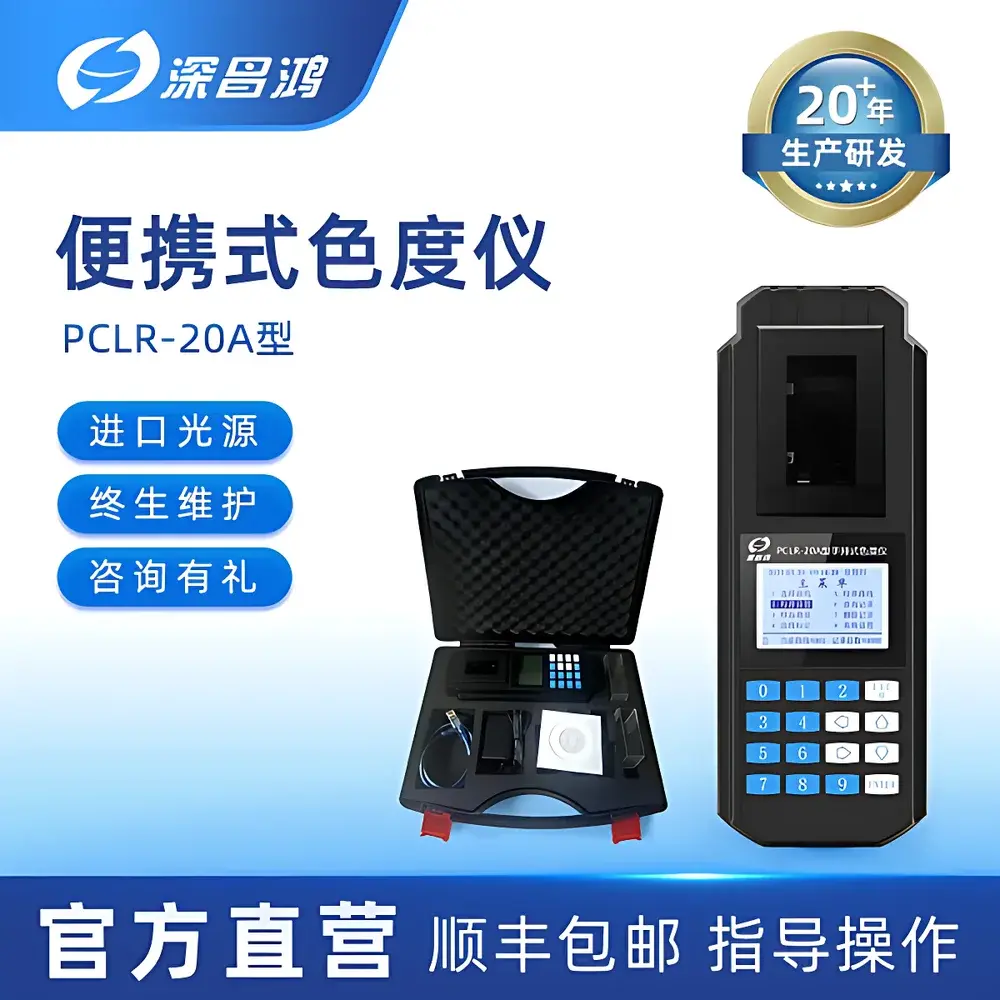

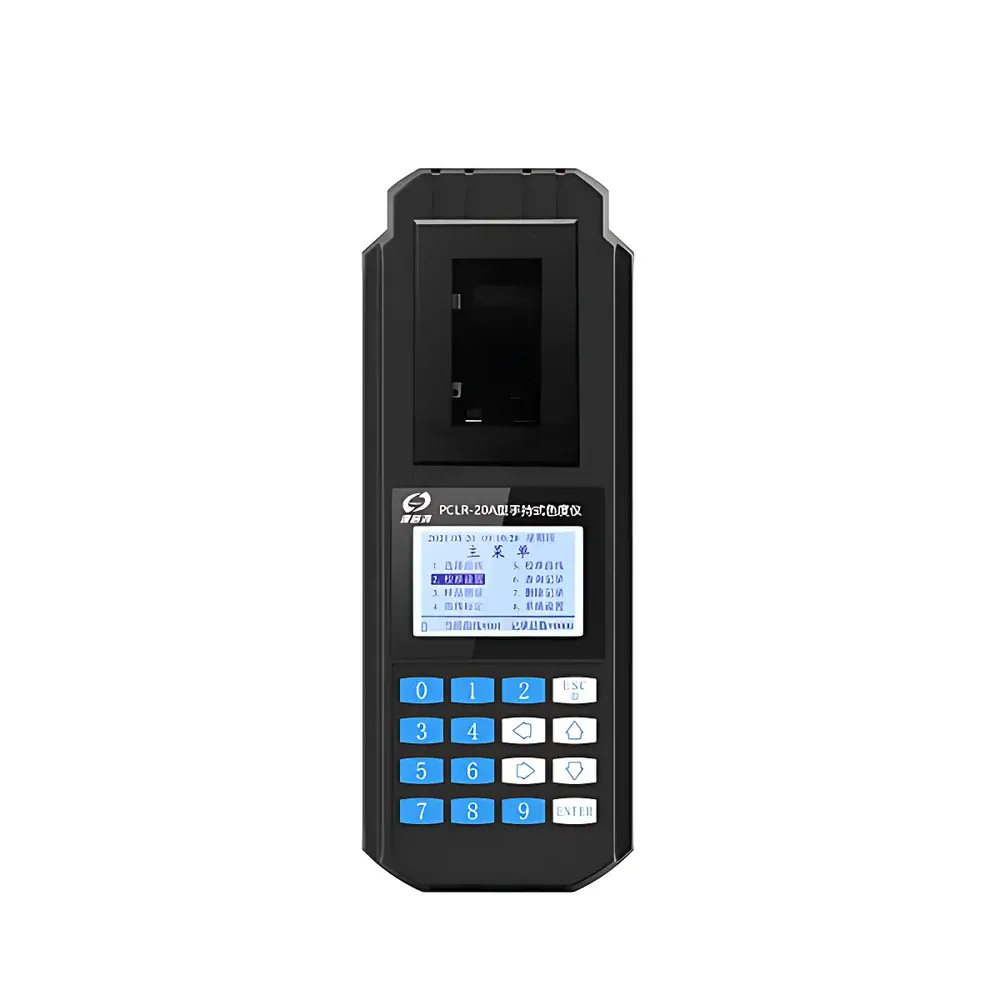
Shenchanghong PCLR-20A Portable Colorimeter for Water Quality Analysis
| Brand | Shenchanghong |
|---|---|
| Origin | Guangdong, China |
| Manufacturer Type | Direct Manufacturer |
| Origin Category | Domestic (China) |
| Model | PCLR-20A |
| Price | USD 495 (FOB Guangdong) |
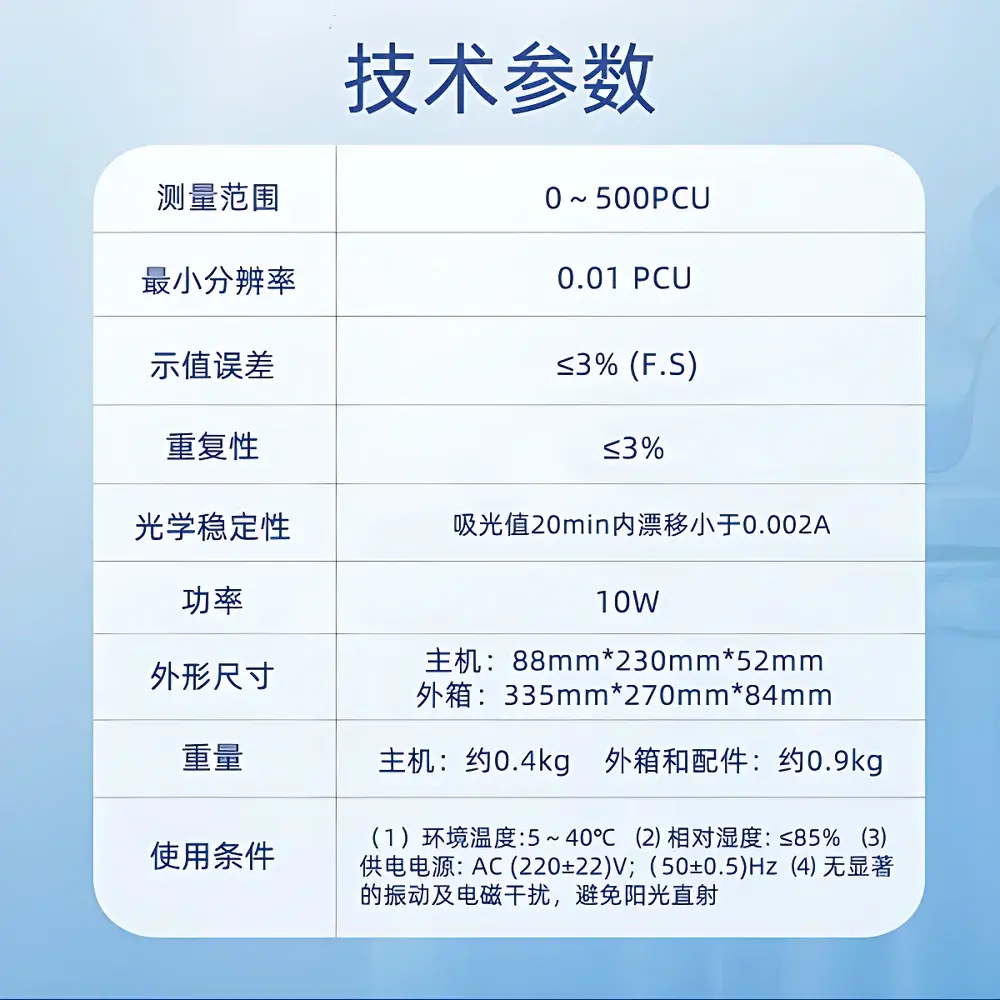
| Measurement Range | 5–500 PCU |
| Accuracy | ≤ ±3% FS |
| Repeatability | ≤ ±2% FS |
| Resolution | 0.1 PCU |
| Drift | < 0.002 A/h |
| Light Source | High-stability narrow-band cold LED |
| Optical System | Fixed-wavelength interference filter with 5 cm pathlength cuvettes |
| Power Supply | Rechargeable lithium-ion battery (6-month standby) |
| Weight | 1.0 kg |
| Dimensions | 80 × 230 × 55 mm |
| IP Rating | IP65 |
| Data Storage | 20 calibration curves + 199 measurement records |
| Interface | USB 2.0 |
| Display | Backlit Chinese LCD |
| Compliance | Designed per ISO 7887:2011 (Water quality — Examination of colour) principles |
Overview
The Shenchanghong PCLR-20A Portable Colorimeter is a field-deployable optical instrument engineered for quantitative color assessment in aqueous samples according to the Platinum-Cobalt (PCU) scale. It operates on the fundamental principle of single-wavelength absorbance photometry: a stabilized narrow-band LED emits light at a fixed wavelength optimized for PCU correlation (typically 455 nm), which passes through a 5 cm pathlength sample cell. The detector measures transmitted intensity, and the onboard microprocessor applies the Lambert-Beer law to compute color concentration directly in Platinum-Cobalt Units (PCU). Unlike subjective visual comparison methods, the PCLR-20A delivers objective, traceable, and operator-independent results—critical for regulatory monitoring, process control, and quality assurance in water-intensive industries. Its compact form factor, robust mechanical design, and extended battery life enable reliable operation in wastewater treatment plants, electroplating facilities, textile dye houses, pharmaceutical clean utilities, and food & beverage production lines—without dependence on laboratory infrastructure.
Key Features
- High-stability optical architecture featuring imported long-life cold LED source and precision interference filters—ensuring minimal spectral drift and consistent photometric response across environmental fluctuations.
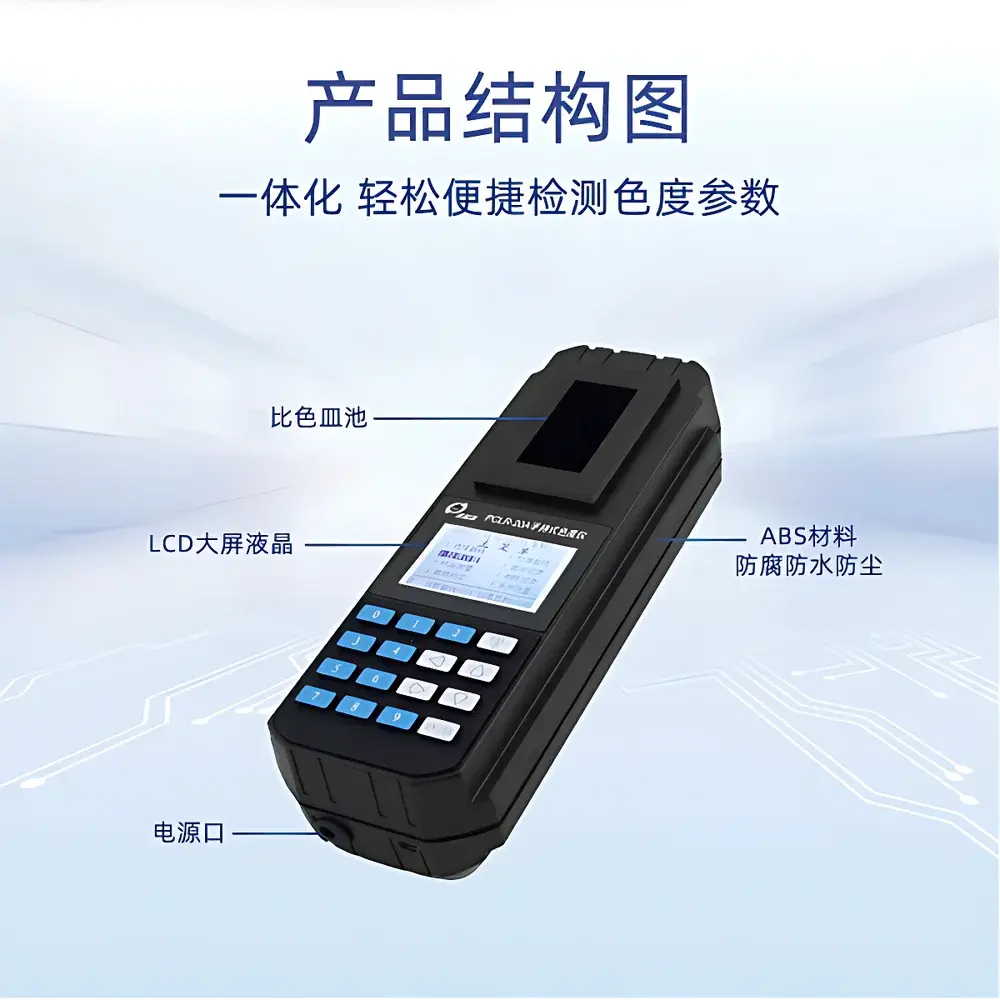
- IP65-rated ABS polymer housing with sealed optical chamber—providing dust-tight, water-resistant, and corrosion-resistant performance in harsh industrial environments (e.g., wet labs, effluent channels, plating shop floors).
- Ultra-low-power 16-bit embedded microcontroller enabling ≥6 months of standby time on a single lithium-ion charge—ideal for unattended field deployments or mobile QA/QC rounds.
- Integrated data management: stores up to 20 user-defined calibration curves and 199 timestamped measurements with automatic power-fail recovery—eliminating data loss during unexpected shutdowns.
- USB 2.0 interface compliant with standard HID protocols—enabling direct connection to Windows/Linux PCs for firmware updates, curve export, and batch report generation via included software suite.
- Fixed 5 cm optical path cuvette geometry—minimizing alignment errors and ensuring reproducibility without manual adjustment; compatible with standard quartz or high-transmission plastic cuvettes.
Sample Compatibility & Compliance
The PCLR-20A is validated for use with clarified, low-turbidity aqueous solutions where suspended solids do not interfere with light transmission (turbidity < 1 NTU recommended). It conforms methodologically to ISO 7887:2011 Annex A for instrumental PCU determination and supports routine verification against certified reference standards traceable to NIM (National Institute of Metrology, China). While not certified to IEC 61000-6-3 or FDA 21 CFR Part 11 out-of-the-box, its audit-ready data log (with operator ID, date/time stamp, and measurement ID) meets foundational GLP documentation requirements for internal quality systems. For regulated applications, users may implement supplementary procedural controls—including daily blank verification, periodic inter-instrument checks, and documented calibration certificate archiving.
Software & Data Management
The included PC software (Windows-compatible, no admin rights required) provides raw absorbance export (.CSV), calibration curve editing, statistical summary (mean, SD, CV%), and PDF report generation with configurable headers. All stored measurements retain full metadata: date/time, operator code (user-input field), curve ID, and raw A-value. USB transfer preserves integrity via CRC-16 checksum validation. No cloud dependency or subscription model—data remains fully under user control. Firmware updates are delivered as signed binary packages with version rollback capability.
Applications
- Effluent compliance monitoring in municipal and industrial wastewater treatment plants (per local discharge limits referencing PCU thresholds).
- In-process color verification in electroplating rinse baths and anodizing lines to detect metal ion contamination or organic carryover.
- Raw material and final product testing in textile dyeing—quantifying dye bath exhaustion efficiency and post-rinse clarity.
- Pharmaceutical water system surveillance (PW, WFI pre-check) to identify early-stage organic fouling or carbon bed breakthrough.
- Food processing line validation—assessing clarity of sugar syrups, vinegar, or fruit juice concentrates prior to filtration or bottling.
FAQ
What is the optical pathlength of the PCLR-20A?
The instrument uses a fixed 5 cm pathlength cuvette configuration—optimized for sensitivity within the 5–500 PCU range while maintaining compatibility with standard laboratory cuvette handling practices.
Does the PCLR-20A support multi-wavelength analysis?
No. It is a dedicated single-wavelength photometer calibrated specifically for PCU quantification using a narrow-band LED centered near 455 nm—maximizing specificity and minimizing interference from non-color-absorbing chromophores.
Can calibration curves be edited or deleted via the device interface?
Yes. Users may create, rename, overwrite, or delete calibration curves directly on the instrument using the intuitive menu-driven LCD interface—no PC required for routine field adjustments.
Is the lithium-ion battery replaceable by the end user?
The battery is field-replaceable using standard Torx T5 tools and a certified replacement module (part no. SC-BAT-LI4020); full replacement procedure is documented in the service manual supplied with each unit.
How is measurement traceability maintained?
Each unit ships with a factory calibration certificate referencing NIM-traceable PCU standards (SRM 2105a series equivalents); users are advised to perform quarterly verification using in-house secondary standards and document results per internal SOP.




