
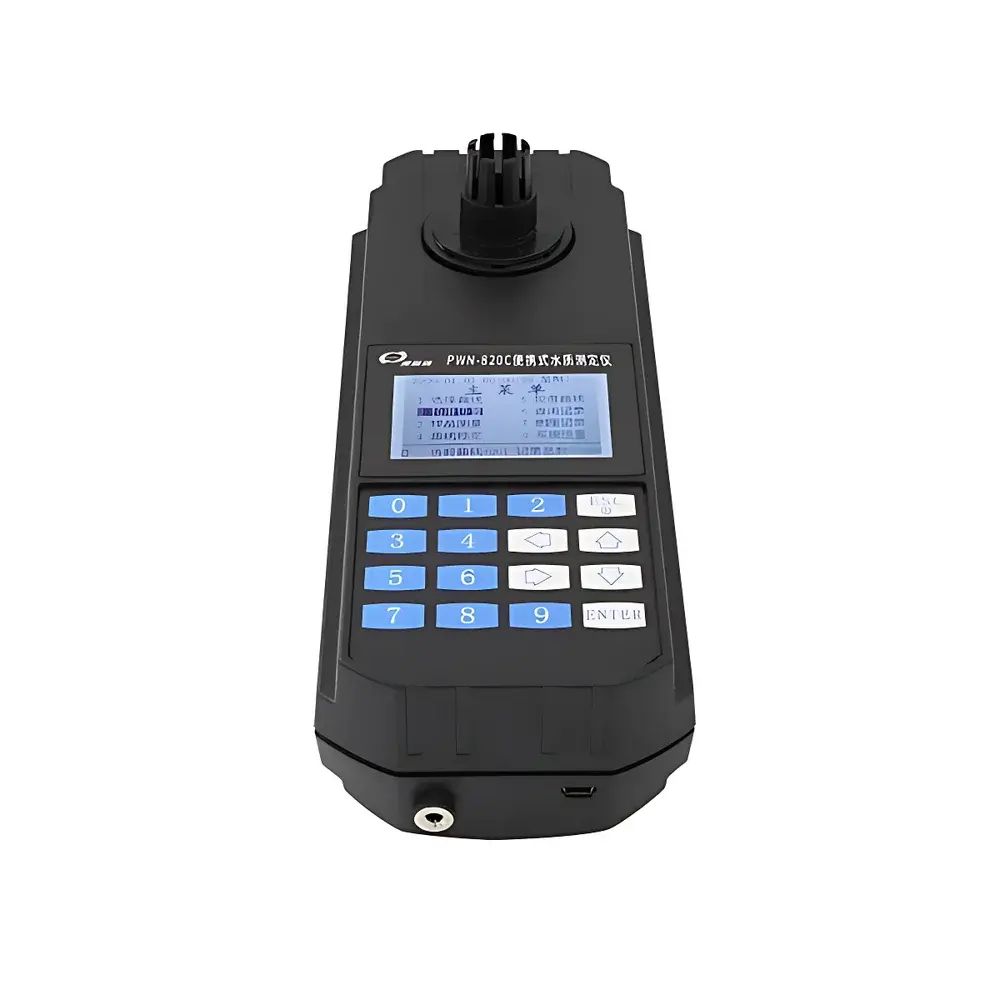
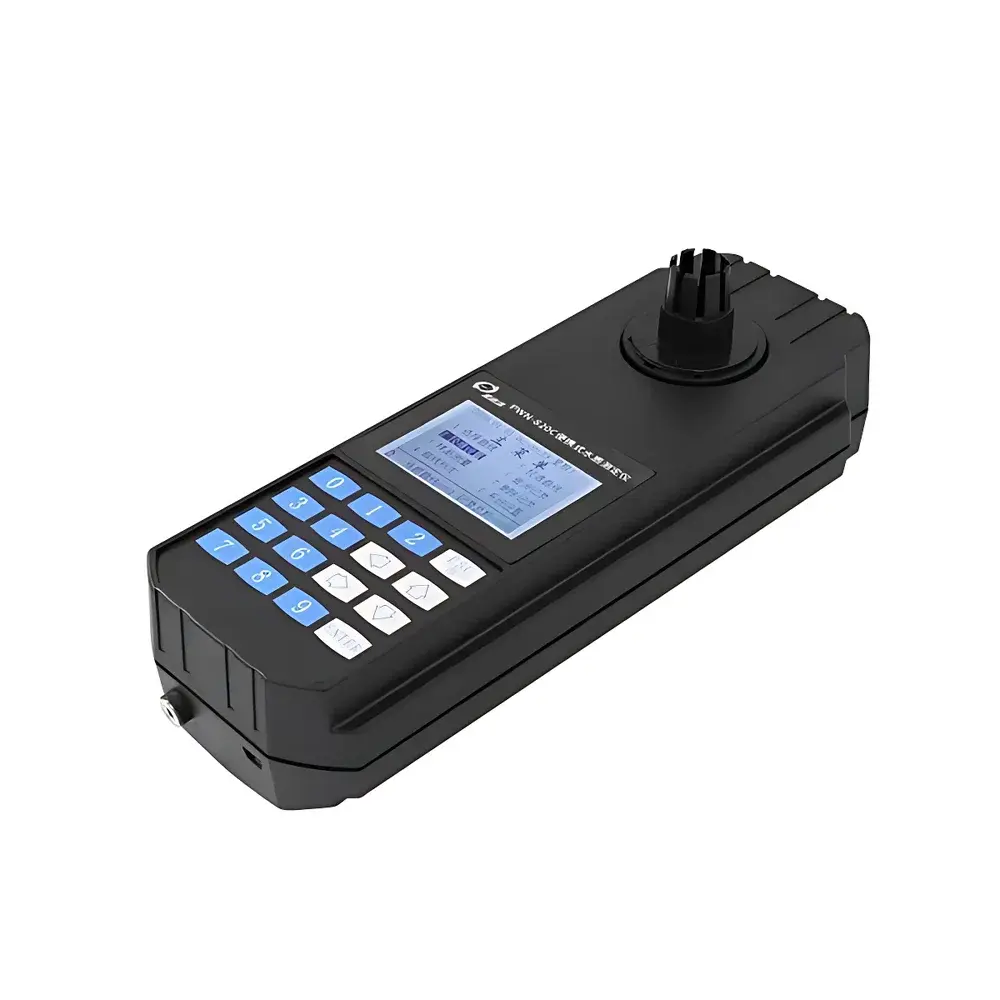
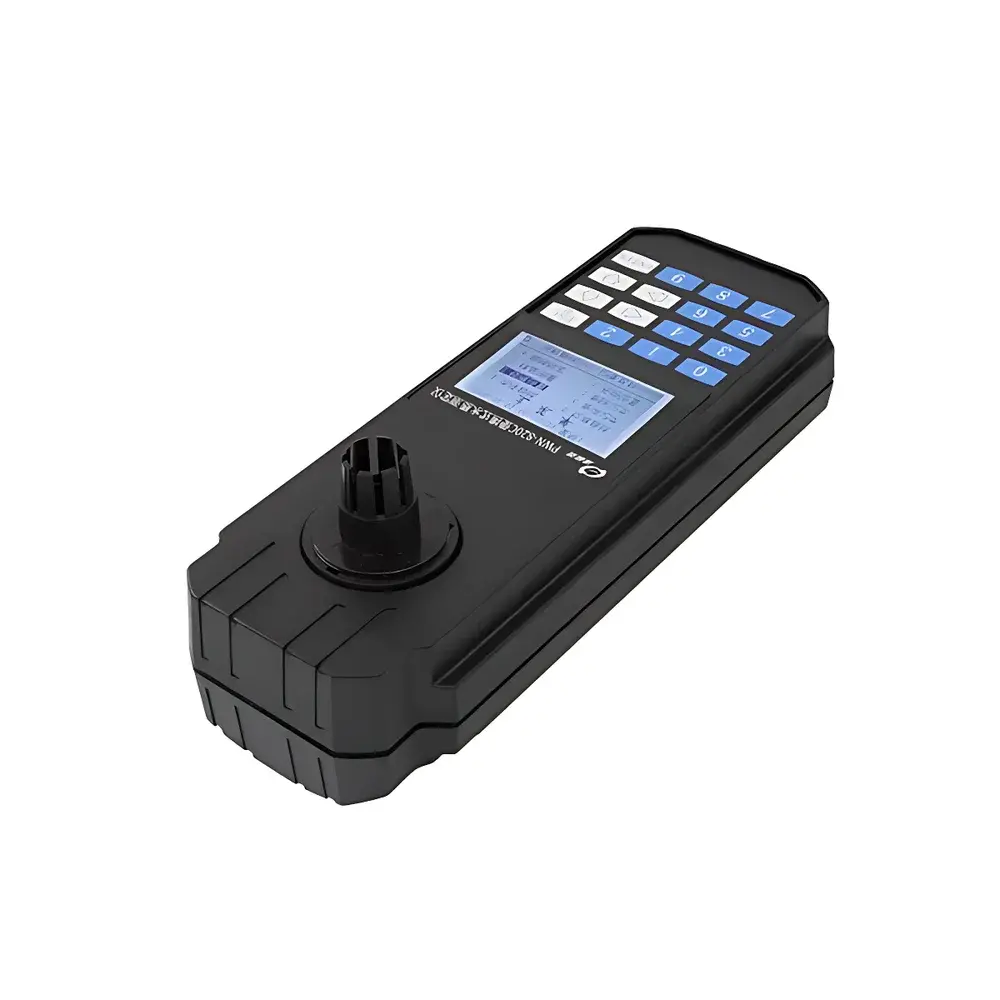
Shenchanghong PWN-820C Portable COD and Total Nitrogen Analyzer
| Brand | Shenchanghong |
|---|---|
| Origin | Guangdong, China |
| Manufacturer Type | Manufacturer |
| Product Origin | Domestic (China) |
| Model | PWN-820C |
| Instrument Type | Portable |
| Measurement Principle | UV Absorption Spectrophotometry |
| Wavelength | 410 nm |
| COD Range | 0–2000 mg/L |
| TN Range | 0.05–100 mg/L |
| Accuracy | ≤ ±5% (COD & TN) |
| Repeatability | ≤ ±3% |
| Detection Limit | 0.1 mg/L (COD) |
| Measurement Time | 15 min per batch |
| Batch Capacity | 10 samples |
| Optical Drift | < 0.002 A in 20 min |
| Chloride Interference Tolerance | ≤ 2000 mg/L (for COD) |
| Dimensions (Analyzer) | 80 × 230 × 55 mm |
| Dimensions (Digester) | 105 × 160 × 90 mm |
| Protection Rating | IP65 |
| Data Storage | 199 measurements with timestamp (YYYY-MM-DD hh:mm:ss), plus 30 user-defined calibration curves |
| Interface | USB port for data export and PC connectivity |
| Power | DC 12 V (AC/DC adapter included) |
| Housing Material | Molded ABS |
Overview
The Shenchanghong PWN-820C is a field-deployable, dual-parameter spectrophotometric analyzer engineered for simultaneous determination of Chemical Oxygen Demand (COD) and Total Nitrogen (TN) in water and wastewater samples. It operates on the principle of ultraviolet absorption spectrophotometry at a fixed wavelength of 410 nm, enabling rapid, reagent-based quantification without the need for hazardous digestion reagents such as potassium dichromate under reflux conditions. Unlike traditional laboratory-based COD analyzers relying on open-reflux or sealed-vessel digestion, the PWN-820C integrates a dedicated 4-position digital digester that maintains precise thermal control during sample pretreatment—ensuring consistent oxidation of organic matter and nitrogenous compounds prior to optical measurement. Its compact form factor, IP65-rated enclosure, and extended battery standby (>6 months) make it suitable for routine monitoring in municipal water utilities, environmental inspection teams, industrial effluent discharge points, and emergency response scenarios where lab access is unavailable.
Key Features
- Modular architecture: Independent digester unit prevents thermal cross-talk and preserves photometric accuracy during concurrent operation.
- PID-controlled temperature regulation in the 4-channel digester ensures ±0.5 °C stability across 100–165 °C operating range, critical for reproducible oxidation kinetics.
- Narrow-band interference optical system with cold LED light source delivers long-term photometric stability (<0.002 A drift over 20 minutes), minimizing recalibration frequency in variable ambient conditions.
- Embedded 16-bit low-power microcontroller enables extended field deployment; device retains full functionality after prolonged storage without battery replacement.
- Onboard data management supports timestamped storage of up to 199 measurement records—including absorbance, transmittance, calculated concentration, and full ISO 8601 timestamps (year, month, day, hour, minute, second).
- USB interface compliant with CDC/ACM class protocols allows direct connection to Windows/Linux systems for raw data extraction, report generation, or integration into LIMS environments.
- ABS polymer housing meets IP65 ingress protection standards, ensuring operational reliability in high-humidity, dusty, or splashing-prone outdoor environments.
Sample Compatibility & Compliance
The PWN-820C is validated for use with surface water, groundwater, domestic sewage, and industrial effluents exhibiting chloride concentrations up to 2000 mg/L—eliminating the need for mercury sulfate masking in most field applications. Sample volume requirement is 2.5 mL per test, accommodated in standardized 16 mm OD glass digestion tubes. While not certified to ISO 15705:2002 (COD by UV spectrophotometry) or ISO 11905-1:1996 (TN by alkaline persulfate digestion), its performance aligns with method equivalency guidelines issued by Chinese EPA (HJ/T 399–2007 for COD; HJ 636–2012 for TN) and demonstrates interlaboratory reproducibility consistent with ASTM D1253–22 (Standard Test Method for Residual Chlorine in Water) adaptation frameworks. The instrument’s firmware architecture supports audit-trail-ready data logging, satisfying basic GLP documentation requirements for field-generated environmental data.
Software & Data Management
No proprietary software installation is required for basic operation. All calibration curves (up to 30) are stored in non-volatile memory with checksum validation. Calibration coefficients may be entered manually or derived via multi-point standardization using NIST-traceable potassium hydrogen phthalate (COD) and potassium nitrate (TN) reference solutions. Timestamped datasets exported via USB appear in CSV format compatible with Excel, R, Python pandas, or commercial QA/QC platforms. Optional third-party middleware can map exported files to SQL databases or cloud-based environmental dashboards supporting ISO/IEC 17025-compliant metadata tagging (e.g., operator ID, location GPS coordinates, instrument serial number).
Applications
- Routine compliance monitoring at wastewater treatment plant influent/effluent points per local discharge permits.
- Field verification of membrane bioreactor (MBR) or activated sludge process performance.
- Emergency spill assessment in rivers, lakes, and irrigation canals following industrial accidents.
- Validation of on-site pretreatment systems in food processing, pharmaceutical, and textile manufacturing facilities.
- Educational use in university environmental engineering laboratories for method comparison studies between UV-spectrophotometric and dichromate-based COD protocols.
FAQ
Does the PWN-820C require daily calibration?
No—calibration is only necessary when changing reagent lots, after extended storage (>30 days), or when verifying traceability against certified reference materials. Factory-installed factory curves remain stable for ≥6 months under normal use.
Can it measure COD and TN in saline seawater samples?
It is not recommended for undiluted seawater due to matrix interference beyond 2000 mg/L chloride; however, 1:10 dilution with deionized water enables semi-quantitative screening within specified accuracy limits.
Is the digester compatible with other tube formats?
Only 16 mm OD borosilicate glass digestion tubes (10 mL capacity) are mechanically and thermally validated for use with the included 4-hole block.
How is data integrity ensured during power interruption?
All measurement sessions and calibration parameters are written to EEPROM with atomic commit logic—no data loss occurs even during sudden power-off events.
What regulatory documentation accompanies the instrument?
Each unit ships with a Declaration of Conformity (DoC) to GB/T 18204.2–2014 (Chinese national standard for water quality analysis instruments), Certificate of Calibration, and full traceability documentation for optical path validation.
Related Products







