
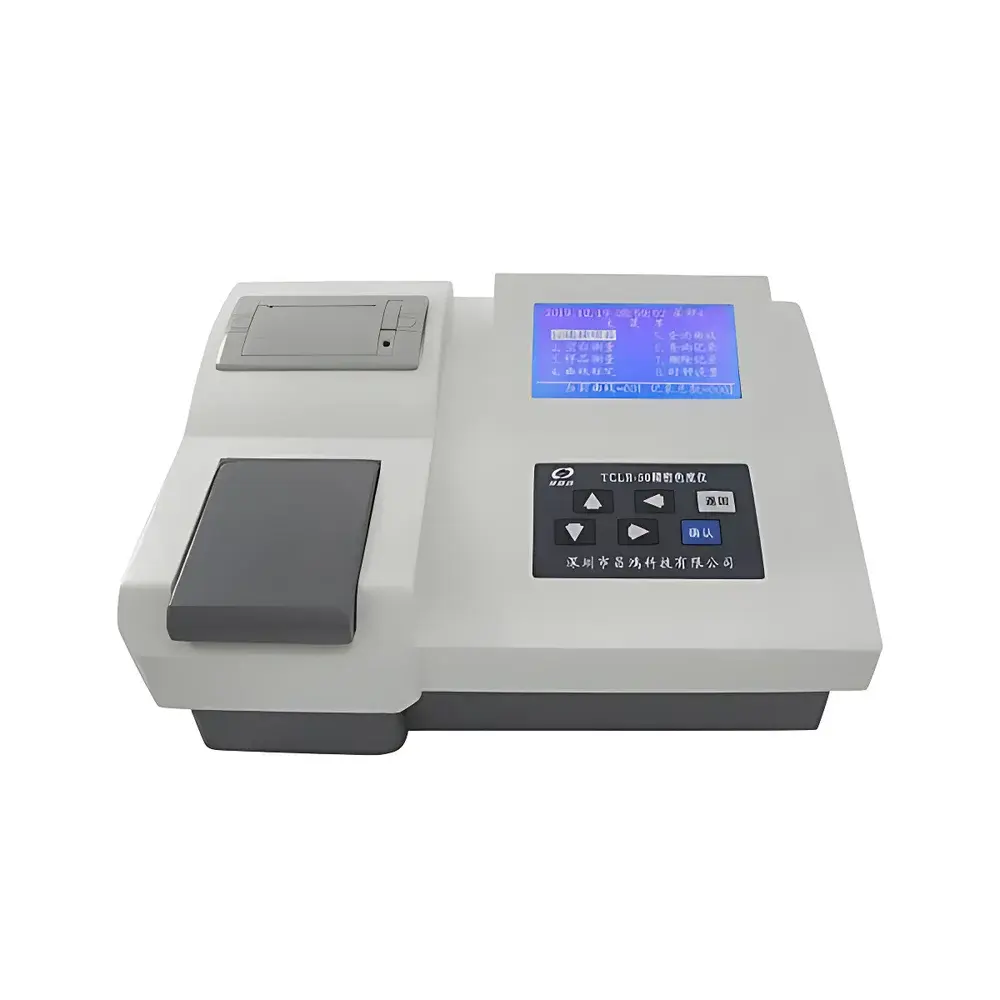
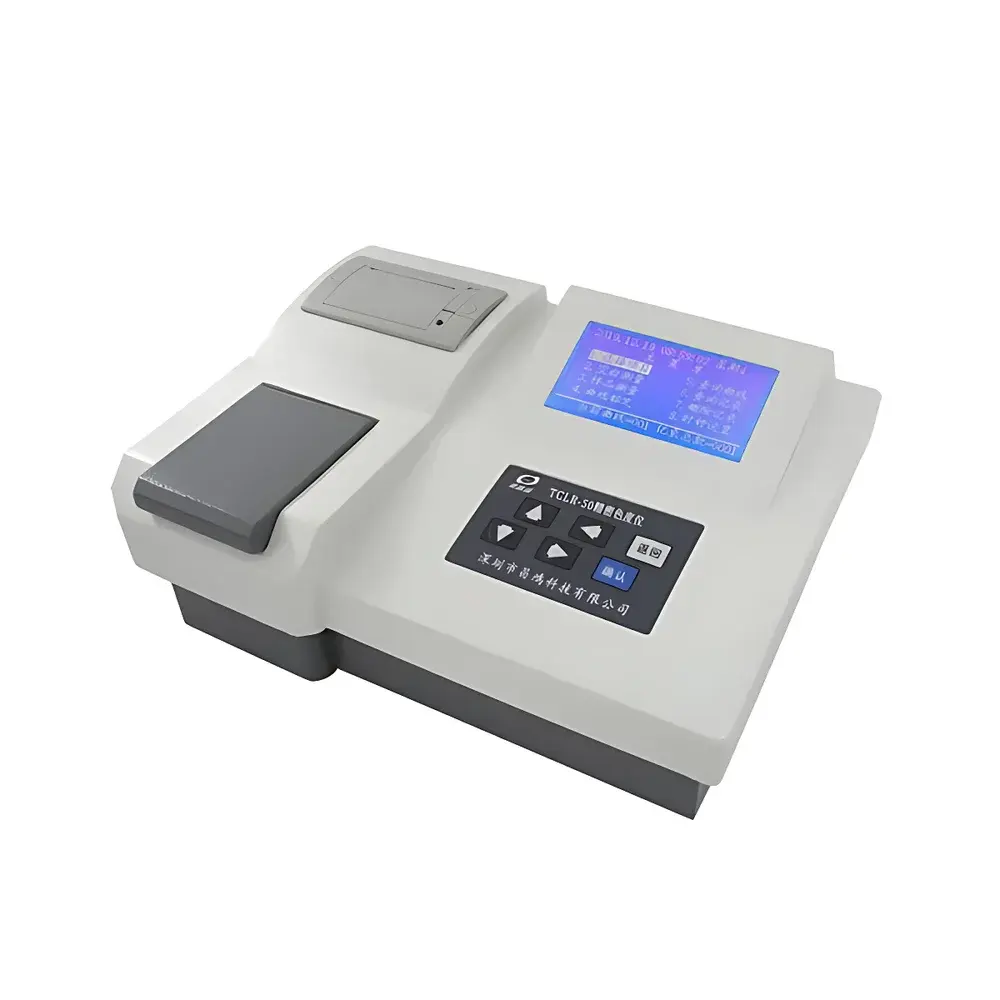
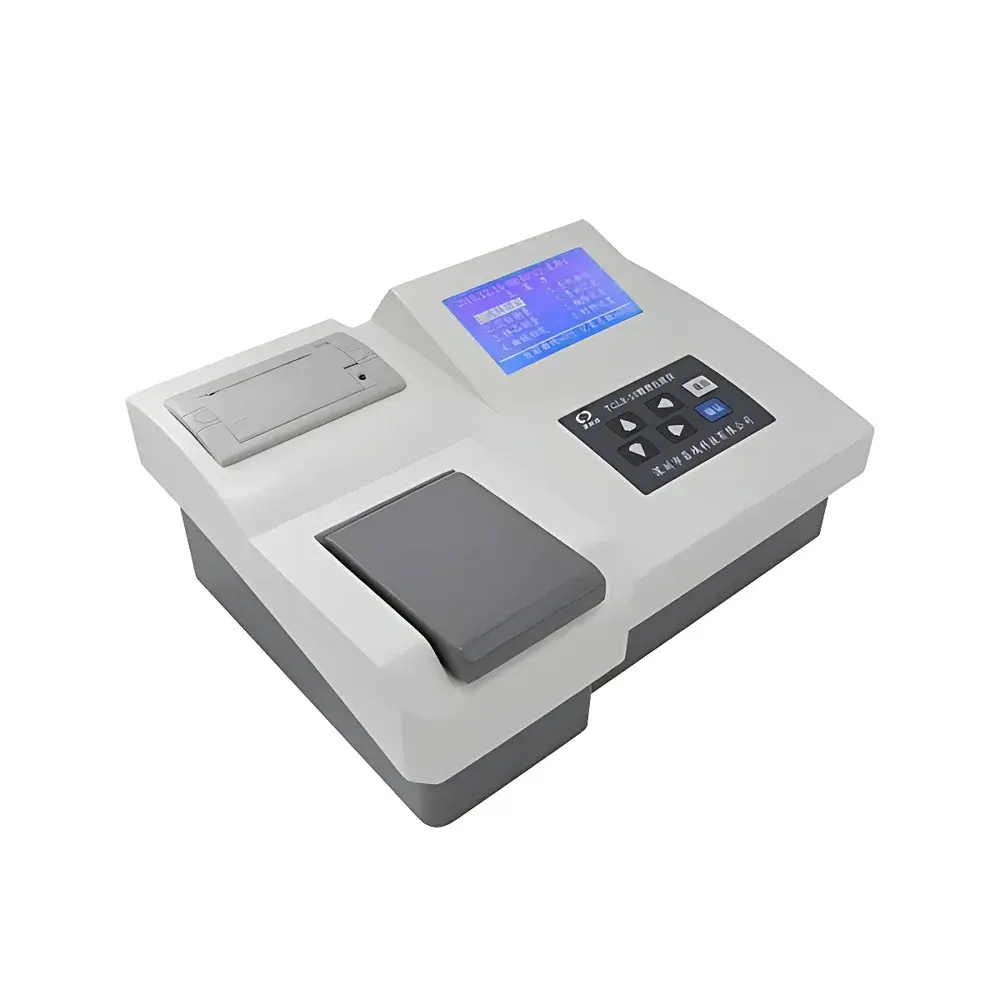
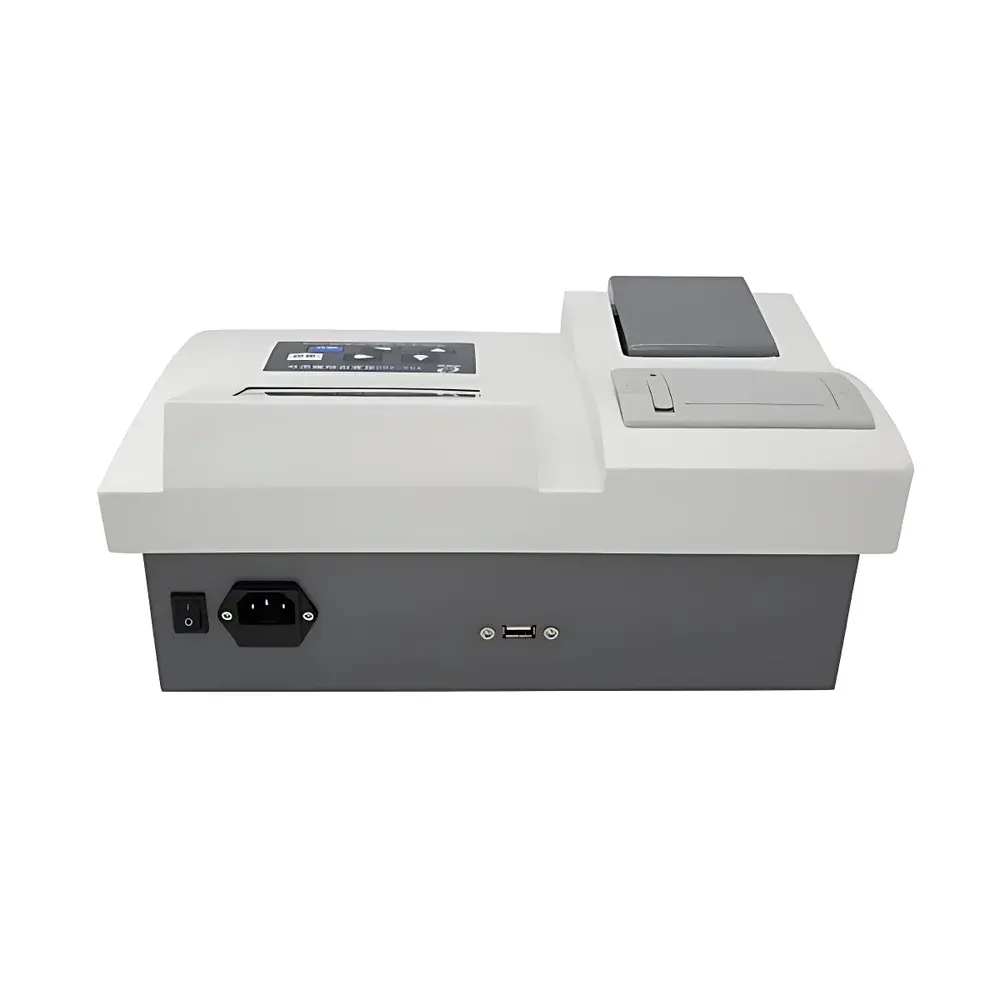
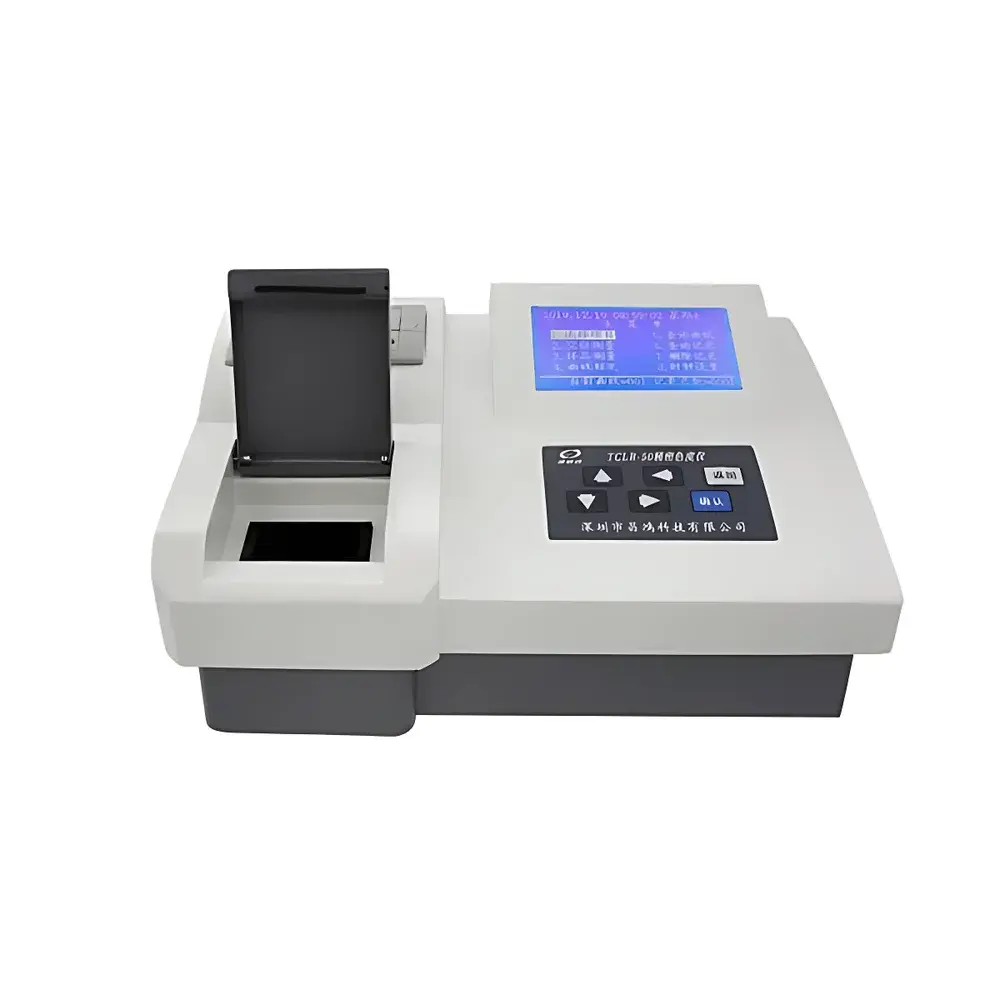
Shenchanghong TCLR-50 Precision Colorimeter
| Brand | Shenchanghong |
|---|---|
| Origin | Guangdong, China |
| Manufacturer Type | OEM/ODM Manufacturer |
| Country of Origin | China |
| Model | TCLR-50 |
| Price | Upon Request |
| Measurement Range | 5–100 PCU |
| Accuracy | ≤ ±3% FS |
| Repeatability | ≤ ±2% FS |
| Resolution | 0.01 PCU |
| Drift | < 0.1 PCU/h |
| Weight | 1 kg |
| Dimensions | 266 × 200 × 130 mm |
| Operating Temperature | 5–40 °C |
| Relative Humidity | ≤70% RH |
| Power Supply | AC (220 ±10%) V, 50 Hz |
| Display | Backlit LCD with Chinese UI |
| Data Storage | 10 calibration curves + 199 measurement records |
| Light Source | High-brightness, long-life (100,000 h) imported LED |
| Optical System | Narrow-band interference filter-based photometric detection |
| Housing Material | Corrosion-resistant ABS |
| Microcontroller | Low-power 16-bit MCU |
Overview
The Shenchanghong TCLR-50 Precision Colorimeter is a benchtop-to-field portable photometric instrument engineered for quantitative colorimetric analysis of liquid samples in accordance with the Platinum-Cobalt (PCU) scale—a standardized method widely adopted for visual and instrumental assessment of yellowish hue in clear aqueous solutions. Based on the principle of absorbance photometry at a fixed wavelength (typically ~455 nm), the TCLR-50 employs a stable, high-luminance imported LED light source coupled with a precision narrow-band optical filter to isolate the spectral region most sensitive to Pt-Co standard solutions. This optical architecture ensures minimal spectral drift and high immunity to ambient light interference—critical for reproducible field or laboratory measurements where controlled lighting conditions cannot be guaranteed. Designed specifically for water quality monitoring applications, the instrument complies with the fundamental optical requirements outlined in ISO 7887:2011 (Water quality — Examination of colour) and aligns with the technical basis of APHA Standard Method 2120B (Platinum-Cobalt Scale). Its compact form factor, low power consumption, and robust ABS housing enable reliable operation across municipal water labs, environmental monitoring stations, and third-party testing facilities.
Key Features
- Stable photometric platform: 100,000-hour lifetime high-intensity LED light source with thermally compensated drive circuitry ensures consistent irradiance over extended operational cycles.
- Narrow-band optical filtering: Interference-type bandpass filter centered near 455 nm provides high spectral selectivity, minimizing stray-light contributions and improving measurement fidelity against non-target chromophores.
- High-resolution digital readout: 0.01 PCU resolution with full-scale accuracy ≤ ±3% and repeatability ≤ ±2%, verified per internal factory calibration protocols traceable to NIM (National Institute of Metrology, China) reference standards.
- Embedded data integrity: Non-volatile memory retains up to 10 user-defined calibration curves and 199 individual measurement records—even after power interruption—supporting basic GLP-compliant documentation workflows.
- Environmental resilience: ABS polymer housing offers resistance to common laboratory reagents and humidity; operational specification validated from 5 °C to 40 °C at ≤70% RH, with thermal drift < 0.1 PCU/h after 30-minute warm-up.
Sample Compatibility & Compliance
The TCLR-50 is optimized for transparent, low-turbidity aqueous samples including potable water, surface water, groundwater, and treated effluents. It is not suitable for highly turbid, opaque, or strongly fluorescent matrices without prior pretreatment (e.g., filtration, dilution, or acidification). Sample cells are standard 10-mm pathlength quartz or optical-grade glass cuvettes (supplied as 2 units); compatibility with alternative pathlengths (e.g., 20 mm or 50 mm) is limited due to fixed optical geometry. While the instrument does not implement automated wavelength scanning or multi-parameter algorithms, its fixed-wavelength design satisfies routine compliance needs under national regulatory frameworks referencing PCU-based color limits—including China’s GB 5749-2022 (Hygienic Standard for Drinking Water) and environmental discharge standards such as GB 8978-1996. It supports manual verification of color thresholds required by ISO/IEC 17025-accredited laboratories when used within defined uncertainty budgets.
Software & Data Management
The TCLR-50 operates via an embedded 16-bit microcontroller with firmware supporting Chinese-language menu navigation, real-time numeric display, and on-device curve storage. No external PC software is provided; all calibration and measurement functions are executed locally. Calibration is performed using certified Pt-Co standard solutions (e.g., 5, 10, 20, 50, and 100 PCU), with linear or two-point interpolation enabled. Data export requires manual transcription or optional RS-232 interface (not included as standard). Though lacking native 21 CFR Part 11 audit trail functionality or electronic signature capability, the device supports foundational data governance practices—including timestamped record retention, operator-defined curve labeling, and power-loss resilient memory—making it appropriate for Tier-2 QA/QC environments where full digital compliance is not mandated.
Applications
- Drinking water treatment: Routine verification of color removal efficiency across coagulation, sedimentation, and activated carbon adsorption stages.
- Environmental field monitoring: Rapid screening of surface water bodies for organic pollution indicators (e.g., humic/fulvic acid leaching).
- Industrial wastewater pre-discharge checks: Compliance verification against municipal sewer authority color limits before release.
- Educational laboratories: Teaching core principles of photometry, Beer-Lambert law application, and standard method implementation.
- Regulatory inspection support: Field-deployable tool for municipal health departments conducting on-site water quality audits.
FAQ
What color scale does the TCLR-50 use?
It measures color exclusively in Platinum-Cobalt Units (PCU), aligned with ISO 7887 and APHA 2120B.
Can the instrument measure beyond 100 PCU?
No—its optical design and signal processing are validated only for 5–100 PCU; samples exceeding this range require dilution with deionized water and subsequent correction.
Is the device compatible with ASTM D1209?
Yes—ASTM D1209 specifies the same Pt-Co scale and methodology; however, users must confirm alignment of reference standards and cuvette specifications per their lab’s SOP.
Does the TCLR-50 require annual recalibration?
While not mandatory, Shenchanghong recommends annual verification using traceable Pt-Co standards to maintain stated accuracy and repeatability specifications.
Can I use plastic cuvettes?
Only if optically matched to 10-mm pathlength and certified for UV-Vis transparency at 455 nm; standard polystyrene cuvettes may introduce unacceptable scatter and are not recommended.




