
Shimadzu HMV-G Series Micro-Vickers Hardness Tester
| Brand | Shimadzu |
|---|---|
| Origin | Japan |
| Manufacturer Type | Original Equipment Manufacturer (OEM) |
| Product Origin | Imported |
| Model | HMV-G Series |
| Instrument Type | Vickers Hardness Tester |
| Test Force Range | 9.807 mN – 19.61 N |
| Maximum Total Test Force | 19.61 N |
| Specimen Space | Horizontal/Vertical travel: Unlimited |
| Depth direction | Up to 200 mm for specimens wider than 120 mm |
Overview
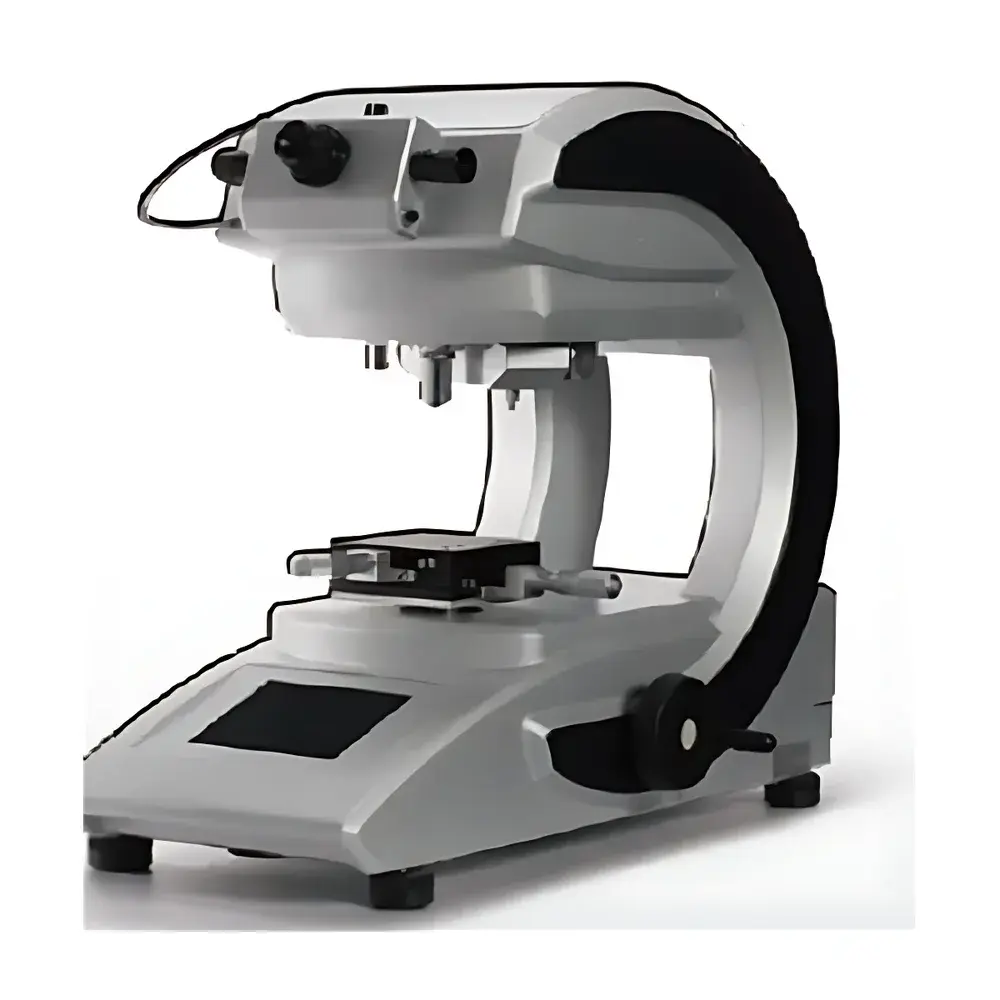
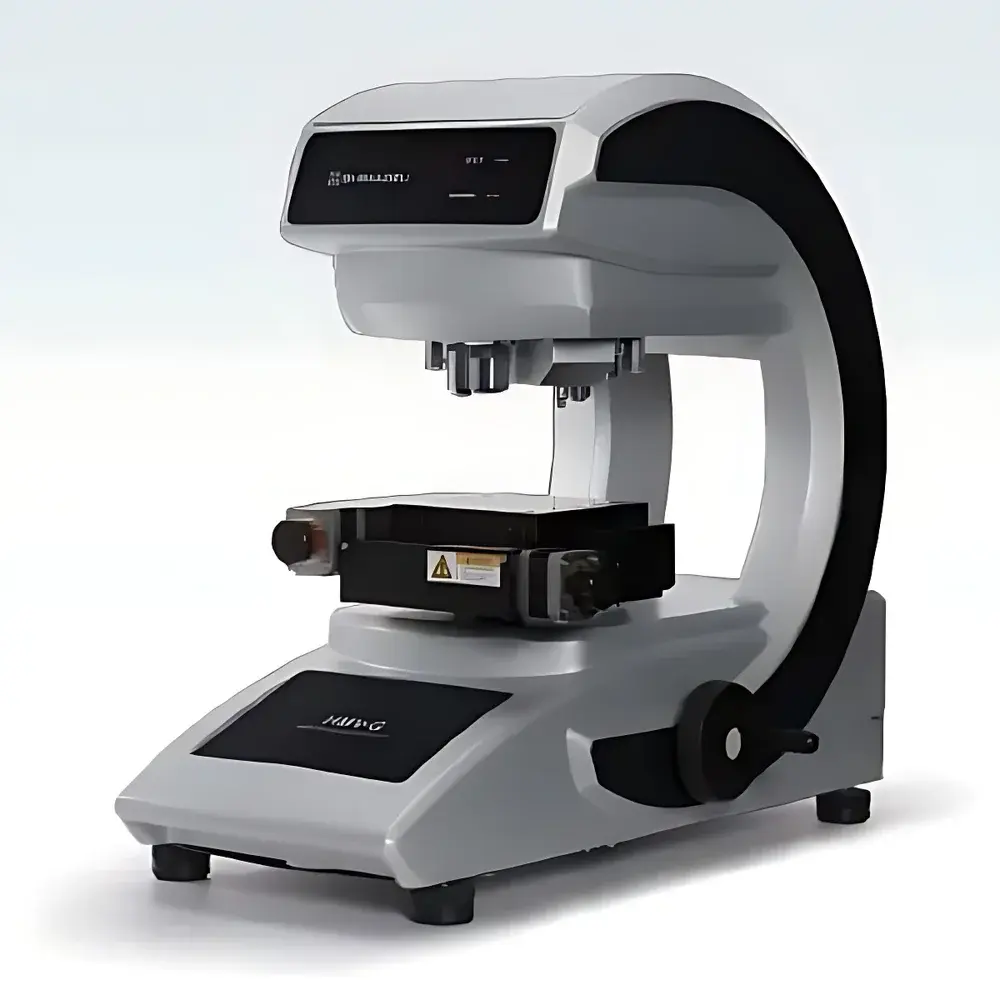
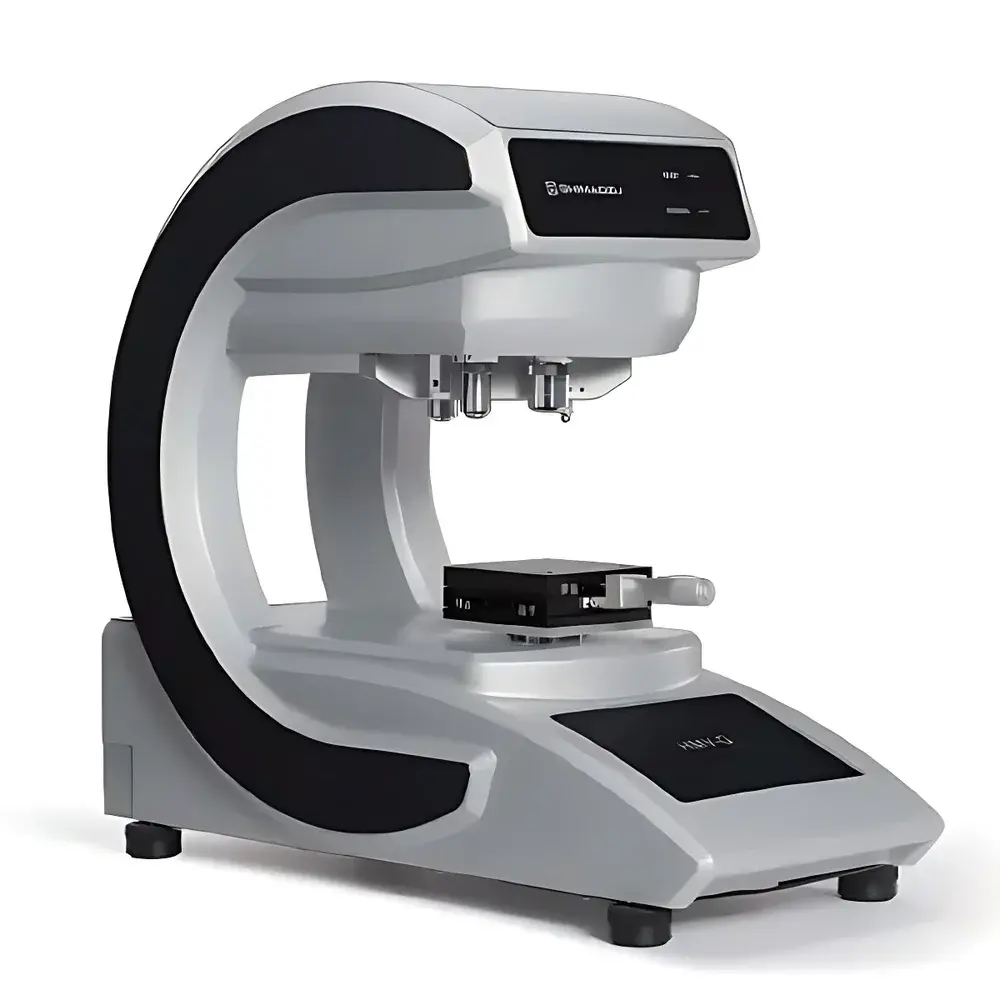
The Shimadzu HMV-G Series is a high-precision micro-Vickers hardness tester engineered for metrologically traceable indentation hardness measurement in R&D laboratories, quality control environments, and failure analysis facilities. It operates on the principle of diamond pyramid indentation under precisely controlled static loads, followed by optical measurement of the diagonal lengths of the resulting impression using calibrated digital imaging. The system complies with international standards including ISO 6507-1, ASTM E384, and JIS Z 2244, ensuring full alignment with GLP/GMP documentation requirements and regulatory audit readiness. Designed around a rigid G-frame architecture, the HMV-G Series eliminates mechanical hysteresis and thermal drift through monolithic cast-iron construction and symmetrical load-path geometry—critical for sub-micron repeatability in low-force microhardness testing (HV0.001 to HV2). Its modular platform supports manual, semi-automated, and fully automated operation modes across three configurations: HMV-G30 (entry-level touchscreen), HMV-G31 (advanced CCD-integrated), and HMV-G31-FA (fully automated XYZ stage with panoramic imaging).
Key Features
- G-frame structural design with rounded, edge-free contours for uniform stress distribution and enhanced rigidity—minimizing frame deflection during high-resolution indentation.
- Electromagnetic force actuation enabling precise test force selection from 9.807 mN (HV0.001) to 19.61 N (HV2) in 9.807 mN increments—ensuring compliance with ISO 6507-2 force tolerance specifications.
- Integrated high-resolution CCD camera (monochrome or optional color) with auto-focus and real-time image acquisition—enabling sub-pixel diagonal measurement accuracy.
- Dual-indentor / quad-lens turret (D-type) accommodating two Vickers indentors and four objective lenses (e.g., 10×, 20×, 40×, 100×) for seamless magnification switching without manual intervention.
- Automated lens selection logic based on predicted hardness and expected indentation depth—optimizing optical resolution and field-of-view for each test cycle.
- Fracture toughness evaluation module calculating KIC values via crack-length measurement from radial cracks emanating from Vickers impressions—validated per ASTM E384 Annex A5.
- Smart software algorithms that dynamically configure optimal test force and objective lens prior to indentation—reducing operator dependency and inter-test variability.
- High-speed image processing engine completing single-indentation analysis in ≤0.3 seconds (monochrome mode), supporting throughput-critical production QA workflows.
Sample Compatibility & Compliance
The HMV-G Series accommodates specimens up to 200 mm in depth (for widths >120 mm) and unrestricted lateral dimensions due to its open G-frame architecture—enabling evaluation of elongated components, thin foils, coated substrates, and irregularly shaped metallurgical cross-sections. The central aperture allows unobstructed access for narrow-profile samples (e.g., turbine blade edges, MEMS structures). Surface preparation flexibility extends beyond mirror-polished metals to include etched microstructures (e.g., ferrite-pearlite steels, aluminum alloys), with contrast-enhanced image segmentation for reliable diagonal detection. All firmware and data handling modules support FDA 21 CFR Part 11-compliant electronic signatures, audit trails, and user-access controls when integrated into validated laboratory information management systems (LIMS).
Software & Data Management
Shimadzu’s proprietary HMV software provides a unified interface for method development, execution, and reporting. It features Excel-based test pattern definition (no proprietary scripting required), statistical process control (SPC) dashboards displaying batch-wise mean hardness trends, and automated CSV export via USB flash drive or direct PC connection (USB 2.0). The HMV-G31-FA variant adds panoramic stitching functionality—capturing multi-field-of-view mosaics for large-area mapping—and AI-assisted specimen contour recognition to auto-generate grid-based test sequences. All data files embed metadata (operator ID, timestamp, environmental conditions, calibration status) and are timestamp-locked to prevent post-acquisition modification—meeting ISO/IEC 17025 clause 7.7 traceability requirements.
Applications
The HMV-G Series is routinely deployed in aerospace component certification (turbine disk case hardness gradients), semiconductor packaging validation (die attach layer integrity), biomedical implant characterization (Ti-6Al-4V surface hardening), and advanced battery material R&D (anode/cathode coating homogeneity assessment). Its low-force capability makes it suitable for thin-film hardness profiling (e.g., DLC coatings <1 µm thick), while fracture toughness mode supports ceramic and intermetallic phase evaluation in nuclear fuel cladding studies. In foundry QC labs, it replaces manual microhardness testers for ASTM E384-compliant weld HAZ (heat-affected zone) mapping.
FAQ
What standards does the HMV-G Series comply with?
ISO 6507-1/2/3, ASTM E384, JIS Z 2244, and EN ISO 14577 for instrumented indentation—fully documented in the included conformity declaration.
Can the system measure non-metallic materials?
Yes—ceramics, sintered carbides, polymers, and composites are supported via appropriate test force selection and image thresholding optimization.
Is remote operation possible?
Standard USB 2.0 connectivity enables host PC control; optional Ethernet interface kits support networked deployment in centralized lab infrastructures.
How is calibration verified?
The system includes NIST-traceable reference hardness blocks (HV5 to HV1000) and supports periodic verification per ISO 6507-3 using certified secondary standards.
Does the software support multi-user permission levels?
Yes—administrator, technician, and viewer roles with configurable access to method editing, result deletion, and audit log review functions.



