
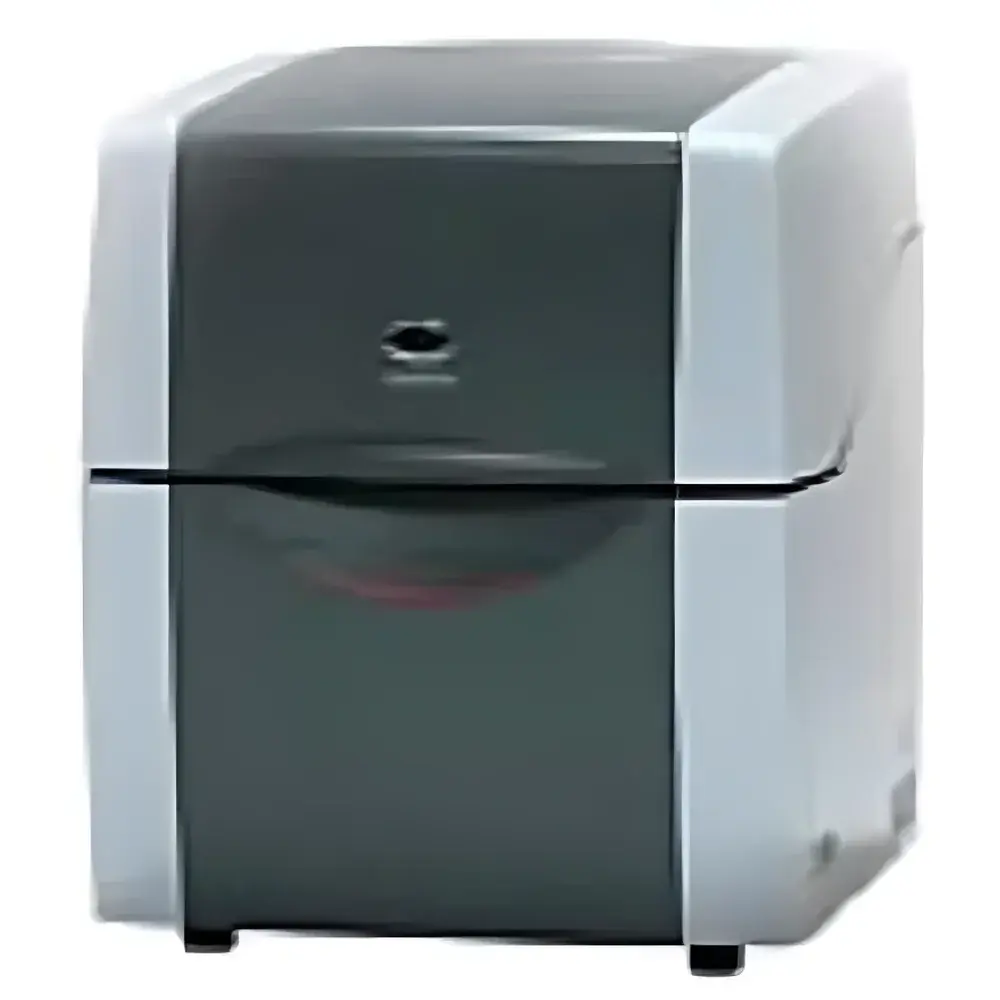
Shimadzu MCE-202 MultiNA Microchip Electrophoresis System
| Brand | Shimadzu |
|---|---|
| Origin | Japan |
| Manufacturer Type | Original Equipment Manufacturer (OEM) |
| Origin Category | Imported Instrument |
| Model | MCE-202 MultiNA |
| Pricing | Available Upon Request |
Overview
The Shimadzu MCE-202 MultiNA is a fully integrated microchip-based capillary electrophoresis (MCE) platform engineered for rapid, high-fidelity nucleic acid analysis in life science and molecular diagnostics laboratories. Unlike conventional slab-gel electrophoresis—particularly agarose or polyacrylamide gel systems—the MultiNA employs planar glass microchips with precisely fabricated separation channels (typically 30–100 µm wide × 30–50 cm effective length), enabling electrokinetic sample injection, separation under controlled electric fields (up to 3 kV), and real-time LED-induced fluorescence detection. This architecture eliminates manual gel casting, staining, destaining, and imaging steps, reducing hands-on time by >90% while delivering quantitative, digital electropherogram outputs. The system operates on the principle of size-based sieving electrophoresis in polymer matrix-filled microchannels, where DNA/RNA fragments migrate at velocities inversely proportional to their logarithmic molecular weight—enabling accurate sizing (±0.5 bp resolution for fragments <1 kb) and relative quantification (CV <3% for peak area across replicate runs).
Key Features
- Ultra-low operational cost: Reusable glass microchips (rated for ≥100 runs per chip under standard protocols) eliminate single-use gels and ethidium bromide reagents—reducing consumable expenditure by up to 70% versus traditional agarose workflows.
- High-throughput automation: Supports unattended batch processing of up to 120 samples via programmable analysis sequences; four microchips can be loaded simultaneously for parallel sample preparation and sequential electrophoretic separation.
- Sub-second cycle time: Minimum analysis cycle duration of 75 seconds—including chip priming, sample injection, separation (≤60 s), and fluorescence detection—achievable for fragments <500 bp using optimized polymer sieving matrices.
- Enhanced sensitivity: Integrated 470 nm LED excitation source coupled with high-quantum-efficiency photodiodes enables detection limits of ≤10 pg/µL dsDNA (with SYBR Gold or similar intercalating dyes), exceeding ethidium bromide-based agarose gels by one order of magnitude.
- Robust reproducibility: On-chip internal standard co-electrophoresis (e.g., 50–1000 bp DNA ladder pre-loaded in dedicated channels) ensures run-to-run retention time stability (RSD <1.2%) and fragment sizing accuracy traceable to NIST SRM standards.
Sample Compatibility & Compliance
The MCE-202 MultiNA accepts purified double-stranded DNA, single-stranded DNA, RNA, PCR amplicons, restriction digests, and cDNA synthesis products (0.1–10,000 bp range). Sample volume requirements are 0.5–2.0 µL per injection. Buffer compatibility includes Tris-Borate-EDTA (TBE), Tris-Acetate-EDTA (TAE), and proprietary low-conductivity polymer sieving buffers optimized for microchannel performance. The system complies with ISO/IEC 17025:2017 requirements for testing laboratory competence and supports GLP/GMP-aligned data integrity through audit-trail-enabled software (see Software section). All microchip fabrication adheres to JIS Q 9001 certified cleanroom processes, ensuring channel dimensional consistency and surface passivation critical for electroosmotic flow control.
Software & Data Management
The bundled MultiNA Analysis Software (v3.x) provides a validated, FDA 21 CFR Part 11–compliant environment featuring electronic signatures, role-based access control, and immutable audit trails for all method creation, run execution, and result reporting events. Electropherograms are exported in standard .fda and .csv formats compatible with LIMS integration. Quantitative analysis includes automatic band calling, molecular weight calibration against internal standards, concentration calculation via reference curve fitting, and QC flagging for migration anomalies or signal saturation. Raw data files retain full metadata (voltage history, temperature logs, buffer lot numbers) required for regulatory submissions under ICH M10 and USP .
Applications
- Routine QC of PCR products and cloning constructs in biopharmaceutical process development
- Fragment analysis for CRISPR editing efficiency assessment (indel detection down to 1–2 bp)
- RNA integrity evaluation (RIN-equivalent metrics derived from 18S/28S rRNA peak ratios)
- High-sensitivity genotyping (e.g., STR profiling, SNP fragment sizing)
- NGS library quality control prior to sequencing (size distribution, adapter dimer detection)
- Educational labs requiring safe, rapid, and quantitative nucleic acid analysis without UV transilluminators or hazardous dyes
FAQ
What sample types are compatible with the MCE-202 MultiNA?
Purified DNA, RNA, PCR products, restriction digests, and cDNA—within the 0.1–10,000 bp size range and free of excessive salts or proteins.
Can the microchips be reused, and how many runs are supported?
Yes—glass microchips are designed for ≥100 electrophoretic runs when cleaned according to Shimadzu’s validated protocol (NaOH flush + deionized water rinse).
Does the system support regulatory-compliant data handling?
Yes—the software includes full 21 CFR Part 11 functionality: electronic signatures, audit trail, user authentication, and data immutability.
Is external calibration required for fragment sizing?
No—on-chip internal standards enable self-calibrating electropherograms; no external ladder loading per run is necessary.
What maintenance is required for long-term operational reliability?
Daily capillary flush with recommended cleaning solution, quarterly optical path inspection, and annual voltage calibration—documented in the instrument’s built-in maintenance scheduler.





