
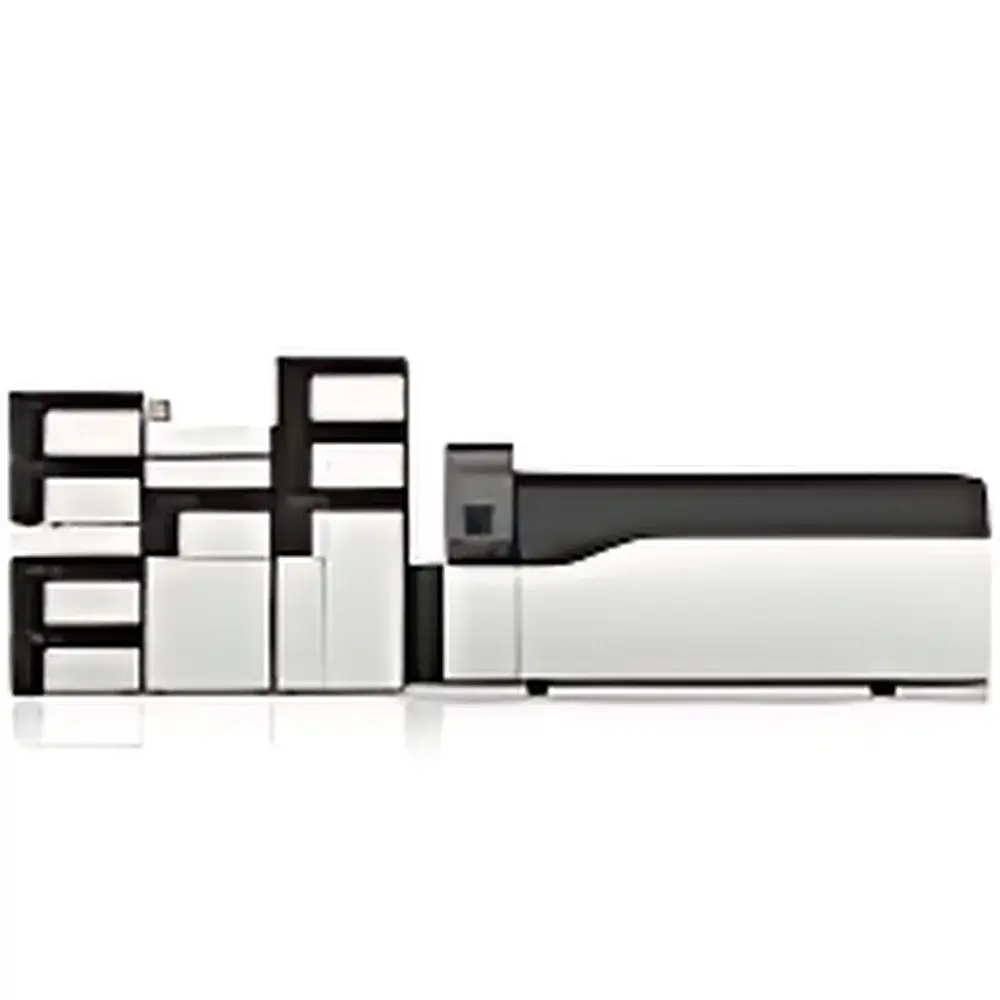
Shimadzu Nexera-e Comprehensive Two-Dimensional Liquid Chromatography System
| Brand | Shimadzu |
|---|---|
| Origin | Japan |
| Manufacturer Type | Original Equipment Manufacturer (OEM) |
| Product Category | Imported Instrument |
| Model | Nexera-e |
| Instrument Type | Comprehensive 2D-LC System |
| Flow Rate Range | Not Applicable (Modular Dual-Flow Architecture) |
| Maximum System Pressure | 130 MPa (2nd Dimension) |
| Sample Injection Positions | Dual Sample Loops with Alternating Switching |
| Injection Volume Range | Configurable via Loop Selection (e.g., 1–100 µL) |
| Column Oven Temperature Range | Ambient to 85 °C |
| Wavelength Range (DAD) | 190–800 nm |
| Data Acquisition Rate | Up to 125 Hz (SPD-M30A), 20,000 u/sec (LCMS-IT-TOF) |
Overview
The Shimadzu Nexera-e Comprehensive Two-Dimensional Liquid Chromatography (2D-LC) System is an engineered platform for high-resolution separation of chemically complex and structurally analogous compounds—such as polyphenols, carotenoids, flavonoids, and lipids—in natural extracts, biological matrices, and pharmaceutical intermediates. Unlike conventional one-dimensional LC, which relies on a single retention mechanism, the Nexera-e implements true comprehensive 2D-LC (LC×LC) by coupling two orthogonal separation dimensions—typically reversed-phase (RP) in the second dimension and normal-phase (NP), hydrophilic interaction (HILIC), or size-exclusion (SEC) in the first—within a single analytical run. This architecture delivers peak capacities exceeding 10,000, orders of magnitude greater than standard HPLC, enabling resolution of co-eluting isomers differing only in double-bond geometry, alkyl chain length, or stereochemistry. The system operates on the principle of heart-cutting-free, continuous modulation: fractions eluting from the 1st-D column are captured in micro-volume loops with sub-microliter dead volume, then rapidly transferred—without dilution or solvent mismatch—to the 2nd-D column for ultrafast re-separation. Its dual-loop alternating switching design ensures uninterrupted data continuity and eliminates dead time between fraction transfers.
Key Features
- Dual-Flow Precision Pumping: Equipped with LC-30AD dual-gradient pumps, each independently programmable for optimal 1st-D (low-flow, high-stability) and 2nd-D (high-pressure, high-speed) operation; 10 µL micro-plunger syringes ensure <0.1% RSD flow precision at 0.01–0.1 mL/min (1st-D), while 130 MPa pressure tolerance supports sub-2 µm particle columns at 1–3 mL/min (2nd-D).
- Orthogonal Modulation Architecture: No moving parts in the interface; passive valve switching with <50 ms actuation time ensures reproducible fraction transfer and minimal carryover (<0.005%). Dual sample loops (e.g., 10 µL & 50 µL) are matched to within ±0.2% internal volume for quantitative fidelity across repeated runs.
- Retention Time Stability: Achieves <0.3% RSD in 2nd-D retention time over 100 consecutive injections—critical for cross-dimensional alignment in LC×LC contour plots and MS correlation.
- Modular Detection Integration: Native compatibility with Shimadzu LCMS-8030/8040/8050 triple quadrupole systems (UFswitching™, UFscanning™), LCMS-IT-TOF for high-res accurate mass, and SPD-M30A DAD with 85 mm flow cell for enhanced UV sensitivity (LOD < 0.5 ng on-column for phenolic standards).
Sample Compatibility & Compliance
The Nexera-e is validated for use with diverse sample types—including plasma, urine, tissue homogenates, botanical extracts, fermentation broths, and polymer digests—without requiring offline fractionation or derivatization. It meets core regulatory expectations for method robustness in GxP environments: its hardware and software architecture support audit trail logging (per FDA 21 CFR Part 11), electronic signature capability, and instrument qualification documentation (IQ/OQ/PQ templates available). Method parameters—including gradient profiles, loop switching timing, and temperature setpoints—are fully traceable and exportable in PDF/CSV formats. All chromatographic modules comply with ISO/IEC 17025:2017 requirements for testing laboratories and align with ICH Q2(R2) guidelines for analytical procedure validation in pharmaceutical development.
Software & Data Management
ChromSquare LC′LC is the dedicated 2D-LC data processing suite, built on a 64-bit architecture supporting real-time contour map generation, interactive peak tracking, and cross-dimensional spectral correlation. Users visualize the full LC×LC space via synchronized contour plots (general and zoomed), extracted ion chromatograms (XICs), MS/MS spectra, and 2nd-D UV traces—all on a single screen. Peak detection employs adaptive noise-threshold algorithms and retention time warping correction to compensate for minor 1st-D drift. The integrated LC′LC Assistant module automates second-dimension gradient optimization: given a 1st-D gradient profile and solvent strength, it calculates compensatory 2nd-D gradients to mitigate solvent strength mismatch—a known cause of peak distortion or fronting in re-injected fractions. Raw data files (.qgd, .lcd) are stored in vendor-neutral HDF5 format, enabling third-party import into Python-based chemometrics workflows (e.g., PyChem, scikit-learn) or commercial platforms like Simca-P.
Applications
- Pharmaceutical Impurity Profiling: Resolving genotoxic impurities, stereoisomeric degradants, and process-related byproducts in APIs per ICH Q3B(R3) and Q5C guidelines.
- Clinical Biomarker Discovery: Quantifying low-abundance metabolites (e.g., oxylipins, bile acids) in human biofluids using LC×LC–MS/MS with scheduled MRM transitions.
- Natural Product Characterization: Mapping polyphenol glycosylation patterns in green tea or anthocyanin acylation profiles in berry extracts without prior isolation.
- Proteomics Support: Coupled with online protease digestion, enabling deep coverage of peptide maps from complex digests—particularly valuable for post-translational modification (PTM) site localization.
- Food Authenticity & Adulteration Screening: Detecting synthetic colorants, adulterant oils (e.g., hazelnut in olive oil), or illegal preservatives via fingerprint chromatographic signatures.
FAQ
What distinguishes “comprehensive” 2D-LC (LC×LC) from “heart-cutting” 2D-LC?
Comprehensive 2D-LC analyzes the entire 1st-D effluent across all time points, modulating every fraction into the 2nd-D column. Heart-cutting isolates only selected regions, sacrificing coverage for sensitivity. Nexera-e is designed exclusively for LC×LC mode.
Can the Nexera-e be operated as a conventional 1D-HPLC system?
Yes—by bypassing the 2nd-D interface valves and routing flow directly to the detector, the system functions as a high-pressure, dual-pump UHPLC platform with full Shimadzu LabSolutions software control.
Is method transfer between different Nexera-e systems reproducible?
With identical column dimensions, mobile phase composition, and temperature settings, inter-system retention time variability is typically ≤0.5% RSD for 2nd-D peaks, supported by Shimadzu’s column oven thermal uniformity certification (±0.1 °C) and pump calibration certificates.
Does ChromSquare support batch processing of multiple 2D datasets?
Yes—users define processing templates (peak picking thresholds, integration algorithms, spectral libraries) and apply them across hundreds of samples via script-driven automation, with output exported to Excel-compatible .csv or LIMS-ready XML.
What maintenance intervals are recommended for the dual-loop interface?
Shimadzu recommends quarterly inspection of loop seals and valve rotor surfaces; replacement of PEEK tubing and ferrules every 6 months under continuous operation; full interface cleaning with acetonitrile/water (90:10) after every 500 injections of protein-rich samples.
Related Products





