
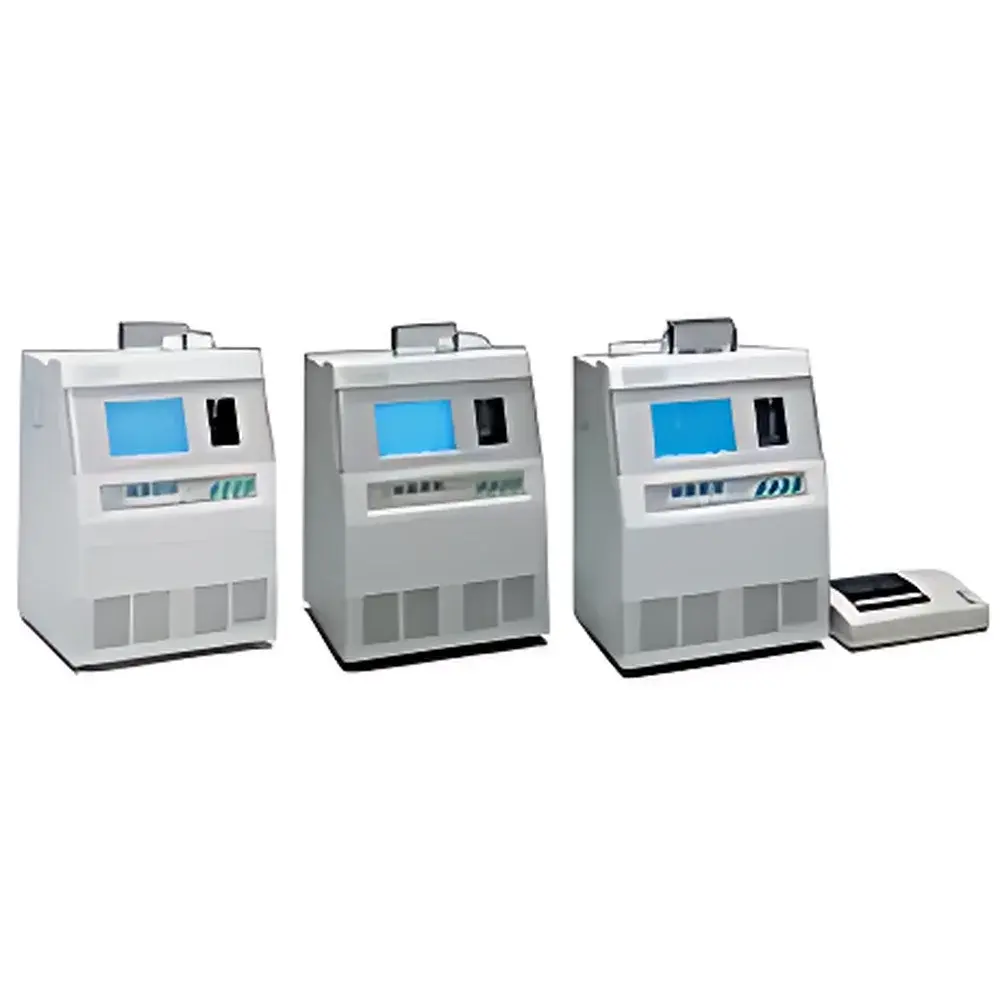
Shimadzu NOA/CGT/SOA-7000 Series Portable Multi-Gas Emission Analyzer
| Brand | Shimadzu |
|---|---|
| Origin | Japan |
| Manufacturer Type | Original Equipment Manufacturer (OEM) |
| Import Status | Imported |
| Model | NOA-7000 / CGT-7000 / SOA-7000 |
| Pricing | Available Upon Request |
| Measurement Accuracy | ±0.5% of Full Scale |
| Weight | ~14.5–15 kg |
Overview
The Shimadzu NOA/CGT/SOA-7000 Series Portable Multi-Gas Emission Analyzer is a field-deployable, integrated gas analysis system engineered for precise, real-time quantification of key combustion-related gases in flue and exhaust streams. Utilizing electrochemical (EC) and non-dispersive infrared (NDIR) sensor technologies—optimized per model—the instrument delivers laboratory-grade measurement integrity in a rugged, self-contained portable platform. Designed specifically for stack emission monitoring, boiler efficiency audits, and combustion optimization in industrial, municipal, and marine settings, the 7000 Series complies with fundamental principles outlined in ISO 12039 (CO, CO₂), ISO 7935 (SO₂), ISO 10849 (NOₓ), and ASTM D6522 (NO/NO₂). Its fully integrated sample conditioning architecture—including built-in particulate filtration, Nafion™-based permeation dryers, and precision mass-flow-controlled sampling pumps—ensures representative, moisture- and particulate-compensated gas delivery to sensors without external accessories.
Key Features
- Integrated sample conditioning: Onboard heated particulate filter, Nafion™ membrane dryer, and diaphragm vacuum pump eliminate need for external pre-treatment modules under standard operating conditions.
- Modular sensor configuration: Dedicated models optimized for specific gas matrices—NOA-7000 (NOₓ + O₂), CGT-7000 (CO/CO₂/CH₄ + O₂), SOA-7000 (SO₂ + O₂)—with cross-interference compensation algorithms validated per IEC 62942-2.
- Field-rugged design: IP54-rated enclosure, shock-absorbing chassis, and battery-operated capability (optional) support operation in ambient temperatures from –10 °C to +50 °C and relative humidity up to 90% non-condensing.
- Calibration traceability: Supports two-point (zero/span) calibration using certified gas standards; onboard memory logs calibration events with timestamps, operator ID, and drift values for GLP/GMP audit readiness.
- Real-time data interface: RS-232 and USB-C ports enable direct connection to laptops or data loggers; optional Bluetooth 5.0 module available for wireless telemetry to Shimadzu’s EMIS-View mobile application.
Sample Compatibility & Compliance
The 7000 Series accepts raw flue gas samples with temperatures up to 180 °C (with optional high-temp probe), particulate loading ≤10 mg/m³, and dew point ≤10 °C post-drying. For applications involving high-moisture, high-sulfur, or low-flow exhaust (e.g., marine auxiliary engines, small-scale biomass boilers), the CFP-8000 Continuous Flow Preconditioner module provides active cooling, enhanced sulfuric acid scrubbing, and flow stabilization down to 0.1 L/min. All configurations meet CE marking requirements under Directive 2014/30/EU (EMC) and 2014/35/EU (LVD); sensor modules are certified to ATEX II 2G Ex ib IIC T4 Gb for use in Zone 1 hazardous areas when installed with approved barriers.
Software & Data Management
Shimadzu EMIS-View software (Windows/macOS compatible) provides full instrument control, real-time trend visualization, customizable report generation (PDF/CSV), and automated compliance reporting aligned with EPA Method 7E, EN 15267-3, and ISO 14064-1 Annex F. Data integrity safeguards include electronic signatures, 21 CFR Part 11-compliant audit trails (user actions, parameter changes, calibration history), and encrypted local storage. Raw sensor output, temperature/pressure compensation values, and diagnostic flags (e.g., low pump vacuum, sensor saturation) are timestamped at 1-second intervals and exportable for third-party QA/QC validation.
Applications
- Regulatory stack testing for NOₓ, SO₂, CO, CO₂, CH₄, and O₂ per EPA Performance Specification 2 (PS-2), EN 14181, and China’s HJ 75-2017.
- Combustion efficiency analysis and air-fuel ratio optimization in natural gas-fired heaters, steam generators, and thermal oil systems.
- Marine emissions verification (IMO MARPOL Annex VI) for auxiliary engine exhaust, including low-flow dilution sampling configurations.
- Periodic maintenance verification of selective catalytic reduction (SCR) and flue gas desulfurization (FGD) system performance.
- Research-grade field studies on biomass, waste-to-energy, and hydrogen-blended fuel combustion profiles.
FAQ
What gas standards are required for calibration?
Certified zero gas (N₂ or synthetic air) and span gases traceable to NIST or BIPM standards—e.g., 500 ppm NO in N₂, 10% CO₂ in N₂, 1% SO₂ in N₂—are recommended. Span concentrations should match expected field ranges.
Can the analyzer operate continuously for 24 hours?
Yes—when connected to stable AC power or with the optional extended-life Li-ion battery pack (8-hour runtime). Internal thermal management maintains sensor stability during prolonged operation.
Is firmware upgrade supported in the field?
Yes—via USB drive or EMIS-View software. All updates include version-controlled release notes, backward-compatible configuration files, and SHA-256 checksum verification.
How is O₂ measurement integrated across models?
Electrochemical O₂ sensors are factory-installed as standard on NOA-7000 and SOA-7000; on CGT-7000, O₂ is optional but shares the same EC platform with 0–25 vol% range and ±0.2 vol% repeatability.
Does the system support remote diagnostics?
With optional Ethernet or 4G LTE module, technicians can initiate live sensor diagnostics, review error logs, and verify calibration status remotely via secure TLS 1.2 connection.
Related Products







