
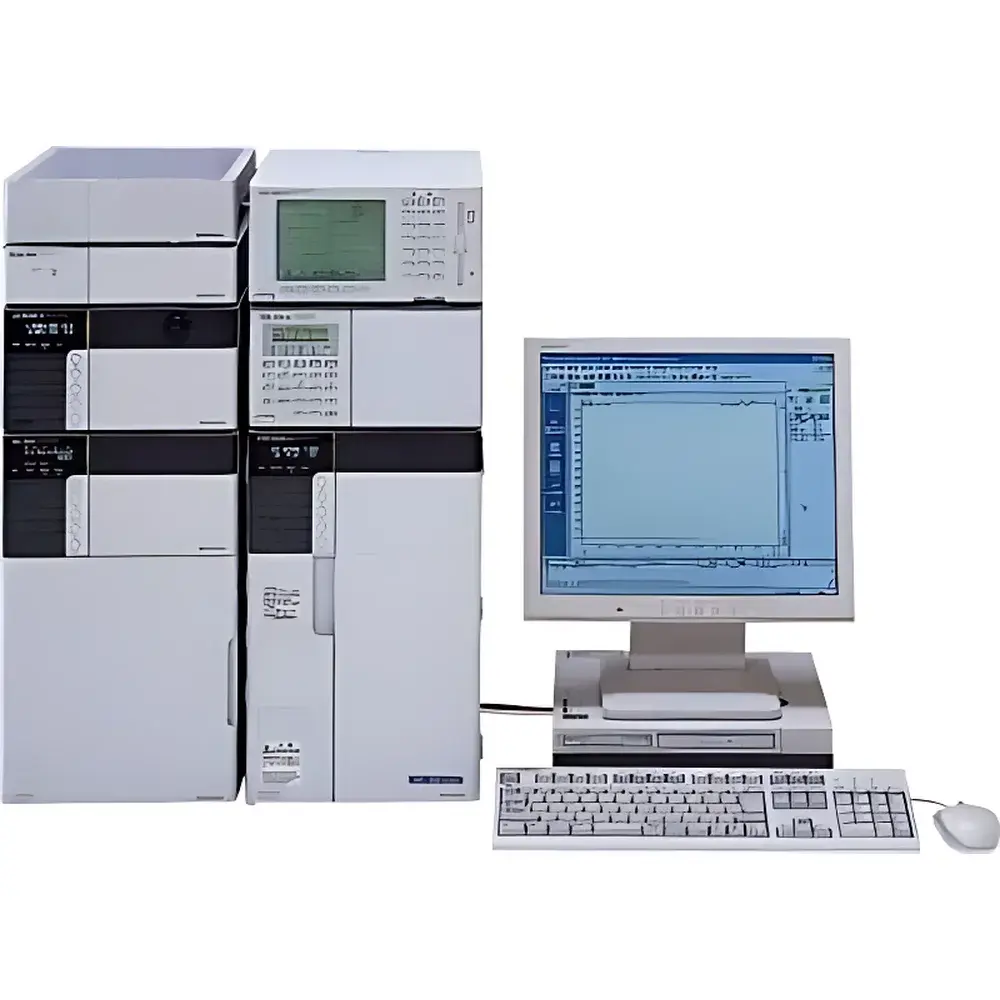
Shimadzu Prominence HIC-SP / HIC-NS Ion Chromatograph
| Brand | Shimadzu |
|---|---|
| Origin | Japan |
| Manufacturer Type | Original Equipment Manufacturer (OEM) |
| Origin Category | Imported Instrument |
| Instrument Type | Laboratory Benchtop Ion Chromatograph |
| Detection Modes | Suppressed and Non-Suppressed Conductivity Detection |
| Application Scope | Trace Anion and Cation Analysis in Environmental, Pharmaceutical, Food, and Industrial Samples |
Overview
The Shimadzu Prominence HIC-SP and HIC-NS are high-performance, benchtop ion chromatography (IC) systems engineered for precise, reproducible separation and quantification of ionic species—including common anions (e.g., F⁻, Cl⁻, NO₂⁻, PO₄³⁻, SO₄²⁻) and cations (e.g., Li⁺, Na⁺, NH₄⁺, K⁺, Ca²⁺, Mg²⁺)—in complex aqueous matrices. Based on the principle of ion exchange chromatography, these instruments utilize high-efficiency, low-dead-volume separation columns paired with conductivity detection—either suppressed or non-suppressed—to achieve sub-μg/L detection limits. The HIC-SP integrates a fully automated electrolytic suppressor module, enabling background conductivity reduction and signal amplification essential for ultra-trace analysis. In contrast, the HIC-NS provides a streamlined, cost-optimized configuration without integrated suppression, ideal for routine applications where robustness and ease of maintenance are prioritized over maximum sensitivity. Both models inherit Shimadzu’s legacy of precision fluidic engineering, including pulse-free dual-plunger reciprocating pumps, thermally stabilized column ovens, and low-diffusion detector cells—ensuring baseline stability, retention time reproducibility (<0.1% RSD), and long-term operational reliability under GLP/GMP-compliant laboratory environments.
Key Features
- Modular architecture supporting both suppressed and non-suppressed conductivity detection modes—enabling method flexibility across diverse regulatory and research workflows.
- Electrolytic chemical suppression (HIC-SP): Zero-reagent consumption suppressor with real-time current control, eliminating manual regenerant handling and enhancing system uptime.
- Compact footprint design: Optimized for space-constrained analytical laboratories—fully functional IC system occupying <0.8 m² floor area.
- High-pressure, low-pulsation dual-plunger pump delivering flow rates from 0.01 to 5.00 mL/min with ≤0.1% flow precision and pressure capability up to 35 MPa.
- Integrated column oven with ±0.1 °C temperature stability—critical for retention time reproducibility and method transferability between labs.
- Intelligent leak detection and pressure monitoring with automatic shutdown protocol—minimizing solvent waste and safeguarding column integrity.
Sample Compatibility & Compliance
The HIC-SP and HIC-NS accommodate a broad range of sample types—including drinking water, wastewater, pharmaceutical excipients, biological fluids (after appropriate dilution/filtration), and industrial process streams—provided they meet standard IC pre-treatment requirements (e.g., 0.22 µm filtration, pH adjustment, and removal of particulates or organic interferences). Both systems comply with international analytical standards, including ASTM D4327 (anion analysis in water), ISO 10304-1 (determination of dissolved anions by liquid chromatography), and USP (conductivity of purified water). When operated with Shimadzu LabSolutions IC software configured for audit trail, electronic signatures, and user access control, the platforms support 21 CFR Part 11 compliance for regulated environments—facilitating validation documentation, change control, and data integrity assurance per ALCOA+ principles.
Software & Data Management
Controlled via Shimadzu LabSolutions IC—a dedicated, Windows-based chromatography data system—the HIC-SP/NS supports full method development, sequence execution, peak integration, calibration curve generation (linear, quadratic, or weighted), and report export in PDF, CSV, or XML formats. The software includes built-in tools for peak purity assessment, retention time locking, and system suitability testing (SST) evaluation against user-defined criteria (e.g., resolution ≥2.0, tailing factor ≤2.0, %RSD ≤1.5%). Raw data files are stored in vendor-neutral .cdf format (compatible with third-party review tools), while audit trails record all user actions—including parameter changes, reprocessing events, and report generation—with timestamps and operator IDs. Optional LIMS connectivity enables automated result transfer to enterprise laboratory information management systems.
Applications
- Environmental monitoring: Quantification of nitrate, sulfate, and bromide in surface and groundwater per EPA Method 300.0 and ISO 10304-3.
- Pharmaceutical quality control: Testing for residual chloride, acetate, and sodium in active pharmaceutical ingredients (APIs) and injectables per ICH Q5C and USP monographs.
- Food and beverage safety: Determination of preservative anions (benzoate, sorbate) and cationic nutrients (Na⁺, K⁺, Ca²⁺) in dairy, beverages, and infant formula.
- Power generation: Monitoring of chloride and sulfate ingress in boiler feedwater and steam condensate to prevent corrosion-related turbine failures.
- Academic and method development labs: Platform for developing novel eluent gradients, evaluating new stationary phases, and validating multi-ion simultaneous determination protocols.
FAQ
What is the difference between the HIC-SP and HIC-NS configurations?
The HIC-SP includes an integrated electrolytic suppressor for enhanced sensitivity (sub-μg/L LODs) and lower baseline noise; the HIC-NS omits the suppressor, offering simplified operation and reduced maintenance for routine, higher-concentration analyses.
Can the system be validated for GMP use?
Yes—when deployed with LabSolutions IC in 21 CFR Part 11 mode and supported by Shimadzu’s IQ/OQ/PQ documentation packages, the HIC-SP/NS meets core requirements for instrument qualification in regulated pharmaceutical and biotech settings.
Is column compatibility limited to Shimadzu-branded columns?
No—the systems support industry-standard 4.0 mm and 2.0 mm ID columns from major vendors (e.g., Thermo Fisher, Metrohm, Waters) via universal PEEK union fittings and compatible mobile phase chemistries.
What maintenance intervals are recommended for routine operation?
Pump seals: every 6–12 months depending on usage; suppressor cartridge (HIC-SP): 6–12 months or after 500 injections; guard column: replaced after 50–100 injections; detector cell cleaning: monthly with 10% nitric acid followed by DI water rinse.







