
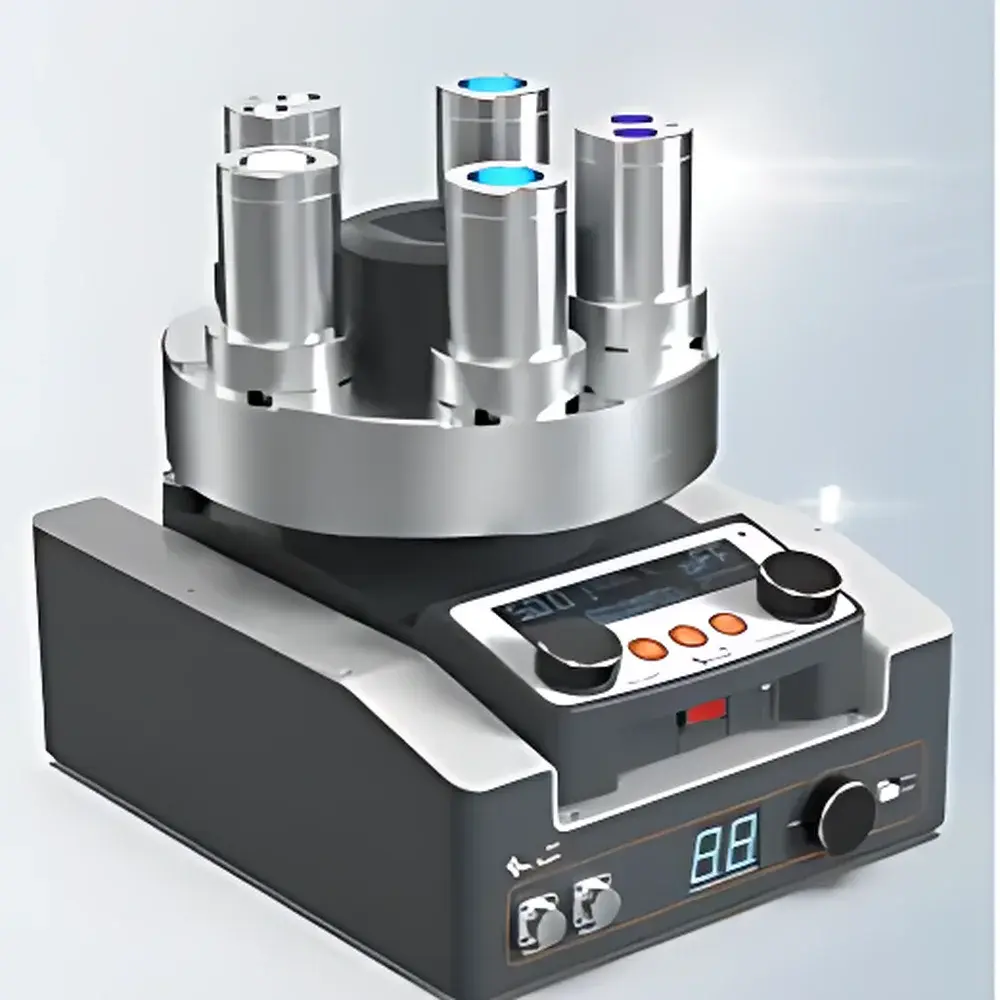
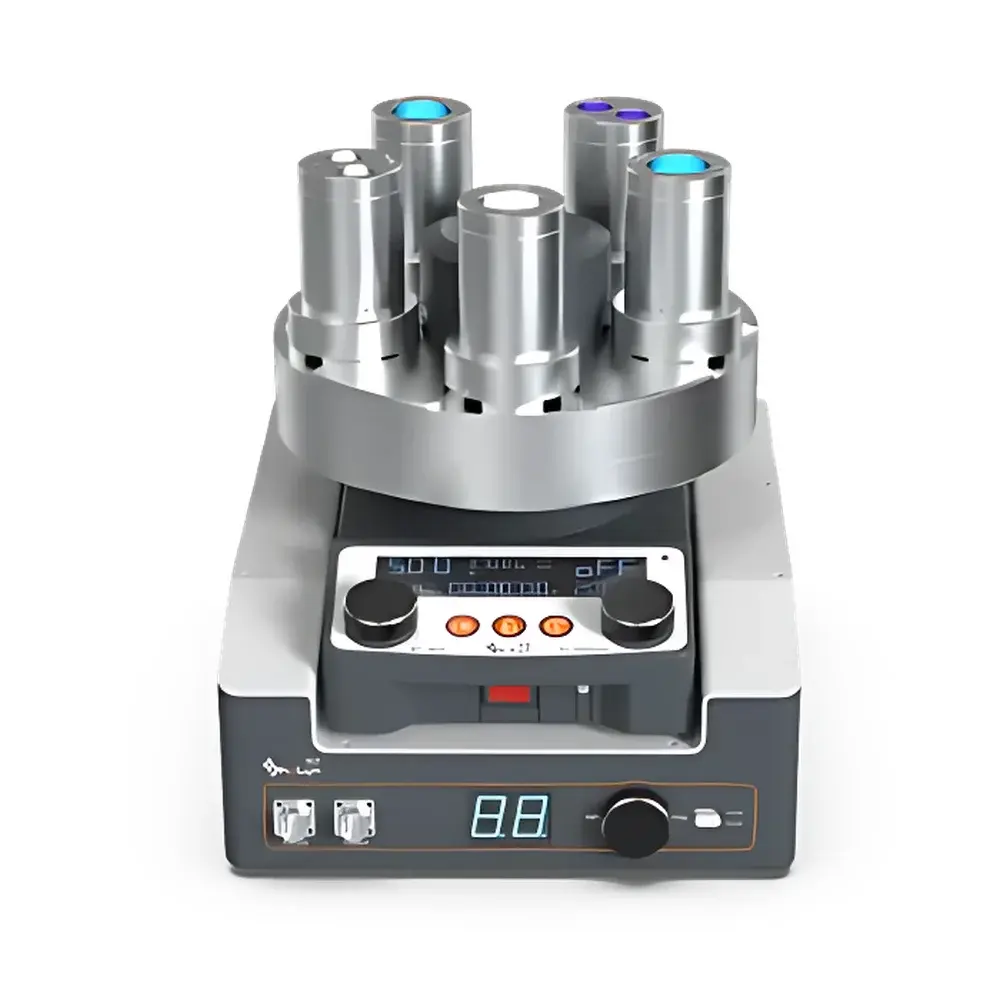
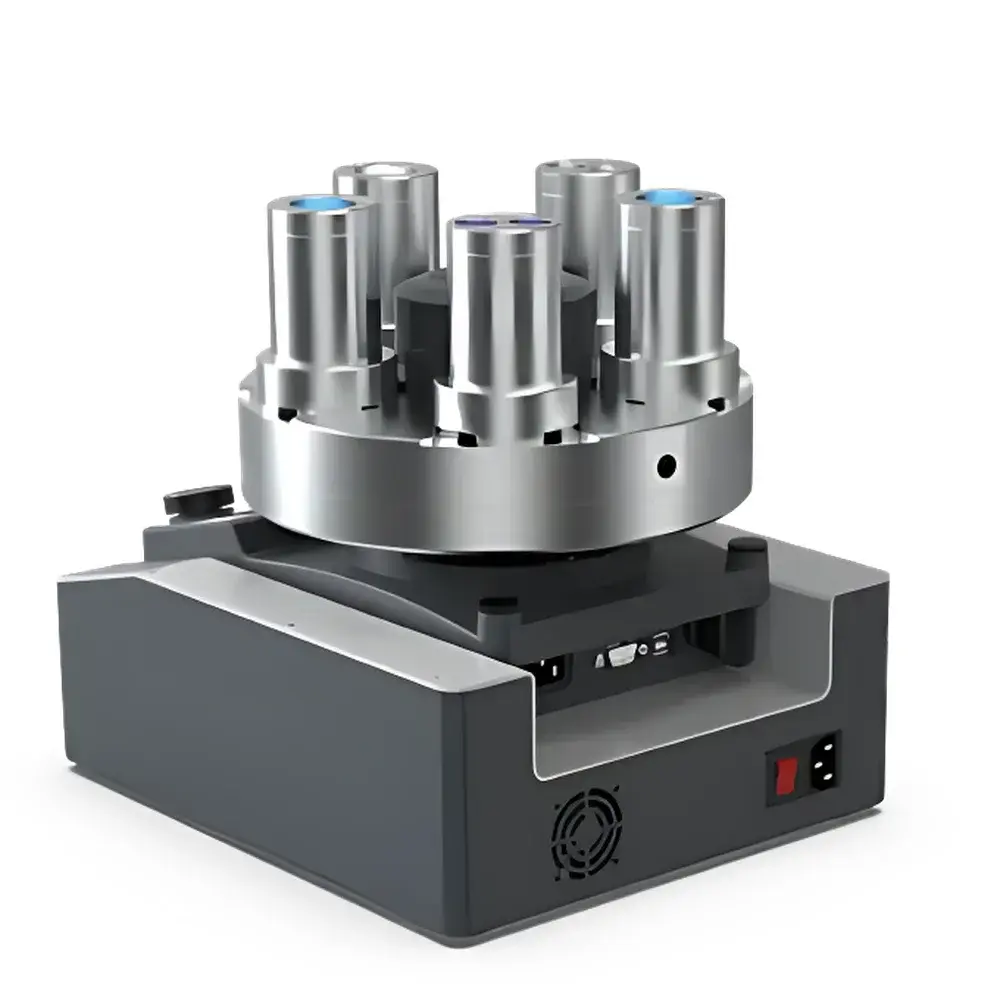
ShoLyn ShoPho5S Five-Position Parallel Photochemical Reactor
| Brand | ShoLyn |
|---|---|
| Origin | Shanghai, China |
| Model | ShoPho5S |
| Reaction Pressure | Ambient |
| Reaction Temperature | Room Temperature |
| Catalyst Loading Capacity | User-Defined |
| Light Source | Interchangeable High-Efficiency LED Modules (365–950 nm, including 254/280/305/330 nm and customizable composite spectra) |
| Light Power per Position | 0–12 W, independently adjustable in fine steps |
| Light Source Lifetime | >10,000 h |
| Illumination Architecture | Patented dual-lens collimated transmission optics |
| Cooling Method | Integrated high-flow axial fans + high-thermal-conductivity aluminum chassis |
| Stirring Speed Range | 50–2000 rpm, bidirectional, with timer/countdown |
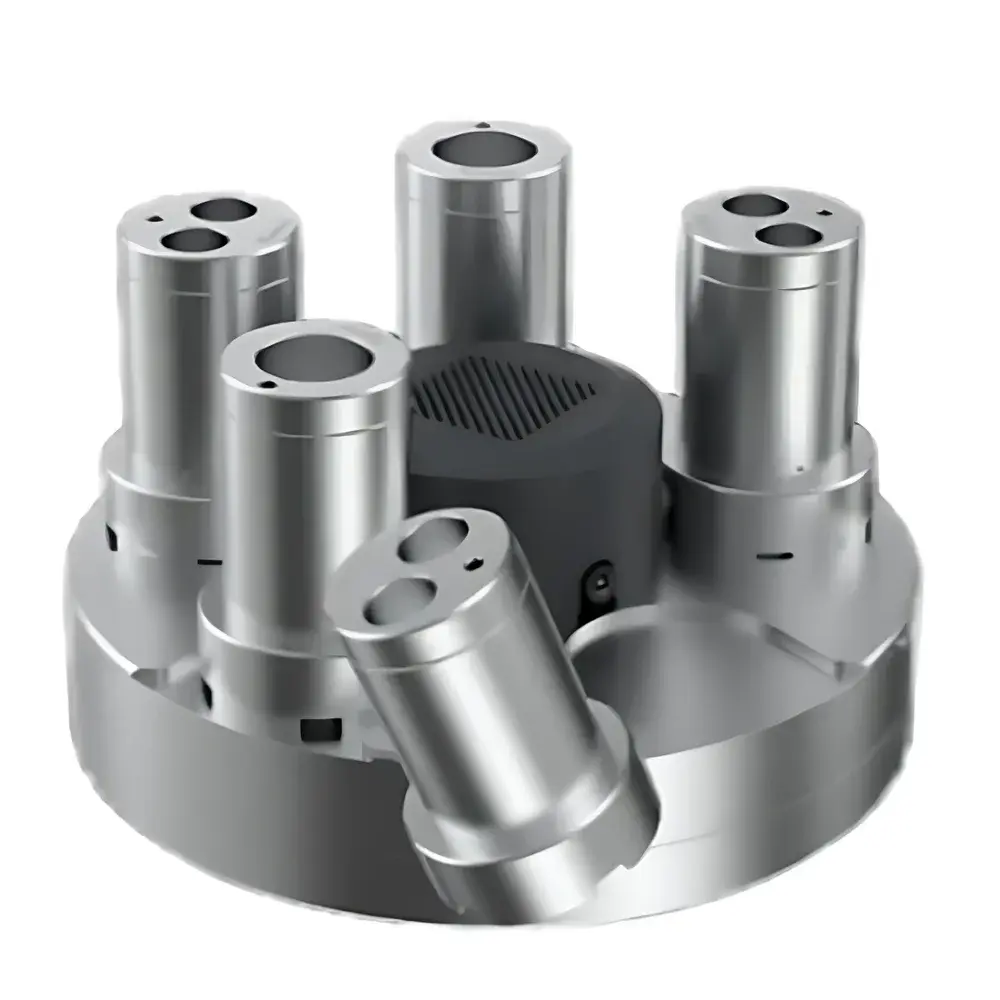
| Reaction Vessel Compatibility | Single-hole (Φ22.5 mm inner / Φ28 mm outer) or dual-hole (2 × Φ16.5 mm) |
| Expandability | Modular design supports upgrade to 10-position configuration |
Overview
The ShoLyn ShoPho5S Five-Position Parallel Photochemical Reactor is an engineered platform for high-throughput, reproducible photocatalytic screening under controlled illumination. It operates on the principle of homogeneous photon flux delivery to multiple independent reaction zones—each subjected to identical thermal, hydrodynamic, and photonic boundary conditions. Unlike conventional open-beam LED arrays, the ShoPho5S employs a patented dual-lens collimation system that enhances optical coupling efficiency by ≥40%, ensuring spatially uniform irradiance across all five positions. Designed specifically for reactions insensitive to moderate thermal drift but critically dependent on inter-trial illumination consistency, the system eliminates positional bias in quantum yield estimation, kinetic profiling, and catalyst structure–activity relationship (SAR) studies. Its ambient-pressure, room-temperature operational envelope aligns with widely adopted protocols for oxidative/reductive organic transformations, water splitting model systems, and CO₂ photoreduction benchmarking.
Key Features
- Five independently addressable reaction positions with synchronized power supply and real-time individual light intensity control (0–12 W, stepwise adjustment)
- Modular, plug-and-play LED light sources covering UV–Vis–NIR spectrum (254 nm to 950 nm); standard options include 365 nm, 405 nm, 450 nm, 525 nm, 630 nm, and 6500 K white; custom narrowband or multi-peak composite spectra available upon request
- High-thermal-conductivity monolithic aluminum chassis (6061-T6) with extended surface area fins, integrated with low-noise axial cooling fans to suppress photothermal artifacts below ±0.8 °C inter-position variance over 8 h
- Precision magnetic stirring (50–2000 rpm, reversible rotation, programmable timer/countdown) compatible with Schlenk-type tubes, flat-bottom vials, and custom reactor inserts
- Optomechanically stable transmission-mode illumination architecture minimizing reflection losses and enabling direct bottom-up irradiation through transparent reactor bases
- Scalable platform: single-position ShoPhoS reactors can be docked into the ShoPho5S base station; optional expansion kits support conversion to 10-position parallel operation
Sample Compatibility & Compliance
The ShoPho5S accommodates a broad range of standard laboratory glassware—including 8 mL and 15 mL flat-bottom vials, 10–40 mL Schlenk tubes (Φ15 mm, Φ22 mm, Φ28 mm), and custom quartz or borosilicate reactor inserts—without requiring mechanical adapters. All contact surfaces are chemically inert (anodized aluminum, PTFE-coated stir bars, silicone-free sealing interfaces). The system complies with general laboratory safety standards (IEC 61010-1) and supports GLP-aligned experimental workflows through consistent parameter logging (light power, RPM, elapsed time). While not certified for pressurized or high-temperature operation, its ambient-condition specification ensures compatibility with ISO 10678:2010 (photocatalytic activity assessment) and ASTM E2938–21 (standard guide for evaluating photocatalytic materials) test frameworks.
Software & Data Management
The ShoPho5S operates via tactile rotary encoder and LED status display—no external PC required for basic operation. For traceable, auditable experimentation, optional USB-connected firmware enables timestamped parameter export (light intensity per channel, RPM, duration) in CSV format. Data logs conform to ALCOA+ principles (Attributable, Legible, Contemporaneous, Original, Accurate, Complete, Consistent, Enduring, Available) and support retrospective analysis in LIMS or ELN environments. Though not FDA 21 CFR Part 11 compliant out-of-the-box, the system’s deterministic hardware control architecture facilitates validation documentation for regulated academic or industrial QC labs conducting catalyst batch qualification or photoreaction method development.
Applications
- High-throughput photocatalyst screening (e.g., TiO₂ variants, g-C₃N₄ composites, MOFs, covalent organic frameworks)
- Wavelength-dependent quantum efficiency mapping across UV–Vis spectral bands
- Light-intensity kinetic studies (zero-order vs. first-order photon flux dependence)
- Comparative evaluation of sacrificial reagents, electron donors/acceptors, or solvent effects under matched photonic input
- Method development for pharmaceutical photostability testing (per ICH Q1B guidance, using relevant UV bands)
- Training and pedagogical use in advanced inorganic and physical chemistry laboratories
FAQ
Can the ShoPho5S operate under inert atmosphere?
Yes—reaction vessels are sealed independently using standard septa or O-ring caps; the base station itself does not provide gas manifold integration but is fully compatible with glovebox docking or external Schlenk line purging.
Is wavelength calibration traceable to NIST standards?
LED modules are factory-characterized using calibrated spectroradiometers; spectral output reports (FWHM, peak λ, irradiance at 1 cm distance) are supplied with each unit. Full NIST-traceable recalibration services are available via authorized ShoLyn service centers.
What maintenance is required for long-term reliability?
No routine optical alignment or lamp replacement is needed. Fans should be inspected quarterly for dust accumulation; LED modules retain >95% output after 10,000 h and are field-replaceable without tools.
Does the system support external trigger synchronization?
Not natively—but TTL-compatible GPIO pins are accessible via the optional firmware interface for integration with spectrophotometers, gas chromatographs, or potentiostats in time-resolved reaction monitoring setups.



