
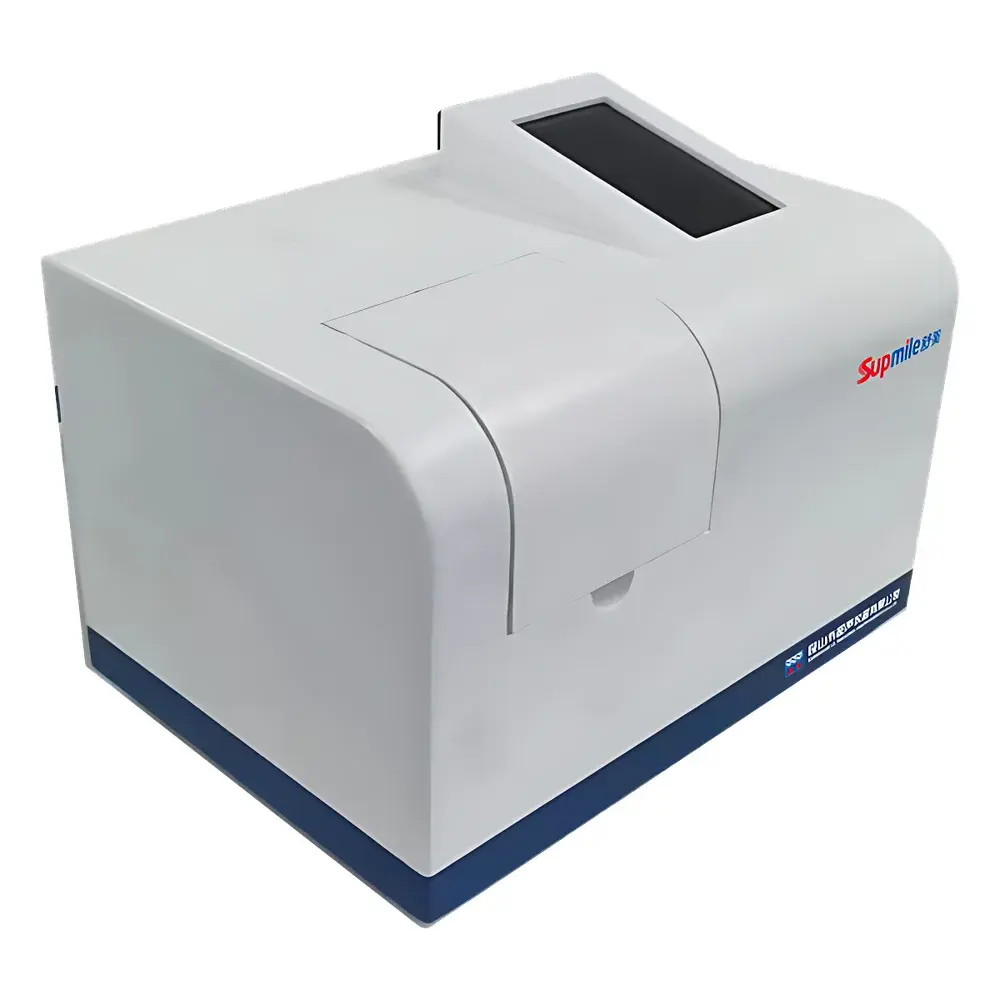
Shumei KBC-3080FJC-T Non-Contact Ultrasonic Processor
| Brand | Shumei |
|---|---|
| Origin | Jiangsu, China |
| Manufacturer Type | Direct Manufacturer |
| Instrument Category | Domestic |
| Model | KBC-3080FJC-T |
| Price Range | USD 2,200–4,700 (est.) |
| Instrument Type | Ultrasonic Cell Disruptor |
| Operating Frequency | 20–80 kHz |
| Ultrasonic Power Output | 10–60 W |
| Adjustable Power Range | 0–100% |
| Programmable Duration | 1 min – 100 h |
| Sample Volume Capacity | 100 nL – 3 mL |
| Pulse Duration Adjustment | 1 s – 60 min |
| Horn Tip Diameter Customization | Φ3–12 mm |
| Transducer Material | CV33 Piezoelectric Ceramic |
| Active Element | PZT (Lead Zirconate Titanate) |
| Horn Material | Ti-6Al-4V Titanium Alloy |
| Control Interface | Full-color capacitive touchscreen |
| Protection Features | Overload detection, real-time fault monitoring, auto-shutdown |
Overview
The Shumei KBC-3080FJC-T Non-Contact Ultrasonic Processor is an engineered solution for controlled, low-shear mechanical lysis of biological samples without direct probe immersion. Unlike conventional horn-based sonicators that introduce contamination risk and thermal stress via direct contact, this system employs a precisely coupled ultrasonic transducer mounted beneath a sealed microtube rack—enabling energy transmission through the tube wall via acoustic coupling. The device operates on the principle of resonant piezoelectric excitation, where CV33-class PZT ceramic elements convert electrical input into high-frequency mechanical oscillations (20–80 kHz), transmitted through a Ti-6Al-4V titanium alloy horn assembly. Its non-contact architecture eliminates cross-contamination between samples, preserves sample integrity in sensitive applications (e.g., extracellular vesicle isolation or chromatin shearing), and supports unattended operation across extended durations (up to 100 hours). Designed for integration into GLP-compliant workflows, it meets foundational requirements for reproducible nucleic acid and protein extraction in molecular biology, biopharmaceutical development, and single-cell research.
Key Features
- Full-color capacitive touchscreen interface with intuitive icon-driven navigation and real-time parameter feedback
- Auto-frequency tracking (AFT) across 20–80 kHz range ensures stable resonance despite load variation or temperature drift
- Intelligent energy compensation algorithm dynamically adjusts output amplitude to maintain consistent cavitation intensity across viscosity gradients
- Dual operating modes: continuous ultrasonication and programmable pulse mode (1 s – 60 min ON/OFF cycles)
- Three-dimensional exponential horn geometry optimized for uniform acoustic field distribution and minimized mechanical fatigue
- Integrated safety architecture featuring real-time overload detection, thermal monitoring, and automatic shutdown upon anomaly detection
- Ti-6Al-4V titanium alloy horn—corrosion-resistant, non-reactive, and certified for repeated sterilization cycles (autoclave-compatible up to 134°C)
Sample Compatibility & Compliance
The KBC-3080FJC-T accommodates standard microcentrifuge tubes (0.2–2.0 mL), PCR strips, and custom low-volume vials (down to 100 nL). Its non-invasive design is validated for use with temperature-sensitive samples—including primary cells, organoids, lipid nanoparticles (LNPs), and native chromatin complexes—without compromising epitope integrity or RNA stability. The system complies with IEC 61000-6-3 (EMC emissions) and IEC 61000-6-2 (immunity) standards. While not FDA 510(k)-cleared, its operational parameters align with ASTM E2937-22 guidelines for ultrasonic cell disruption validation, and its audit-trail-capable firmware supports 21 CFR Part 11 readiness when deployed with compliant LIMS integration.
Software & Data Management
The embedded control firmware records all operational metadata—including frequency setpoint, power percentage, cumulative exposure time, pulse profile, and system health logs—with timestamped entries stored internally (16 GB flash memory). Export is supported via USB 2.0 to CSV or XML formats for traceability in QA/QC documentation. Optional Ethernet connectivity enables remote monitoring and centralized protocol management in multi-instrument labs. All parameter changes are logged with user ID (if configured via network directory service), satisfying basic GLP/GMP data integrity requirements for method validation and equipment qualification (IQ/OQ/PQ).
Applications
- Chromatin immunoprecipitation (ChIP) sample preparation with reduced DNA fragmentation bias
- Exosome and extracellular vesicle isolation from biofluids without membrane damage
- Preparation of soluble protein extracts from inclusion bodies under non-denaturing conditions
- Homogenization of cryopreserved tissue fragments for spatial transcriptomics workflows
- Disruption of bacterial and yeast cells for plasmid DNA purification with minimized endotoxin release
- Activation of sonosensitive drug carriers in preclinical formulation studies
FAQ
Is the KBC-3080FJC-T suitable for RNA-seq library preparation?
Yes—its non-contact mode minimizes RNase contamination risk and reduces heat-induced RNA degradation; optimal results observed at 25–35 kHz with 30% power and 30-s pulse intervals.
Can the system be integrated into automated liquid handling platforms?
Yes—RS-232 and TTL trigger interfaces are provided for external start/stop control and status signaling, enabling synchronization with robotic arms or plate handlers.
What maintenance is required for long-term calibration stability?
Annual verification of acoustic output using calibrated hydrophone (per ISO 18530) is recommended; horn surface inspection and coupling gel replacement every 6 months ensure consistent energy transfer.
Does the device support multi-tube parallel processing?
Yes—it accepts standard 8- or 12-position racks with independent acoustic coupling per position, enabling true parallel processing without cross-talk or power division.
Is validation documentation available for GxP environments?
Factory-issued IQ/OQ protocols and raw calibration certificates (traceable to NIM, China) are supplied; PQ templates aligned with ISO/IEC 17025 are available upon request.
Related Products





