
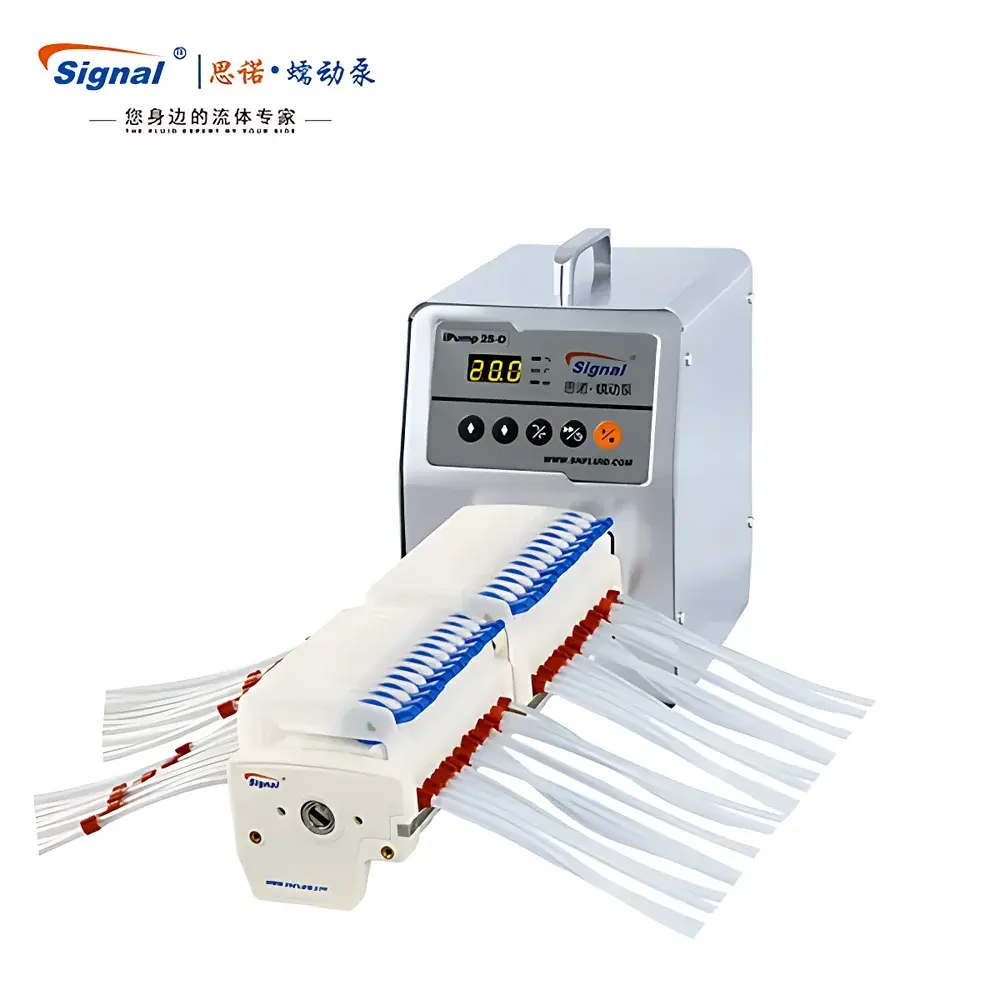
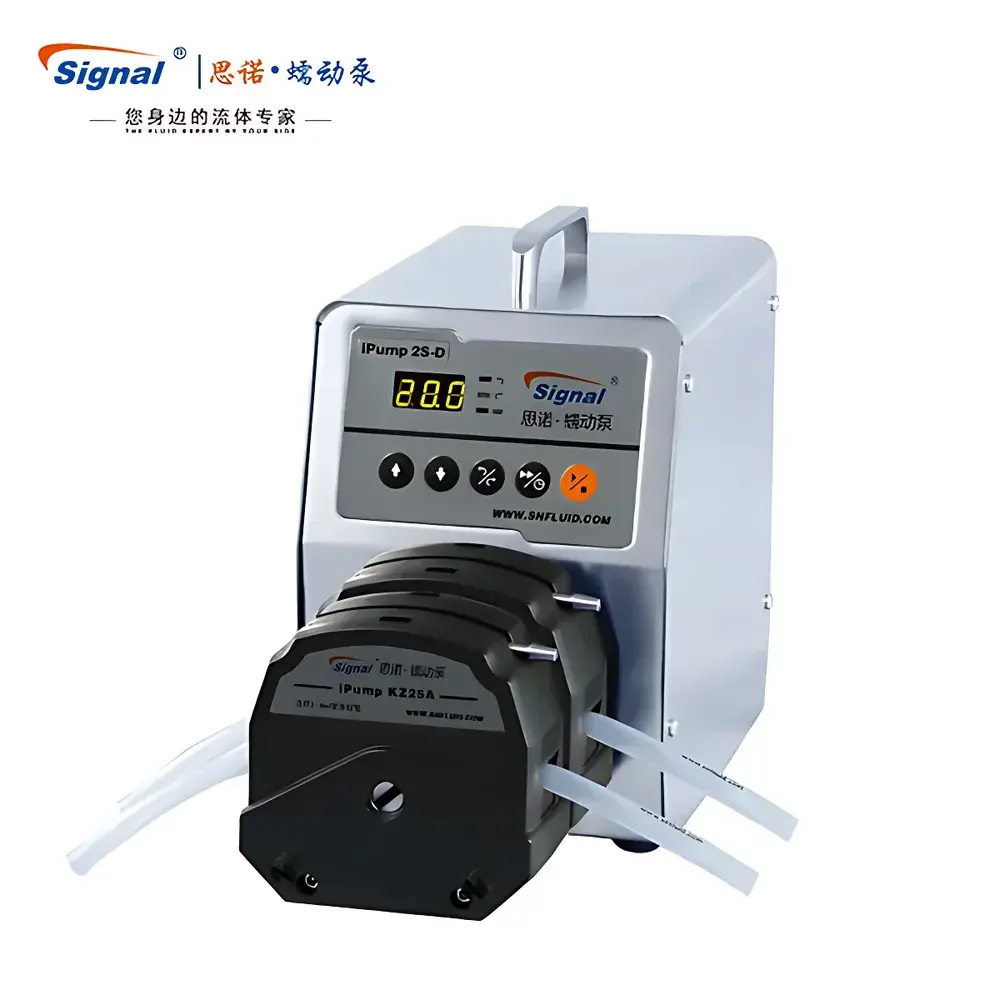
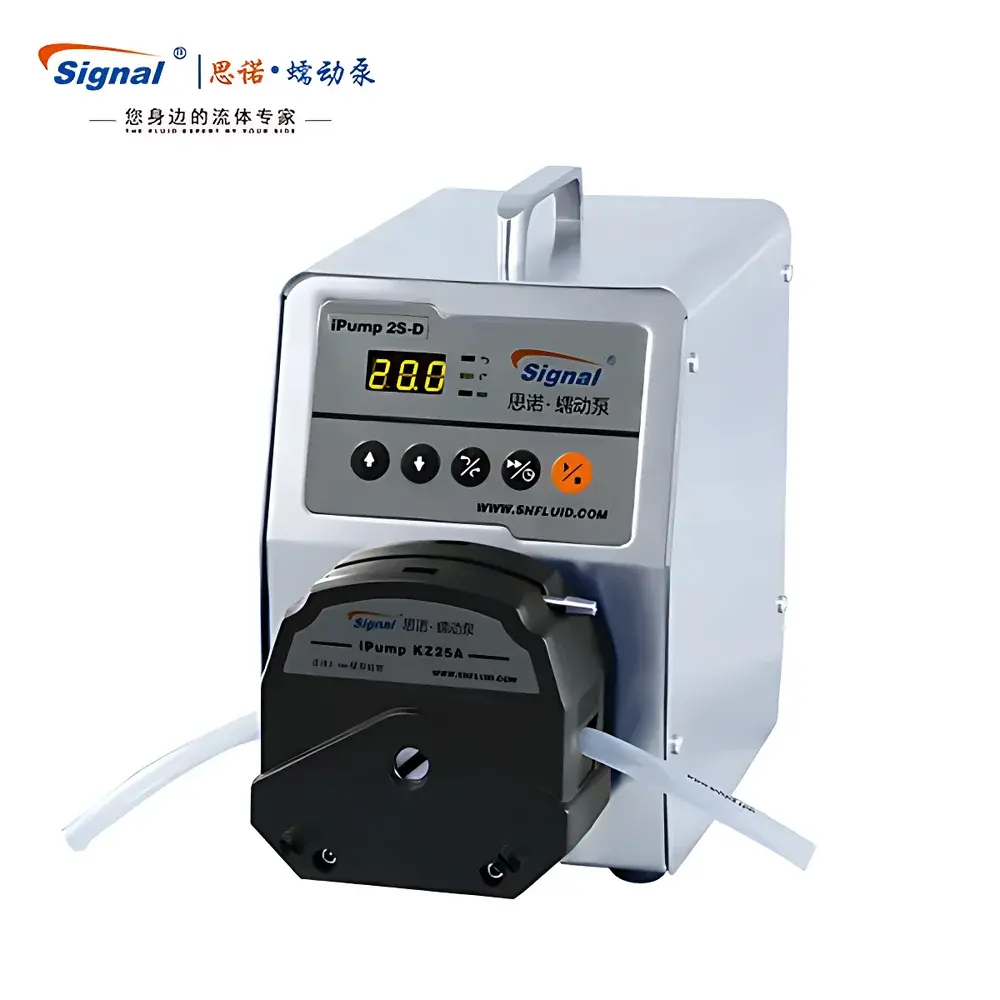
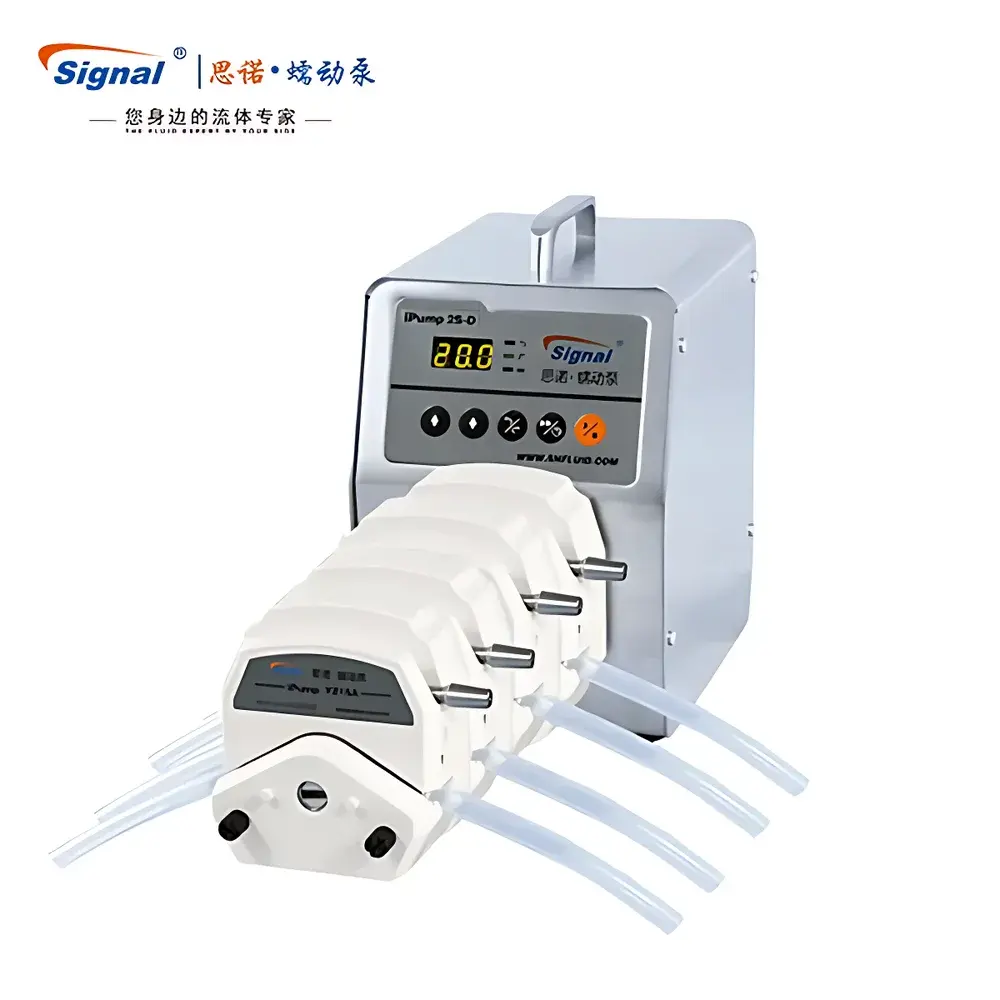
Signal iPump2S-D Adjustable-Speed Peristaltic Pump
| Brand | Signal |
|---|---|
| Origin | Hebei, China |
| Model | iPump2S-D |
| Flow Rate Range | 0.006–1970 mL/min |
| Speed Range | 0.1–200 rpm |
| Speed Resolution | 0.1 rpm (<100 rpm), 1 rpm (≥100 rpm) |
| Display | 3-digit LED for speed and timer |
| Direction Control | Bidirectional |
| Timing Function | 0.1 s–99 h |
| External Control Options | 0–5 V, 0–10 V, 4–20 mA, 0–10 kHz (optical isolation) |
| Communication | RS485 with Modbus RTU protocol (optional) |
| Protection Rating | IP31 |
| Power Supply | AC 90–260 V, 50/60 Hz |
| Power Consumption | <50 W |
| Operating Environment | 0–40 °C, ≤80% RH non-condensing |
| Dimensions (L×W×H) | 224 × 147 × 227 mm (excl. pump head) |
| Weight | 3.8 kg |
| Enclosure Material | 304 stainless steel |
| PCB | Conformal coated (triple protection against moisture, corrosion, and dust) |
Overview
The Signal iPump2S-D is a precision-engineered adjustable-speed peristaltic pump designed for demanding laboratory, bioprocessing, pharmaceutical, food & beverage, and environmental applications where accurate, contamination-free fluid transfer is critical. Based on the fundamental principle of peristalsis—mechanical occlusion and sequential compression of elastomeric tubing—the iPump2S-D delivers repeatable volumetric flow without internal valves, seals, or wetted metal parts. This eliminates cross-contamination risk and simplifies cleaning and maintenance, making it ideal for sterile or shear-sensitive media handling. Its core architecture integrates a high-torque stepper motor, imported motor driver ICs, and robust mechanical design to support stable low-speed operation down to 0.1 rpm and multi-channel synchronization via daisy-chained pump heads. The pump operates on a universal AC input (90–260 V), ensuring compatibility across global laboratory power infrastructures without external transformers.
Key Features
- Wide, digitally controlled speed range: 0.1–200 rpm with dual-resolution control (0.1 rpm below 100 rpm; 1 rpm above) for fine-tuned flow modulation.
- Bidirectional rotation capability enables both forward and reverse fluid displacement—critical for priming, backflushing, and recirculation protocols.
- Integrated timing function (0.1 s–99 h) supports programmable dispensing, timed reagent addition, and automated batch processes without external controllers.
- 304 stainless steel chassis provides structural rigidity, chemical resistance, and ease of decontamination in regulated environments.
- Conformal-coated printed circuit boards ensure long-term reliability under humid or chemically aggressive ambient conditions (IP31-rated enclosure).
- Full-speed mode allows rapid tube filling or system purge; power-loss memory retains last operational state for seamless restart after interruption.
- Optically isolated analog and frequency-based external control inputs (0–5 V, 0–10 V, 4–20 mA, 0–10 kHz) enable integration into PLC-driven or SCADA-monitored workflows.
- Optional RS485 communication module supports Modbus RTU protocol for centralized monitoring, remote parameter setting, and audit-ready data logging in GLP/GMP-compliant facilities.
Sample Compatibility & Compliance
The iPump2S-D accommodates a broad spectrum of pump heads—including DG-1 (6–24 rollers), YZ15/YZ25 series, and KZ25A—enabling flexible configuration for single- or multi-channel operation. Compatible tubing materials include medical-grade silicone, Viton®, Tygon®, and PharmPure®—all certified for USP Class VI, FDA 21 CFR 177.2600, and EU 10/2011 compliance. Flow performance varies with tubing inner diameter (ID), wall thickness, and roller geometry; published flow ranges (e.g., 0.006–1970 mL/min) are empirically validated using calibrated silicone tubing under ISO 8536-4 test conditions. While not intrinsically rated for hazardous locations, the pump meets IEC 61010-1 safety requirements for laboratory electrical equipment and supports traceability through configurable run logs when paired with optional communication modules.
Software & Data Management
Although the base unit operates via front-panel membrane keys and real-time LED display, optional RS485 + Modbus RTU integration enables full remote supervision using industry-standard SCADA platforms or custom LabVIEW/Python-based control interfaces. Configuration parameters—including target speed, direction, timer setpoints, and alarm thresholds—can be read/written dynamically. When deployed with compliant data acquisition systems, the pump supports electronic record retention aligned with FDA 21 CFR Part 11 requirements, including user authentication, audit trails, and immutable event timestamps. No proprietary software is required; all communication adheres to open Modbus register maps published in the technical manual.
Applications
- Automated sample introduction in HPLC, IC, and continuous-flow analytical systems.
- Controlled reagent dosing in cell culture bioreactors and fermentation vessels.
- Perfusion media delivery in organ-on-chip and microfluidic platforms.
- Calibration standard delivery in environmental water quality analyzers (e.g., COD, TOC, nutrient analyzers).
- Food texture analysis—precise slurry metering in rheology and viscosity testing setups.
- Pharmaceutical QC labs—repeatable buffer exchange during column regeneration or filter integrity testing.
FAQ
What is the minimum controllable flow rate with the iPump2S-D?
With appropriate tubing selection (e.g., 13# silicone, 0.5 mm ID) and low-speed operation (0.1 rpm), the pump achieves stable flow as low as 0.006 mL/min—suitable for nanoliter-scale dosing in assay development.
Can multiple iPump2S-D units be synchronized?
Yes—via shared analog control signals or Modbus network addressing, enabling coordinated multi-pump sequencing for complex fluid routing logic.
Is the pump suitable for sterile applications?
When used with gamma-irradiated, USP Class VI-certified tubing and validated cleaning procedures, the iPump2S-D supports aseptic processing in ISO 5–7 environments.
Does the device support GMP audit trails?
Only when equipped with the RS485 + Modbus option and integrated into a validated electronic data management system that enforces 21 CFR Part 11 controls.
What maintenance intervals are recommended?
Roller wear inspection every 2,000 operating hours; tubing replacement based on cycle life (typically 100–500 hours depending on pressure, speed, and tubing type).



