
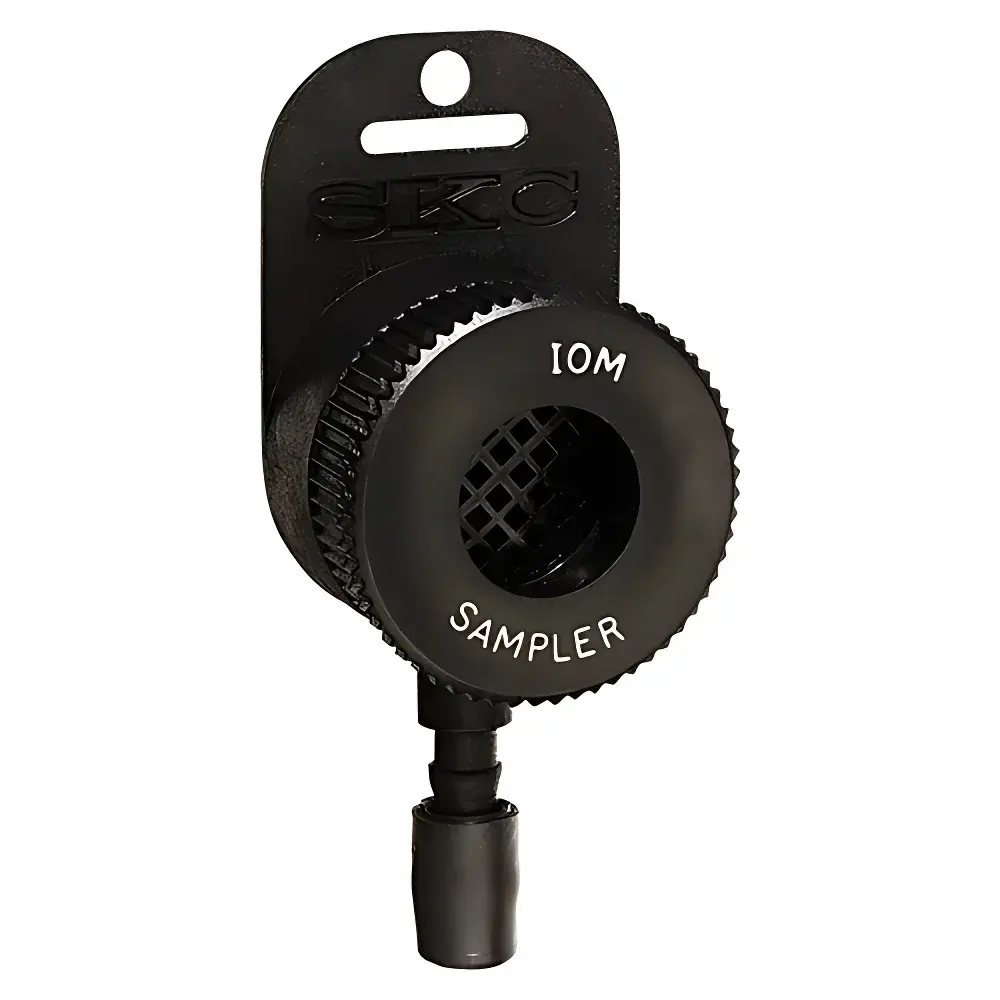
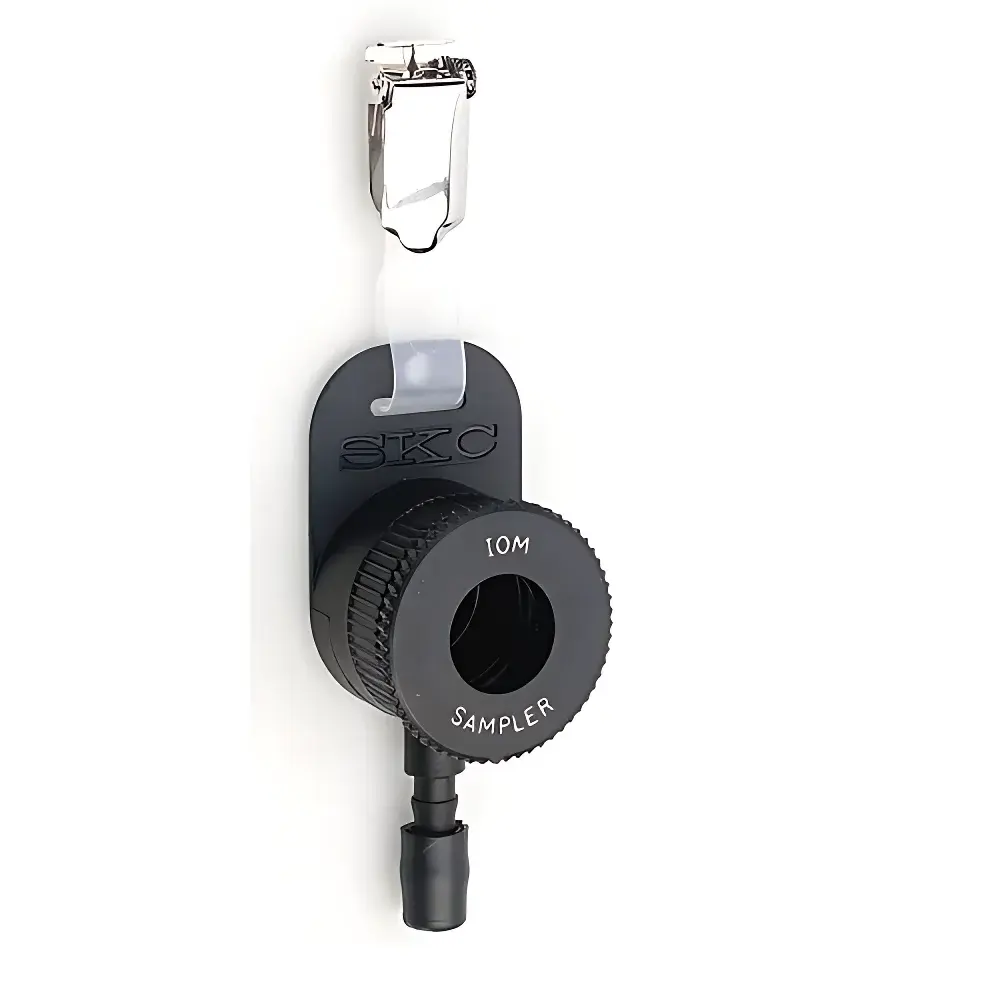
SKC IOM Inhalable Particulate Matter Sampler
| Brand | SKC |
|---|---|
| Origin | USA |
| Model | IOM |
| Sampling Flow Rate | 2 L/min |
| 50% Cut-Point | 100 µm (at 2 L/min) |
| Filter Diameter | 25 mm |
| Housing Material | Heat-resistant polypropylene (plastic) or stainless steel |
| Max Operating Temperature | 100 °C (plastic), 200 °C (stainless steel) |
| Weight | <55 g (plastic version, including cassette) |
| Dimensions | 8.5 × 2.8 cm |
| Inlet Tubing ID | 6.25 mm (1/4″) |
| Compliance | ACGIH Inhalable Fraction, ISO/CEN EN 13205, HSE MDHS 14/4, MDHS 6/3 (with accessory head), MDHS 25/3 (stainless only), NIOSH Method 5700, OSHA PNOR, Australian Inhalable PM Standard |
Overview
The SKC IOM Inhalable Particulate Matter Sampler is an internationally recognized, human-simulating personal sampling device engineered for the quantitative collection of inhalable airborne particles in occupational and environmental settings. Designed in accordance with the ACGIH-defined inhalable fraction—representing particles that enter the nose and mouth during normal breathing—the IOM sampler replicates the aerodynamic deposition behavior of airborne particulates up to 100 µm aerodynamic diameter. Its performance is validated against ISO/CEN EN 13205, HSE MDHS 14/4, and other regulatory benchmarks for health-related aerosol monitoring. The sampler operates at a nominal flow rate of 2 L/min and features a precision-engineered inlet geometry that ensures consistent 50% cut-point efficiency at 100 µm under standard sampling conditions. Unlike thoracic or respirable samplers, the IOM captures the full inhalable mass fraction—including coarse dusts, mists, and bioaerosols—making it indispensable for exposure assessment of nuisance dusts, metals, organic compounds, and biological agents.
Key Features
- Human-centric inlet design optimized for realistic simulation of nasal and oral particle entry during natural breathing
- Reusable 25 mm filter cassette system—available in autoclavable stainless steel or heat-resistant polypropylene—enabling both gravimetric and chemical analysis workflows
- Modular construction eliminates direct manual contact with the filter surface; the entire cassette is weighed pre- and post-sampling to ensure complete mass recovery
- Compatible with SKC MultiDust foam discs for concurrent collection of respirable (≤4 µm) and inhalable (≤100 µm) fractions in a single sampling event
- Lightweight profile (<55 g for plastic version) and compact dimensions (8.5 × 2.8 cm) support extended wear without compromising worker mobility or comfort
- Stainless steel variant rated for continuous operation up to 200 °C and compatible with solvent cleaning and high-pressure steam sterilization—critical for bioaerosol and hazardous chemical applications
- Standard 6.25 mm (1/4″) ID tubing connection ensures seamless integration with all major personal sampling pumps meeting ISO 13137 requirements
Sample Compatibility & Compliance
The SKC IOM sampler is certified and widely adopted across global regulatory frameworks governing occupational hygiene. It meets the ACGIH inhalable convention and is explicitly referenced in HSE MDHS 14/4 (biological aerosols), MDHS 6/3 (lead), and MDHS 25/3 (organic isocyanates—stainless steel version only). It is also approved under NIOSH Method 5700 (particulate formaldehyde), OSHA’s PNOR (Particulates Not Otherwise Regulated) methodology, and the Australian Standard for inhalable particulate matter. For chemical analysis, the stainless steel cassette supports acid digestion, ICP-MS, and GC-MS workflows without leaching or adsorption artifacts. For microbiological applications, the stainless variant withstands repeated autoclaving (121 °C, 15 psi, 20 min), preserving sample integrity while ensuring biosafety compliance. All configurations maintain traceability under GLP-aligned field protocols and support audit-ready documentation when paired with calibrated flow measurement devices.
Software & Data Management
While the IOM sampler itself is a passive, flow-driven mechanical device requiring no embedded electronics or firmware, its data integrity is fully supported within modern exposure monitoring software ecosystems. When used with SKC’s AirChek TOUCH or legacy AirChek XR pumps—equipped with internal datalogging—the time-weighted average (TWA) flow profile, total sampling volume, and pump runtime are automatically recorded and exportable via USB or Bluetooth. These datasets integrate natively with industrial hygiene platforms such as IHSTAT, EHS Insight, and ADAM (Air Data Analysis Module) for statistical validation, trend analysis, and OEL comparison reporting. All gravimetric results derived from IOM-collected filters adhere to ISO 11097 and ASTM D7520 chain-of-custody requirements, with optional electronic lab notebook (ELN) synchronization for 21 CFR Part 11–compliant audit trails in regulated pharmaceutical or contract research environments.
Applications
- Occupational exposure assessment for mineral dusts (e.g., silica, limestone, coal), metal fumes (e.g., welding aerosols), and agricultural dusts
- Quantification of inhalable endotoxin, β-glucan, and culturable fungal spores in livestock, grain handling, and compost facilities
- Monitoring of isocyanate-laden aerosols during spray painting, polyurethane foam application, and adhesive curing—using stainless steel cassettes per MDHS 25/3
- Lead-in-dust evaluation in renovation, demolition, and abatement projects—per MDHS 6/3 with optional cyclone attachment
- Validation of local exhaust ventilation (LEV) performance through spatially resolved inhalable mass mapping
- Field calibration of optical particle counters and low-cost sensor networks using reference-grade gravimetric endpoints
FAQ
What is the difference between inhalable, thoracic, and respirable fractions?
The inhalable fraction represents all particles entering the nose and mouth during breathing (up to ~100 µm); the thoracic fraction includes particles penetrating past the larynx (~10 µm cutoff); the respirable fraction refers to particles reaching the gas-exchange region of the lungs (~4 µm cutoff). The IOM sampler targets the inhalable definition.
Can the plastic IOM cassette be autoclaved?
No—the polypropylene housing is rated for continuous use up to 100 °C but is not suitable for steam sterilization. Only the stainless steel variant is autoclavable.
Which filter types are recommended for IOM sampling?
Standard 25 mm mixed cellulose ester (MCE), polycarbonate (PC), or quartz fiber filters are commonly used depending on analytical requirements—e.g., MCE for gravimetry, quartz for elemental carbon analysis, PC for electron microscopy.
Is flow calibration required before each sampling event?
Yes. Per ISO 13137 and AIHA RP-1 guidelines, flow must be verified pre- and post-sampling using a NIST-traceable primary calibrator (e.g., bubble meter or electronic flow calibrator) to ensure accuracy within ±5% of target 2 L/min.
Related Products







