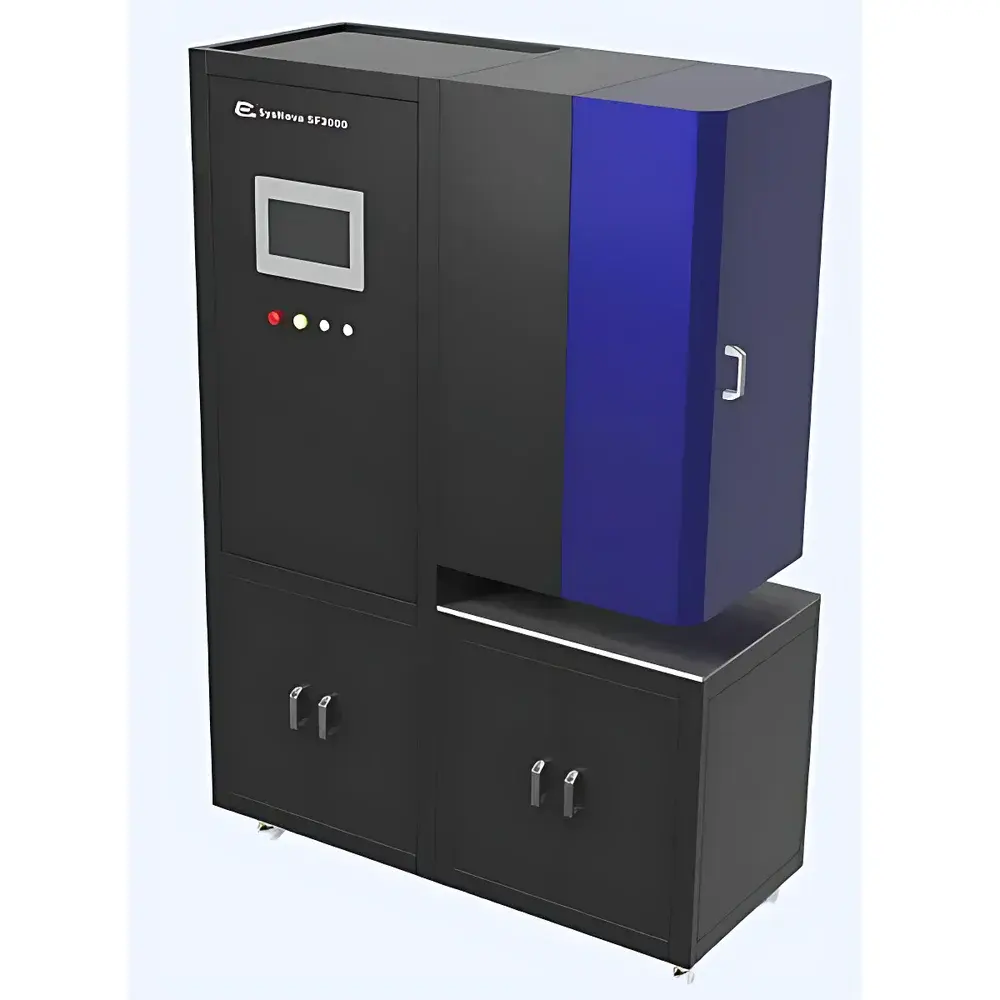
U-Skin In Vitro Makeup Longevity & Sebum Resistance Testing System
| Brand | μfactory |
|---|---|
| Origin | France |
| Model | U-Skin |
| Type | Import |
| Distribution Channel | Authorized Distributor |
Overview
The U-Skin In Vitro Makeup Longevity & Sebum Resistance Testing System is an engineered platform for objective, reproducible assessment of cosmetic performance under physiologically relevant skin surface conditions. Unlike conventional in vivo trials or static in vitro methods, U-Skin dynamically simulates the interfacial interactions between applied cosmetics and human skin secretions—including eccrine sweat, sebaceous lipids, tear fluid, and salivary components—within a controlled laboratory environment. The system operates on a biomimetic principle: it delivers precisely metered, temperature- and pH-regulated micro-doses of synthetic sweat (ISO 18805-compliant composition) and sebum mimic (based on squalene, triglycerides, wax esters, and free fatty acids per ISO 16128 guidelines) onto standardized substrate surfaces (e.g., silicone elastomer films, porcine ear skin, or reconstructed epidermis models). Real-time optical monitoring—via high-resolution time-lapse imaging coupled with spectral reflectance analysis at 400–700 nm—quantifies changes in makeup integrity, gloss development, pigment migration, and film cohesion over time. This enables direct correlation with clinical endpoints such as “time to visible shine,” “foundation transfer resistance,” and “mascara smudging onset.” Designed for R&D laboratories operating under GLP-aligned workflows, U-Skin reduces reliance on early-stage human panel testing while maintaining statistical relevance and regulatory traceability.
Key Features
- Biomimetic secretion delivery module: Independent, programmable micro-pumps for simultaneous or sequential application of sweat, sebum, tear, and saliva simulants—each calibrated to physiological flow rates (0.1–2.0 µL/min) and surface coverage uniformity (±3% CV)
- Environmental control chamber: Maintains constant temperature (25–37 °C ±0.3 °C) and relative humidity (30–80% RH ±2%) to replicate diverse climatic exposure conditions
- Multi-spectral optical quantification: Integrated LED-based reflectance spectroscopy (5-nm resolution) and HD time-lapse imaging (up to 120 fps) for dynamic tracking of gloss index (GU), color shift (ΔE00), and edge blur metrics
- Standardized substrate interface: Compatible with ISO 10993-5–validated silicone substrates (Shore A 20/30), ex vivo porcine tissue, and full-thickness reconstructed human epidermis (RHE) models
- Modular assay design: Pre-configured protocols for foundation longevity, powder oil-control efficacy, mascara waterproofness, and concealer creasing resistance—fully customizable via open scripting interface
- Regulatory-ready data architecture: Audit-trail enabled, with timestamped raw image stacks, metadata logging (fluid batch IDs, environmental logs, operator credentials), and export compliance with ASTM E2500 and FDA 21 CFR Part 11 requirements
Sample Compatibility & Compliance
U-Skin supports evaluation of liquid, cream, gel, powder, and aerosol formulations across skincare, color cosmetics, and sun care categories. Tested substrates include medical-grade silicone elastomers (ASTM D2240), cryopreserved porcine auricular skin (ISO 10993-2), and commercially available RHE models (e.g., EpiDerm™, SkinEthic™). All secretion simulants conform to internationally recognized compositional standards: synthetic sweat per ISO 18805 (pH 4.7–5.5, NaCl 0.5%, lactate 0.1%), sebum mimic per ISO 16128 Annex B (squalene 12%, wax esters 25%, triglycerides 45%, free fatty acids 18%), and tear fluid per ISO 13485–referenced ophthalmic buffer formulations. The system is validated for use in laboratories compliant with ISO/IEC 17025 and aligned with ICH M7 and OECD TG 439 principles for non-animal testing strategies.
Software & Data Management
The U-Skin Control Suite (v4.2+) provides intuitive assay setup, real-time visualization, and automated endpoint detection using machine learning–enhanced image segmentation algorithms. Raw data—including spectral reflectance curves, temporal gloss profiles, and pixel-level degradation maps—are stored in vendor-neutral HDF5 format with embedded EXIF metadata. The software supports role-based user access, electronic signatures, and integrated report generation compliant with ISO/IEC 17025 documentation requirements. Export modules enable seamless integration with LIMS platforms (via ASTM E1467-compliant XML schema) and statistical analysis tools (JMP, SAS, R). All audit trails are immutable and timestamped to UTC, satisfying traceability mandates under EU Cosmetics Regulation (EC No 1223/2009) Annex I safety assessment guidelines.
Applications
- Accelerated formulation screening for long-wear foundations, matte primers, and oil-control powders
- Quantitative benchmarking of anti-shine actives (e.g., silica derivatives, clay complexes, polymer networks)
- In vitro validation of waterproof claims for mascaras and eyeliners per ISO 20953 methodology
- Stability assessment of SPF-containing makeup under perspiration challenge
- Correlation modeling between in vitro shine onset time and in vivo panel scores (r² > 0.87 demonstrated in multi-center validation studies)
- Supporting safety dossiers for REACH registration and CPNP notifications through reproducible, non-animal test evidence
FAQ
What biological secretions does U-Skin simulate—and how closely do they match human physiology?
U-Skin replicates eccrine sweat, sebum, tear fluid, and salivary components using chemically defined simulants validated against published human stratum corneum exudate analyses (J. Invest. Dermatol. 2021;141:212–220e). Compositions adhere to ISO 18805, ISO 16128, and pharmacopoeial references.
Can U-Skin replace in vivo testing entirely?
It serves as a Tier 1 screening tool per OECD Guidance Document 271. While not a full replacement for final consumer trials, it significantly reduces subject recruitment, variability, and ethical burden—particularly in early-phase formula iteration.
Is method validation support available for regulatory submissions?
Yes. μfactory provides IQ/OQ/PQ documentation packages, inter-laboratory reproducibility reports (n=5 labs, CV <8.2%), and technical white papers supporting alignment with ISO 10993, ICH S7B, and EU Commission Recommendation 2022/C 212/01.
What maintenance and calibration protocols are required?
Daily fluid line priming, weekly optical sensor verification using NIST-traceable gloss standards (10/60/85 GU), and annual pump flow-rate recalibration per ISO/IEC 17025-accredited service providers.
Does the system integrate with existing LIMS or ELN infrastructure?
Yes—via RESTful API and ASTM E1467-compliant data export. Pre-built connectors are available for LabVantage, Thermo Fisher SampleManager, and Benchling ELN.