
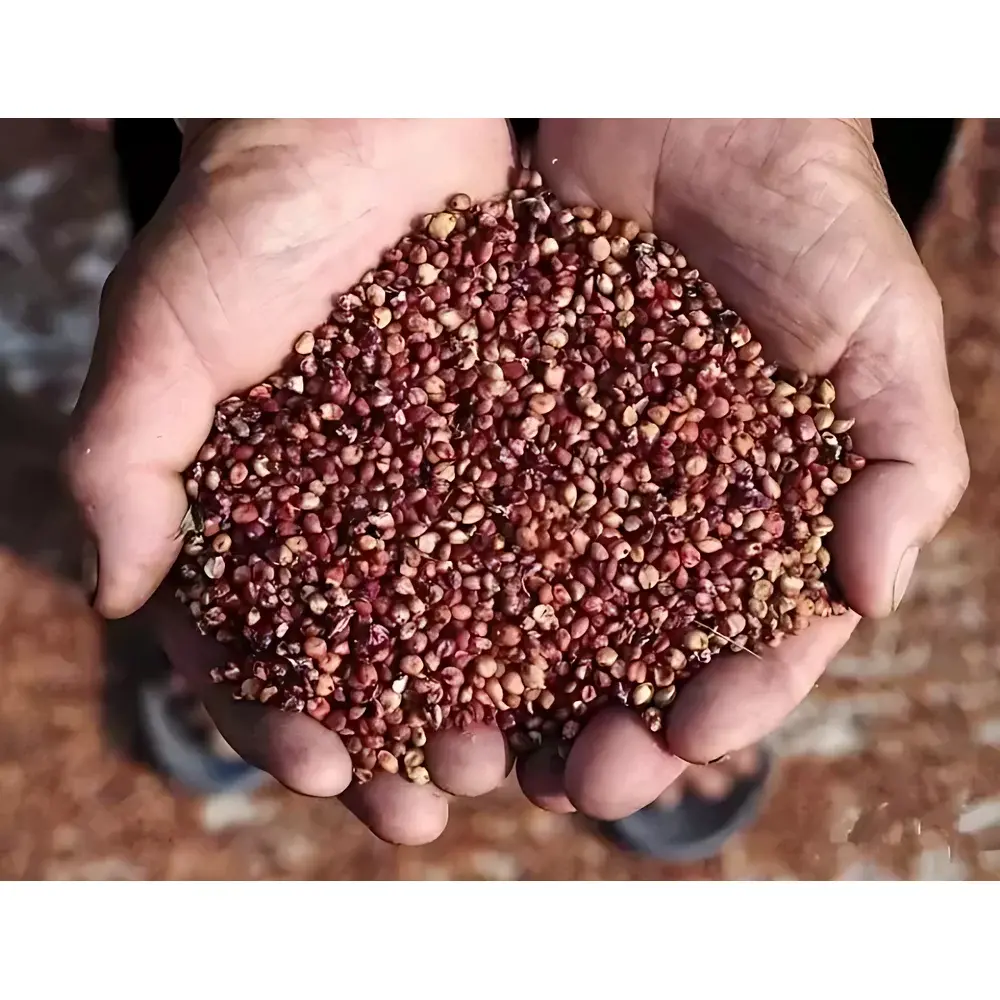
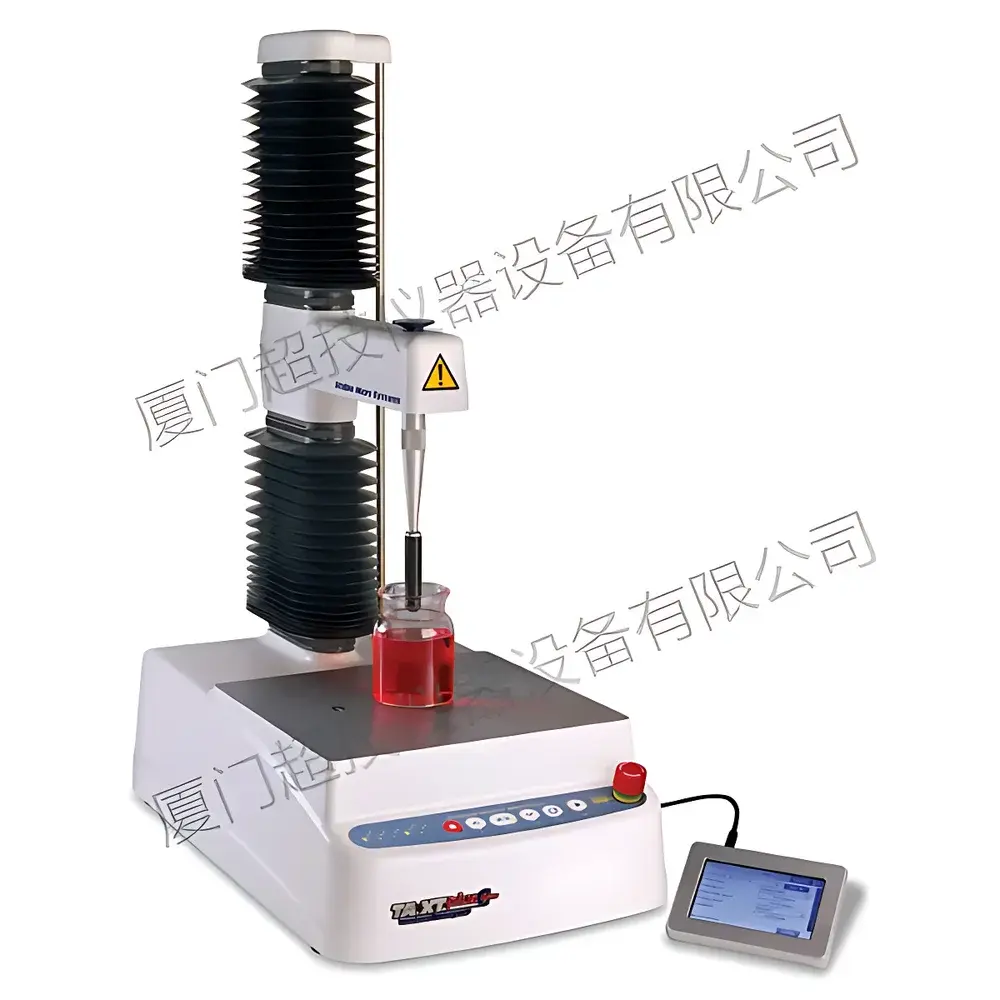
SMS TA.XT PlusC Texture Analyzer for Jiupi (Distiller’s Grains) and Zao Pi (Fermented Mash) Viscosity & Rheological Characterization
| Brand | SMS |
|---|---|
| Origin | United Kingdom |
| Manufacturer Type | Authorized Distributor |
| Origin Category | Imported Instrument |
| Model | TA.XT PlusC for Jiupi/Zao Pi Analysis |
| Instrument Type | Dedicated Texture & Rheology Analyzer for Alcoholic Fermentation Substrates |
| Application Environment | Laboratory-Based Quality Control & R&D |
| Measurement Duration | ~4 minutes per test |
| Dimensions (L × W × H) | 650 mm × 280 mm × 540 mm (H × W × D) |
| Weight | 14 kg |
Overview
The SMS TA.XT PlusC Texture Analyzer is a high-precision, single-column universal testing system engineered for objective mechanical property characterization of semi-solid and heterogeneous biological matrices—specifically optimized for traditional Chinese alcoholic fermentation substrates such as jiupi (distiller’s grains) and zao pi (fermented mash). Operating on the principle of controlled uniaxial compression deformation, the instrument quantifies fundamental textural parameters—including hardness, cohesiveness, adhesiveness, springiness, and chewiness—through standardized two-cycle deformation testing (TDT), directly mirroring the tactile assessment methodology historically employed by master distillers (“eye-and-hand evaluation”). Unlike conventional viscometers designed for homogeneous liquids, the TA.XT PlusC captures structural integrity, particle binding behavior, and moisture-mediated interfacial resistance in complex, particulate-laden mashes—enabling correlation between physical architecture and microbial activity, ethanol yield, and final spirit sensory profile. Its modular probe design and programmable force/displacement control allow reproducible simulation of manual compaction, kneading, and shearing actions critical to evaluating “song song bu cao” (loose but not coarse) and “rou shu bu ni” (soft-mature but not greasy)—two empirically defined quality benchmarks central to premium baijiu production.
Key Features
- Two-Deformation Test (TDT) protocol calibrated for fermented grain matrices, delivering quantitative metrics aligned with traditional sensory grading criteria.
- Integrated barcode scanning interface enabling one-touch test initiation—eliminates manual method selection and reduces operator-induced variability.
- Remote operation capability via iOS/Android mobile devices or tablets using the Texture Exponent software suite; real-time monitoring and post-test email auto-export supported.
- Full programmability of test sequences: users define custom pre-load, compression speed, hold time, relaxation, and return parameters without dependency on factory presets.
- Robust mechanical architecture with ±0.01 N force resolution and ±1 µm displacement accuracy, compliant with ISO 11357-3 and ASTM D638 for tensile/compression validation protocols.
- Dedicated probe kits for mash analysis—including flat-ended cylindrical probes (12.7 mm, 25 mm diameter), spherical indenters, and custom-designed multi-pronged “grain cluster” fixtures replicating hand-squeeze geometry.
Sample Compatibility & Compliance
The TA.XT PlusC accommodates fresh, partially fermented, or aged jiupi/zao pi samples within temperature-controlled environmental chambers (optional accessory), supporting measurements across 5–40 °C to reflect seasonal fermentation conditions. Sample containers conform to standard 100 mL stainless-steel or food-grade polymer cups (diameter ≥ 60 mm), ensuring minimal wall interference during compression. All hardware and firmware comply with CE marking requirements and electromagnetic compatibility standards (EN 61326-1). Data acquisition meets ALCOA+ principles (Attributable, Legible, Contemporaneous, Original, Accurate, Complete, Consistent, Enduring, Available) for GLP-compliant laboratories; audit trail functionality and electronic signature support are available under optional FDA 21 CFR Part 11-compliant software licensing.
Software & Data Management
Texture Exponent v3.1 software provides intuitive graphical workflow editing, real-time force–distance curve visualization, and automated parameter extraction (e.g., peak force, work of compression, recovery ratio, adhesive energy). Raw data exports to CSV, Excel, and HDF5 formats; integrated statistical module supports ANOVA, PCA, and correlation mapping against fermentation time, pH, reducing sugar, or ethanol concentration. Over 400 peer-reviewed application notes—including 27 dedicated to East Asian fermentation substrates—are embedded in-context with searchable metadata tags (e.g., “sorghum mash”, “Daqu inoculation”, “lactic acid bacteria impact”). Cloud synchronization enables cross-site method sharing among distillery QC labs and university research centers.
Applications
- Quantitative benchmarking of mash physical state across fermentation stages (0–72 h) to optimize inoculation timing and aeration cycles.
- Correlation of cohesiveness index with Lactobacillus/Pediococcus population dynamics and organic acid accumulation.
- Evaluation of Daqu enzyme activity impact on starch granule disintegration and matrix softening kinetics.
- Batch-to-batch consistency verification for premium baijiu brands requiring strict adherence to historical texture profiles.
- Accelerated stability testing of stored zao pi under varying humidity and temperature regimes.
- Supporting regulatory filings for geographical indication (GI) claims by documenting physical attribute continuity across vintage years.
FAQ
Can the TA.XT PlusC measure viscosity directly like a rotational rheometer?
No—it does not report dynamic viscosity (Pa·s) or shear rate-dependent flow curves. Instead, it delivers texture-derived indices (e.g., cohesiveness ratio, adhesive work) that correlate strongly with macroscopic handling properties and microbial accessibility in solid-phase fermentations.
Is calibration traceable to national standards?
Yes—force transducers are factory-calibrated against UKAS-accredited deadweight standards (NPL traceable); annual recalibration services include full uncertainty budget documentation per ISO/IEC 17025.
How is sample heterogeneity addressed during testing?
Three replicate tests per sample are recommended; software includes outlier detection based on Cook’s distance and automatic flagging of non-monotonic force curves indicative of phase separation or probe slippage.
Does the system support integration with LIMS?
Yes—via configurable ODBC drivers and RESTful API endpoints for bidirectional data exchange with LabVantage, Thermo Fisher SampleManager, and similar platforms.
What training resources are included upon installation?
On-site commissioning includes 1-day hands-on operator training; access to the SMS Academy portal grants unlimited streaming of video modules, downloadable SOP templates, and quarterly live webinars focused on baijiu-specific applications.






