
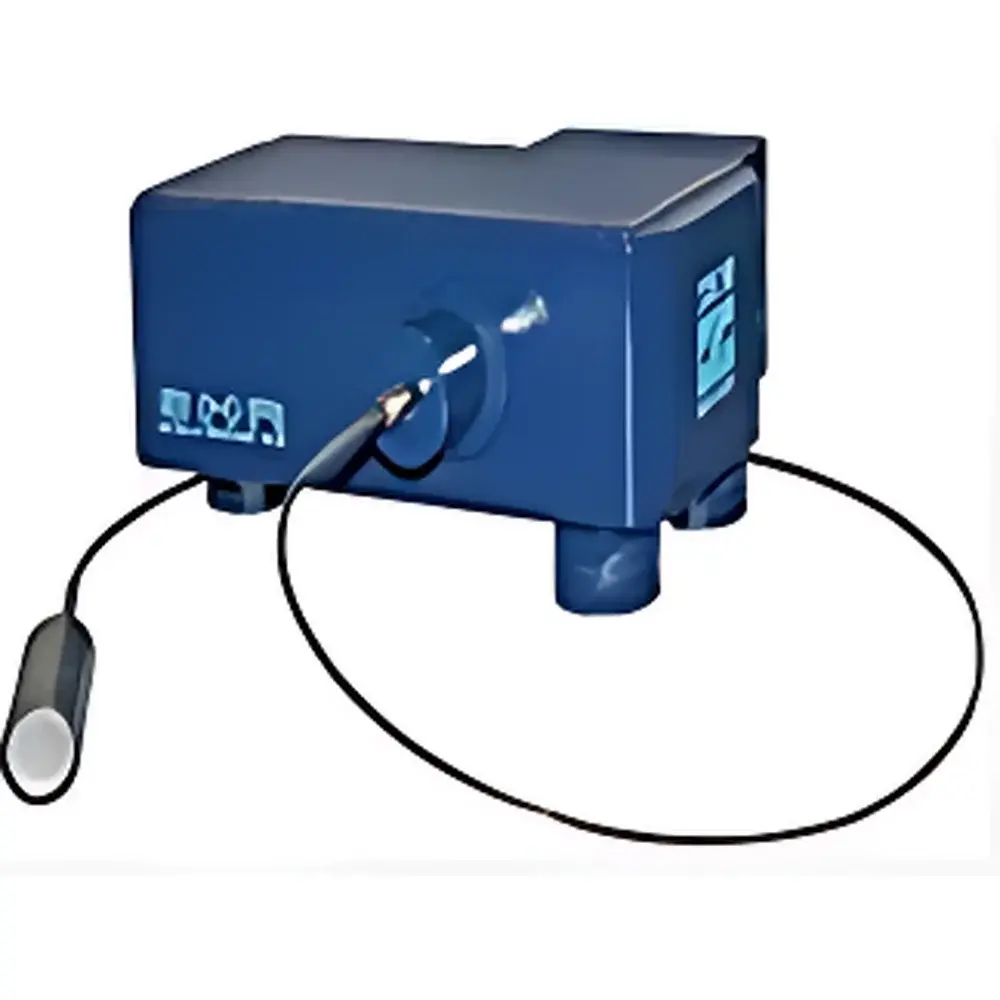
Solars SHR Series High-Precision Laser Wavelength Meter
| Brand | Solars |
|---|---|
| Model | SHR Series |
| Origin | Belarus |
| Type | Imported Optical Measurement Instrument |
| Spectral Range (SHR) | 190–1100 nm |
| Absolute Accuracy (SHR) | ±0.003 nm |
| Spectral Resolution (SHR) | 0.006 nm @ 193 nm, 0.04 nm @ 1200 nm |
| Spectral Range (SHR-IR) | 600–1800 nm |
| Absolute Accuracy (SHR-IR) | ±0.02 nm |
| Spectral Resolution (SHR-IR) | 0.15 nm @ 600 nm, 0.48 nm @ 1800 nm |
| Linewidth Requirement | ≤125 cm⁻¹ |
| Optical Interface | SMA-905 fiber connector, 400 µm core, 1 m length |
| Attenuation | Integrated FA-3 diffuse attenuator |
| Operation Modes | CW and externally triggered pulsed |
Overview
The Solars SHR Series High-Precision Laser Wavelength Meter is a compact, solid-state interferometric instrument engineered for absolute wavelength calibration of continuous-wave (CW) and pulsed lasers across ultraviolet, visible, and near-infrared spectral regions. Unlike grating-based spectrometers, the SHR employs a high-stability Fizeau-type interferometer architecture with no moving parts—ensuring long-term measurement repeatability and immunity to mechanical drift. Its design leverages phase-shifting interferometry coupled with real-time Fourier analysis to deliver traceable wavelength values referenced to internal stabilized HeNe and iodine absorption lines. This metrological foundation enables compliance with ISO/IEC 17025 requirements for calibration laboratories performing laser source characterization in R&D, manufacturing QA, and national metrology institutes.
Key Features
- Two configuration variants: SHR (190–1100 nm) for UV-VIS-NIR applications and SHR-IR (600–1800 nm) optimized for telecom, fiber laser, and OPO characterization
- Sub-picometer absolute accuracy: ±0.003 nm (SHR) and ±0.02 nm (SHR-IR), validated against NIST-traceable standards
- Fiber-coupled input via SMA-905 interface with 400 µm core multimode fiber (1 m length included), enabling seamless integration into optical tables and OEM laser systems
- Integrated FA-3 diffuse attenuator with calibrated optical density steps, eliminating risk of detector saturation or nonlinear response during high-power pulse measurement
- Real-time acquisition at up to 10 Hz frame rate for CW sources; external TTL trigger synchronization for precise gating of nanosecond- to microsecond-duration pulses
- Robust aluminum alloy housing with passive thermal stabilization, rated for operation in ambient temperatures from 15 °C to 30 °C with <0.001 nm/°C thermal coefficient
Sample Compatibility & Compliance
The SHR series accommodates both narrow-linewidth (<0.1 cm⁻¹) and broader gain-medium-emission lasers (up to 125 cm⁻¹ linewidth, equivalent to ~0.5 nm at 193 nm and ~40 nm at 1800 nm), making it suitable for excimer lasers, diode-pumped solid-state (DPSS) systems, tunable Ti:sapphire oscillators, and quantum cascade lasers. All instruments are CE-marked and comply with IEC 61326-1 (EMC for laboratory equipment) and IEC 61010-1 (safety requirements). Firmware supports audit trail logging per FDA 21 CFR Part 11 when used in regulated environments (e.g., pharmaceutical laser processing validation), and raw interferogram data export enables third-party uncertainty budgeting per GUM (Guide to the Expression of Uncertainty in Measurement).
Software & Data Management
Bundled SHR Control Software (v4.x, Windows 10/11 x64) provides intuitive GUI-driven operation, multi-channel spectral monitoring, and automated pass/fail reporting against user-defined tolerance bands. Data export formats include CSV, HDF5, and XML with embedded metadata (timestamp, integration time, trigger status, fiber coupling efficiency estimate). API support (DLL and Python bindings) allows integration into LabVIEW, MATLAB, or custom Python-based automation frameworks for inline laser qualification in production lines. All software modules undergo annual verification against NIST SRM 2034 (Holmium Oxide filter) and SRM 1920a (neodymium-doped glass) reference spectra.
Applications
- Wavelength certification of single-frequency DPSS lasers prior to delivery in OEM supply chains
- In-process monitoring of tunable laser cavities during cavity-length optimization in ultrafast amplifier development
- Verification of OPO output stability under temperature and pump power variation (e.g., ±0.01 nm drift over 8-hour test)
- Calibration of wavelength meters used in EUV lithography source metrology labs
- Validation of frequency-comb-referenced laser systems in quantum optics experiments requiring sub-MHz absolute uncertainty
- Support for ISO 11146 beam parameter measurements when synchronized with BeamOn beam profilers
FAQ
Does the SHR require periodic recalibration by the manufacturer?
Yes—annual recalibration is recommended and includes interferometer path-length verification using stabilized HeNe and iodine reference cells. Calibration certificates include expanded uncertainty (k=2) statements traceable to CIPM MRA signatory NMIs.
Can the SHR measure broadband ASE sources or supercontinuum spectra?
No—the instrument is designed exclusively for quasi-monochromatic sources with coherence lengths exceeding 10 mm. ASE or white-light spectra fall outside its operational linewidth specification and will yield ambiguous fringe contrast.
Is fiber alignment critical during installation?
Yes—optimal coupling efficiency (>75%) requires centering the 400 µm core within the input collimator’s field of view. A misalignment >50 µm degrades signal-to-noise ratio and may increase reported uncertainty beyond spec.
What is the minimum detectable power for pulsed operation?
At 1064 nm, the SHR-IR achieves reliable triggering with ≥10 µJ/pulse (10 ns, 10 Hz), while the SHR requires ≥5 µJ/pulse in the visible range under identical conditions.
Does the system support remote control via Ethernet or only USB?
Both interfaces are supported: USB 2.0 for local control and configuration; Gigabit Ethernet (TCP/IP) for networked deployment in cleanroom or multi-instrument test benches.






