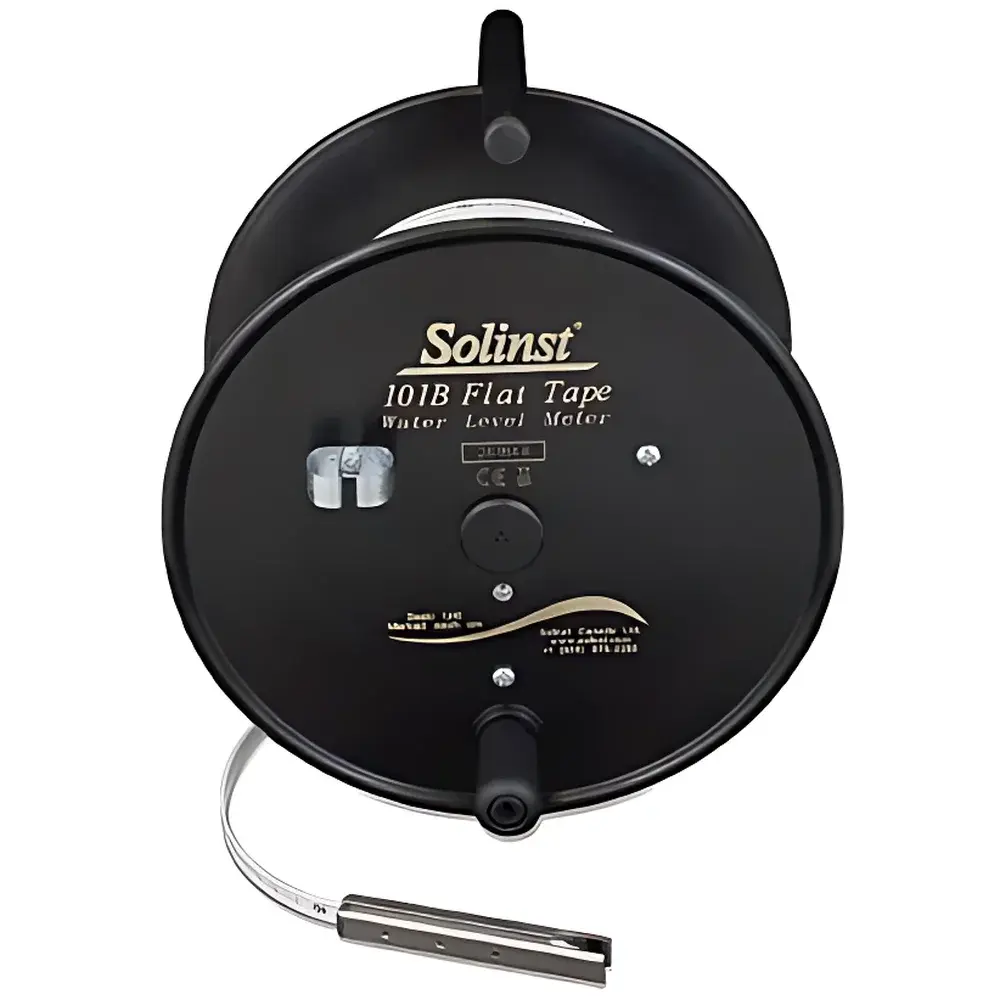
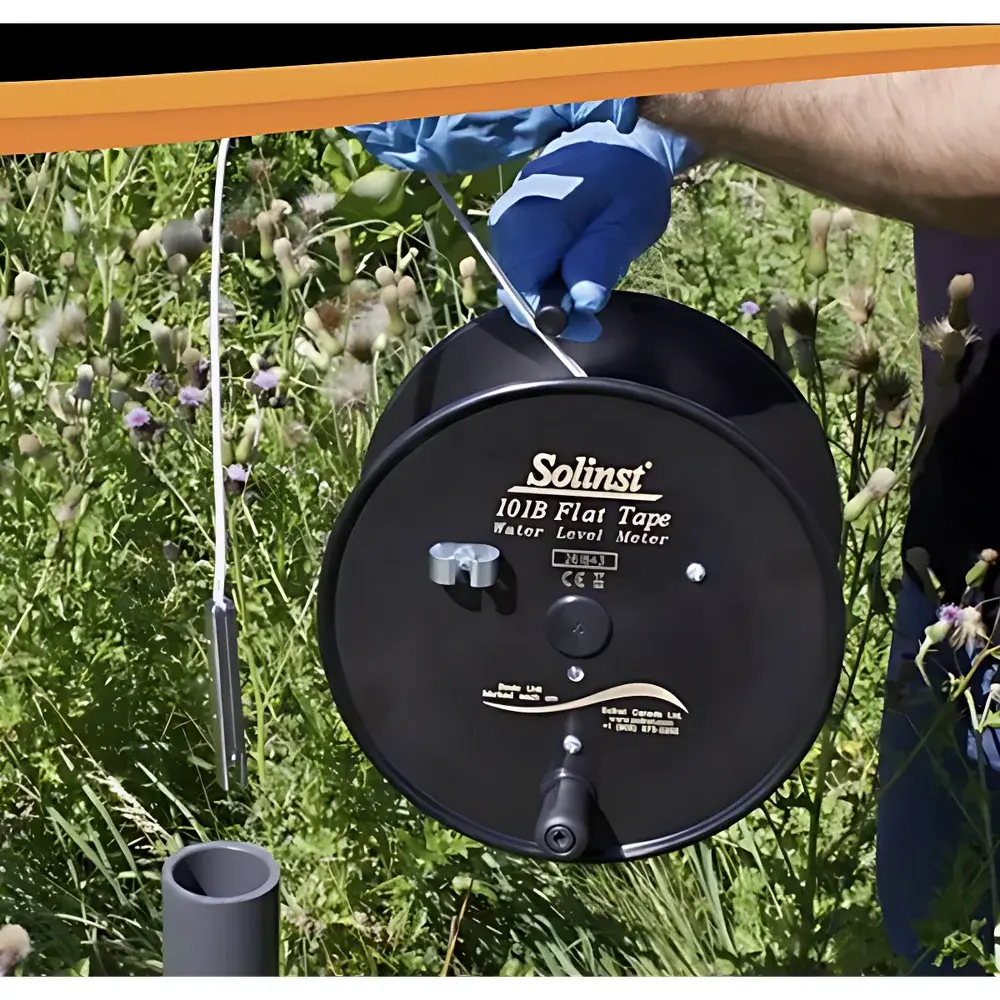
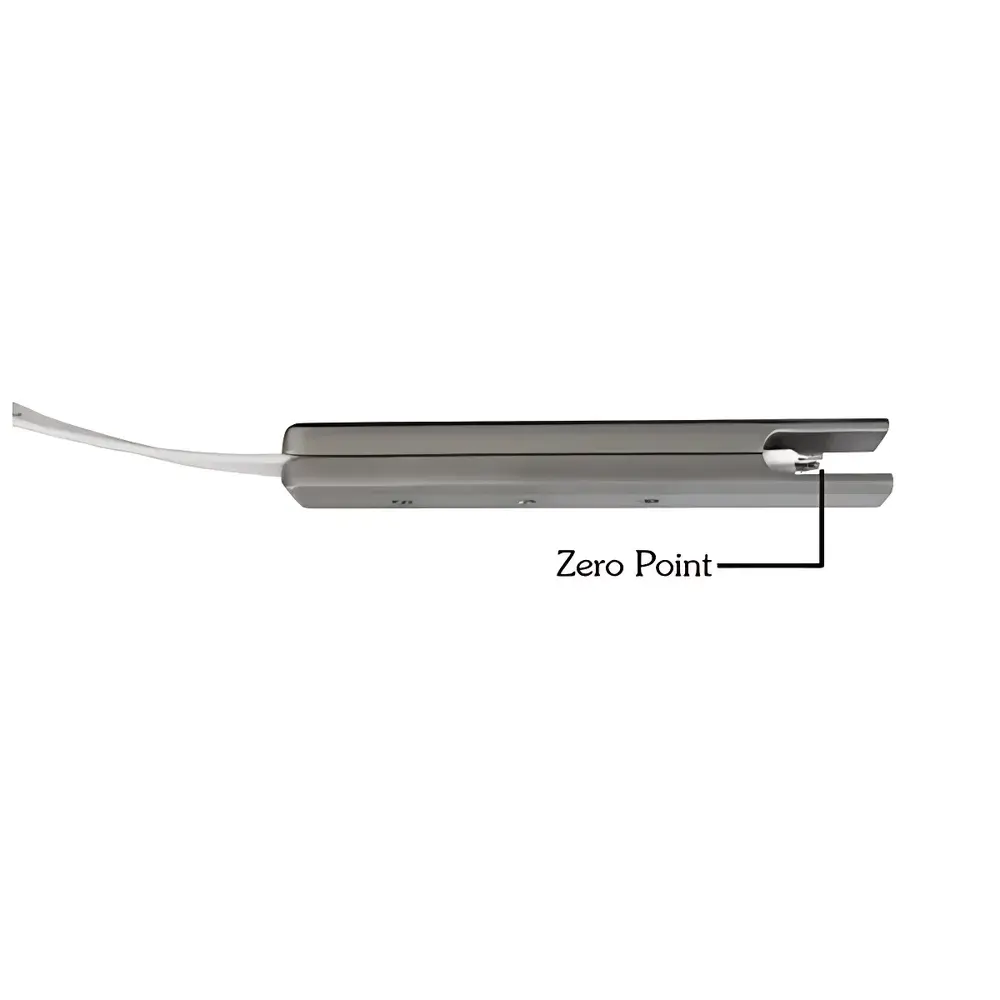
Solinst Model 101B Water Level Meter
| Brand | Solinst |
|---|---|
| Origin | Canada |
| Model | 101B |
| Sensor Type | Conductivity-based water level probe |
| Probe Dimensions | 12.7 mm diameter × 102 mm length |
| Probe Weight | 100 g |
| Tape Material | Polyethylene (PE) tape with heat-embossed metric graduations (cm and m) |
| Standard Tape Lengths | 30 m, 60 m, 100 m |
| Construction | Stainless steel probe, corrosion-resistant reel and ergonomic handle |
Overview
The Solinst Model 101B Water Level Meter is a field-deployable, direct-reading groundwater level measurement instrument engineered for precision, durability, and operational simplicity in environmental monitoring, hydrogeological surveys, and regulatory compliance applications. It operates on the principle of electrical conductivity detection: when the stainless steel probe contacts water in a well or piezometer, a low-voltage circuit is completed, triggering an audible tone and visual LED indicator. This binary contact method eliminates ambiguity in water surface detection and ensures high repeatability across repeated measurements. Designed as the entry-level variant within Solinst’s established water level meter platform, the 101B maintains the core engineering integrity of its predecessors—robust probe construction, stable tape calibration, and intuitive mechanical handling—while optimizing cost-efficiency for routine monitoring programs requiring reliable, manual depth-to-water (DTW) determination.
Key Features
- Stainless steel probe (12.7 mm Ø × 102 mm L) with sealed electronics and corrosion-resistant housing, rated for long-term submersion in freshwater, brackish, and mildly aggressive aquifer environments.
- Polyethylene measuring tape with permanently heat-embossed centimeter and meter graduations—resistant to abrasion, UV degradation, and chemical exposure during repeated lowering and retrieval cycles.
- Ergonomic, over-molded handle with integrated brake mechanism and smooth-retraction reel—designed to minimize operator fatigue during extended field use and ensure consistent tape tension for accurate depth registration.
- Low-power, battery-operated circuitry (standard 9 V alkaline battery) with dual feedback: audible beep and bright red LED activation upon water contact—enabling reliable operation in noisy or low-light conditions.
- Calibration traceability: Tape graduations are applied under controlled thermal and tension conditions, ensuring metrological consistency aligned with ISO/IEC 17025–accredited verification practices used by certified calibration laboratories.
Sample Compatibility & Compliance
The Model 101B is compatible with standard monitoring wells (PVC, stainless steel, or ABS casings) ranging from 2″ to 6″ internal diameter. Its compact probe profile allows deployment in narrow-diameter piezometers and nested well installations. The instrument meets fundamental requirements for field data collection under ASTM D4044 (Standard Test Method for Determining the Integrity of Nonmetallic Underground Storage Tank Systems), EPA Method 9020B (Ground-Water Monitoring), and ISO 555-2 (Measurement of Liquid Levels in Open Channels). While not intrinsically rated for hazardous locations, it complies with IEC 61000-6-3 (EMC emission standards) and carries CE marking for conformity with EU electromagnetic compatibility directives. Data recorded using the 101B supports GLP-compliant field notebooks and integrates into structured QA/QC workflows required by state and federal environmental agencies.
Software & Data Management
The Solinst Model 101B is a standalone, analog field instrument and does not interface directly with digital software or wireless networks. However, its measurement output—depth-to-water expressed in meters or centimeters—is fully compatible with standardized electronic data capture systems including Solinst’s Levelogger Series software (Levelogger Software v4.x+), USGS NWISWeb templates, and common spreadsheet-based QA/QC databases. Field technicians routinely log readings manually into calibrated field forms or mobile data collection apps (e.g., Fulcrum, ESRI Survey123), with timestamps, well ID, observer name, and environmental notes. For audit readiness, all raw 101B measurements can be linked to instrument-specific calibration certificates (traceable to NIST or NRC Canada standards) and included in annual instrument maintenance logs per ISO 17025 Clause 6.4.
Applications
- Baseline and long-term groundwater level monitoring in municipal, industrial, and agricultural well networks.
- Verification of automated pressure transducer or datalogger deployments during installation, maintenance, or sensor drift validation.
- Regulatory compliance sampling for Phase I/II Environmental Site Assessments (ESAs) and RCRA/CERCLA site investigations.
- Academic hydrogeology field instruction and student-led aquifer characterization projects.
- Construction dewatering management and excavation safety monitoring where rapid, on-site DTW confirmation is required.
FAQ
What is the accuracy specification of the Model 101B?
Accuracy is governed by tape calibration and operator technique; Solinst specifies ±1 cm under standard field conditions when used per manufacturer instructions and with verified tape tension.
Can the 101B be used in saline or contaminated groundwater?
Yes—the stainless steel probe and PE tape are chemically resistant to typical inorganic ions (Cl⁻, SO₄²⁻, NO₃⁻); however, prolonged exposure to highly concentrated hydrocarbons or strong oxidizers may affect tape longevity.
Is recalibration required between uses?
No formal recalibration is needed between deployments; users are advised to perform a zero-check at the wellhead before each use and verify tape integrity visually prior to lowering.
Does Solinst provide NIST-traceable calibration documentation?
Yes—certified calibration reports (including uncertainty budgets) are available upon request for individual units, issued by Solinst’s ISO/IEC 17025–accredited calibration laboratory in Waterloo, Ontario.
How should the 101B be maintained after field use?
Rinse probe and tape with deionized water after exposure to mineral-rich or saline water; dry thoroughly before rewinding. Store in original case at ambient temperature, away from direct UV exposure.