
Solinst Model 428 Bailer Sampler
| Brand | Solinst |
|---|---|
| Origin | Canada |
| Model | 428 |
| Instrument Type | Portable Manual Water Bailer Sampler |
| Sample Volume | 200–1000 mL |
| Construction Material | HDPE (High-Density Polyethylene) |
| Body Transparency | Semi-transparent |
| Check Valve | Fixed PVC ball valve |
| Dimensions (Standard) | 38 mm Ø × 915 mm L (1.5″ × 36″), total length 965 mm (38″) |
| Narrow Version Dimensions | 19 mm Ø × 1016 mm L (3/4″ × 40″), total length 1041 mm (41″) |
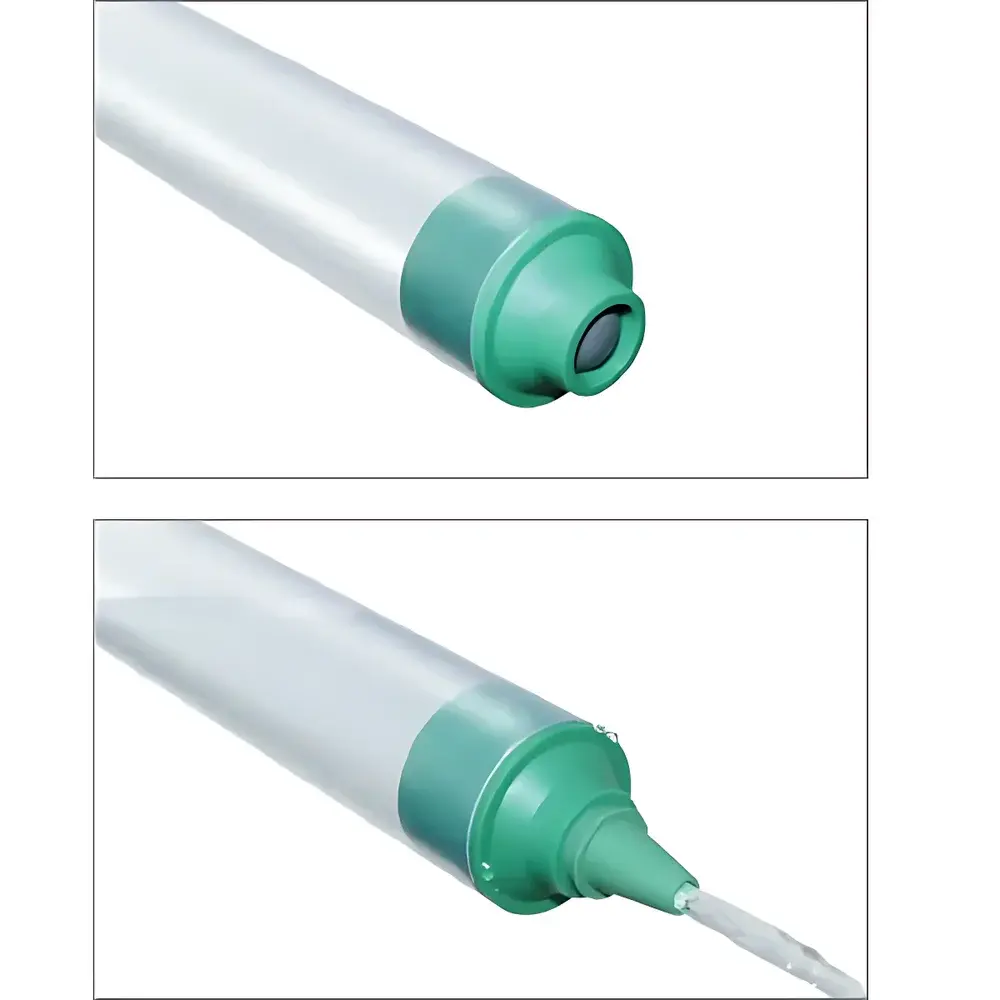
| Release Mechanism | Standard or optional low-flow release assembly |
| Compliance | Designed for ASTM D6771, ASTM D6987, and EPA Method 500.0 field sampling protocols |
Overview
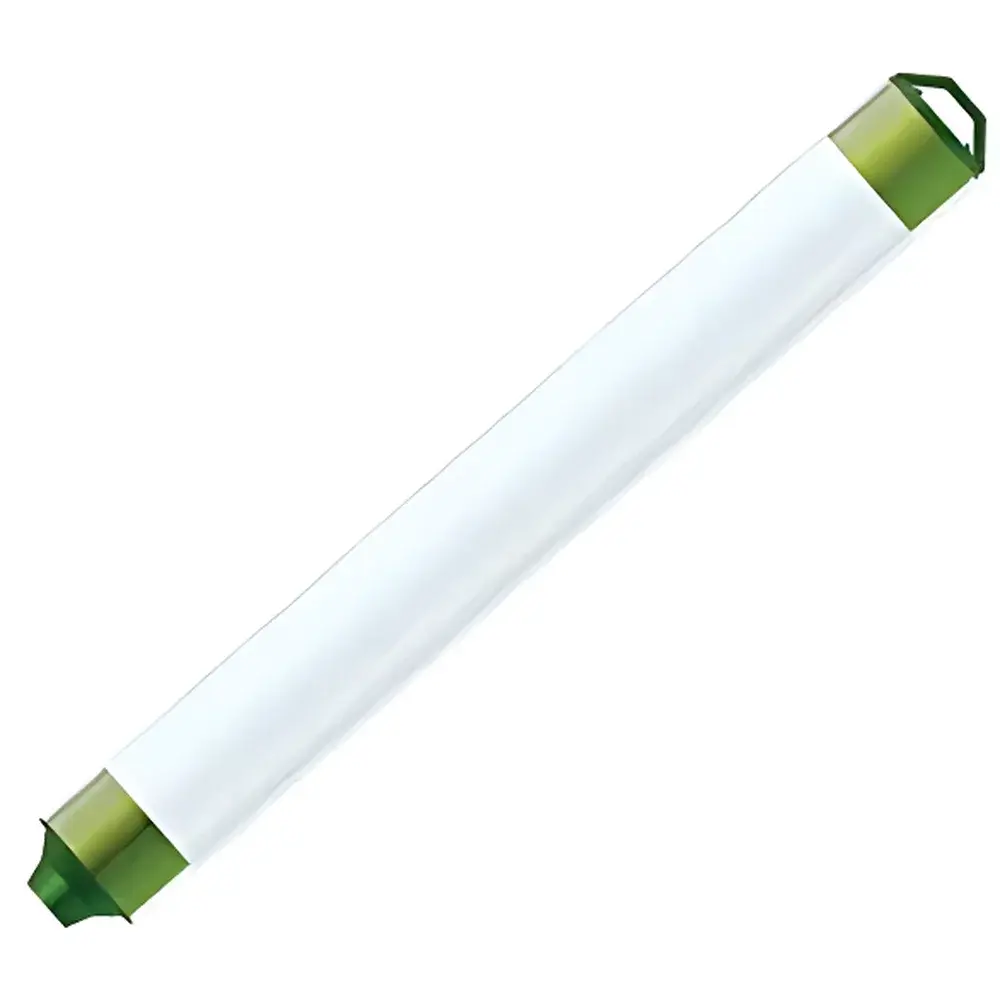
The Solinst Model 428 Bailer Sampler is a precision-engineered, manually operated water sampling device designed for reliable, contamination-minimized collection of discrete groundwater or surface water samples from monitoring wells, piezometers, and open boreholes. Based on the classic bailer principle—where a sealed, vertically lowered tube captures a column of water upon retrieval—the Model 428 employs a fixed-position PVC check ball within its tapered nozzle to prevent backflow during withdrawal. Its rigid HDPE construction ensures structural integrity across variable well diameters and depths, while the semi-transparent body enables real-time visual verification of sample ingress, air entrapment, and phase separation (e.g., LNAPL or DNAPL presence). Unlike flexible or collapsible samplers, the Model 428’s non-deformable geometry maintains consistent internal volume calibration and eliminates memory effects between sampling events. It is explicitly intended for single-use or rigorously decontaminated reuse in accordance with site-specific QA/QC protocols.
Key Features
- Rigid, non-collapsible HDPE body prevents bending or kinking—even in narrow or irregularly shaped wells—ensuring repeatable sample capture geometry.
- Tapered conical ends minimize snagging on well casings, screens, or sediment layers during deployment and retrieval.
- Integrated, mechanically locked PVC check ball remains axially fixed at the inlet port; it cannot migrate into the sample chamber, eliminating false positives from valve displacement.
- Semi-transparent wall allows direct visual confirmation of water entry, sample clarity, turbidity, and immiscible liquid layer formation without opening the device.
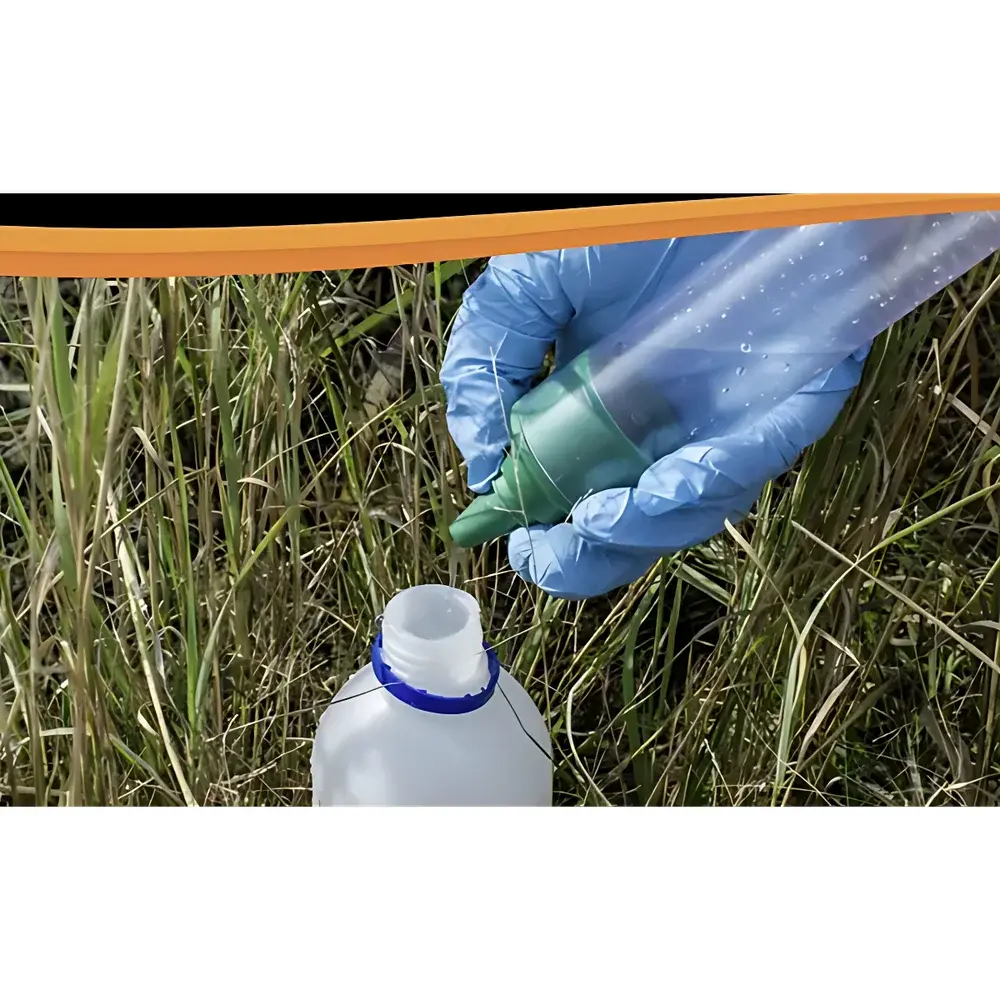
- Standard release mechanism provides rapid, full-volume discharge; optional low-flow release assembly enables controlled, laminar sample transfer to preserve volatile organic compound (VOC) integrity per EPA Method 502.2 requirements.
- Ergonomic handgrip and large-diameter rope channel accommodate standard well-field polypropylene or stainless-steel sampling ropes without slippage or abrasion.
- Two configurations available: standard (38 mm Ø, ≥1 L capacity) and narrow (19 mm Ø, ≥250 mL capacity), supporting both high-yield and low-diameter applications including nested wells and micro-piezometers.
Sample Compatibility & Compliance
The Model 428 is validated for use with aqueous matrices containing suspended solids, dissolved ions, and light non-aqueous phase liquids (LNAPLs) such as gasoline, diesel, or BTEX compounds. Its HDPE composition exhibits chemical resistance to common environmental analytes, including chlorinated solvents (e.g., PCE, TCE), petroleum hydrocarbons, and acidic or alkaline groundwater (pH 2–12). The sampler complies with key regulatory sampling frameworks: ASTM D6771 (Standard Guide for Selection of Sampling Devices for Groundwater Monitoring Wells), ASTM D6987 (Standard Practice for Low-Flow Groundwater Sampling), and U.S. EPA Method 500.0 (Determination of Volatile Organic Compounds in Drinking Water by Gas Chromatography with Photoionization and Electrolytic Conductivity Detectors). When used with documented decontamination procedures (e.g., triple-rinse with field-matched water followed by methanol purge), it supports GLP-compliant data generation under 40 CFR Part 136 and 21 CFR Part 11–aligned chain-of-custody workflows.
Software & Data Management
As a manual, non-electronic sampling tool, the Model 428 does not incorporate embedded sensors, firmware, or digital interfaces. However, it integrates seamlessly into modern environmental data ecosystems via standardized field documentation practices. Each deployment is traceable through Solinst’s recommended logbook templates (available in PDF and Excel formats), which align with electronic lab notebook (ELN) systems such as LabWare LIMS, Thermo Fisher SampleManager, or EQuIS. Barcode-labeled disposable units support automated inventory tracking, and batch-specific lot numbers enable full material traceability per ISO/IEC 17025:2017 Clause 7.5.2 (traceability of sampling equipment). Calibration verification is performed volumetrically using NIST-traceable graduated cylinders prior to critical sampling campaigns.
Applications
- Regulatory groundwater monitoring at RCRA, CERCLA, and UST sites requiring discrete depth sampling.
- Pre- and post-remediation verification sampling for VOCs, SVOCs, metals, and nutrients.
- Low-flow purging and sampling in compliance with state-approved well development protocols.
- Field screening for free-phase hydrocarbons in leaking underground storage tank (LUST) investigations.
- Academic and consulting hydrogeological studies requiring cost-effective, high-fidelity discrete sampling across multiple depth intervals.
- Emergency response scenarios where rapid, battery-free, and maintenance-free sampling is operationally essential.
FAQ
Is the Model 428 suitable for VOC analysis?
Yes—when used with the optional low-flow release assembly and following EPA Method 502.2 handling protocols (including no headspace, immediate chilling, and sodium bisulfite preservation), it meets data quality objectives for volatile organic compound quantification.
Can it be sterilized and reused?
HDPE permits autoclaving at ≤121°C for limited cycles; however, Solinst recommends single-use deployment for regulatory submissions. If reused, validation of cleaning efficacy per ASTM D5092 must be documented.
Does it require calibration certification?
No formal calibration certificate is issued, but users must verify nominal volume accuracy using traceable volumetric standards before each sampling event per ISO/IEC 17025 Clause 7.6.
What rope diameter is compatible with the handgrip channel?
The standard grip accommodates ropes up to 6 mm (¼″) in diameter; narrower ropes (e.g., 3 mm fluoropolymer) are secured without slippage due to the deep, chamfered groove geometry.
How is depth control achieved during deployment?
Depth is determined externally using calibrated well tape or integrated depth-measuring winches; the Model 428 itself contains no built-in depth sensing capability, preserving its passive, fail-safe design philosophy.







