
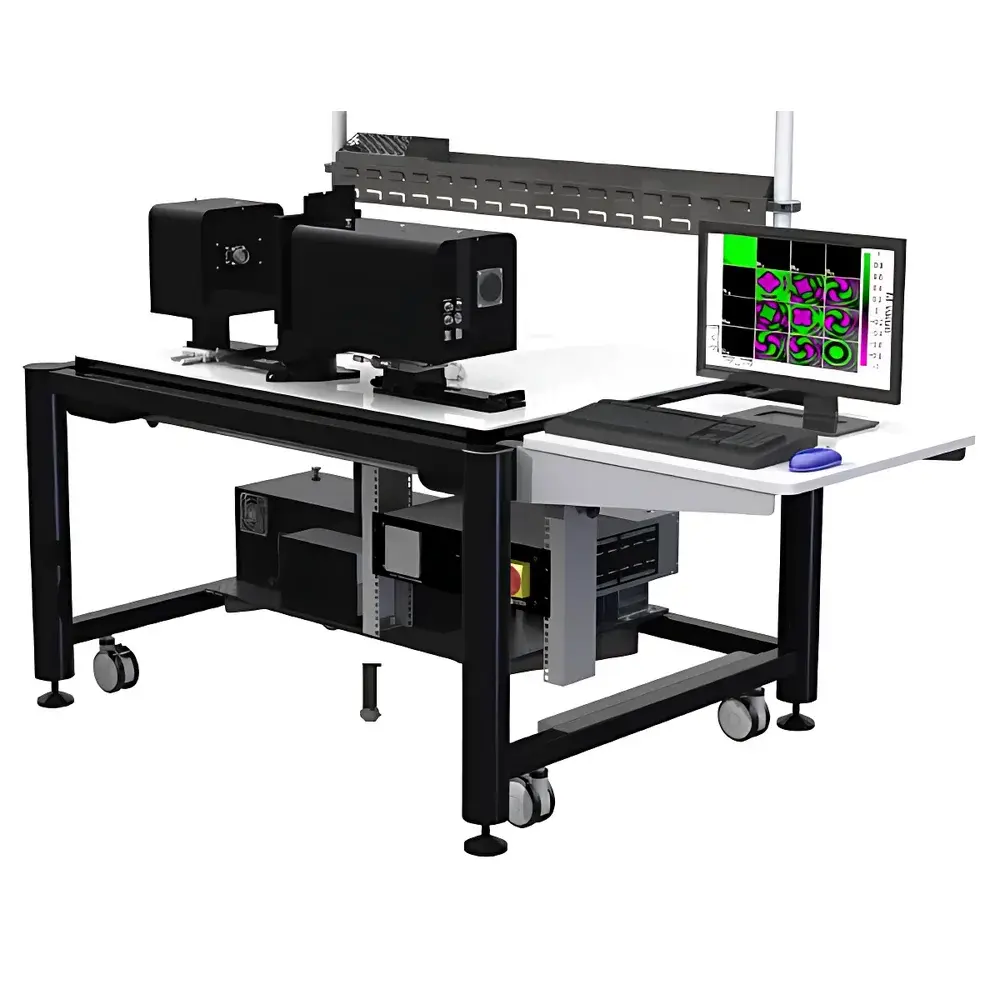
Spark Lasers TDTR Time-Domain Thermoreflectance Measurement System
| Brand | Spark Lasers |
|---|---|
| Origin | France |
| Manufacturer Type | Authorized Distributor |
| Origin Category | Imported |
| Model | TDTR Measurement System |
| Price | Upon Request |
| Pump Laser | Femtosecond Fiber Laser (e.g., ~1030 nm, <300 fs pulse width) |
| Probe Laser | Tunable Wavelength (e.g., 515–800 nm) |
| Temporal Resolution | Sub-nanosecond to microsecond range |
| Sample Stage | High-Precision Linear Translation Stage (≥50 mm travel, ≤100 nm repeatability) |
| Detection | Lock-in Amplifier with Dual-Phase Demodulation |
| Imaging | Integrated CCD Microscopy (5×–50× magnification, real-time sample alignment) |
| Environmental Compatibility | Compatible with high-pressure cells (up to 10 GPa) and high-temperature stages (up to 1000 °C) |
| Measurable Film Thickness | ≥10 nm |
| Thermal Conductivity Range | 0.1–2000 W·m⁻¹·K⁻¹ |
| Thermal Diffusivity Range | 0.05–1000 mm²·s⁻¹ |
| Volumetric Heat Capacity | 500–50,000 J·m⁻²·K⁻¹·s⁻⁰·⁵ |
| Interfacial Thermal Resistance (R<sub>int</sub>) Resolution | <10⁻⁹ m²·K·W⁻¹ |
Overview
The Spark Lasers TDTR Time-Domain Thermoreflectance Measurement System is a turnkey ultrafast thermophysical characterization platform engineered for quantitative, non-contact measurement of thermal transport properties at nanoscale dimensions. It implements the pump-probe time-domain thermoreflectance (TDTR) technique—based on femtosecond laser excitation and delayed optical probing—to resolve transient thermal responses with sub-nanosecond temporal resolution. In this method, a modulated pump pulse heats a thin transducer metal film (e.g., Al, Au, or Ti), inducing a transient temperature rise that propagates into the underlying sample. A time-delayed probe pulse monitors the resulting thermoreflectance change (ΔR/R) at the film surface, which is linearly proportional to local temperature. By acquiring phase- and amplitude-resolved reflectivity decay curves across variable delay times—and fitting them to multi-layer thermal diffusion models—the system extracts intrinsic thermal conductivity (k), thermal diffusivity (α), volumetric heat capacity (Cv), and interfacial thermal resistance (Rint) with high reproducibility. Unlike steady-state or frequency-domain methods, TDTR operates without physical contact, eliminates substrate interference in thin-film measurements, and maintains sensitivity down to monolayer-limit thicknesses.
Key Features
- Femtosecond dual-wavelength pump-probe architecture: Independent pump (e.g., 1030 nm) and tunable probe (515–800 nm) lasers minimize spectral crosstalk and enable optimized absorption/reflection contrast for diverse transducer films.
- High-stability lock-in detection with dual-phase demodulation: Enables robust signal recovery of weak thermoreflectance signals (<10⁻⁴ ΔR/R) under ambient or controlled-environment conditions.
- Integrated high-magnification CCD microscopy: Provides real-time visual targeting and precise positioning over microstructured samples—including patterned thin films, heterostructures, and 2D material stacks—without mechanical drift.
- Modular, open-path optical design: Facilitates user customization (e.g., vacuum-compatible beam paths, cryogenic interfaces, or in-situ stress stages) while maintaining alignment stability over extended acquisition periods.
- Long-travel precision translation stage (≥50 mm, <100 nm repeatability): Supports wide temporal delay scanning ranges (0.1–10 ns typical, extendable to µs) for resolving both ballistic and diffusive thermal regimes.
- Environmental extensibility: Fully compatible with high-pressure diamond anvil cells (DACs, up to 10 GPa) and high-temperature heating stages (up to 1000 °C), enabling thermophysical studies under extreme thermomechanical conditions.
Sample Compatibility & Compliance
The TDTR system accommodates a broad spectrum of solid-state materials—including single-crystal wafers, polycrystalline metals, amorphous dielectrics, 2D materials (graphene, h-BN, TMDs), metallic alloys, and composite thin films—with no requirement for electrical contact or metallization beyond the transducer layer. Sample dimensions range from 5 × 5 mm² to 25 × 25 mm²; thicknesses span from bulk (>100 µm) to ultrathin films (≥10 nm). All hardware and software modules are designed to support GLP-compliant workflows: full audit trail logging, user-access control, electronic signature capability, and raw-data immutability—aligned with FDA 21 CFR Part 11 and ISO/IEC 17025 documentation requirements. Calibration traceability follows NIST-traceable reference standards for laser energy, temporal delay, and thermal modeling parameters.
Software & Data Management
The proprietary TDTR Control & Analysis Suite (v4.x) provides integrated instrument control, automated data acquisition, model-based parameter inversion, and uncertainty quantification. The software supports multi-layer thermal modeling (e.g., Fourier heat diffusion with Kapitza boundary conditions), automatic baseline correction, and batch processing of spatially resolved maps (e.g., k(x,y) imaging). Export formats include HDF5 (for FAIR data principles), CSV, and MATLAB-compatible .mat files. All datasets retain embedded metadata—laser fluence, modulation frequency, ambient pressure/temperature, stage position, and fit residuals—for traceable reanalysis. Software architecture complies with IEC 62304 for medical device-grade reliability and supports networked deployment in shared core facilities.
Applications
- Quantitative thermal conductivity mapping of epitaxial semiconductor heterostructures (e.g., GaN-on-SiC, SiGe/Si superlattices).
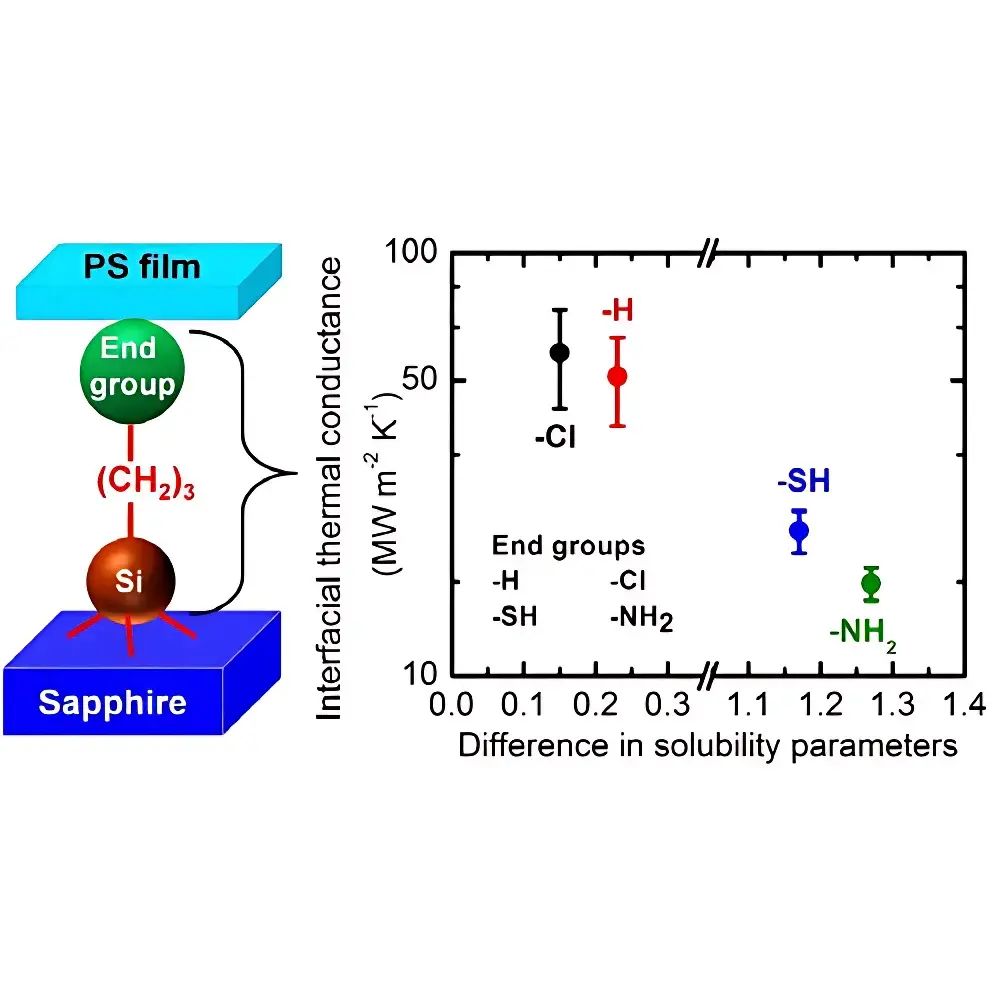
- Interfacial thermal resistance characterization at metal/oxide, 2D/3D, and polymer/inorganic interfaces—critical for thermal management in advanced packaging.
- Temperature- and pressure-dependent thermal transport studies in quantum materials (e.g., topological insulators, correlated oxides) under extreme conditions.
- Validation of ab initio phonon transport simulations and molecular dynamics predictions for nanostructured composites.
- Quality control of thermal barrier coatings (TBCs), thermoelectric thin films, and battery electrode architectures during R&D and process development.
FAQ
What transducer materials are recommended for optimal TDTR sensitivity?
Aluminum (50–100 nm) is standard for visible/NIR probe wavelengths due to strong thermoreflectance coefficient (~1.5 × 10⁻⁵ K⁻¹) and low optical absorption at pump wavelengths. Gold and titanium are alternatives for UV or IR probing or chemically reactive substrates.
Can the system measure anisotropic thermal conductivity?
Yes—by rotating the sample stage and acquiring angular-dependent TDTR decays, the system resolves in-plane vs. cross-plane thermal conductivities in crystalline or textured thin films.
Is vacuum or inert-gas operation supported?
The optical path is fully adaptable to vacuum chambers (10⁻⁶ mbar) or glovebox-integrated configurations; optional beam tube enclosures prevent air-induced dispersion and acoustic noise.
How is calibration performed for absolute thermal property values?
Calibration uses reference samples with certified thermal properties (e.g., fused silica, sapphire, or Si standard wafers) and incorporates Monte Carlo–based uncertainty propagation to report k ± δk with confidence intervals.
Does the system comply with ISO 18755 or ASTM E2958 for TDTR methodology?
While no single ISO/ASTM standard yet defines TDTR as a standalone test method, the system’s operational protocol, uncertainty analysis, and reporting structure align with the metrological framework outlined in ISO/IEC Guide 98-3 (GUM) and ASTM E2958 Annex A1 for ultrafast thermal metrology validation.



