
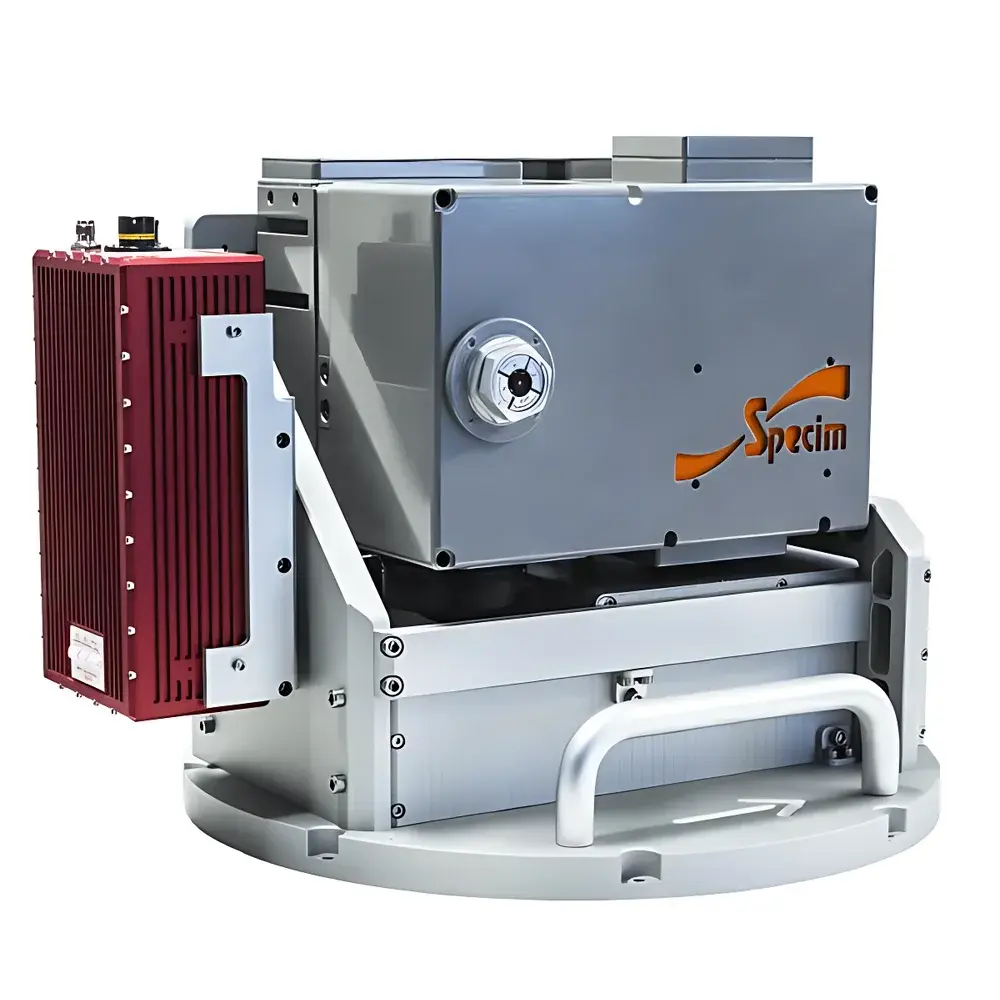
SPECIM AisaOWL Long-Wave Infrared (LWIR) Hyperspectral Imaging System
| Brand | SPECIM |
|---|---|
| Origin | Czech Republic |
| Model | AisaOWL |
| Spectral Range | 7.7–12.3 µm |
| Spectral Resolution | 100 nm (diffraction-limited) |
| F-number | F/2.0 |
| Spatial Resolution | 384 pixels |
| Frame Rate | up to 100 Hz |
| Field of View (FOV) | 24° or 32.3° |
| Instantaneous FOV (IFOV) | 0.063° or 0.084° |
| Spectral Bands | 96 |
| Spectral Sampling | 48 nm per band |
| Bit Depth | 14-bit LVDS output |
| Detector | Stirling-cooled MCT |
| Calibration | Integrated dual blackbody radiometric calibration |
| Operating Temperature | +5°C to +40°C (non-condensing) |
| Storage Temperature | −20°C to +50°C |
| Power Consumption | <200 W (sensor), <50 W (calibrator) |
| Dimensions (sensor) | 255 × 285 × 223 mm |
| Weight (sensor) | 13.1 kg |
| Dimensions (calibrator) | 365 × 194 × 110 mm |
| Weight (calibrator) | 4.5 kg |
| Software | CaliGeoPRO preprocessing suite |
| GNSS/IMU | High-precision integrated unit |
| Compliance | Designed for ASTM E1937, ISO 18434-1, and USP <1058> spectral instrument qualification frameworks |
Overview
The SPECIM AisaOWL is a purpose-built, airborne long-wave infrared (LWIR) push-broom hyperspectral imaging system engineered for quantitative thermal emission spectroscopy in the 7.7–12.3 µm spectral region. Unlike conventional mid-wave infrared (MWIR) or short-wave infrared (SWIR) imagers, the AisaOWL leverages cryogenically stabilized mercury cadmium telluride (MCT) detector technology coupled with a thermally controlled diffraction-limited imaging spectrometer to resolve subtle emissivity variations across geologically and industrially relevant materials. Its operational principle relies on calibrated radiance measurement of self-emitted thermal radiation—enabling material identification based on fundamental vibrational absorption features in the reststrahlen band. The system’s compact, modular architecture supports integration onto small fixed-wing aircraft and Class III UAV platforms without structural reinforcement or custom mounting hardware, fulfilling stringent size, weight, and power (SWaP) constraints typical of tactical and commercial remote sensing missions.
Key Features
- Thermally stabilized push-broom spectrometer with diffraction-limited optical design (F/2.0, 100 nm spectral resolution)
- Stirling-cooled MCT focal plane array delivering high quantum efficiency and low dark current across 7.7–12.3 µm
- Integrated dual blackbody calibration source enabling in-flight radiometric calibration without shutter-induced motion artifacts
- No moving optical components during acquisition—only a single electromechanical shutter for dark reference capture, eliminating mechanical drift and geometric distortion
- 96 contiguous spectral bands sampled at 48 nm intervals, optimized for mineralogical emissivity fingerprinting
- Real-time configurable operation modes: full hyperspectral (all 96 bands) or user-defined multispectral subsets, switchable mid-mission
- Embedded GNSS/IMU with sub-decimeter positioning accuracy and 0.01° attitude resolution for rigorous georeferencing
- Low-SWaP design: sensor unit <200 W continuous draw; total system mass <18 kg including calibrator and DPU
Sample Compatibility & Compliance
The AisaOWL is designed for non-contact, standoff detection and characterization of natural and anthropogenic surface materials—including silicates, carbonates, sulfates, oxides, and organic compounds—based on their intrinsic thermal emission spectra. It complies with foundational standards for spectral radiometric instrumentation, including ASTM E1937 (Standard Practice for Radiometric Calibration of Wide-Field Imaging Sensors) and ISO 18434-1 (Condition monitoring — Thermography — Part 1: General procedures). While not a medical or pharmaceutical device, its calibration traceability, audit-ready metadata logging, and deterministic preprocessing pipeline support GLP-aligned workflows. All radiometric, spectral, and geometric calibration coefficients are embedded in raw data headers and validated against NIST-traceable blackbody sources prior to delivery.
Software & Data Management
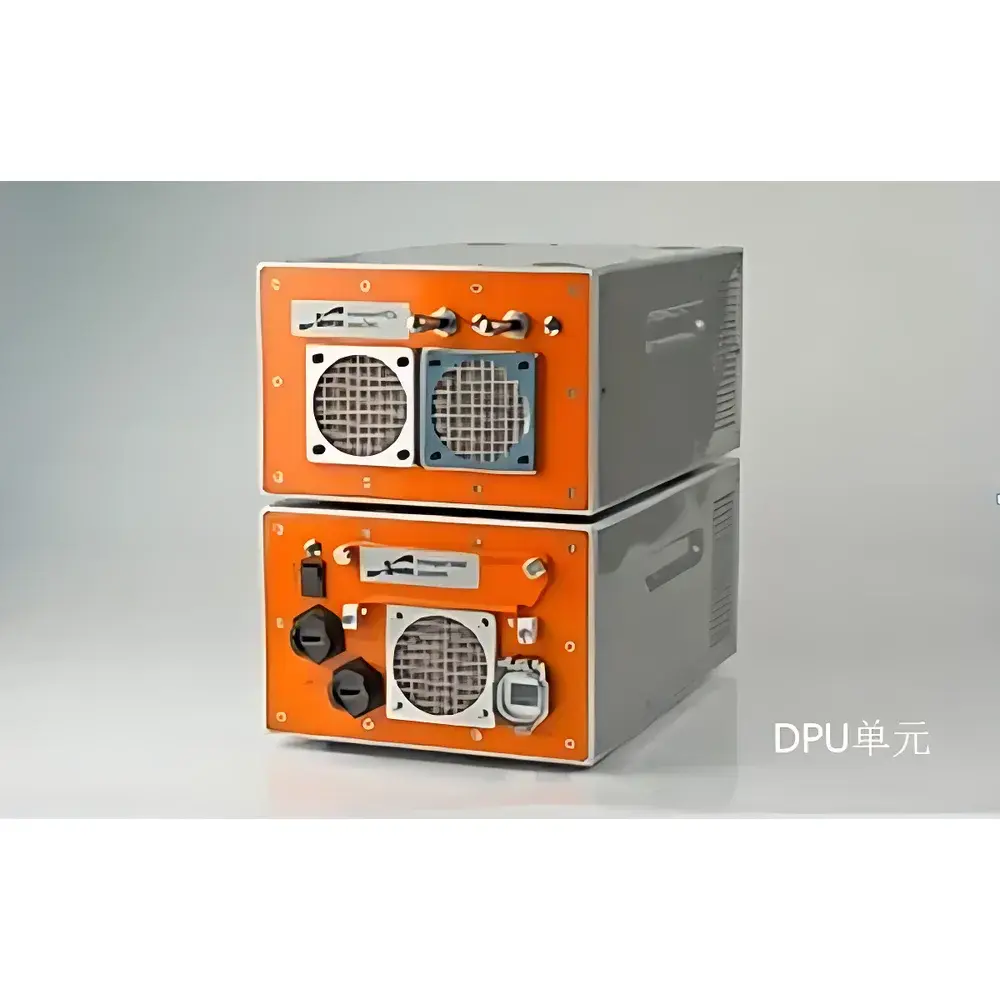
Data acquisition and real-time telemetry are managed via the dedicated Data Processing Unit (DPU), featuring an intuitive GUI and synchronized time-stamping across all subsystems (sensor, GNSS/IMU, calibrator). Raw 14-bit LVDS data streams are stored in SPECIM’s vendor-neutral .bil format, fully compatible with ENVI, Python (spectral, scikit-image), and MATLAB environments. CaliGeoPRO—a modular preprocessing suite—performs radiometric correction, spectral resampling, orthorectification, atmospheric compensation (using MODTRAN-based look-up tables), and emissivity inversion. The software generates FAIR-compliant output: machine-readable metadata (ISO 19115-2), embedded calibration provenance, and version-controlled processing logs required for regulatory audit trails under FDA 21 CFR Part 11–aligned deployments.
Applications
The AisaOWL enables quantitative emissivity mapping critical to geological surveying, environmental compliance monitoring, and defense-related target discrimination. In mineral exploration, it resolves diagnostic reststrahlen minima for quartz, feldspar, kaolinite, dolomite, and gypsum—complementing VNIR/SWIR datasets where spectral overlap limits discrimination. Field validation in Nevada’s copper-rich terrain demonstrated unambiguous separation of quartz–feldspar–chalcedony assemblages indistinguishable in SWIR alone. Similarly, in the Ramon Makhtesh study, LWIR-derived mineral classifications showed >92% concordance with laboratory XRD analysis of ground-truth samples. Additional applications include industrial stack emission profiling, landfill methane plume detection, volcanic fumarole temperature mapping, and camouflage detection via thermal contrast anomaly analysis.
FAQ
What spectral calibration standards does the AisaOWL support?
The system ships with factory-applied spectral, radiometric, and geometric calibration files traceable to NIST-standard blackbodies. Users may perform field recalibration using the integrated dual blackbody source, with results logged automatically in CaliGeoPRO.
Is the AisaOWL compatible with third-party flight management systems?
Yes—via Ethernet and RS-422 interfaces, the DPU supports synchronization with external GPS/INS units and accepts mission plan inputs in KML or GPX formats.
Can data be processed onboard during flight?
No—raw data acquisition occurs only; preprocessing requires post-mission execution in CaliGeoPRO or open-source toolchains. Real-time telemetry includes basic quality metrics (SNR, saturation flags, IMU health).
Does the system meet export control requirements for dual-use technology?
The AisaOWL is classified under EU Dual-Use Regulation (EC No 428/2009) Annex I, Category 6A002.b.1. Export licenses are required for destinations outside EU/NATO member states.
What maintenance is required between flights?
None beyond visual inspection and desiccant replacement every 12 months. The Stirling cooler has a rated lifetime of >20,000 hours; no optical alignment or detector bias adjustment is needed in-field.





