

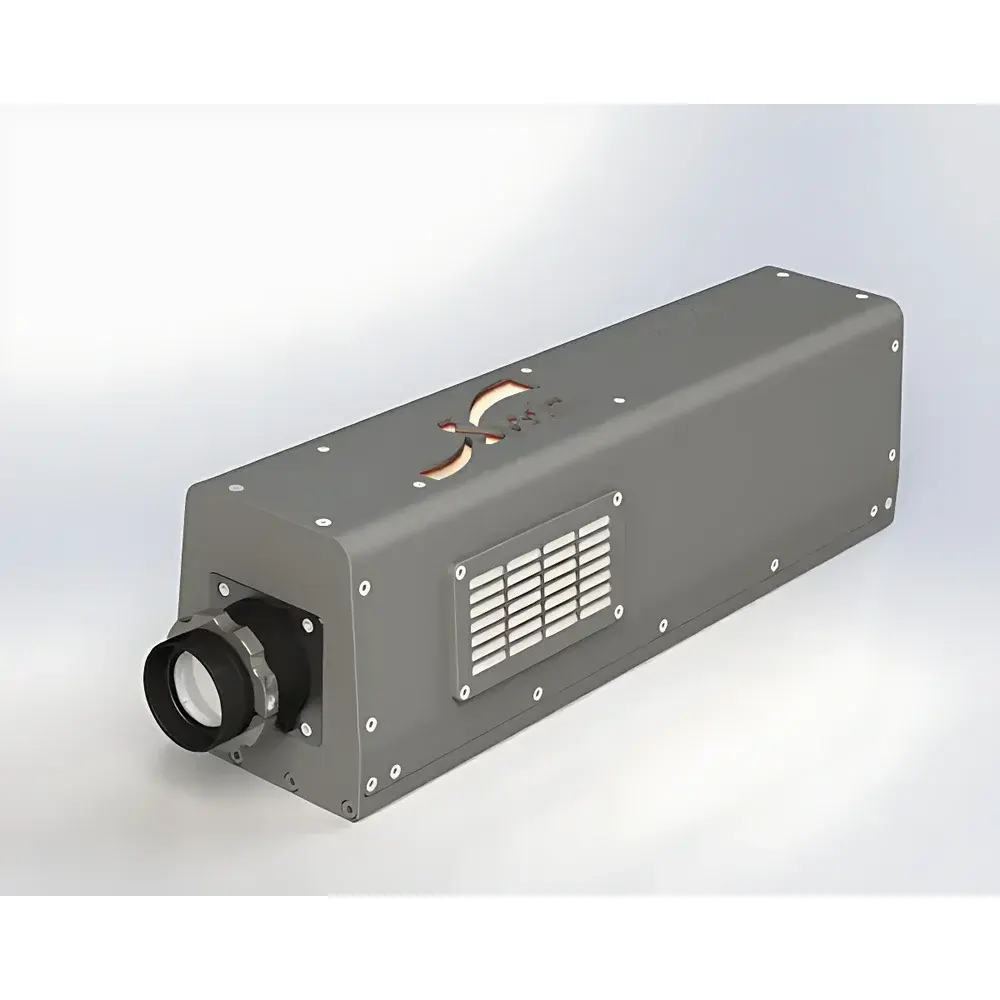
Specim PFD & sCMOS VNIR Hyperspectral Imaging Systems (400–1000 nm)
| Brand | Specim (distributed by Auniontech) |
|---|---|
| Origin | Finland |
| Model | Spectral Camera PFD / Spectral Camera sCMOS |
| Spectral Range | 400–1000 nm |
| Spectral Resolution (FWHM) | 3.0 nm (PFD), 2.9 nm (sCMOS) |
| Spatial Resolution | 1775 px (PFD), 2184 px (sCMOS) |
| Frame Rate | up to 100 fps (full frame), up to 1000 fps (ROI + binning) |
| Slit Width | 30 µm (standard), optional 18–150 µm |
| F/# | f/2.4 |
| Optical Interface | C-mount |
| Output Interface | CameraLink |
| Detector Type | CMOS (PFD), Temperature-Stabilized sCMOS (sCMOS) |
| Bit Depth | 12-bit (PFD), 16-bit (sCMOS) |
| SNR (peak) | 170:1–680:1 (sCMOS, binned) |
| Power Supply | 12 V DC (OEM PFD), 24 V DC or 110/230 V AC (sCMOS) |
| Operating Temp. | +5 to +40 °C (non-condensing) |
| Enclosure | Anodized aluminum, C-mount compatible |
Overview
The Specim PFD and sCMOS VNIR Hyperspectral Imaging Systems are precision-engineered push-broom hyperspectral cameras designed for laboratory, industrial, and field-deployable applications in the visible and near-infrared (VNIR) spectral region (400–1000 nm). Built upon Specim’s proven ImSpector V10E imaging spectrograph platform—featuring high-transmission transmissive diffraction grating optics and f/2.4 aberration-corrected lens design—these systems deliver high-fidelity spectral-spatial data cubes with minimal geometric distortion and stray light (< 0.5% at 590 nm with LPF). The PFD variant integrates a high-speed CMOS sensor optimized for robustness and rapid acquisition; the sCMOS model employs a thermally stabilized scientific-grade sCMOS detector offering ultra-low read noise (~few electrons), superior dynamic range, and enhanced signal-to-noise ratio—particularly critical for low-light or quantitative reflectance applications. Both systems operate on the fundamental principle of spatial-scanning spectroscopy: a line of the scene is dispersed across the detector’s spectral axis, while mechanical or stage-based motion provides the second spatial dimension, enabling full 3D (x, y, λ) hyperspectral data acquisition.
Key Features
- High spectral fidelity: FWHM resolution of 2.9–3.0 nm across 400–1000 nm, achieved via precision 30 µm slit (optional widths: 18–150 µm) and optimized optical train
- Flexible acquisition modes: Full-frame capture at up to 100 fps; region-of-interest (ROI) readout and programmable binning (spatial/spectral, asymmetric support in sCMOS firmware) enable effective frame rates exceeding 1000 fps
- Industrial-grade hardware: Rugged anodized aluminum housing, C-mount lens interface, and thermal management compliant with continuous operation in controlled lab and factory-floor environments (+5 to +40 °C, non-condensing)
- Dual-platform architecture: PFD (12-bit CMOS, <5 W power draw, OEM-friendly form factor: 231 × 80.5 × 78 mm) and sCMOS (16-bit output, 60 W, integrated shutter, larger footprint: 400 × 110 × 120 mm) cater to distinct performance and integration requirements
- Optimized optical throughput: >50% total system efficiency (polarization-independent), RMS spot size <9 µm, and low-distortion imaging support quantitative radiometric and reflectance calibration
Sample Compatibility & Compliance
These systems are designed for ground-based, non-contact analysis of solid, semi-solid, and particulate samples—including agricultural produce, pharmaceutical tablets, mineral specimens, painted surfaces, biological tissues, and printed materials. Sample presentation is compatible with standard microscope stages, conveyor belts, rotary sample holders, and outdoor scanning rigs (e.g., mirror scanners or motorized gimbals). The optical design conforms to ISO 13655:2017 (spectral measurement geometry) and supports traceable calibration using NIST-traceable reflectance standards (e.g., Spectralon®). Data acquisition workflows comply with GLP and GMP documentation prerequisites when paired with LUMO software’s audit-trail-enabled parameter logging and timestamped metadata embedding. While not intrinsically FDA 21 CFR Part 11–certified, the system architecture permits integration into validated environments through controlled user access, electronic signatures, and immutable raw-data archiving protocols.
Software & Data Management
LUMO software serves as the native acquisition and visualization platform, providing real-time spectral cube preview, hardware parameter control (exposure, ROI, binning, shutter timing), and export in ENVI-compatible BIL/BIP formats. It supports synchronized triggering with external devices (e.g., encoders, PLCs) for motion-compensated line-scan acquisition. Raw data cubes are structured per IEEE Std 1596.1-2020 conventions, ensuring interoperability with third-party analytical toolkits including MATLAB Hypercube Toolbox, Python’s scikit-image/hyperspy, and commercial packages such as ENVI, ERDAS IMAGINE, and Thermo Scientific OMNIC. All metadata—including spectral sampling interval, slit width, F/#, detector temperature (sCMOS), and calibration coefficients—is embedded in header files. For regulated environments, LUMO can be deployed in locked-down mode with role-based permissions and export logs meeting ALCOA+ (Attributable, Legible, Contemporaneous, Original, Accurate, Complete, Consistent, Enduring, Available) data integrity principles.
Applications
- Industrial quality control: Real-time sorting of fruits/vegetables by ripeness, sugar content, or defect detection; coating thickness and uniformity verification in automotive and electronics manufacturing
- Agricultural & environmental science: Leaf chlorophyll estimation, crop stress phenotyping, soil organic matter mapping, and wetland vegetation classification
- Pharmaceutical & food safety: Tablet coating homogeneity assessment, counterfeit drug identification, mycotoxin screening in grains, and NIR-based moisture profiling
- Geoscience & mining: Mineralogical mapping of drill cores and outcrops via spectral absorption feature analysis (e.g., Al-OH, Fe³⁺, Mg-OH bands)
- Cultural heritage: Non-invasive pigment identification, underdrawing revelation, and varnish degradation monitoring in paintings and manuscripts
- Life sciences: Label-free tissue characterization, histopathology support, and fluorescence lifetime–independent spectral unmixing in fixed or fresh specimens
FAQ
What is the primary difference between the PFD and sCMOS models?
The PFD uses a high-speed CMOS sensor optimized for speed and low power consumption, making it suitable for OEM integration and portable systems. The sCMOS variant features a cooled, scientific-grade sensor with lower read noise, higher bit depth (16-bit), and greater dynamic range—ideal for low-light, quantitative reflectance, or high-SNR applications.
Can these cameras be calibrated for absolute reflectance measurements?
Yes—when used with certified reference panels (e.g., Spectralon® 99% or 50%) and appropriate illumination (e.g., halogen or quartz-tungsten-halogen source with stable output), both systems support radiometric and reflectance calibration following ASTM E275 and ISO 13655 protocols.
Is synchronization with motion stages or conveyor belts supported?
Yes—hardware trigger input/output (TTL) enables precise encoder-synchronized line acquisition, minimizing spatial smearing during continuous scanning.
Does the system support real-time processing or onboard analytics?
LUMO provides real-time visualization and basic spectral indexing (e.g., NDVI, PRI); advanced algorithms (e.g., MCR, PLS regression, SVM classification) require external computation—but raw data latency is minimized via CameraLink’s high-throughput interface.
Are custom spectral band selections possible without hardware modification?
Yes—via software-defined ROI selection and binning, users can isolate specific wavelength windows (e.g., 650–680 nm for chlorophyll-a peak) to increase effective frame rate or reduce data volume while preserving spectral integrity.





