
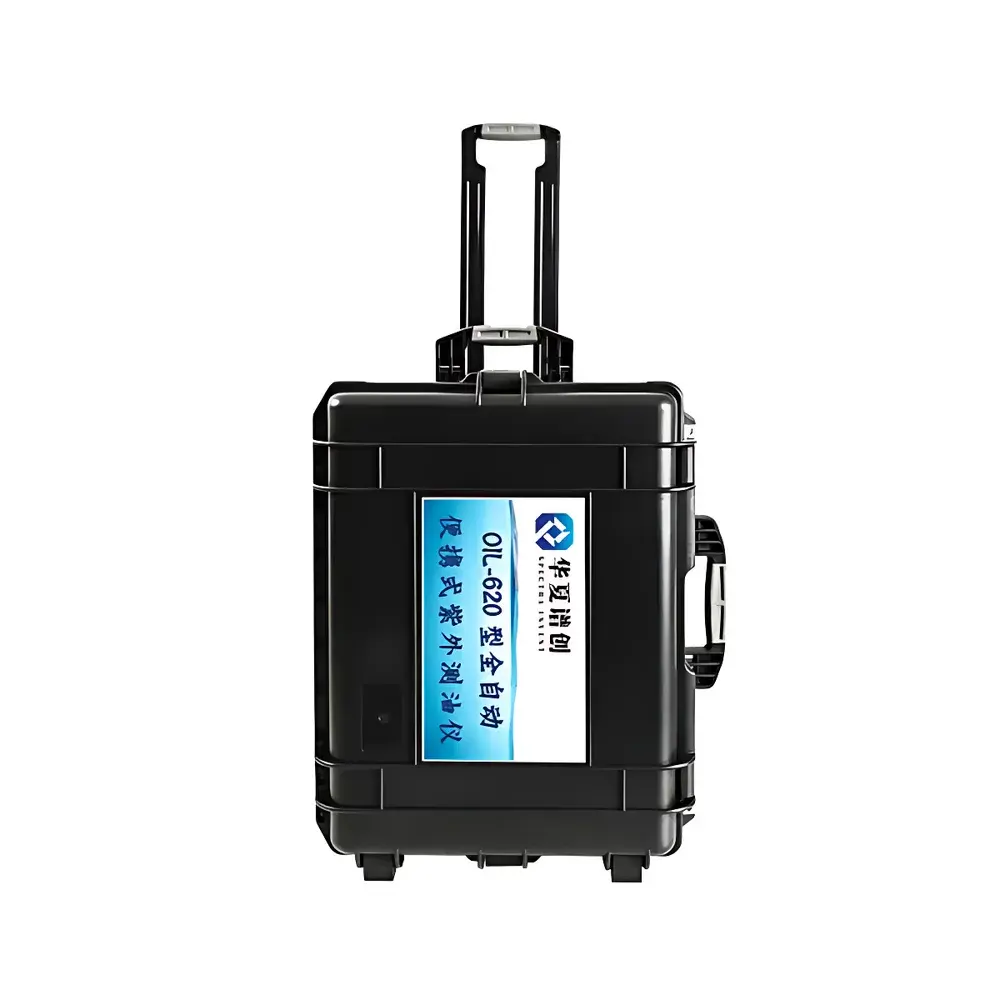
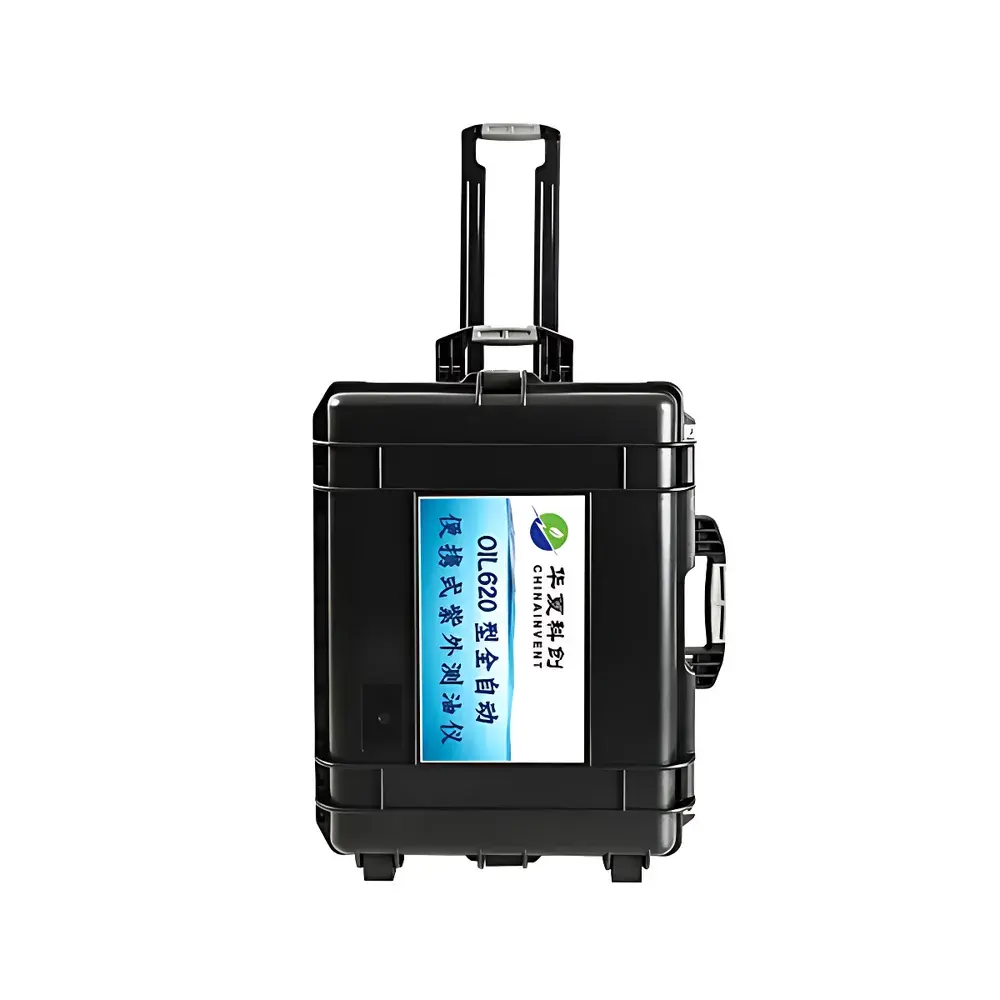
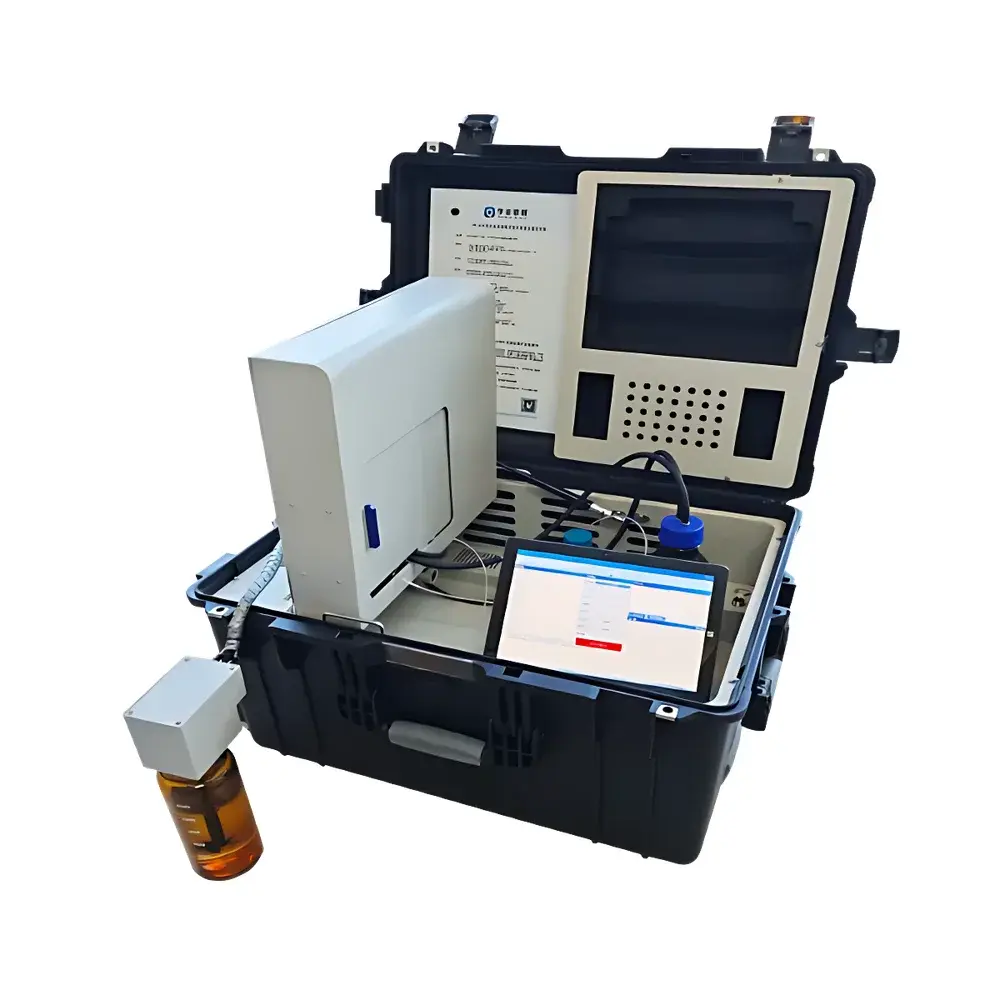
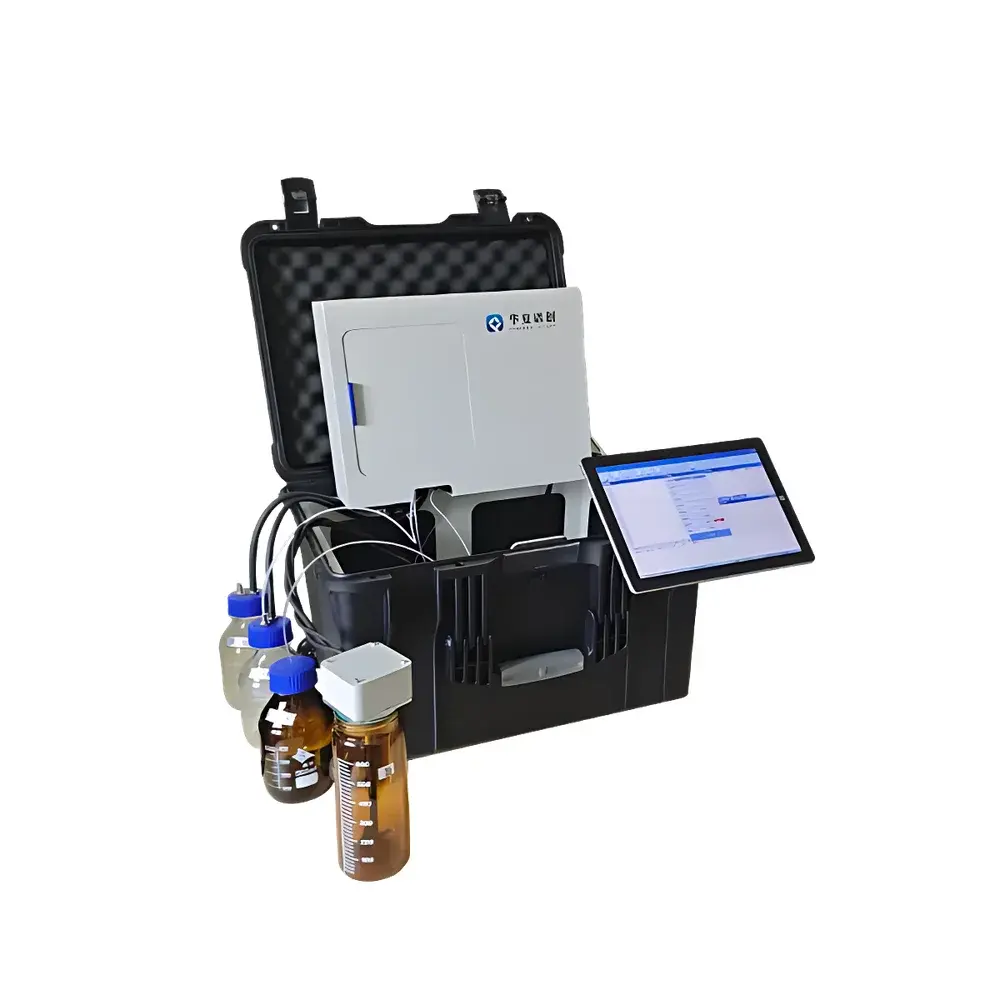
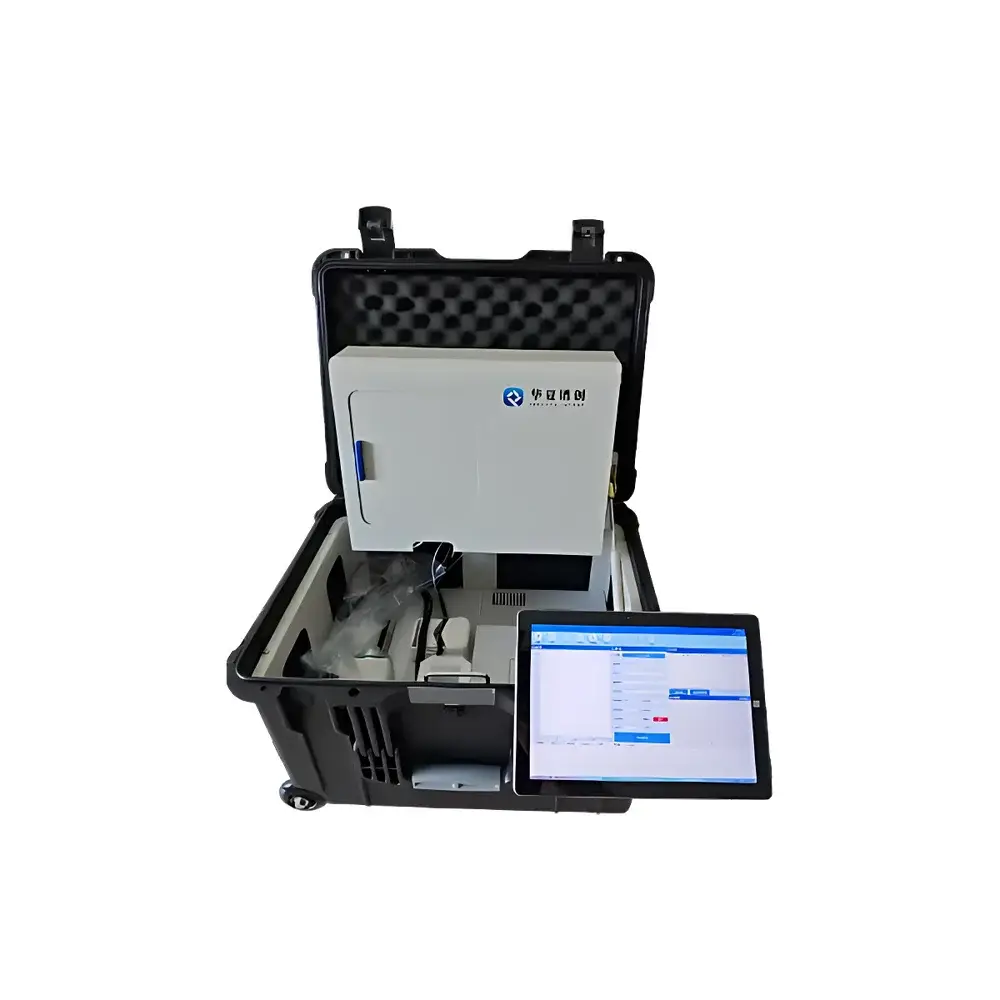
SPECTRA INVENT OIL-620 Portable Automated UV Oil Content Analyzer
| Brand | SPECTRA INVENT (Chinainvent) |
|---|---|
| Origin | Beijing, China |
| Instrument Type | Laboratory |
| Principle | Ultraviolet Spectrophotometry |
| Measurement Range | 0–50 mg/L (auto-dilution beyond range) |
| Detection Limit | DL ≤ 0.005 mg/L (3×SD of 11 measurements in n-hexane blank) |
| Accuracy | ±2.0% |
| Compliance | HJ 970–2018, GB 5084–2021 |
| Sample Vessel Compatibility | Adjustable for multiple standard sampling cup sizes (no sample transfer required) |
Overview
The SPECTRA INVENT OIL-620 is a portable, fully automated oil-in-water analyzer engineered for precise quantification of petroleum hydrocarbons in aqueous matrices using ultraviolet (UV) spectrophotometric detection at 225 nm. Based on the principle of selective absorption of UV light by aromatic and olefinic compounds in petroleum products—particularly those extractable with n-hexane—the instrument implements a standardized methodology aligned with HJ 970–2018 (“Determination of Petroleum Hydrocarbons in Water by UV Spectrophotometry”) and supports broader regulatory frameworks including GB 5084–2021 (Agricultural Irrigation Water Quality Standard). Unlike conventional benchtop UV-Vis systems requiring manual extraction, solvent handling, and cuvette alignment, the OIL-620 integrates automated liquid handling, dual-path optical measurement, and real-time baseline correction to minimize operator variability and maximize analytical reproducibility. Its compact, battery-operable design (optional 12 V DC input) enables deployment in field laboratories, mobile environmental monitoring units, wastewater treatment plants, and emergency response scenarios without compromising metrological integrity.
Key Features
- Fully automated workflow: integrated peristaltic pumps, solvent delivery, phase separation control, and UV absorbance measurement—all executed under programmable sequence without manual intervention.
- Optical system with dual-beam configuration: reference and sample paths simultaneously monitored to compensate for lamp drift, solvent batch variation, and cell window fouling.
- Auto-dilution capability: when sample absorbance exceeds the linear dynamic range (0–50 mg/L), the system triggers precise serial dilution using certified n-hexane to extend effective quantification up to 500 mg/L (with traceability maintained via dilution factor logging).
- Low detection limit validation: method detection limit (MDL) verified per EPA Method 418.1 protocol—DL = 0.005 mg/L based on 3σ of 11 replicate n-hexane blank measurements, ensuring compliance with stringent discharge monitoring requirements.
- Modular sample interface: accommodates standard 40 mL, 60 mL, and 100 mL EPA-compliant glass extraction vials; eliminates cross-contamination risk associated with sample transfer or re-pipetting.
- Ruggedized housing with IP54 rating: dust- and splash-resistant enclosure suitable for operation in ambient temperatures from 5 °C to 40 °C and relative humidity ≤85% non-condensing.
Sample Compatibility & Compliance
The OIL-620 is validated for use with surface water, groundwater, industrial effluent, municipal wastewater, and agricultural runoff samples following pre-extraction with n-hexane (per HJ 970–2018 Section 7). It accepts both unfiltered and gravimetrically filtered (0.45 µm membrane) extracts, provided turbidity remains below 5 NTU to avoid scattering artifacts. The instrument’s calibration verification procedure includes daily bracketing with certified reference materials (CRM) traceable to NIST SRM 2781 (Petroleum Hydrocarbon Mix in Water), and its software enforces audit-trail recording of all calibration events, reagent lots, and user actions—supporting GLP-aligned data governance. While not FDA 21 CFR Part 11–certified out-of-the-box, the system provides electronic signature-ready logs and exportable .csv/.xlsx reports compatible with LIMS integration.
Software & Data Management
Control and analysis are performed via the embedded SPECTRAView™ v3.2 firmware, featuring a 7-inch capacitive touchscreen interface with multilingual support (English, Spanish, French, Chinese). All measurement parameters—including wavelength selection (fixed at 225 nm per standard), pathlength (10 mm quartz flow cell), integration time, and dilution logic—are configurable and stored with timestamped metadata. Raw absorbance spectra, calibration curves, QC check results, and final concentration outputs are archived locally on a removable microSD card (up to 128 GB) and exportable via USB or optional Wi-Fi module. Data files include ISO/IEC 17025–recommended elements: instrument ID, operator ID, environmental conditions (temperature/humidity logged internally), and uncertainty estimation per GUM guidelines (Type A + Type B components reported).
Applications
- Regulatory compliance testing for petroleum hydrocarbon discharge limits under national and provincial environmental protection statutes.
- Source identification and trend analysis in watershed monitoring programs targeting upstream oilfield runoff or refinery outfalls.
- Performance verification of oil-water separation units (e.g., API separators, coalescers, dissolved air flotation systems) in real time.
- Emergency spill assessment: rapid on-site quantification to guide containment strategy and remediation prioritization.
- Method validation studies comparing UV-based determination against IR-based alternatives (e.g., EPA 1664) or GC-FID reference methods.
FAQ
Does the OIL-620 require external calibration standards for every analysis?
No—calibration is performed prior to each analytical batch using a two-point curve (0 mg/L and 20 mg/L CRM); subsequent samples are quantified against this validated curve, with automatic re-calibration triggered if drift exceeds ±1.5% absorbance over 4 hours.
Can the instrument be used with solvents other than n-hexane?
Only n-hexane is supported for quantitative analysis per HJ 970–2018; alternative solvents (e.g., cyclohexane, CCl₄) are incompatible due to spectral interference and lack of method validation.
Is method validation documentation provided with the system?
Yes—the shipment includes a Certificate of Conformance, full HJ 970–2018 validation report (including precision, accuracy, linearity, and robustness data), and SOP templates compliant with ISO/IEC 17025 Clause 7.2.
What maintenance intervals are recommended?
Optical path cleaning every 500 measurements; pump tubing replacement every 3 months or 1,000 cycles; annual factory recalibration recommended for traceability to national metrology institutes.
How is data integrity ensured during power interruption?
The system employs non-volatile flash memory and automatic save-on-interrupt logic—any active measurement sequence resumes from last stable checkpoint upon reboot, with no loss of raw spectral data or metadata.







