
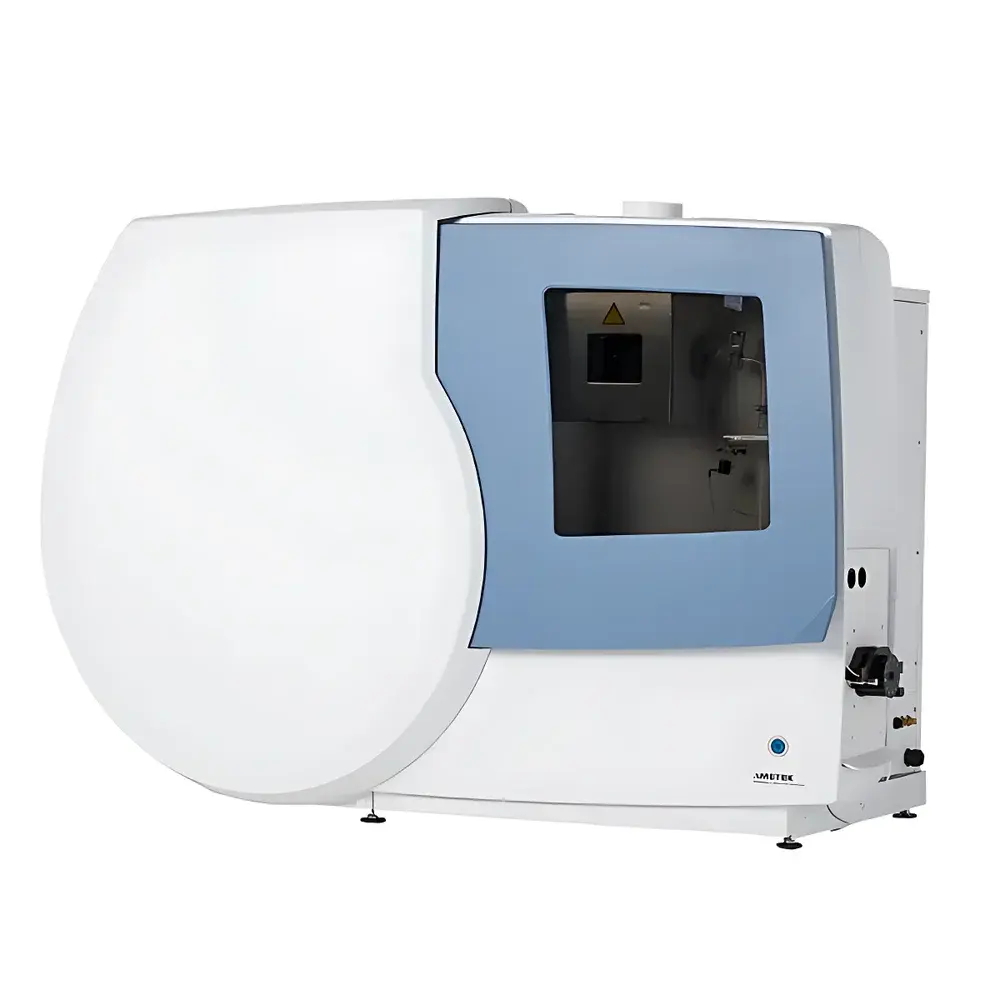
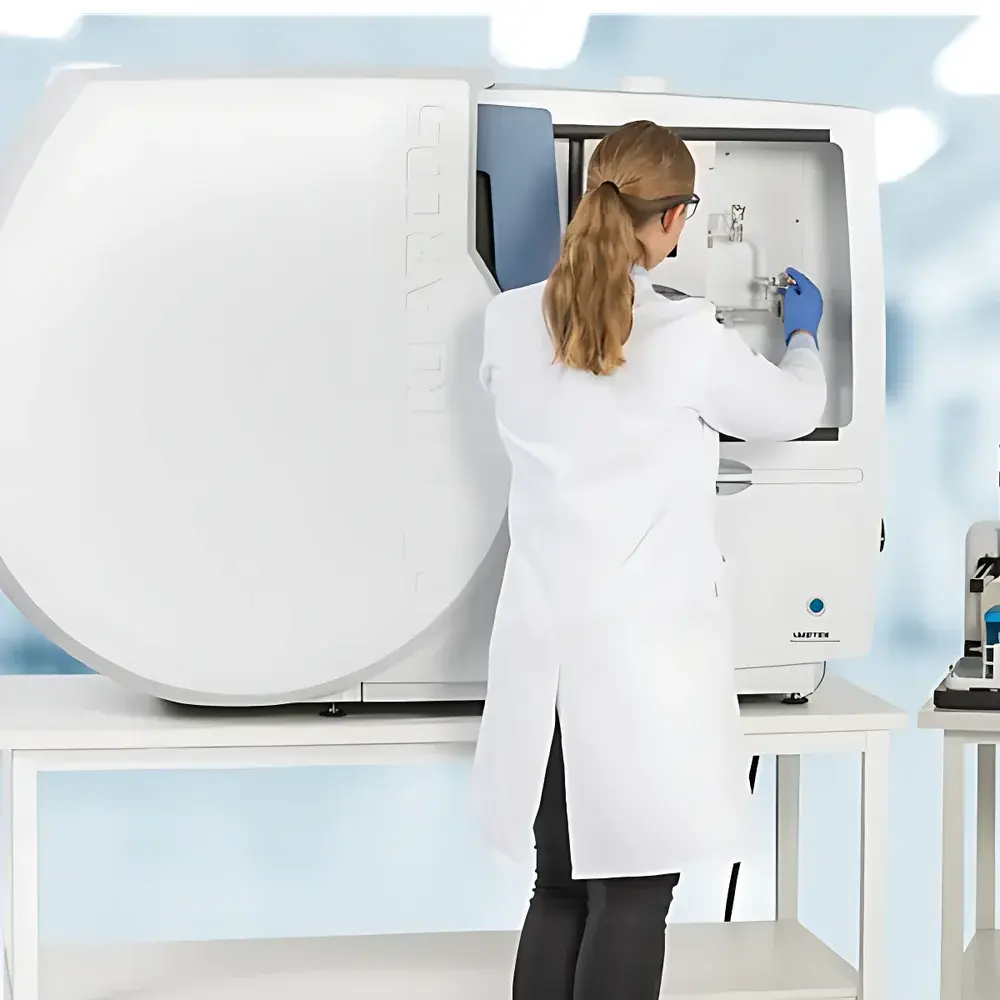
SPECTRO ARCOS ICP-OES Spectrometer
| Brand | SPECTRO |
|---|---|
| Origin | Germany |
| Model | New SPECTRO ARCOS |
| Instrument Type | Full-Spectrum Direct-Reading ICP-OES |
| Detection Limit | <1 ppb |
| Precision (RSD) | 0.5% |
| Long-Term Stability | 1% |
| Wavelength Range | 130–770 nm |
| Optical Resolution | <8.5 pm |
Overview
The SPECTRO ARCOS ICP-OES Spectrometer is a high-performance, full-spectrum direct-reading inductively coupled plasma optical emission spectrometer engineered for trace elemental analysis in demanding industrial and research laboratories. Based on robust plasma excitation at ~10,000 K and high-fidelity optical detection, the instrument employs a dual-view vertical/horizontal plasma observation architecture (DSOI – Dual Simultaneous Observation Interface) to optimize sensitivity and matrix tolerance across diverse sample types. Unlike conventional sequential or limited-range ICP-OES systems, the ARCOS integrates an ORCA (Optimized Radial/axial Coupled Architecture) optical path that simultaneously captures the entire 130–770 nm spectral range with enhanced photon throughput—delivering up to 5× greater signal intensity in the UV and far-UV regions compared to traditional echelle-prism cross-dispersion systems. This architecture enables reliable quantification of ultra-trace elements (sub-ppb) while maintaining exceptional linearity and dynamic range.
Key Features
- Dual Simultaneous Observation Interface (DSOI): Enables rapid, tool-free switching between vertical and horizontal plasma viewing geometries in under 90 seconds—optimizing detection limits for volatile elements (e.g., As, Se, Cd) in radial mode and refractory elements (e.g., Al, Ti, rare earths) in axial mode.
- ORCA Optical System: Monolithic, sealed far-UV optical path (no purge gas required), featuring high-efficiency holographic gratings and optimized mirror coatings to maximize transmission from 130 nm onward.
- CMOS Linear Array Detector: Uncooled, radiation-hardened sensor with zero blooming and no overflow effect—capable of resolving intense matrix lines alongside weak analyte signals within a single exposure, supporting >106 linear dynamic range.
- Ergonomic Modular Base: Integrated air-cooling system, intelligent valve manifold (optional), and compact footprint designed for long-term operational stability and reduced service intervention.
- MultiView Platform Flexibility: Six configurable models available—covering variations in detector format, plasma view orientation (radial-only, axial-only, or DSOI), and extended wavelength options (e.g., deep UV-enhanced optics).
Sample Compatibility & Compliance
The SPECTRO ARCOS accommodates aqueous solutions, digested environmental and geological samples, organic solvents (with optional micro-nebulizer), and high-salt matrices (e.g., seawater, brines) via programmable RF power modulation and robust torch design. It complies with ISO/IEC 17025 method validation requirements and supports audit-ready workflows aligned with GLP and GMP environments. Software-controlled calibration protocols adhere to ASTM D1976, EPA Method 200.7/200.8, and ISO 11885 standards. Optional 21 CFR Part 11-compliant electronic signature and audit trail modules are available for regulated pharmaceutical and clinical testing applications.
Software & Data Management
Controlled by SPECTRO’s proprietary SparkVue™ software, the system provides intuitive method setup, real-time spectral visualization, automated background correction, and multi-element calibration curve generation. Data export conforms to ASTM E1382 and LIMS-compatible formats (CSV, XML, .spc). All acquisition parameters—including integration time, plasma viewing mode, RF power, and nebulizer gas flow—are stored with each measurement for full traceability. Version-controlled method libraries support multi-user environments, and raw spectral data (full 130–770 nm interferogram per read) is retained for retrospective reprocessing.
Applications
The SPECTRO ARCOS delivers validated performance across sectors requiring high-precision multi-element quantification: metal alloy certification (ASTM E3061); semiconductor-grade chemical purity screening (SEMI F57); wastewater and drinking water compliance monitoring (EPA 200.7); catalyst and battery material characterization; petrochemical trace metal analysis (ASTM D5185); and geological exploration geochemistry (ISO 13877). Its low detection limits and robustness against polyatomic interferences make it especially suitable for regulatory reporting where reproducibility and method ruggedness are critical.
FAQ
Does the SPECTRO ARCOS require argon purge for far-UV operation?
No—the ORCA optical path is a permanently sealed, vacuum-tight chamber; no external purge gas is needed for measurements down to 130 nm.
Can the instrument perform both radial and axial observations in a single run?
Yes—DSOI allows simultaneous acquisition from both plasma orientations without mechanical repositioning, enabling internal matrix-matched correction and expanded linear range.
Is the CMOS detector cooled?
No—it operates at ambient temperature with active thermal stabilization, eliminating cryogenic maintenance and enabling continuous duty-cycle operation.
What is the typical warm-up time before analysis?
Instrument stabilization requires ≤30 minutes after ignition; plasma and optics reach thermal equilibrium within this period, meeting ISO 17025 repeatability criteria.
Are application-specific methods pre-installed?
Yes—SparkVue includes validated method templates for EPA, ASTM, ISO, and pharmaceutical compendial assays, all editable and compliant with laboratory SOP documentation requirements.





